





Antique French Plant Trough
An antique french plant trough brings living greenery indoors with aristocratic flourish, combining decorative metalwork and fine timber.
Antique French Plant Trough
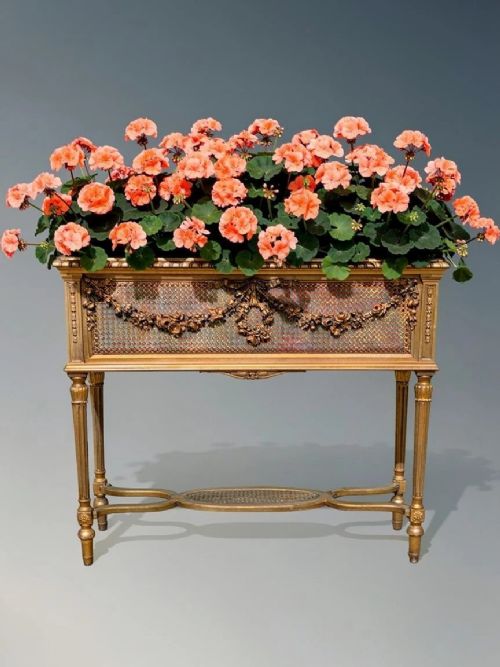
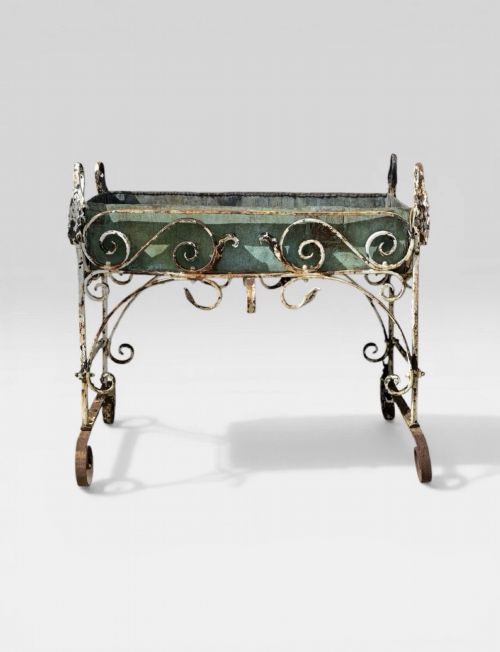
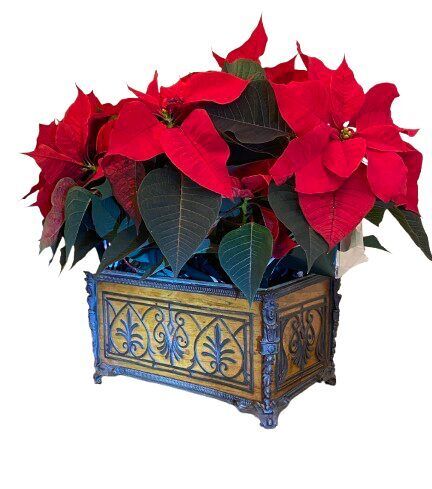
An antique french plant trough encompasses jardinières, garden planters, and plant stands designed to hold potted flora for domestic display. These vessels range from elaborate indoor salon pieces to sturdy garden urns and wire work conservatory stands.
The pieces appearing on this page date predominantly from the nineteenth century, including specific years like 1880, 1890, and 1930, alongside Edwardian and Victorian examples. Stylistic influences lean heavily toward Louis XVI, Louis XV revival, and French country aesthetics.
Forms vary from small table stands to large floor-standing jardinieres, utilising vessel shapes suited for both interior drawing rooms and outdoor patios.
What varies in quality
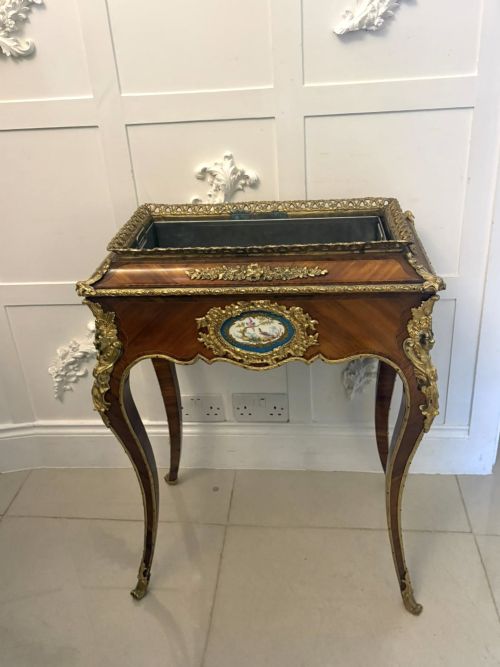
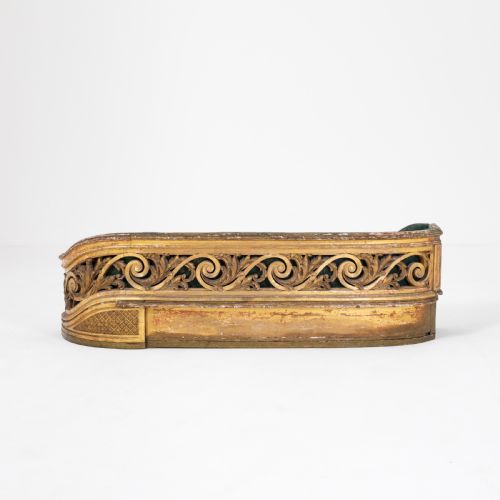
Quality rests upon the ambition of the design and the harmony of mixed materials, such as the crispness of ormolu mounts against fine kingwood or walnut. Elaborate marquetry and hand-carved giltwood distinguish ambitious salon pieces from simpler country house utilitarian items.
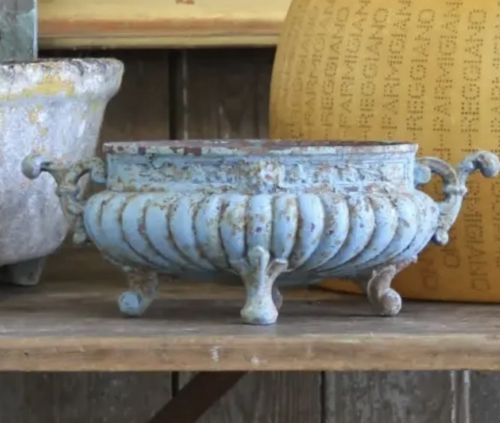
The integrity of the internal lining and the weight of cast or wrought iron define the durability of planters intended for damp environments. Finer examples display meticulous joinery and authentic period mounts rather than later adaptations.
Listings feature nineteen-century dates alongside Edwardian and Victorian eras, utilising materials from zinc and ormolu to kingwood and wrought iron.
The Antique French Plant Trough Glossary
- Jardiniere
- An ornamental pot or stand for holding plants or flowers. These vessels form the majority of indoor plant troughs.
- Ormolu
- Gilded bronze applied as decorative mounts to furniture and planters. It creates a bright metallic contrast against dark woods.
- Marquetry
- Inlaid patterns of wood veneer applied to the surface of a carcase. It provides geometric or floral decoration on high-end pieces.
- Giltwood
- Wood that has been coated with gold leaf or gold paint. This technique appears on ornate nineteenth-century frames and stands.
Antique French Plant Trough: Frequently Asked Questions
Where should I place an antique plant trough?
These pieces suit conservatories, living rooms, and entrance halls where potted plants require an elevated and decorative housing. They bring a distinct architectural element to interior planting schemes.
Larger iron and zinc examples function effectively on patios, balconies, or garden terraces when paired with hardy outdoor flora.
How do I protect the wood from water damage?
Most antique wooden jardinières were originally manufactured with metal liners or inner containers to catch excess moisture. Ensuring a suitable waterproof insert remains inside prevents water from rotting the surrounding timber.
Regularly emptying pooled water and using potted plants within saucers helps preserve the interior veneer and marquetry of delicate pieces.
How can I tell a Louis XVI style piece apart?
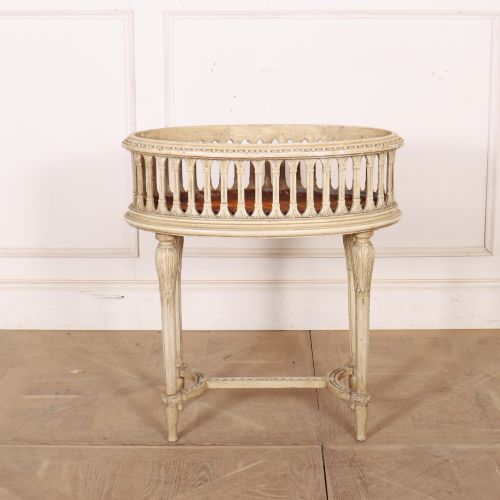
Louis XVI style items typically display neoclassical restraint, featuring straight lines, symmetrical proportions, and classical architectural motifs. Ormolu mounts on these pieces often incorporate ribbon twists, bead reels, and acanthus leaves.
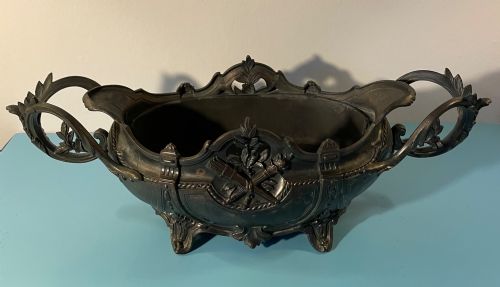
By contrast, Louis XV revival troughs show asymmetrical curves, C-scrolls, and flowing naturalistic foliage.
What is the difference between a jardiniere and a plant stand?
A jardiniere primarily refers to the decorative vessel or trough itself, which holds the soil and roots directly or conceals a pot. It sits upon tables or incorporates its own integrated base.
A plant stand is typically an elevated structure designed purely to raise a separate flowerpot off the floor.