

Antique French Gilt Chairs
Antique french gilt chairs combine opulent gilded finishes with classic forms, offering both historical presence and decorative elegance.
Antique French Gilt Chairs
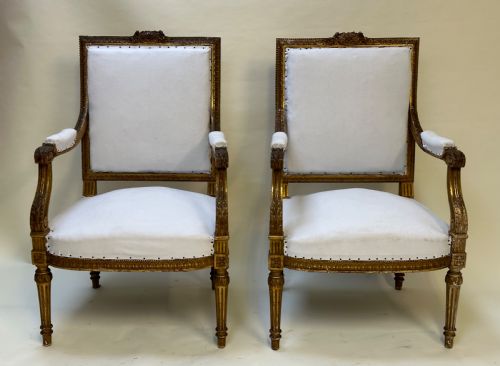
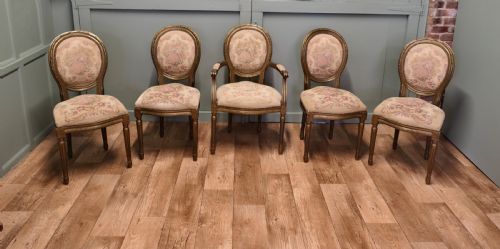
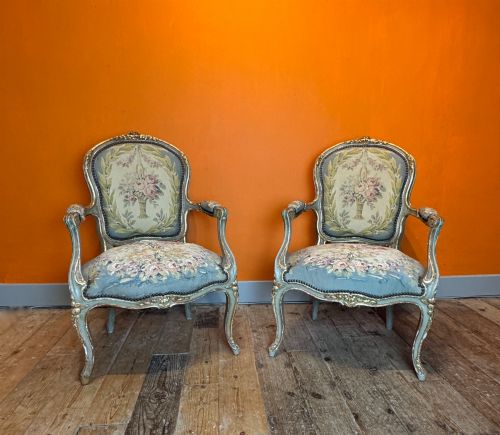
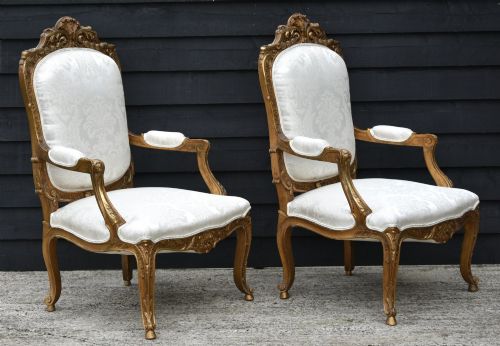
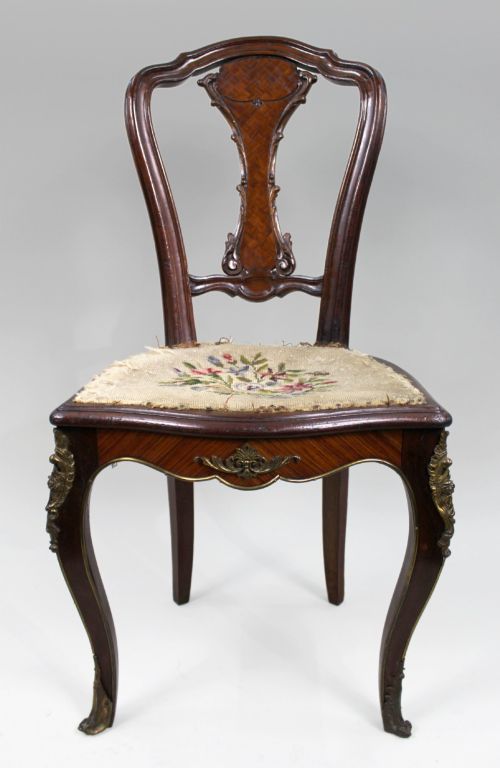
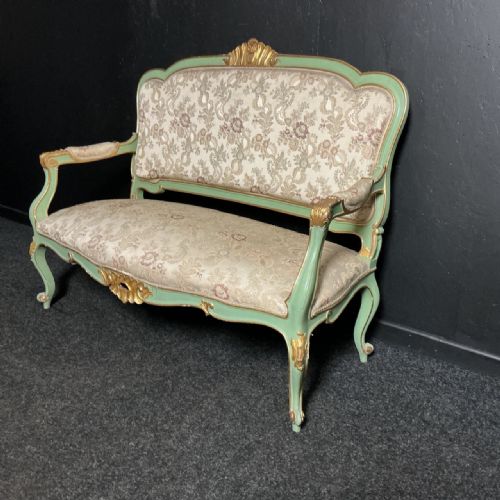
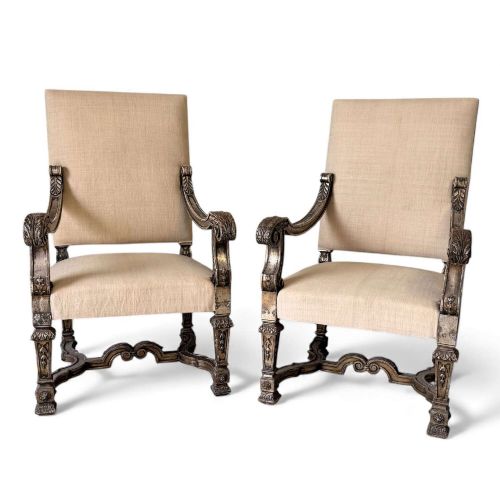
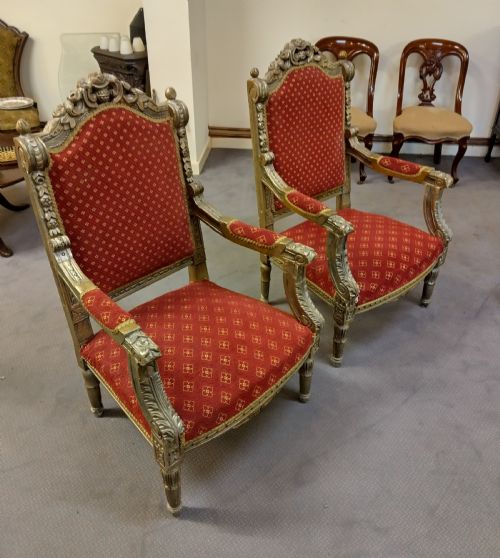
When searching for antique french gilt chairs, buyers encounter a diverse range of seating, including open armchairs, salon chairs, bergères, and side chairs spanning the nineteenth and early twentieth centuries.
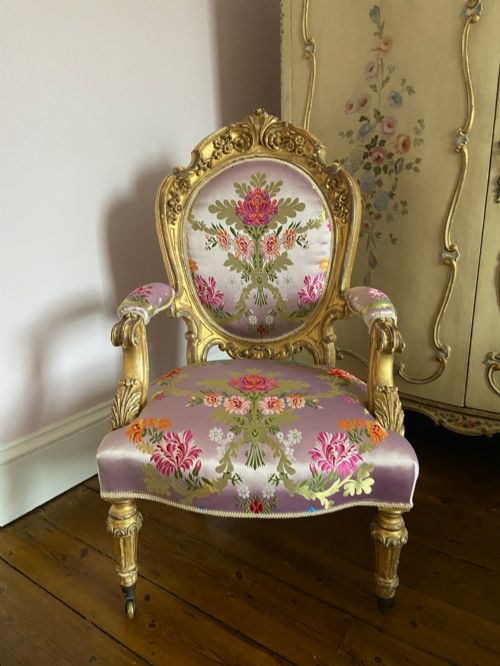
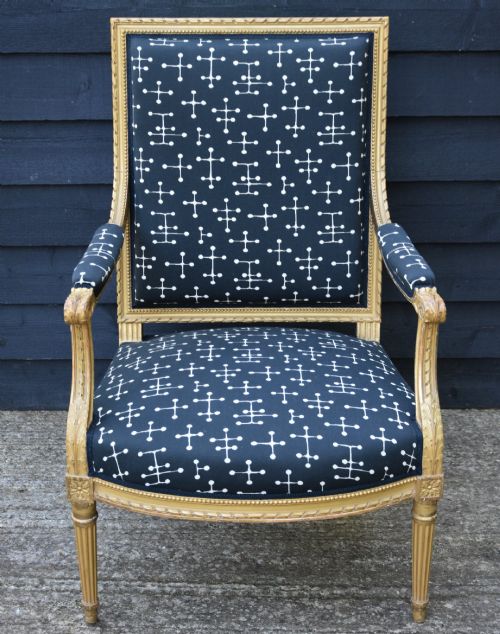
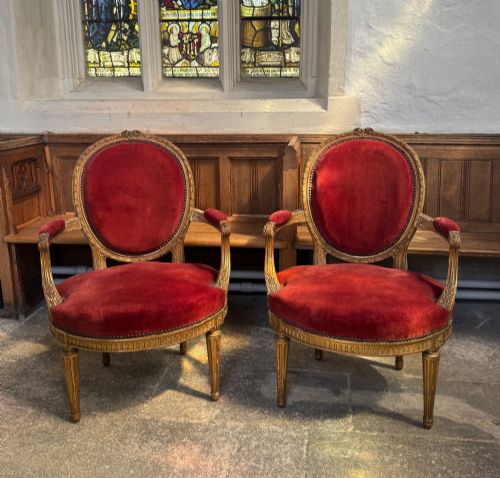
The most common examples on this page follow the Louis XVI style and Louis XV revival taste, featuring neoclassical lines, floral motifs, or ornate rococo scrollwork.
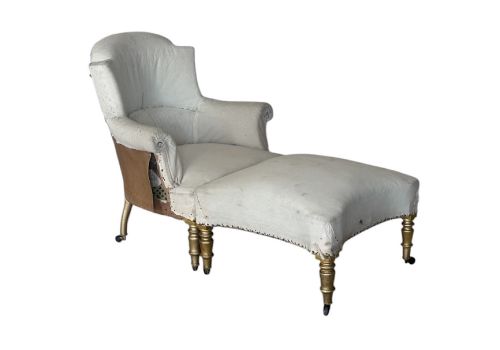
Forms extend from intimate bedroom chairs and desk chairs to large throne chairs, chaise longues, and complete salon suites.
Materials and construction
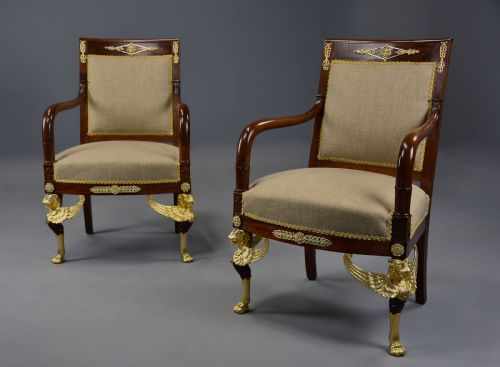
Carved timber frames, predominantly beech, walnut, or mahogany, form the structural foundation beneath layers of metallic leaf or paint.
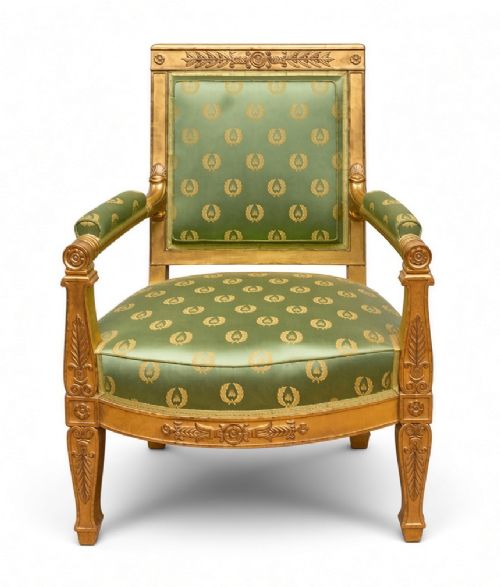
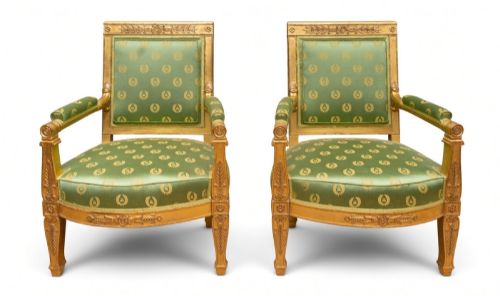
Giltwood and parcel gilt finishes provide the characteristic luminous surface, often complemented by cast brass, ormolu mounts, and gilt bronze.
Upholstery ranges from historical tapestry and silk fabric to contemporary velvet and silk damask.
Duchesse brisées let owners recline in regal comfort by pairing an armchair with a matching stool.
Assessing craftsmanship and finish
The precision of the wood carving dictates the baseline of quality, separating crisp, deep relief work from soft or mechanical moulding.
The application and preservation of the gilding determine visual depth, where hand-applied leaf catches light differently than flat metallic paint.
The integrity of the frame construction and the authenticity of period textiles or appropriate re-upholstery complete the evaluation.
Jacob-Desmalter·Blaise Maucuy
The Antique French Gilt Chairs Glossary
- Giltwood
- Timber coated with fine gold leaf or metallic powder over a prepared gesso ground. This finish creates a warm, reflective surface characteristic of formal seating.
- Fauteuil
- An open-framed upholstered armchair with exposed wooden arms. These chairs gained prominence during French royal periods for formal reception rooms.
- Bergère
- An enclosed upholstered armchair featuring padded sides and a built-in upholstered back. This form offers a deeper, more enclosed seat than an open fauteuil.
- Ormolu
- Gilded bronze mounts applied to furniture for decorative accent. Master craftsmen utilised these metal details to highlight structural corners and apron centres.
- Parquetry
- Geometric wood inlay patterns arranged to create decorative surfaces on furniture panels. This technique showcases contrasting timber tones like kingwood.
Antique French Gilt Chairs: Frequently Asked Questions
What is the difference between a fauteuil and a side chair?
A fauteuil is an open armchair designed with upholstered armrests for formal sitting. Side chairs lack arms entirely, making them compact enough to line salon walls or accompany dining tables.
Both forms utilise matching giltwood finishes and upholstery to maintain uniformity in period rooms.
Are these chairs suitable for daily use?
Many antique gilt chairs retain sturdy beech or walnut frames that handle regular sitting when structurally sound. However, older joinery and delicate carved details require careful treatment during daily use.
Buyers often select them as accent pieces or occasional seating to preserve delicate silk or velvet fabrics.
How do I tell original gilding from later paint?
Original gilding shows microscopic cracking, wear patterns over high points, and subtle variations in metallic tone under close inspection. Later metallic paint often appears flat and uniform across carved crevices.
Examining the underlying gesso layer helps confirm the age of the surface treatment.