
Antique French Gaming Table
An antique french gaming table brings sophisticated engineering and social history together, offering folding surfaces, intricate marquetry, and exceptional cabinetwork for modern rooms.
Antique French Gaming Table
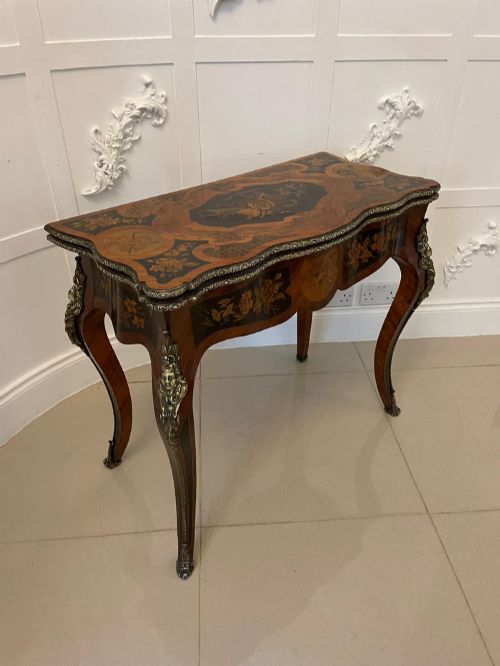
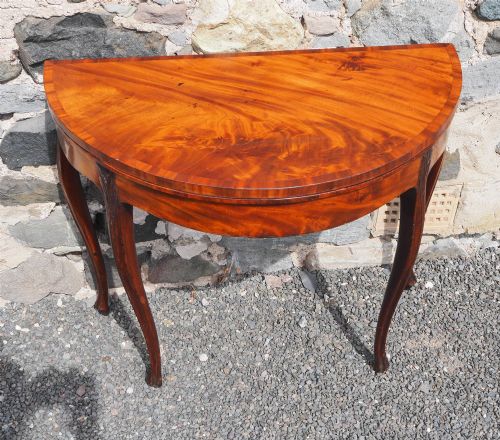
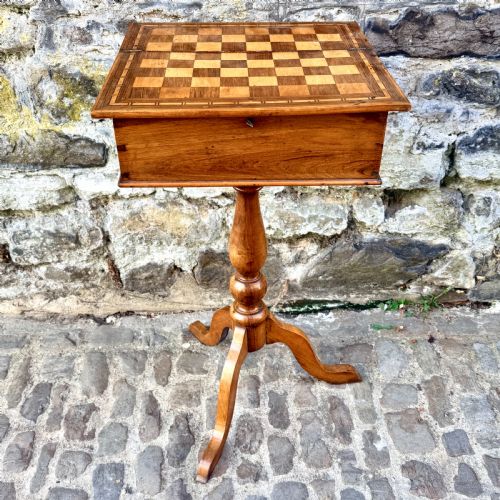
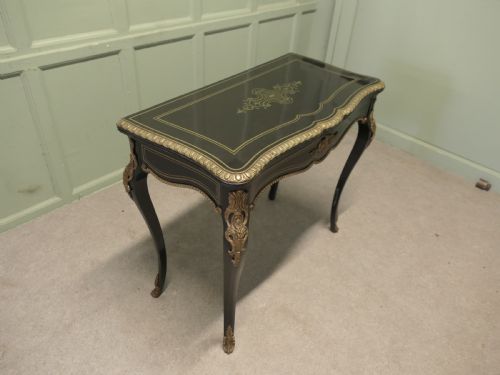
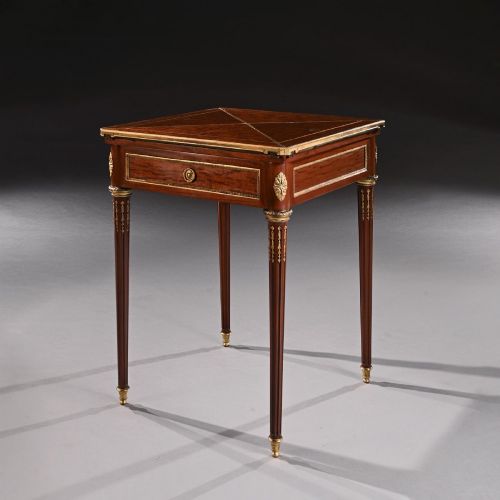
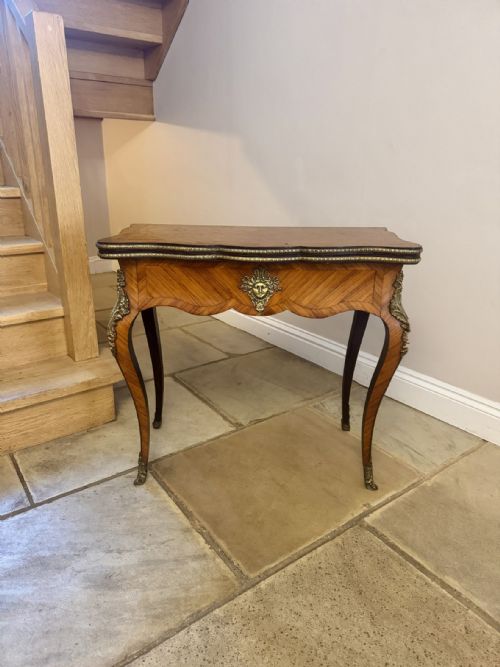
An antique french gaming table serves as a versatile piece of furniture designed for leisure, featuring specialised tops for cards, chess, or roulette that conceal clever folding mechanisms or compartments. These tables originate primarily from the eighteenth and nineteenth centuries, spanning periods from the reign of Louis styles through to the Victorian era.
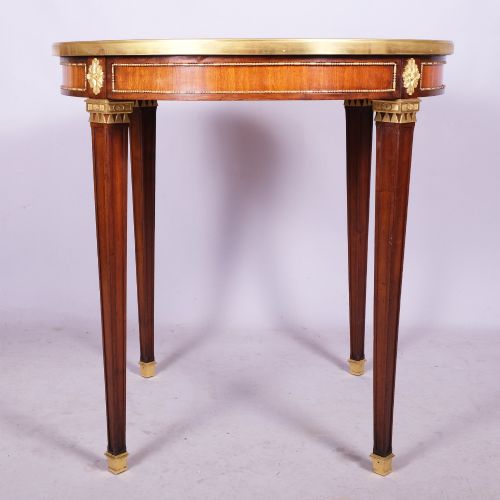
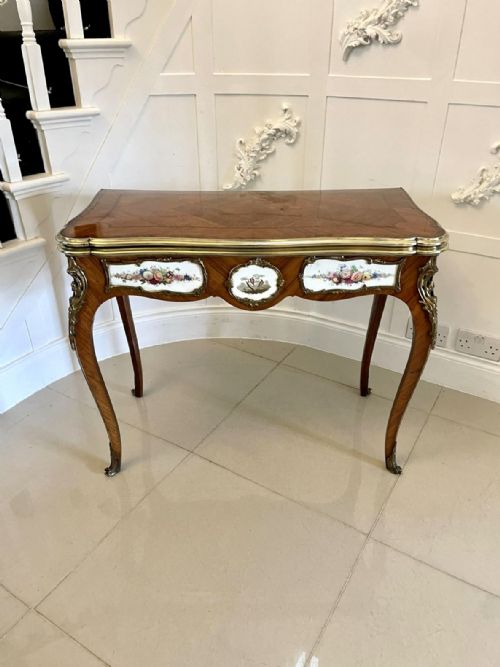
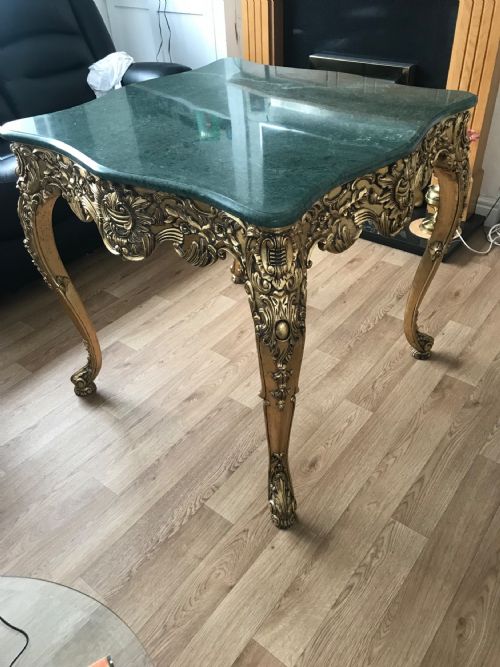
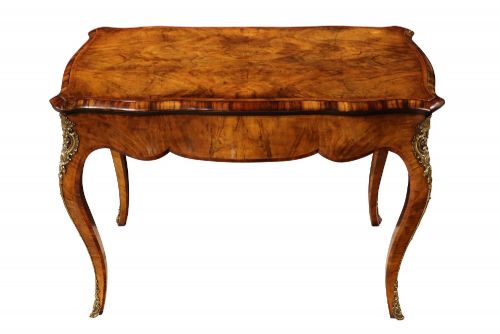
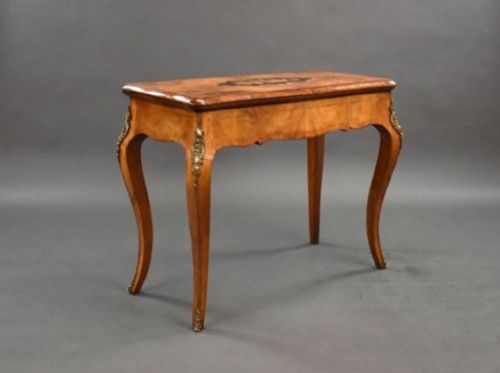
Buyers will encounter various forms on this page, including fold-over card tables, bouillotte tables with marble galleries, and occasional console tables. Woods such as kingwood, walnut, mahogany, and rosewood dominate the selection, often enriched with marquetry or brass inlay.
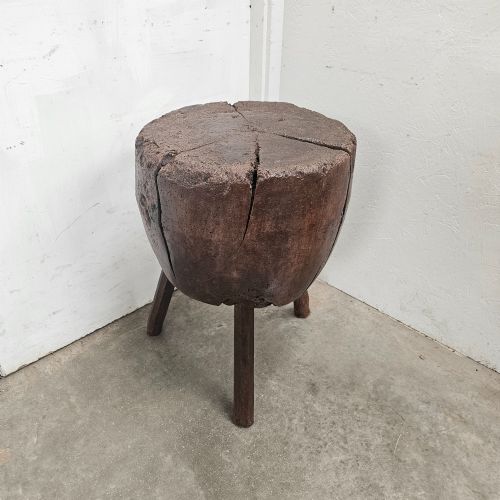
Regional variations range from formal Parisian workshop pieces adorned with ormolu mounts to provincial beech and oak game blocks. Selecting the right example depends on whether the preference leans towards elaborate revival styles or simpler country forms.
How they were made
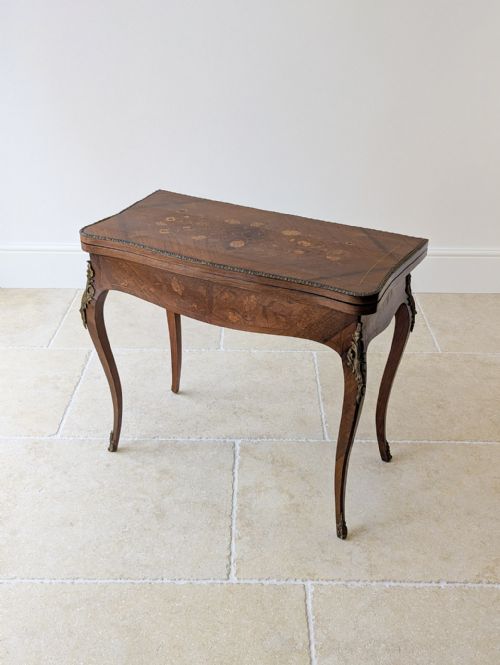
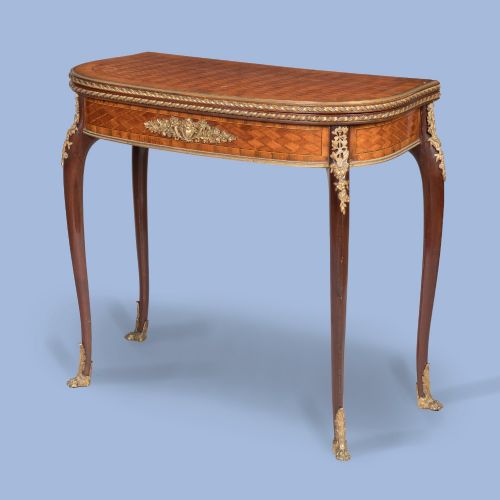
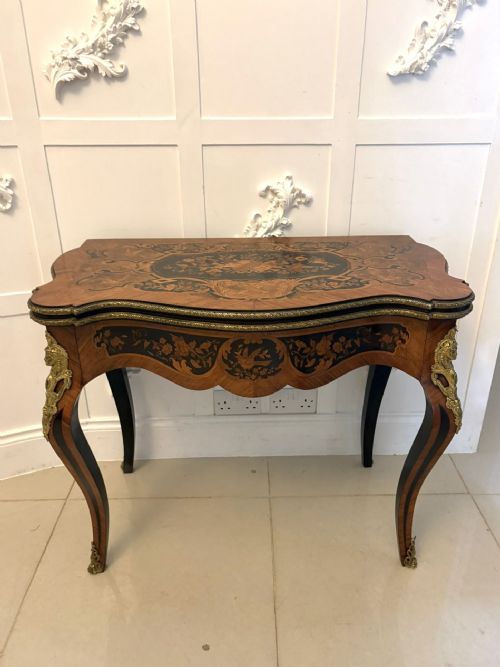
Cabinetmakers utilised dense hardwoods like walnut, mahogany, and kingwood as the structural foundation, frequently applying veneers in intricate floral marquetry or geometric parquetry patterns. Exotic woods and cross-banding defined the surfaces of the finest examples.
Gilt bronze, known as ormolu, was cast and chased to mount corners, legs, and aprons, accentuating the curves of Louis XV and Louis XVI revival designs. Brass inlay added further linear definition to ebonised and tortoiseshell surfaces.
Internal pivoting and folding mechanisms required precise carpentry to ensure the heavy timber tops operated smoothly. Marble inserts formed the heavy, polished circular tops characteristic of bouillotte tables.
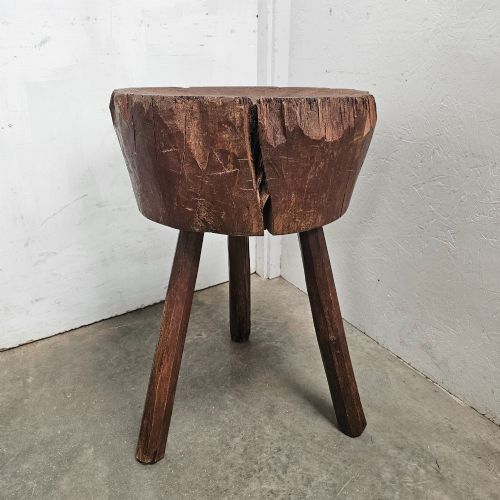
Several listings feature solid oak tree trunk game blocks, reminding us that rural French players required furniture heavy enough to survive vigorous gambling.
What varies in quality
The sophistication of the timber work and the crispness of the marquetry set the baseline for quality, distinguishing simple veneering from meticulous pictorial inlay using multiple exotic woods. Cabinetmakers who matched grain patterns across folding leaves achieved a continuous visual flow when the table opened.
Metalwork quality separates standard production from exhibition pieces, evident in the weight, depth of chisel work, and fire-gilding of ormolu mounts. Heavy, finely chased mounts integrate seamlessly into the timber carcass rather than appearing superficial.
Structural integrity of the folding and pivoting hinges dictates daily usability, where superior joints maintain a flat, level surface under load without sagging at the edges.
Antoine Lampre·G T Morant·François Linke·Joseph-Emmanuel Zwiener·Maison Millet·Edwards & Roberts
The Antique French Gaming Table Glossary
- Ormolu
- Gilded bronze used for decorative mounts and feet on nineteenth-century furniture. It provides a bright metallic contrast against dark timbers like kingwood and rosewood.
- Marquetry
- The art of applying pieces of veneer to a structure to form decorative patterns and pictures. Craftsmen used various coloured woods to create floral and geometric designs.
- Bouillotte table
- A small, round occasional table with a raised brass gallery around the marble top. It was traditionally designed for the French card game of the same name.
- Parquetry
- Geometric mosaic woodwork used for ornamenting floors and furniture surfaces. It relies on symmetrical arrangements of small wooden tiles.
- Cross-banding
- A strip of veneer run along the border of a table top with the grain running perpendicular to the centre panel. This technique frames the primary wood species.
Antique French Gaming Table: Frequently Asked Questions
What is a bouillotte table used for?
A bouillotte table serves as a small accent piece, originally designed for a French card game involving three to five players. The raised brass gallery edge kept counters and cards from sliding onto the floor.
In contemporary interiors, these tables function effectively as bedside stands or small drinks tables, fitting easily beside sofas and armchairs.
How do you open a fold-over card table?
Most antique card tables utilise a pivoting or swing-leg mechanism where the top folds out like a book to reveal a baize-lined playing surface. The rear leg swings outward to support the weight of the open leaf.
Care must be taken to lift the top slightly before pivoting to avoid straining the wooden hinges and internal pivot pins.
What is the difference between Louis XV and Louis XVI styles?
Louis XV style furniture is characterised by asymmetrical curves, cabriole legs, and elaborate rococo floral ornamentation. The overall aesthetic emphasises flowing, organic lines without straight edges.
Louis XVI style shifted toward neoclassical symmetry, featuring straight fluted legs, rectangular proportions, and geometric motifs inspired by classical antiquity.
Are these tables suitable for daily use?
These tables withstand normal daily use provided they receive proper care regarding humidity and temperature. Placing them away from direct heat sources prevents timber shrinkage and veneer lifting.
Using coasters and treating the antique polished wood surfaces gently preserves the original French polish and marquetry details.