

Antique French Faience Ceramic
These antique french faience ceramic pieces bring hand-painted provincial character and tin-glazed earthenware traditions directly to your table.
Antique French Faience Ceramic
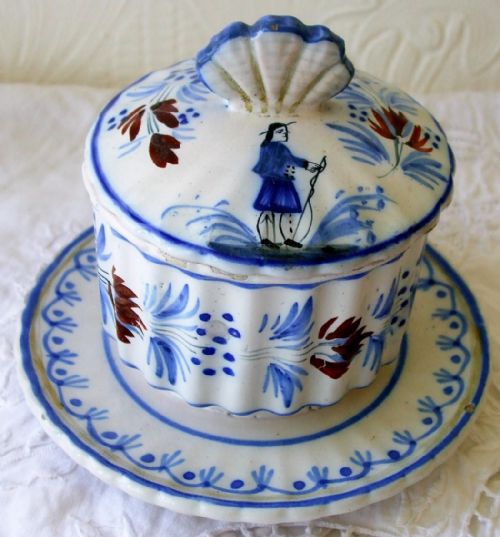
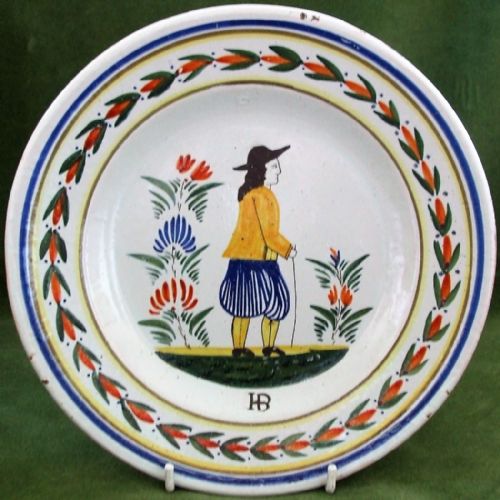
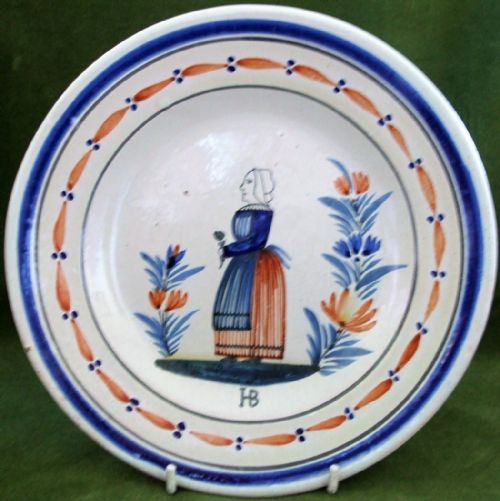
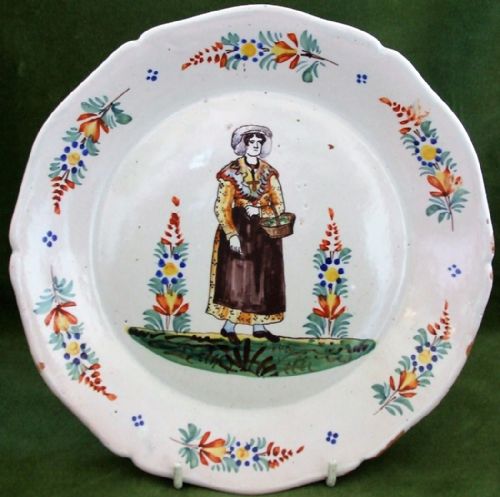
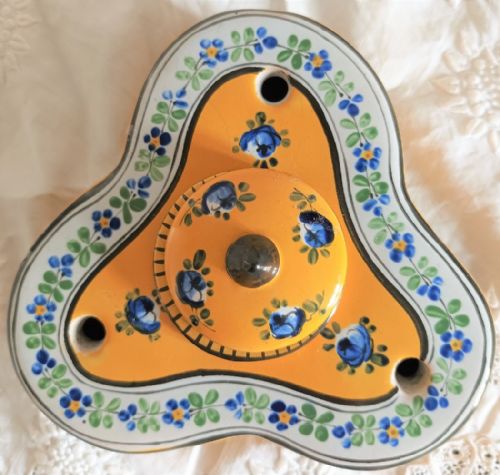
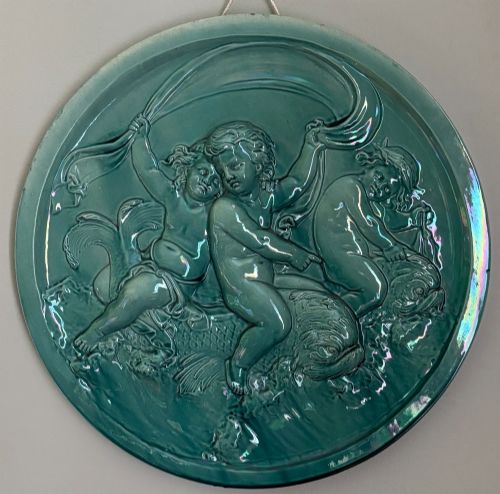
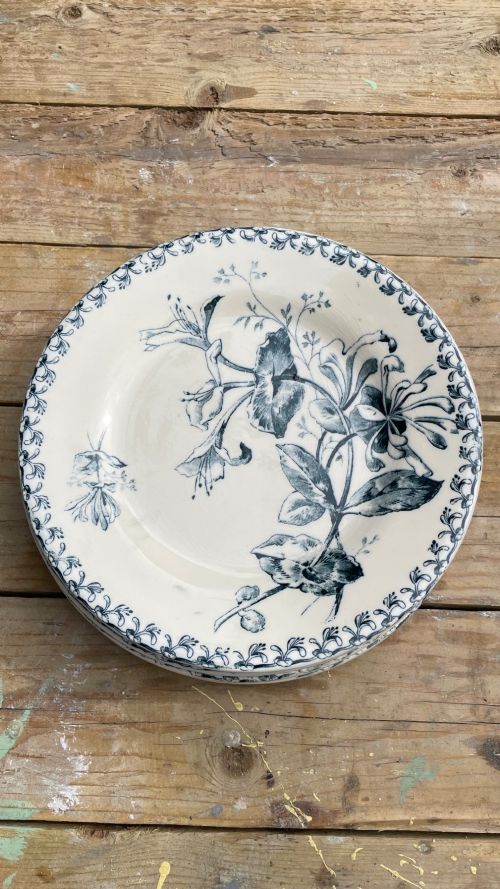
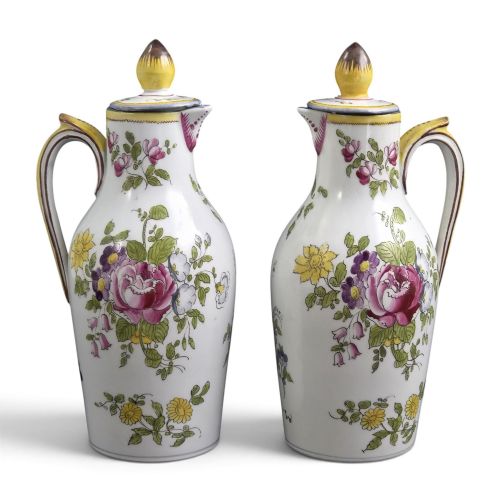
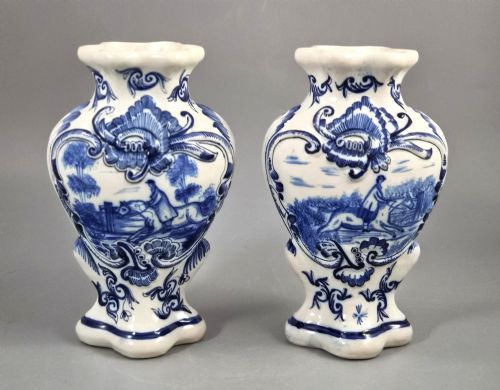
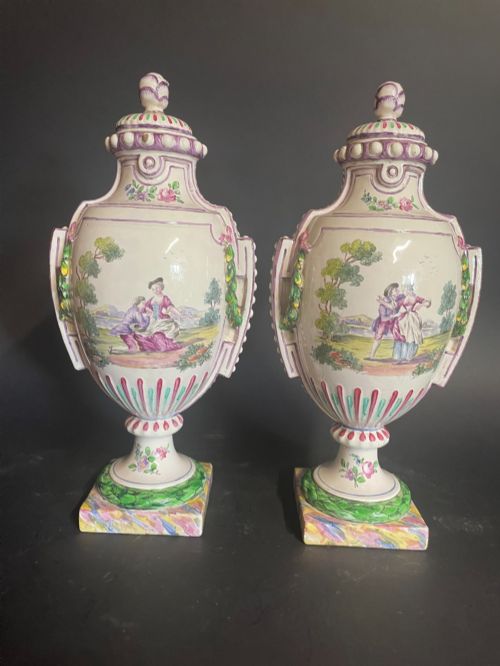
Antique french faience ceramic works encompass plates, dishes, vases, plaques, and inkwells shaped from earthenware bodies. The pieces span regional centres including Quimper, Nevers, Desvres, Marseille, and Gien, reflecting distinct local painting styles.
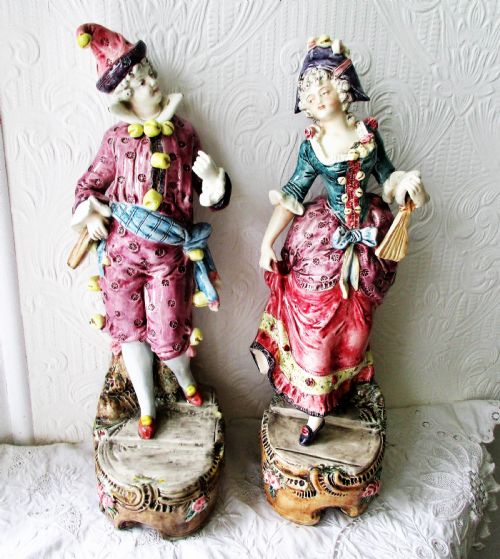
Most examples you encounter on this page date from the nineteenth century, though eighteenth-century tin-glazed dishes and twentieth-century interpretations also appear. Forms range from utilitarian tableware like sauceboats and salt cellars to decorative figurines and urns.
Materials and Technique
Makers formed these objects from earthenware or ceramic bodies, applying an opaque tin glaze that provided a smooth white surface for hand painting. Enamel pigments in blue, yellow, manganese, and turquoise were brushed directly onto the unfired or raw glaze.
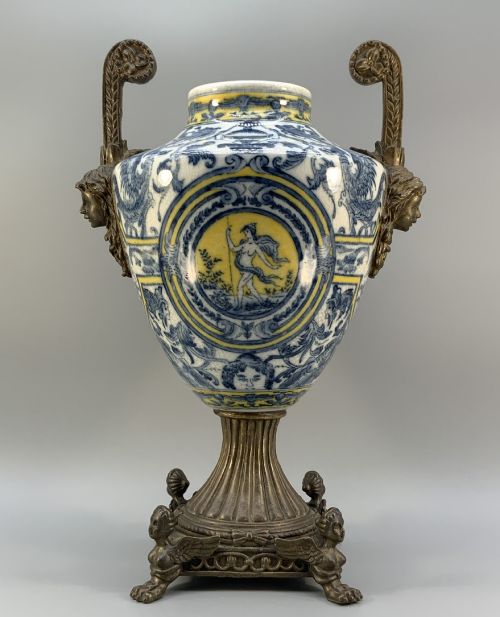
Certain production methods involved mounting the fired ceramic in bronze settings or shaping wares into specific regional moulds like wooden shoe sabots and pedestal cake stands.
Antique French Faience Ceramic Retail Price Guide 2026
Typical asking prices for french faience ceramic among the pieces listed under this phrase on Sellingantiques today, from the lower quarter to the upper quarter. They describe what is for sale here now, not the wider market.
Listings feature eighteenth-century tin-glazed chargers alongside nineteenth-century Quimper plates and twentieth-century earthenware figurines.
Character and Execution
Quality rests in the precision and fluidity of the hand-painted brushwork applied across the tin glaze. Pieces bearing named factory marks or attributed to known workshops demonstrate superior control over pigment shading and floral or figurative detail.
The weight of the earthenware body, the consistency of the glaze coverage, and the sophistication of the modelling distinguish standard regional output from exceptional decorative plaques and large urns.
Antoine Montagnon·Clement Messier·Fourmaintraux-Courquin·Joseph-Gaspard Robert·Veuve Perrin
The Antique French Faience Ceramic Glossary
- Tin Glaze
- A ceramic glaze made opaque by the addition of tin oxide. This surface creates a pale ground suitable for detailed brushwork.
- Vide-Poche
- A small shallow dish designed to hold pocket contents. These items appear frequently in nineteenth-century blue and white ceramics.
- Compote
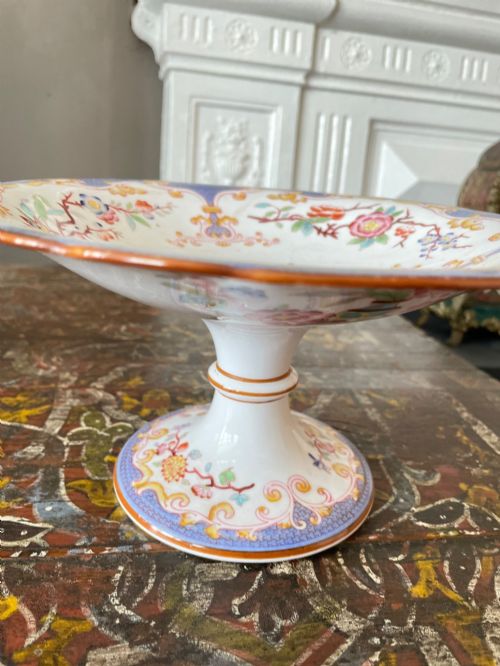
- A raised pedestal dish or bowl used for serving fruit or sweets. They are often rendered in glazed earthenware or porcelain with floral decor.
Antique French Faience Ceramic: Frequently Asked Questions
What is french faience ceramic?
French faience is tin-glazed earthenware decorated with hand-painted mineral pigments. The technique creates an opaque white surface that accepts detailed blue, yellow, and manganese designs.
Potters across various French regions developed distinct painting traditions, from Quimper peasant motifs to the refined floral sprays of Marseille.
How do I identify Quimper pottery?
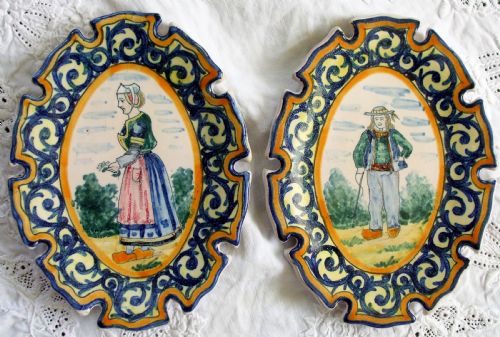
Quimper pieces typically feature characteristic regional figures in traditional Breton costume, often rendered in blue, yellow, and green palettes. Look for painted initials such as HB or HR on the underside.
Common forms include plates, pin trays, double salt cellars, and decorative sabot shoes.
Are these pieces waterproof?
Most antique faience objects are glazed earthenware intended for decorative display or dry service. Using them for holding liquids or plants can expose old ceramic bodies to moisture damage.
Gentle hand washing without harsh detergents helps preserve the integrity of the tin glaze and painted enamel.
How can I date an 18th-century dish?
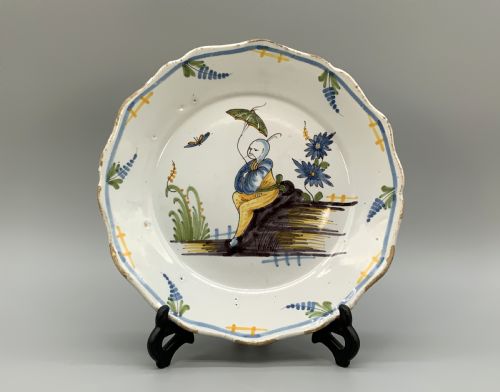
Eighteenth-century pieces often display characteristic manganese and yellow palettes, tin-glazed surfaces with slight glaze pooling, and hand-painted Chinoiserie or armorial motifs. The weight and thickness of the earthenware body differ from later nineteenth-century production.
Examining the foot rim and glaze characteristics provides clear clues regarding the period of manufacture.