
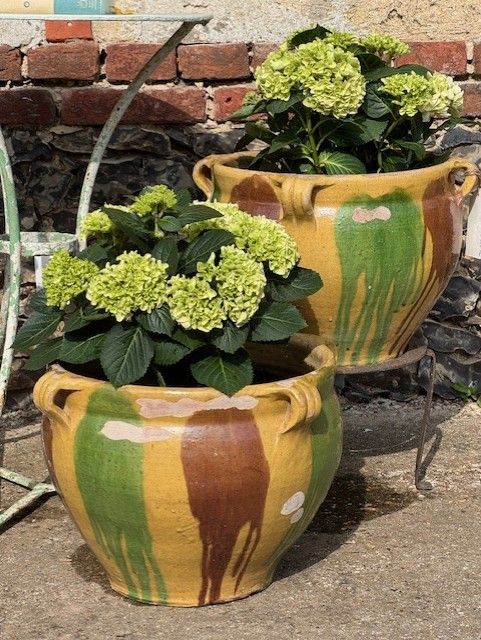


Antique French Earthenware Jar
These antique French earthenware jar selections bring rustic provincial utility and tactile warmth into modern spaces.
Antique French Earthenware Jar
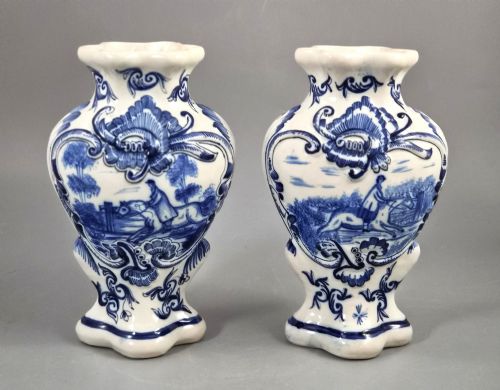
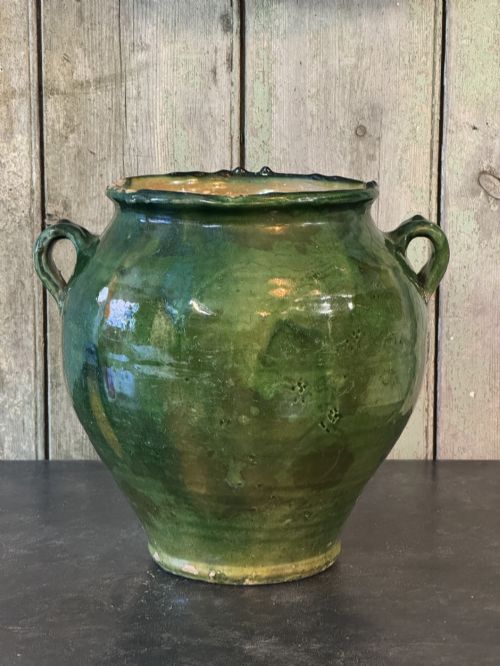
When searching for an antique French earthenware jar, collectors encounter a diverse range of utilitarian and decorative vessels originating from various regional workshops. The pieces span several periods, predominantly featuring 18th century and 19th century items designed for domestic storage, oil preservation, or garden use. Common domestic forms include green confit pots, walnut oil jars, and olive jugs, alongside tin-glazed faience and decorative planters.
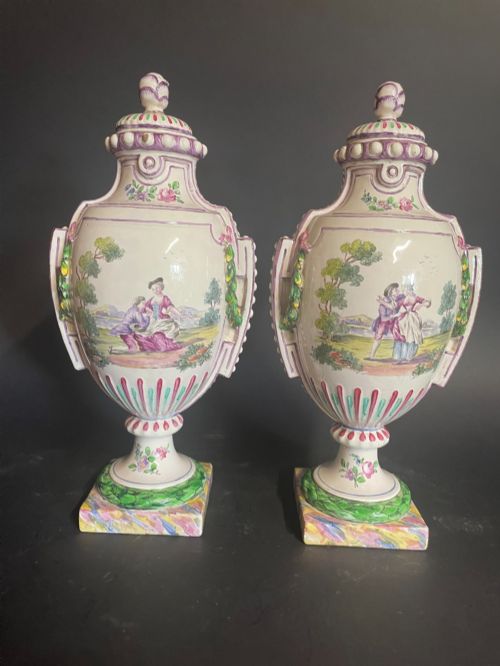
The aesthetic leans heavily toward provincial utility, encompassing French country, Mediterranean country, and rustic European folk styles. Buyers frequently meet pieces finished with rich lead glazes, drip glazes, or hand-painted polychrome decoration. These utilitarian origins mean that many examples show the honest marks of daily use in French homes and orchards.
How they were made
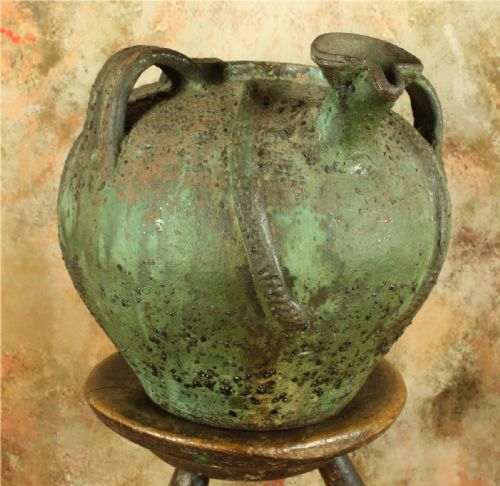
Potters shaped these vessels using local clays, working with earthenware and terracotta bodies that provided sturdy walls for heavy domestic service. The forming techniques combined traditional throwing on the wheel with hand-modelling, particularly for large olive jars, multi-handled oil vessels, and urns. Artisans applied handles and spouts securely to support the heavy loads of oil, water, or preserves they were built to hold.
Surfaces received protective coatings including tin glazes, rich green lead glazes, and characteristic drip glazes that pooled unevenly during the firing process. Faience items required a tin-opacified glaze layer to accept hand-painted pigments in blue and white or polychrome palettes before a final kiln firing. The resulting finishes varied from glossy monochromatic greens to intricate painted designs characteristic of specific regional potteries.
Listings feature pieces spanning from the 18th century through the 20th century, encompassing earthenware, terracotta, and faience materials.
What varies in quality
Artistic ambition differentiates everyday storage vessels from dedicated display items like faience vases and urns with lids. Pieces bearing clear maker attributions or sophisticated hand-painted polychrome details command attention for their decorative sophistication. Conversely, the charm of a rustic olive jar or confit pot rests entirely in its unpretentious silhouette and weather-softened surface texture.
Fourmaintraux-Courquin·Sceaux Faience
The Antique French Earthenware Jar Glossary
- Confit Pot
- A traditional French earthenware pot featuring one or two handles, historically used for preserving meat and other foodstuffs. These vessels typically display a glazed upper section and unglazed lower body.
- Faience
- Tin-glazed earthenware produced in France, often featuring hand-painted botanical or figurative designs in blue and white or polychrome palettes. The tin glaze provides a smooth, opaque white background for the pigments.
- Terracotta
- Fired unglazed or slip-glazed clay of a brownish-red colour, commonly utilised for large olive jars, garden planters, and amphora vessels. It offers a porous, robust body suitable for both indoor and outdoor placement.
- Tin-Glazed Earthenware
- Pottery covered with a lead glaze made opaque by the addition of tin oxide. This technique allows for decorative painting directly onto the unfired glaze surface.
Antique French Earthenware Jar: Frequently Asked Questions
What were antique French earthenware jars used for?
These vessels served practical functions in provincial French households, primarily for storing olive oil, walnut oil, confit meats, and dry goods. Larger jars and amphorae were utilised in gardens and courtyards for planting or water collection.
Over time, their robust construction made them indispensable for daily agrarian life. Today, their functional origins lend an authentic rustic character to interior decoration.
How do I care for a glazed terracotta jar?
Keep glazed earthenware and terracotta pieces indoors during freezing weather to prevent moisture trapped in the porous clay body from expanding and cracking the glaze.
Clean surfaces gently with a soft, damp cloth and avoid harsh chemical detergents that might harm historic glaze finishes.
How do I distinguish 18th century jars from later pieces?
Eighteenth-century examples often exhibit heavier, hand-thrown clay bodies with distinctive potting irregularities and early tin-glaze formulations. Tool marks and utilitarian wear patterns provide key clues to their age.
Nineteenth and twentieth-century pieces frequently show more standardised production methods, brighter lead glazes, or distinct regional styles like French provincial drip-glazing.
Can these antique jars be used outdoors?
Many terracotta and earthenware jars were originally designed for garden or agricultural use, making them suitable for outdoor display in mild climates. However, historic pieces with delicate tin glazes or fine faience decoration require indoor placement to protect the surface.
Protecting unglazed terracotta from prolonged frost prevents structural damage to the clay.