

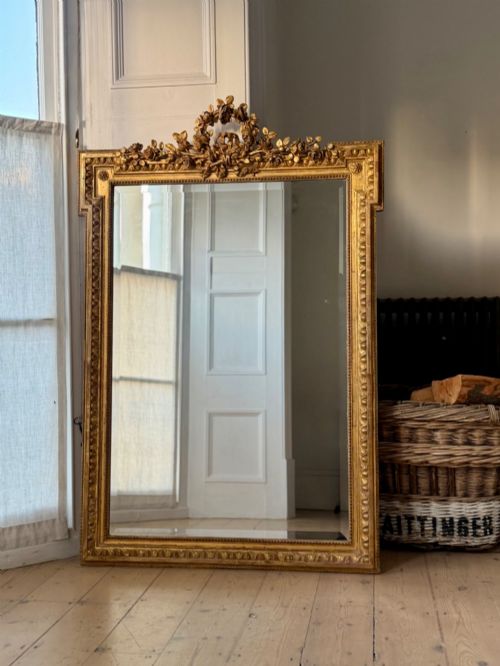
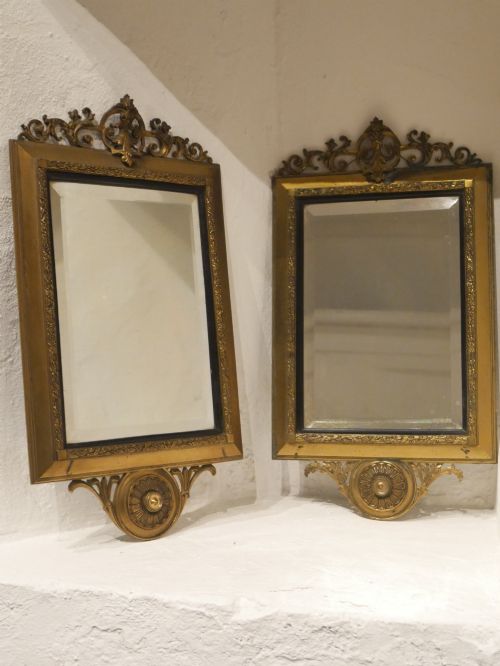
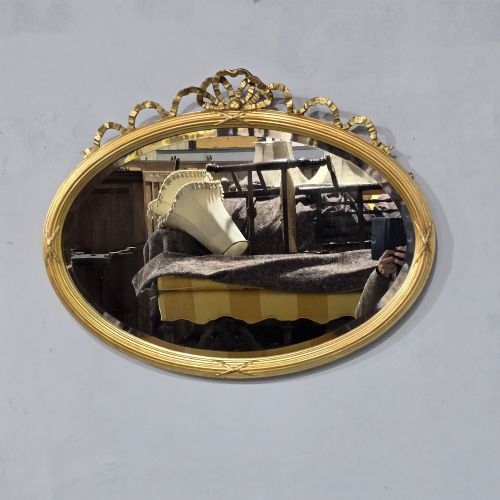
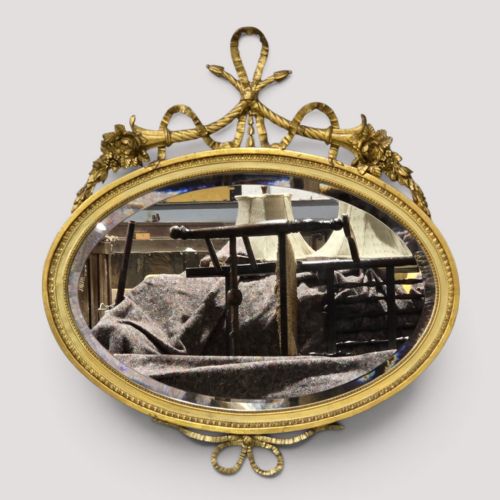
Antique French Bevelled Mirror
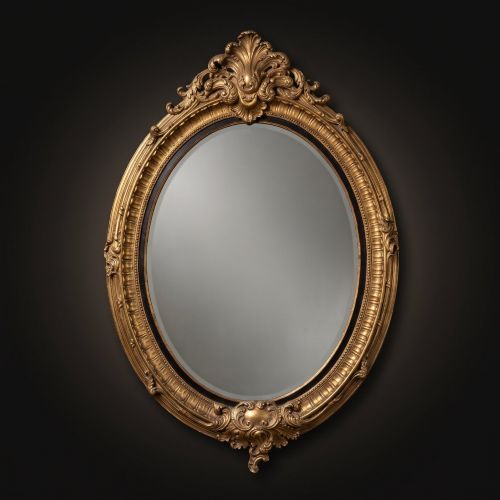
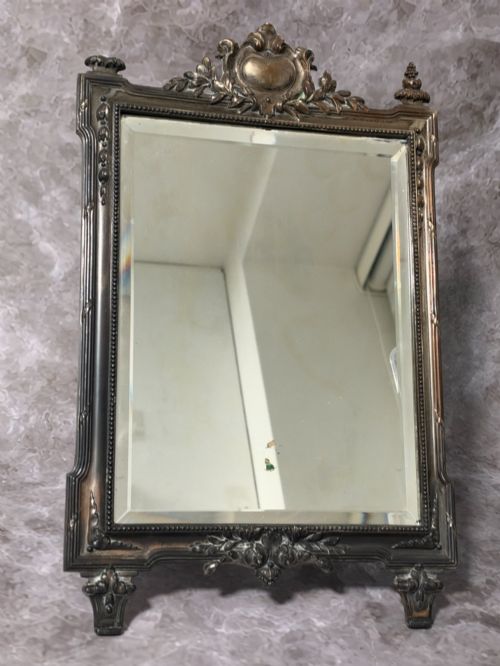
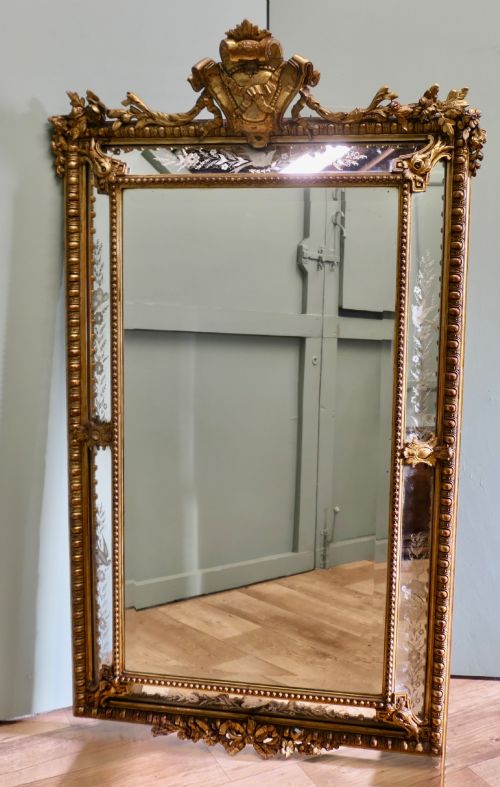
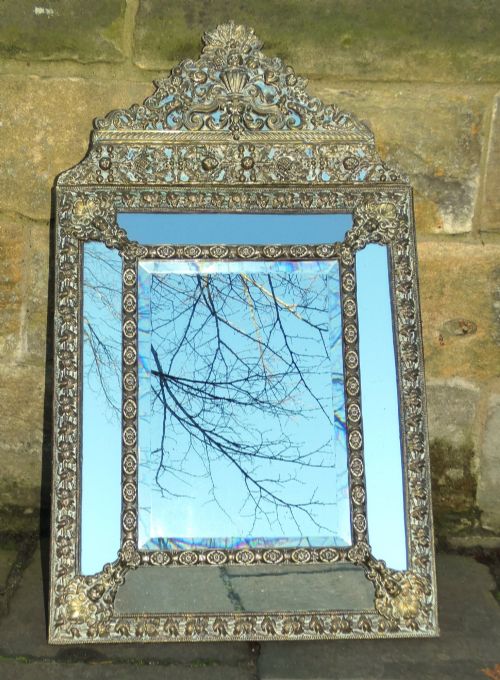
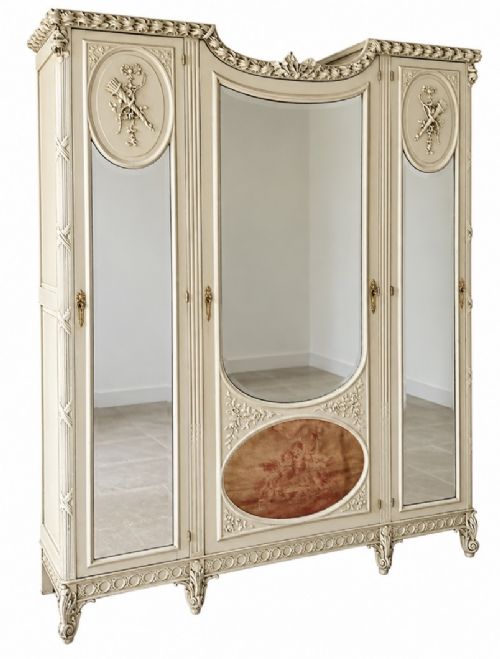
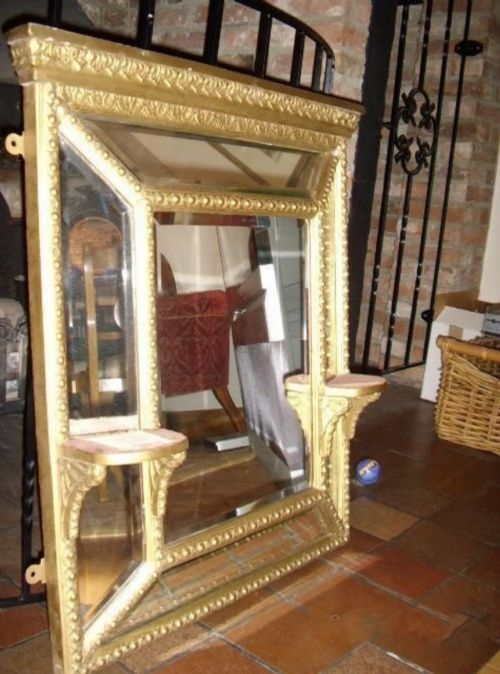
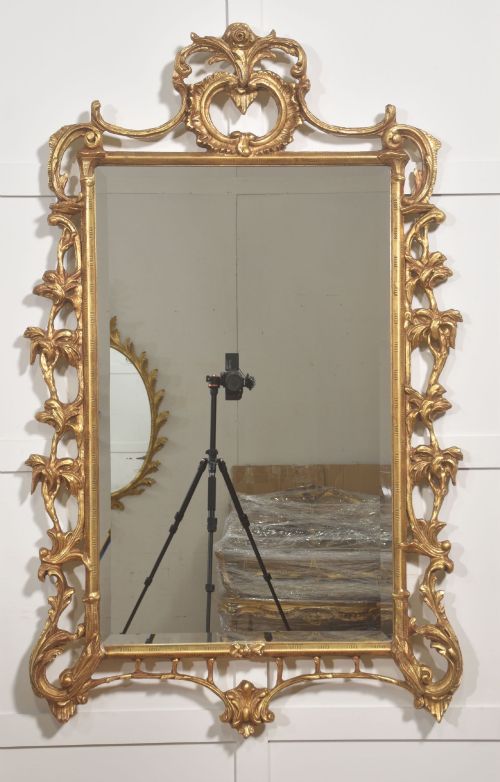
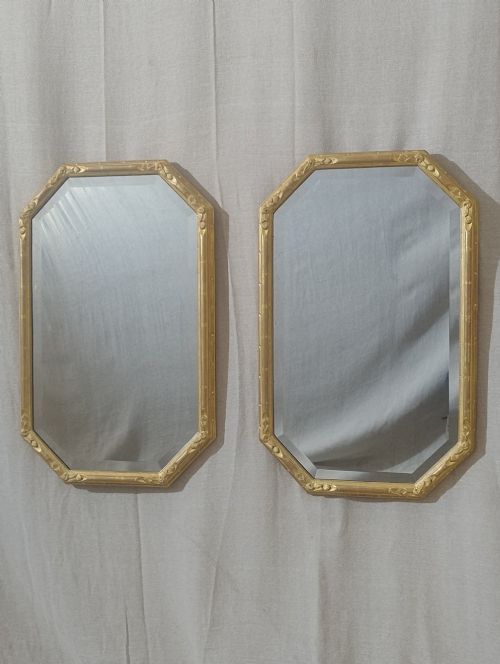
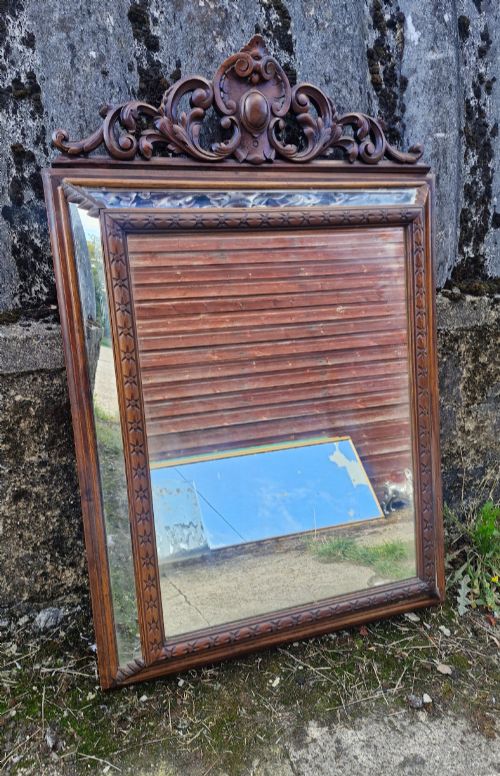
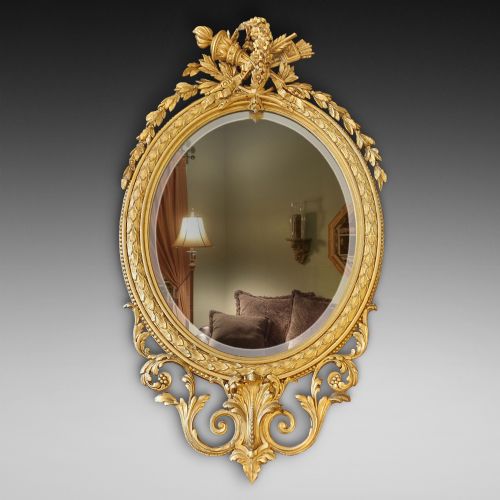
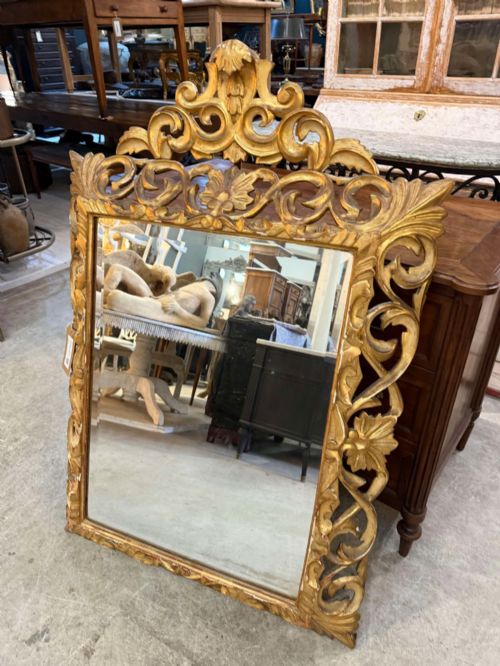
An antique french bevelled mirror brings depth and historic light to a room through heavy giltwood frames and angled glass plates.
Antique French Bevelled Mirror
An antique french bevelled mirror encompasses wall hangings, dressing table pieces, and tall floor versions originating from the nineteenth and early twentieth centuries. Buyers search for these items to introduce decorative architectural presence and reflective light into domestic spaces.
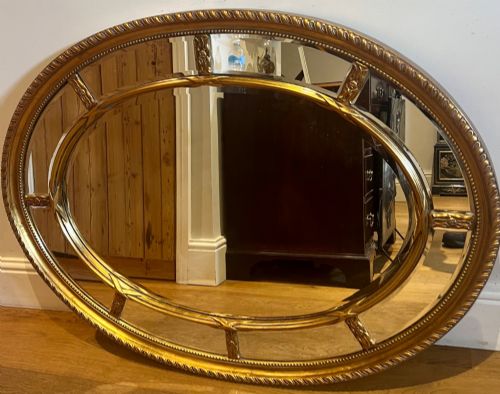
The selections span distinct stylistic revivals, notably Rococo Revival, Louis XVI, and Art Deco, alongside substantial cushion frames and margin mirrors. Most examples combine carved wooden carcasses with gilt or painted finishes.
Forms range from compact brass table mirrors to large armoires fitted with triple glass plates. Nineteenth-century pieces dominate the selection, often presenting ornate floral or scroll carving around the perimeter.
Materials and construction
Makers constructed the structural frames using timber such as oak, mahogany, and carved softwoods, frequently applying gesso to build up intricate relief ornament before gilding. Water gilding and gold leaf finish many of the grander wall mirrors, providing a luminous metallic surface.
Glass plates received a sloped edge cut by hand or early machinery, creating the characteristic bevel that catches and refracts light differently from flat glass. Brass and other metals appear in tandem with wooden elements, particularly on cushion frames and smaller table stands.
Antique French Bevelled Mirror Retail Price Guide 2026
Typical asking prices for french bevelled mirror among the pieces listed under this phrase on Sellingantiques today, from the lower quarter to the upper quarter. They describe what is for sale here now, not the wider market.
Rams heads peer from the corners of Hollywood Regency brass frames, watching over rooms with stubborn, golden dignity.
Judging the work
Quality rests in the depth and sharpness of the carved detail on the wooden or gesso frame, where crisp, undercut foliage distinguishes superior artisan work from softer moulding. The integrity of the original mercury or silvered mirror plate, and how it sits within the rebate, indicates careful original assembly.
The application of gold leaf or water gilding shows varying levels of hand skill, with finer examples retaining subtle tool marks and layered grounds that age with a warm patina rather than flat uniformity.
The Antique French Bevelled Mirror Glossary
- Bevel
- The angled edge ground along the perimeter of a mirror plate. This slope refracts light inwards and adds visual depth to the glass.
- Gesso
- A plaster-like mixture applied to wooden frames as a base for carving and gilding. It allows for sharp, intricate ornamental relief.
- Cushion mirror
- A frame profile that swells outward like a pillow towards the outer edge. This form creates strong shadows and reflects light from multiple angles.
- Margin mirror
- A glass configuration featuring a central plate surrounded by smaller border panes. These narrow outer panels are often bevelled individually.
- Water gilding
- A traditional technique using liquid size to adhere thin gold leaf to a prepared gesso surface. It permits high burnishing to a brilliant shine.
Antique French Bevelled Mirror: Frequently Asked Questions
How do I hang a heavy giltwood wall mirror safely?
Heavy antique frames require substantial wall fixings anchored directly into masonry or structural studs rather than standard plasterboard.
Professional mirror hangers often utilise mirror plates or heavy-duty french cleats to distribute the considerable weight evenly across the wall.
What is the difference between a cushion frame and a flat frame?
Cushion frames curve outward in a convex profile, wrapping the reflection toward the viewer and catching light from broader room angles.
Flat frames maintain a planar surface parallel to the wall, focusing attention on the carved ornamentation surrounding the glass.
Are bevelled edges a sign of age?
Bevelled glass became common in the nineteenth century, though hand-bevelled edges differ from mechanical twentieth-century production.
Hand-cut bevels often show slight irregularities in width and subtle distortion within the slope itself.
How should I clean antique mirror glass and gilt frames?
Dust gilt frames gently with a soft, dry brush to avoid damaging delicate gesso and gold leaf surfaces.
Use a minimal amount of distilled water on a microfiber cloth for the glass, keeping moisture away from the wooden joints and silver backing.