

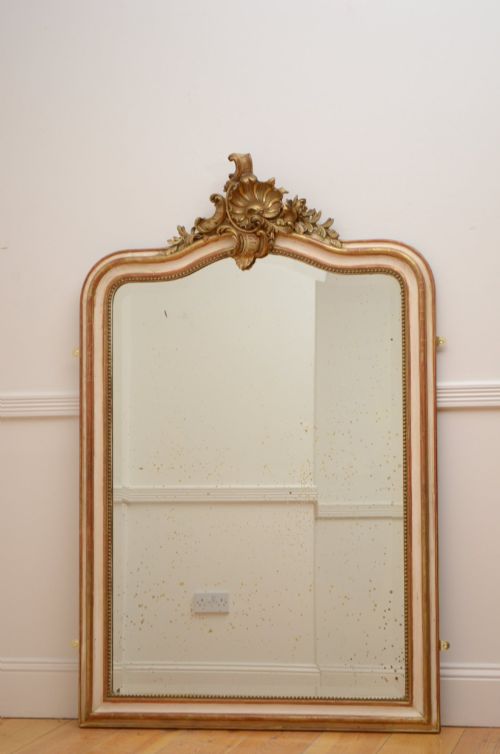


Second Empire French Mirror
A second empire french mirror brings gilded grandeur and striking architectural presence to any interior.
Second Empire French Mirror
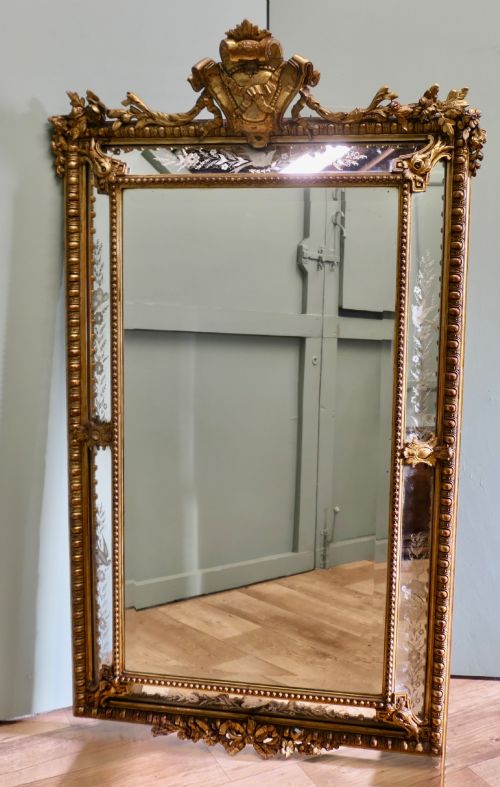
When searching for a second empire french mirror, you encounter imposing 19th-century wall mirrors and pier mirrors that reflect the opulent aesthetic of the Napoleon III era. These pieces frequently feature substantial proportions, with cushion frames and giltwood finishes designed to command attention in a formal room.
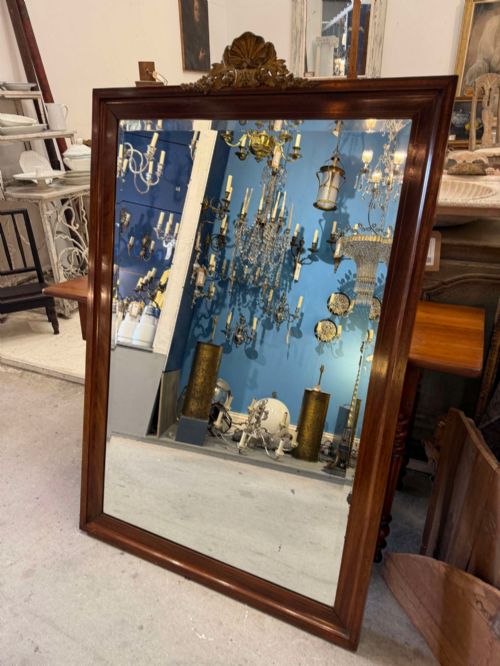
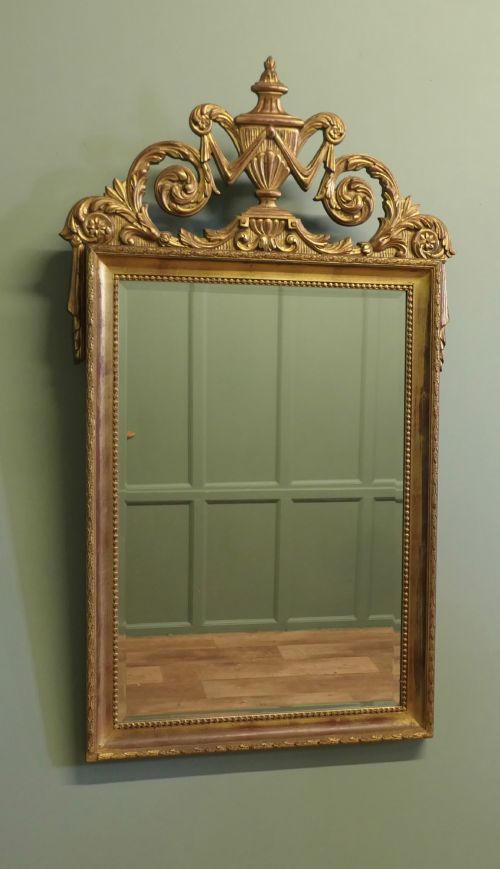
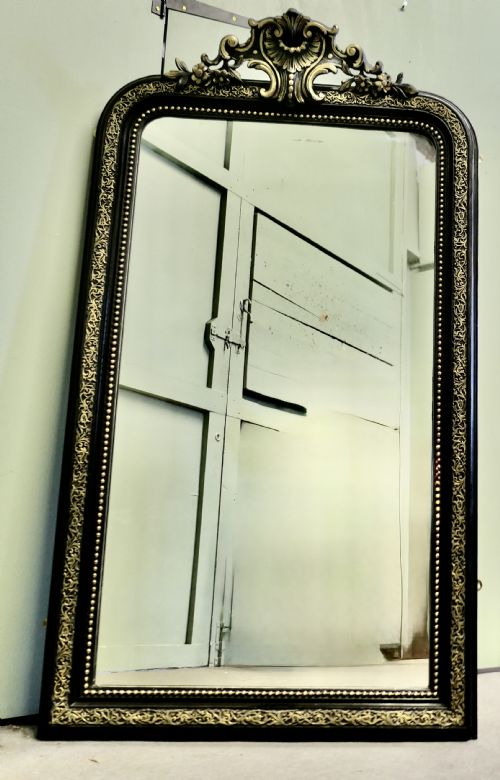
The versions most commonly met on this page are wall mirrors and cushion mirrors dating from the 19th century. They combine rich materials like gold leaf and gesso with bold silhouettes, often incorporating ormolu cresting or dark mahogany structures.
How they were made
Craftsmen built the frames using solid timbers such as mahogany, applying layered gesso to create high-relief ornamentation before finishing the surfaces in gold leaf or black and gold paint. Ormolu and gilt bronze mounts were cast and chased to add elaborate cresting and decorative accents.
Mirrored glass plates of the period were set into cushion frames or tall pier mirror structures, sometimes featuring delicate etching across the glass surface to enhance the decorative scheme.
Second Empire French Mirror Retail Price Guide 2026
Typical asking prices for second empire french mirror among the pieces listed under this phrase on Sellingantiques today, from the lower quarter to the upper quarter. They describe what is for sale here now, not the wider market.
Listings for a second empire french mirror span the 19th century, featuring materials such as giltwood, gesso, mahogany, and ormolu.
What varies in quality
The distinction between tiers of quality rests upon the crispness of the gesso moulding and the depth of the gilding. Finer examples display masterly hand-chiselling on the bronze and ormolu mounts, whereas lesser pieces rely on simpler wooden profiles.
The integrity of the original glass and the weight of the timber frame also dictate the calibre of the piece, with heavier mahogany and intact gold leaf marking out the more substantial items.
The Second Empire French Mirror Glossary
- Giltwood
- Wood that has been coated with gold leaf or gold paint. This finish defines the reflective, luminous appearance characteristic of many 19th-century French mirrors.
- Ormolu
- Gilded bronze mounted to furniture and frames. This technique provides sharp, metallic detailing on the cresting of the mirrors.
- Cushion mirror
- A mirror featuring a convex frame profile that slopes outward or inward. It creates a pronounced, sculptural border around the glass plate.
- Pier mirror
- A tall mirror designed to hang on the wall space between two windows. These pieces often feature extended vertical proportions.
Second Empire French Mirror: Frequently Asked Questions
Where should I hang a second empire french mirror?
These large mirrors suit principal reception rooms or above a principal fireplace where their scale can be fully appreciated.
Ensure the wall structure can support the heavy timber and bronze weight of a 19th-century frame.
How do I clean a gilded frame?
Dust the giltwood gently with a soft, dry brush to protect the delicate gold leaf layer.
Avoid using liquid cleaners or abrasive cloths that can strip the historic finish from the gesso.
Are these mirrors original 19th-century pieces?
The listings consist of items originating from the 19th century, specifically associated with the Napoleon III and Second Empire periods.
Materials such as gesso, hand-applied gold leaf, and ormolu are consistent with genuine manufacturing methods of the era.
What is a cushion mirror?
A cushion mirror has a rounded, swelling frame profile that slopes toward the glass plate.
This distinct shape adds optical depth and catches candlelight effectively from multiple angles.