


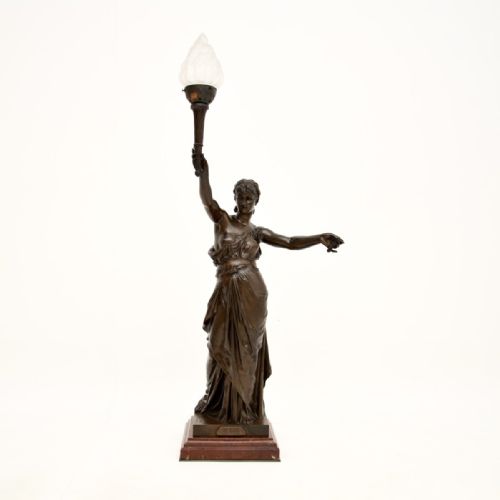


Antique French Allegorical Statues
Antique French allegorical statues embody classical and natural personifications through bronze and porcelain figures dating from the nineteenth century.
Antique French Allegorical Statues
Antique French allegorical statues represent abstract concepts such as peace, seasons, and natural elements through figurative sculpture. When exploring antique French allegorical statues, buyers encounter physical manifestations of ideas like spring, harvest, and dawn portrayed by human and mythological forms.
The selections available span multiple decades of the nineteenth century, extending into the early twentieth century. Works appear predominantly as bronze sculptures, spelter figures, and porcelain objects.
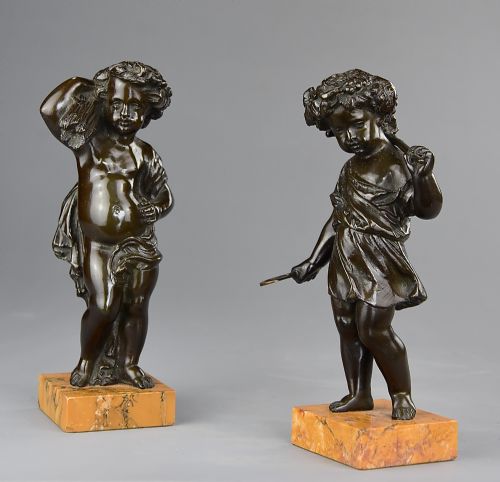
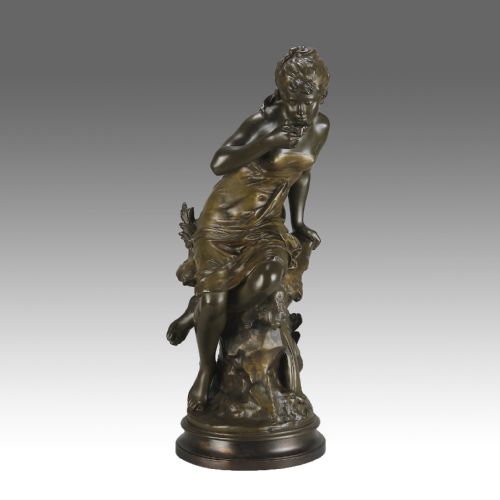
Formats vary from single cabinet figures and table lamps to balanced pairs of putti and dancers. Master modellers like Auguste Moreau and Emile Louis Picault shape much of the output seen in these pieces.
How they were made
Foundry workers utilised traditional lost-wax or sand-casting techniques to shape molten bronze into complex allegorical forms. Spelter served as a more accessible alternative metal for casting decorative figures during the period.
Artisans applied various chemical patinas to bronze surfaces to create tonal depth, ranging from warm golden browns to deep verdigris. Porcelain pieces received detailed enamel decoration to articulate garments and natural motifs.
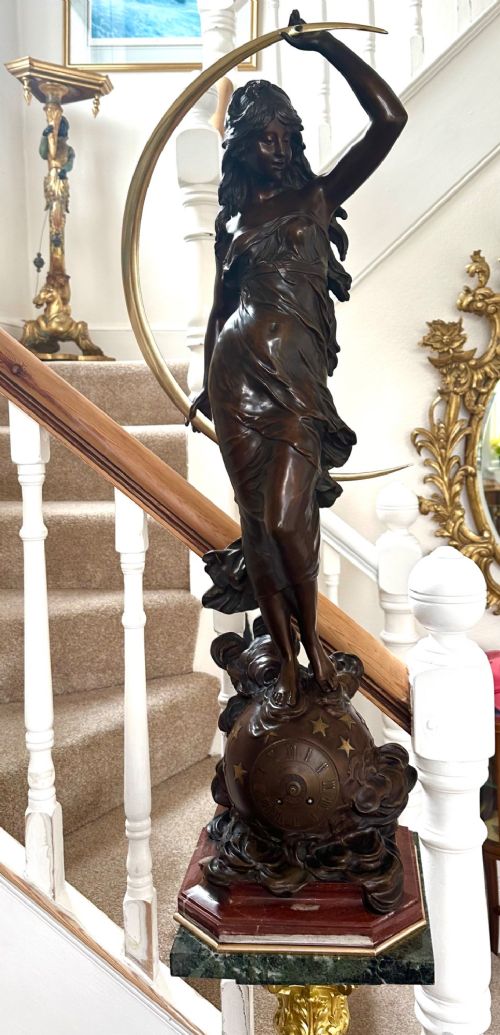
Watch for celestial personifications where Aurora and Selene chase away the dark across miniature bronze chariots.
What varies in quality
Sculptural definition in the cast determines the sharpness of facial expressions, drapery folds, and anatomical details. Finer examples retain crisp chiselling and deliberate chasing applied after the metal leaves the sand or wax mould.
The choice of base materials and patination influences the overall presence of the object. High-grade bronze castings paired with substantial marble plinths demonstrate greater material permanence than lighter spelter alternatives.
August Moreau·Emile Louis Picault·Mathurin Moreau·Ernst Barrias·Barbedienne·Samson of Paris
The Antique French Allegorical Statues Glossary
- Allegory
- The representation of abstract ideas through human figures or symbolic narratives. This artistic method allows sculptors to depict virtues, seasons, or natural forces in tangible form.
- Spelter
- A zinc alloy used as a cost-effective substitute for bronze in nineteenth-century manufacturing. It accepts patination well to mimic bronze finishes.
- Putto
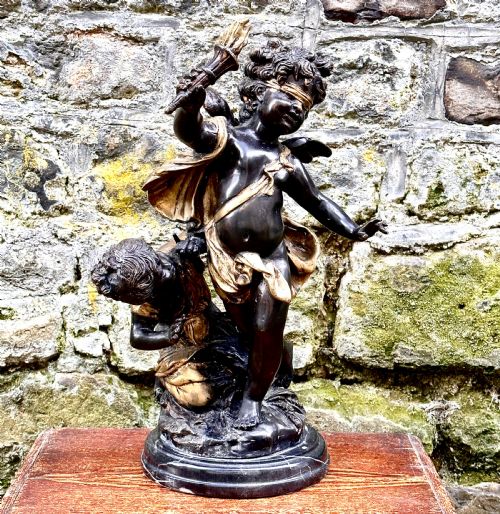
- A chubby male child figure, often winged, frequently deployed in classical compositions. Pairs of these figures often symbolise harvest or seasonal themes.
- Patina
- The surface coloration and sheen developed naturally over time or applied via chemical treatments. It protects the underlying metal while enhancing visual contrast.
Antique French Allegorical Statues: Frequently Asked Questions
What subjects do these statues represent?
These figures portray personifications of abstract virtues, natural phenomena, and seasonal shifts. Common representations include figures symbolising peace, the harvest, dawn, and classical deities.
Makers drew inspiration from mythology and allegorical themes to create decorative sculptures that served both aesthetic and intellectual functions in nineteenth-century interiors.
How do I distinguish bronze from spelter?
Bronze objects feel heavier, display greater tensile strength, and hold sharper chisel marks across fine details. Spelter is softer, lighter, and more prone to surface wear or micro-fracturing.
Examining the underside or areas of natural rubbing often reveals the paler grey metal beneath a worn spelter patina.
Where were these statues placed in a home?
Owners displayed these decorative sculptures on mantelpieces, pedestals, and library tables as focal points of nineteenth-century interior decoration. Some examples incorporated functional elements such as lamp bases or clock housings.
Their scale suited domestic reception rooms and studies, where visitors could examine the narrative details up close.
How should I care for antique bronze figures?
Dust the surface regularly with a soft, dry brush to prevent particulate accumulation within the recesses of the casting. Avoid liquid cleaners or abrasive polishes that strip the original patina.
Stable indoor humidity levels protect marble bases from moisture absorption and keep metal surfaces from oxidising unevenly.