

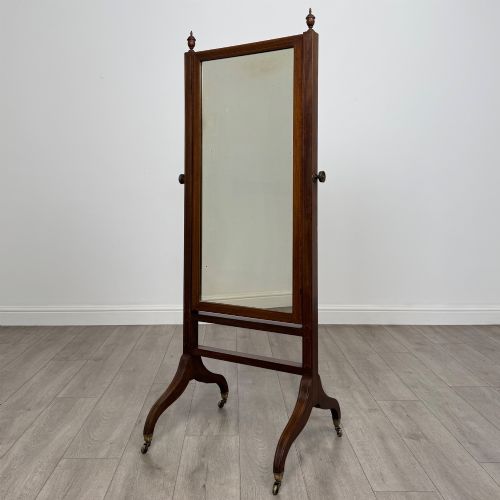
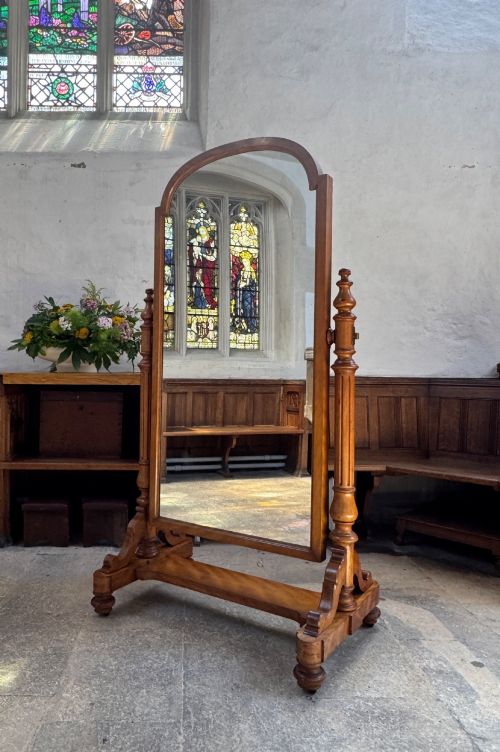
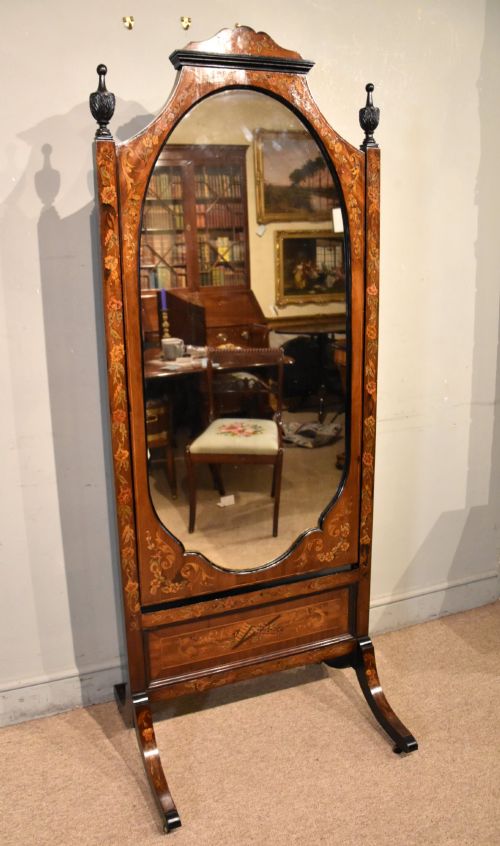
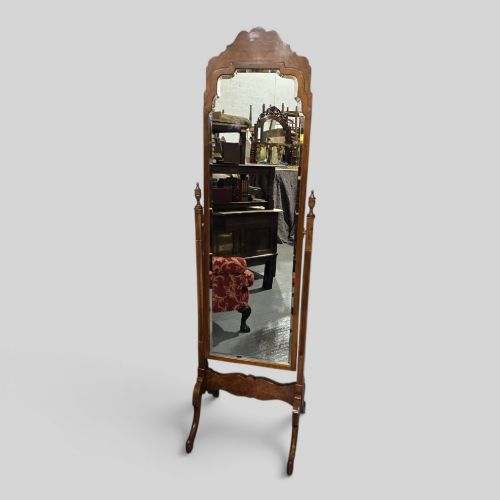
Antique Freestanding Floor Mirror
An antique freestanding floor mirror brings presence to a room, offering a full-length reflection framed in timber or giltwood.
Antique Freestanding Floor Mirror
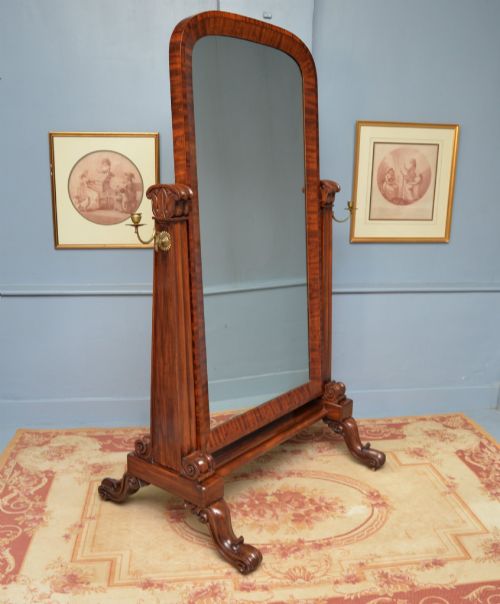
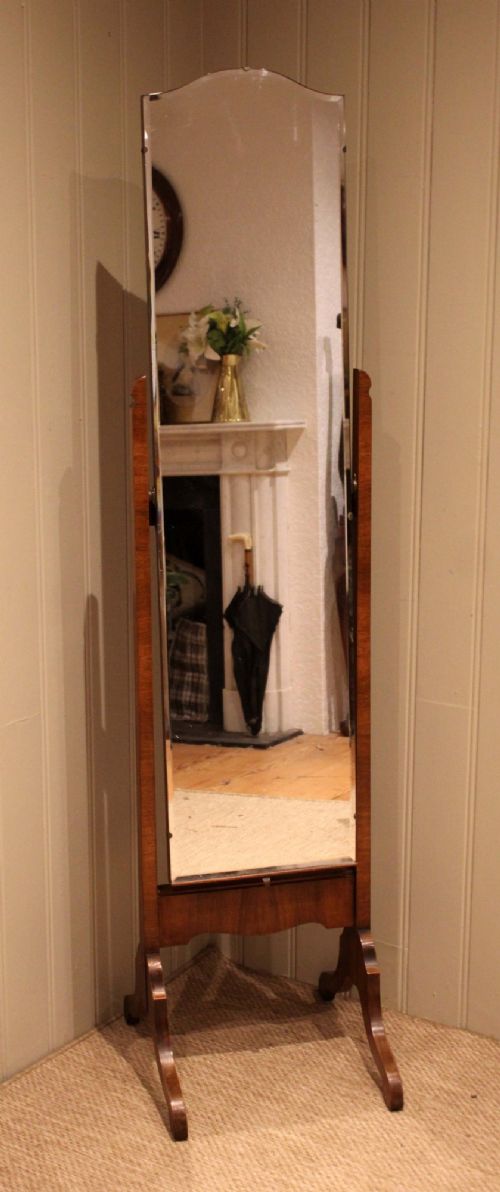
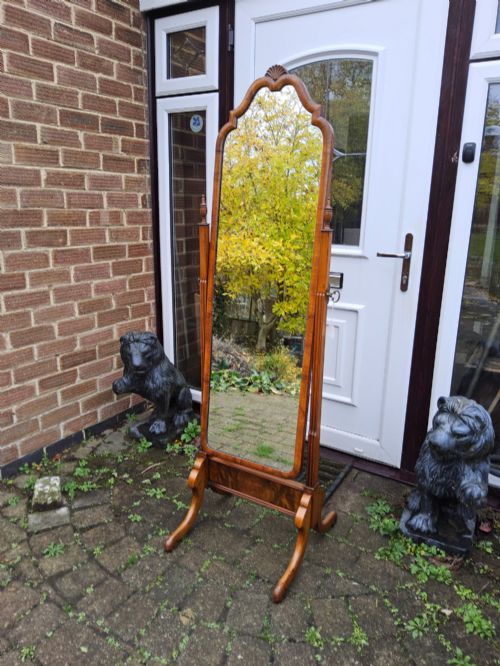
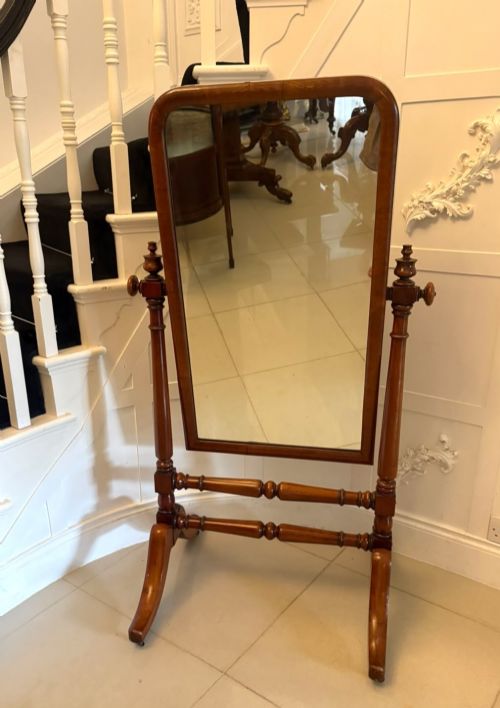
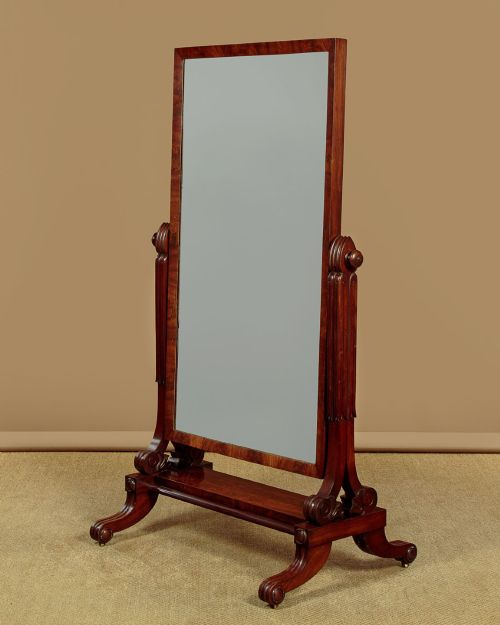
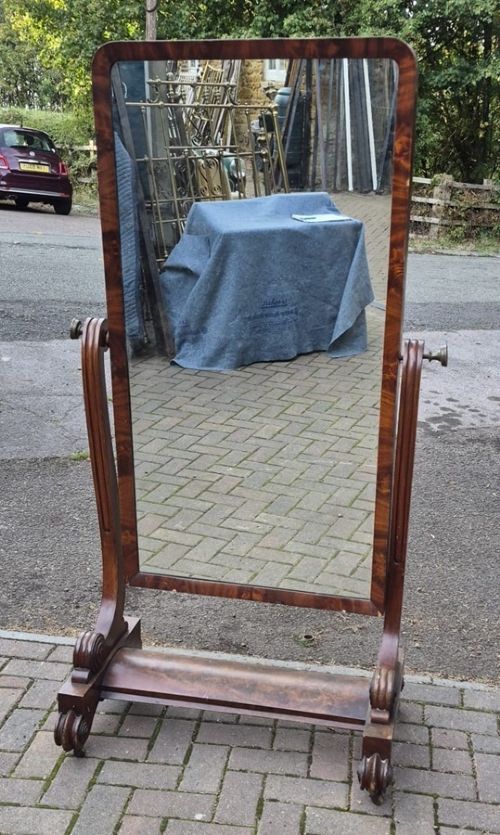
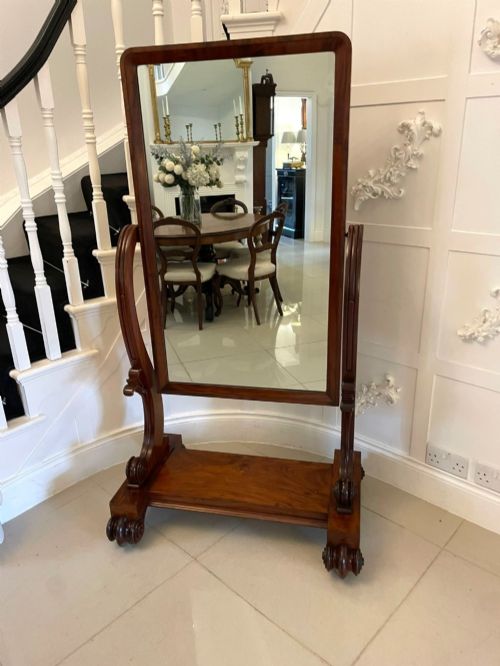
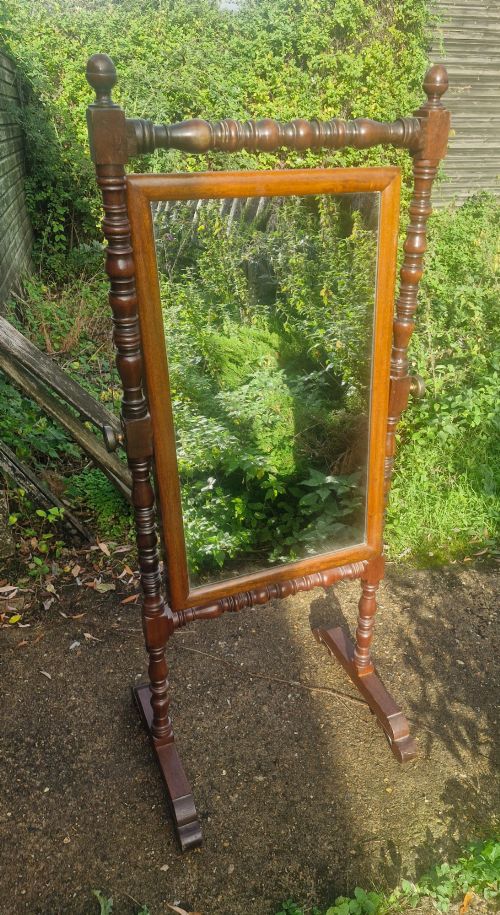
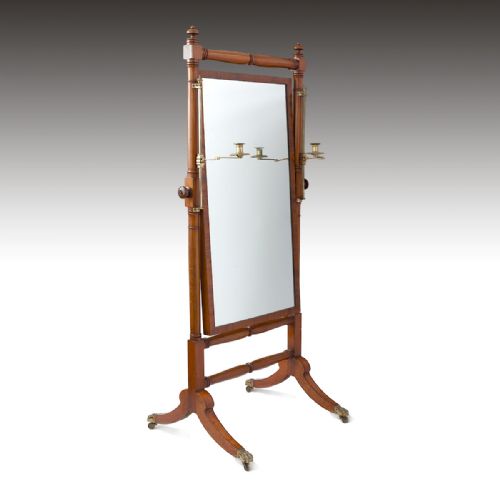
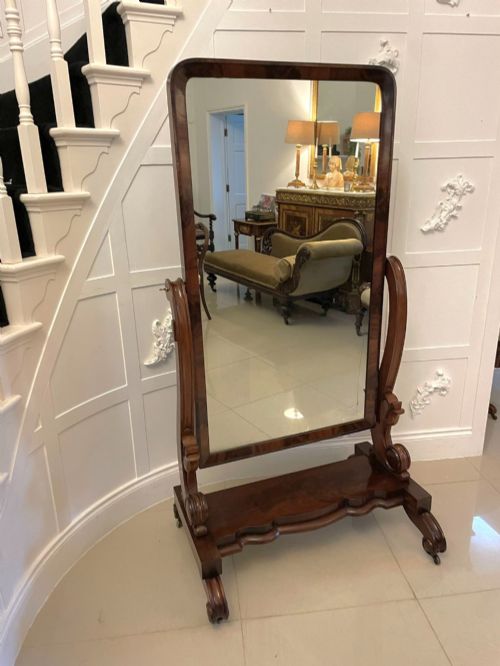
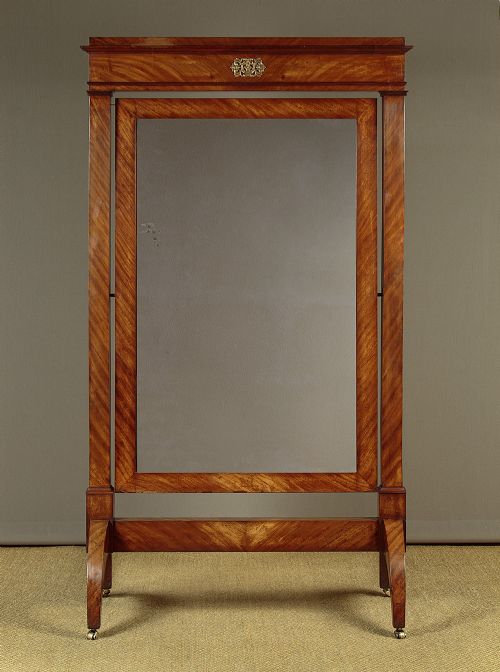
An antique freestanding floor mirror most commonly appears as a cheval mirror, designed to swing within a fixed upright frame supported by sturdy legs. These pieces originate from periods such as the Regency, Victorian, and Edwardian eras, standing independently without need of wall fixings.
The form developed to serve dressing and grooming needs in bedrooms and dressing rooms. Shaving stands and smaller dressing mirrors also populate the category, operating on adjustable or tripod bases.
Mahogany predominates among the surviving examples, alongside walnut, satinwood, and giltwood. Buyers encounter pieces ranging from neat country house proportions to large, architectural frames.
How they were made
Cabinet makers built these frames using dense timbers like mahogany and walnut, often employing fine veneers and internal framing to support the heavy glass plate safely. Joinery methods relied on sturdy tenons and pivots to allow the mirror glass to tilt smoothly.
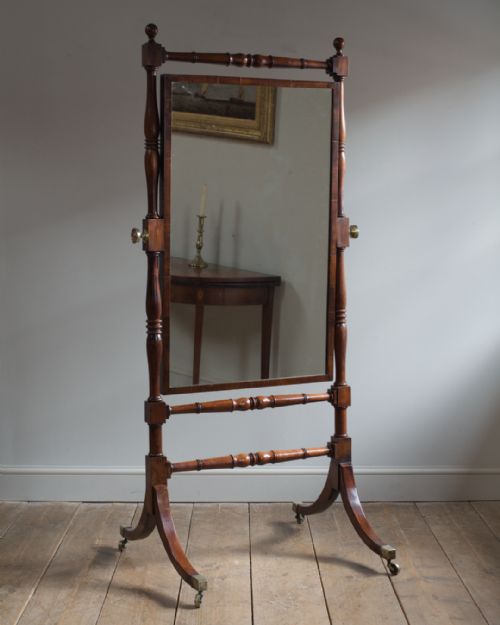
Metalwork played a functional and decorative role, with brass castors, sabots, and adjustable candle arms or framing pins integrated into the design. Giltwood examples involved the application of gold leaf over carved wooden bases.
Antique Freestanding Floor Mirror Retail Price Guide 2026
Typical asking prices for freestanding floor mirror among the pieces listed under this phrase on Sellingantiques today, from the lower quarter to the upper quarter. They describe what is for sale here now, not the wider market.
Listings feature 19th century, Regency, Victorian, and Edwardian pieces constructed from mahogany, walnut, brass, and giltwood.
What varies in quality
Quality rests upon the proportion of the frame and the selection of timber figure, such as flame mahogany or burr walnut. Superior pieces display refined carved details, crisp brass mounts, and robust leg supports that maintain stability when the glass tilts.
The weight and clarity of the mirror glass itself indicate the standard of production. Original mercury or early silvered glass plates show distinct age, while sturdy pivot mechanisms demonstrate the skill of the original maker.
The Antique Freestanding Floor Mirror Glossary
- Cheval mirror
- A large floor-standing mirror that swings in an upright frame. The term derives from the French word for horse, referencing the four-legged support structure.
- Sabot
- A metal shoe fitted to the foot of a furniture leg. These protective covers often appear in brass on Regency and William IV pieces.
- Castor
- A small wheel fitted to the legs of furniture to ease movement. Brass castors frequently support the bases of heavy floor mirrors.
- Tilt dressing glass
- A mirror plate mounted on pivots between upright supports, allowing the user to angle the reflection. These sit upon stands or floors.
- Giltwood
- Wood that has been coated with gold leaf or gold paint for decoration. This finish appears on elaborate 19th-century frames.
Antique Freestanding Floor Mirror: Frequently Asked Questions
Where should I place a floor mirror?
Position the mirror in a bedroom or dressing room where floor space allows it to stand clear of foot traffic. Placing it opposite a light source maximises the reflection and brightens the surrounding space.
Ensure the floor surface is level so the frame rests evenly on its castors or feet, preventing strain on the pivot pins when the glass swings.
How do I adjust the mirror angle?
Most cheval mirrors use side pivots with thumb screws or tightening nuts. Adjust these gently to alter the tilt of the glass without straining the wooden uprights.
Support the weight of the glass with one hand while loosening the fittings to prevent sudden slipping or damage to the frame.
How do I identify a Regency mirror?
Regency pieces often feature architectural lines, dark mahogany timbers, and brass sabots on saber legs. Look for restrained classical details rather than heavy carving.
Proportions tend to be elegant and balanced, reflecting the design sensibilities of the early 19th century.
Are these mirrors heavy to move?
The combination of dense timber frames and thick mirror glass makes these pieces substantial. Many feature original brass castors to help roll the weight across floorboards.
Two people are usually required to lift a freestanding mirror safely when relocating it between rooms.