

Antique Framed Textile
An antique framed textile brings centuries of needlework, tapestry and woven silk directly to the wall behind glass.
Antique Framed Textile
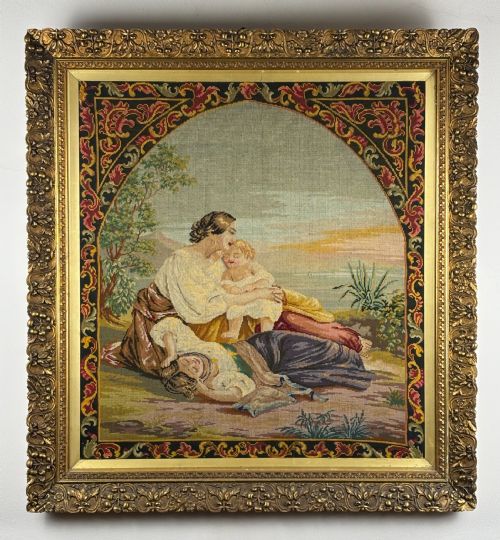
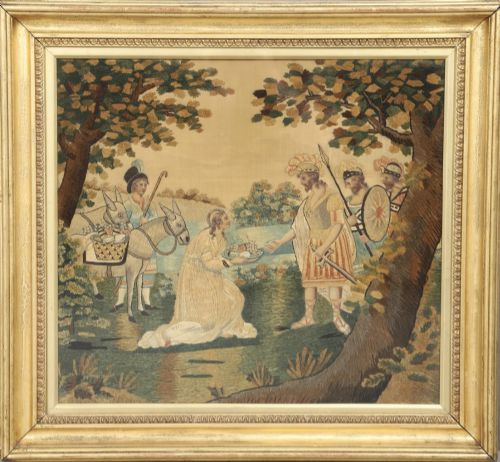
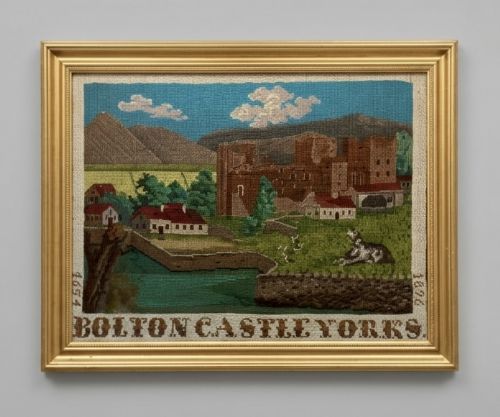
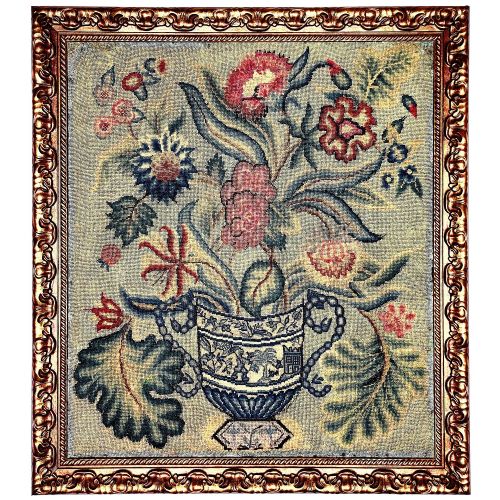
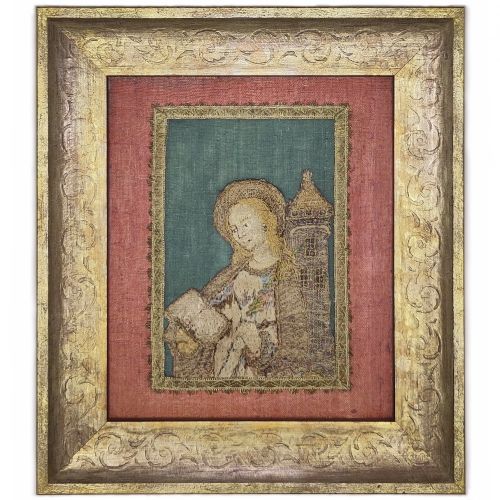
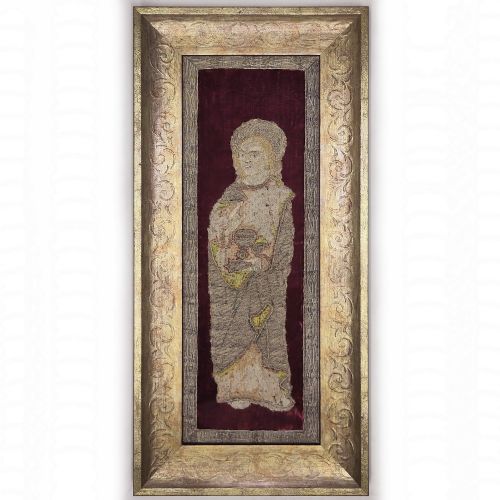
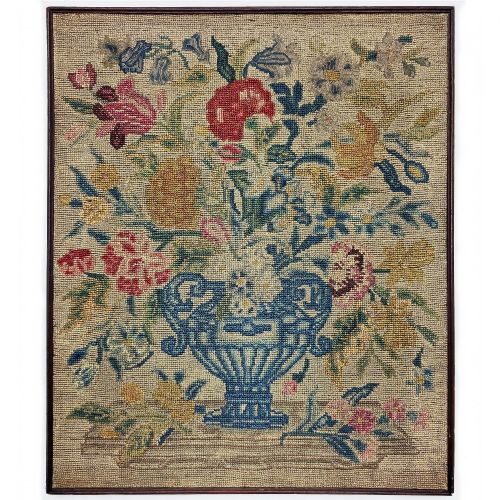
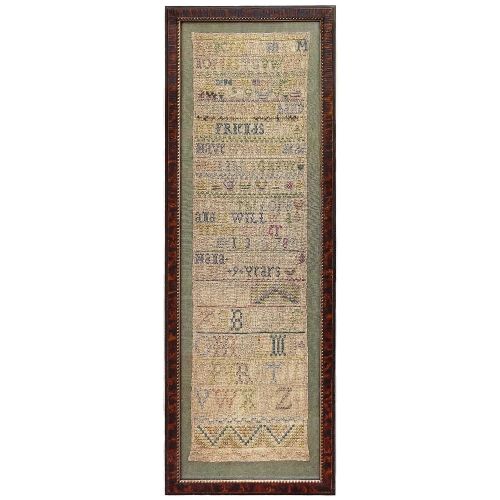
An antique framed textile encompasses needlework pictures, samplers, tapestries and embroidered panels preserved behind glass in period frames. You will frequently encounter nineteenth century wool work, Victorian samplers worked by young girls, and eighteenth century silk portraits on this page.
The selection ranges from European floral studies and maps of England to Chinese silk rank badges, Ottoman fragments and Central Asian tribal dowry embroideries. These pieces served as domestic decoration, educational exercises or displays of status, originating from workshops, homes and distant trade routes.
Makers varied from young scholars stitching alphabets to skilled professional artisans producing verdure tapestries and intricate silk embroideries. Most examples survive mounted on linen or stretched within wood frames, including burr maple and faux tortoiseshell cases.
How they were made
Needlework and embroidery utilise silk floss, wool yarn and metallic thread stitched onto grounds of canvas, linen or woven silk. Artisans employed varied stitches, from Berlin work and plushwork to flat satin stitches, creating texture and depth in depictions of animals, figures and flora.
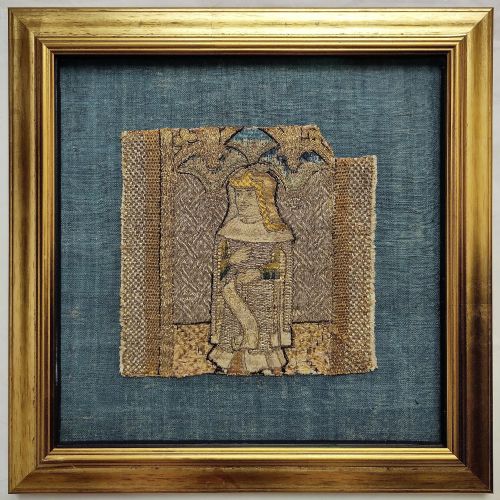
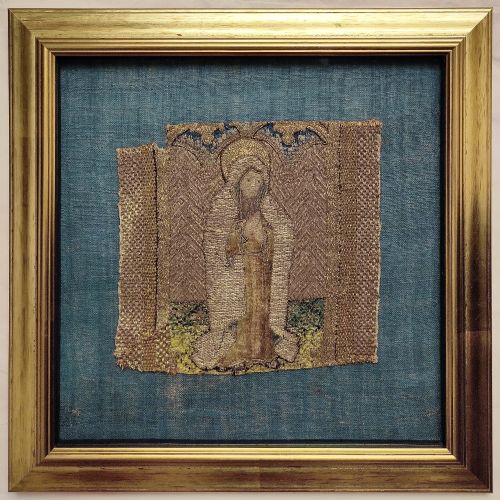
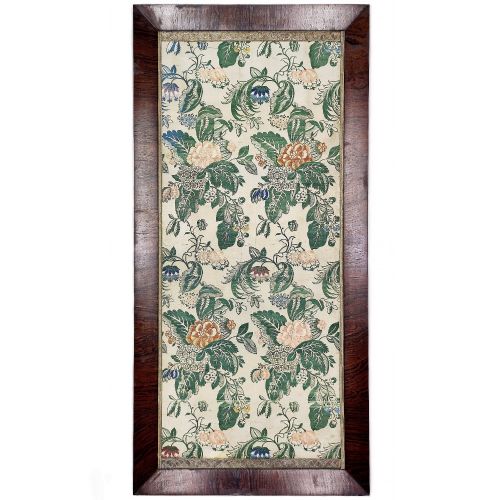
Woven textiles rely on handlooms producing tapestries, silk rank badges and patterned panels using dyed natural fibres. Many fragile fragments and paper-thin embroidered panels required mounting onto linen backing to support their weight before being secured under glass.
Frames play a structural role in protecting delicate fibres from dust and handling, utilising woods such as burr maple, painted mouldings and faux tortoiseshell finishes. Glazing protects the textile art while framing provides the rigid boundary necessary for wall hanging.
Antique Framed Textile Retail Price Guide 2026
Typical asking prices for framed textile among the pieces listed under this phrase on Sellingantiques today, from the lower quarter to the upper quarter. They describe what is for sale here now, not the wider market.
Materials recorded across the inventory include wool yarn, silk floss, metallic thread, cotton, linen, canvas, glass and wood.
What varies in quality
The fidelity of the design and the precision of the needlework dictate the calibre of a piece, distinguishing practised studio output from amateur domestic efforts. Finer works display complex shading, sophisticated use of silk floss and balanced composition, whether rendering human portraits or botanical subjects.
Condition and original context heavily influence merit, particularly regarding textile integrity and frame originality. Examples retaining their contemporary burr maple frames, vibrant untouched dyes and stable linen mounts command greater appreciation than heavily faded or later re-framed fragments.
Stevens of Coventry
The Antique Framed Textile Glossary
- Sampler
- A piece of needlework demonstrating a beginner's or scholar's proficiency in various stitches, alphabets or motifs. These often include names, ages and dates, providing a clear historical record.
- Berlin work
- A popular nineteenth century style of needlepoint worked in coloured wool on canvas from printed gridded patterns. It allowed stitchers to create rich, shaded pictorial designs of animals and scenes.
- Rank badge
- An embroidered insignia worn on the robes of Qing Dynasty officials to denote civil or military status. Once removed from garments, these circular or square silk panels are frequently framed for display.
- Verdure tapestry
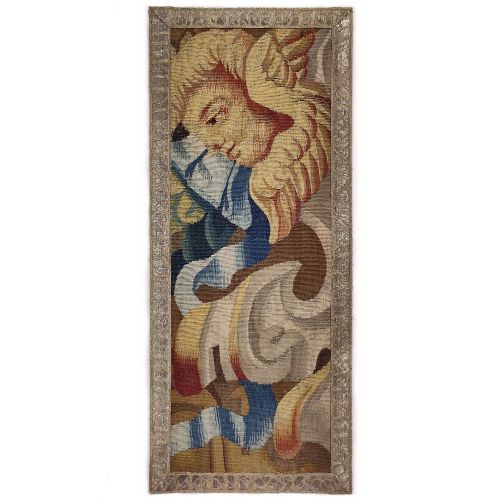
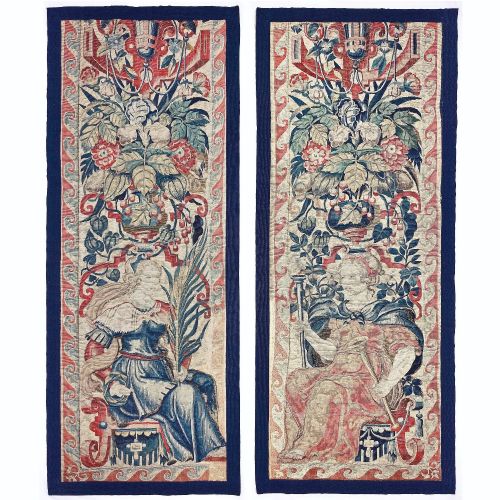
- A wall hanging or panel depicting a stylised landscape dominated by foliage, trees and plants. Eighteenth and seventeenth century fragments are often mounted and framed as independent decorative pictures.
- Plushwork
- A needlework technique utilising looped stitches that are cut to create a velvet-like, three-dimensional pile. This method was frequently employed on nineteenth century animal subjects to render fur realistically.
Antique Framed Textile: Frequently Asked Questions
How do I hang antique textiles safely?
Keep framed pieces away from direct sunlight and damp environments to protect fragile silk and wool fibres. Ensure the wall fixings are secure, as the combined weight of glass, wood frames and backing boards can be substantial.
Check that the internal textile is not touching the glass directly, as trapped moisture causes permanent mildew and fibre degradation. Professional framing with UV-filtering glass offers the best preservation for delicate historical needlework.
How are samplers dated accurately?
Many samplers include embroidered dates, makers' names and ages, offering a direct record of their creation. Style, alphabet fonts and framing materials provide secondary clues when a date is absent.
Comparing the type of linen ground and wool or silk thread helps narrow down the decade of production. Eighteenth century examples tend to use finer linens and more muted natural dyes than later Victorian counterparts.
What is a silk rank badge?
A rank badge is an embroidered square or circle once worn on the chest and back of Qing Dynasty official robes. They displayed specific birds for civil officials and animals for military officers to indicate their exact rank.
Following the fall of the dynasty, many surviving panels were mounted and framed as decorative art for Western collectors. They are celebrated for intricate needlework utilising metallic thread and fine silk floss.