





English Textile
An English antique textile carries centuries of domestic handwork and trade, offering textured depth that modern fabrics simply cannot replicate.
English Textile
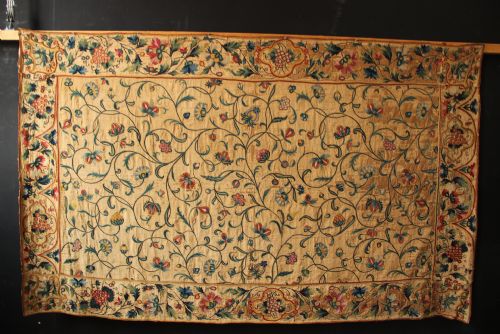
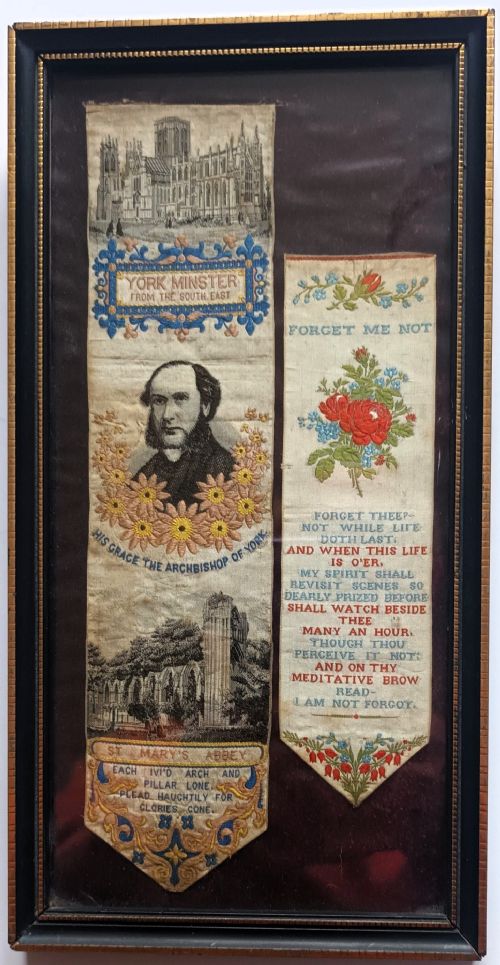
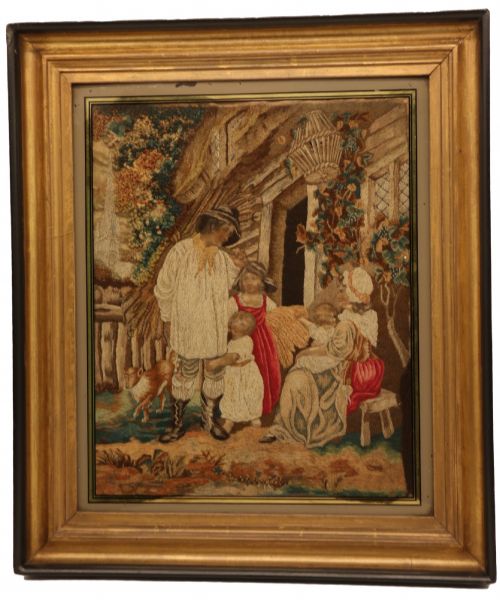
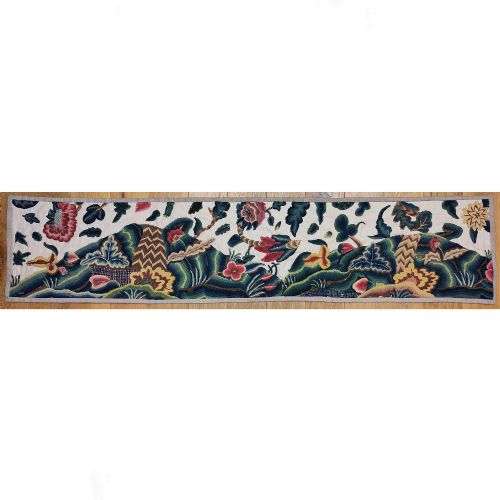
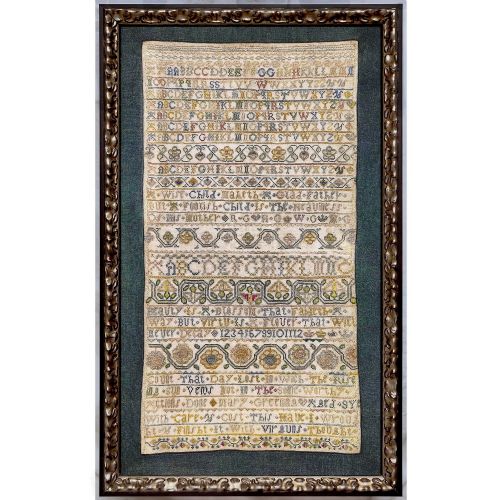
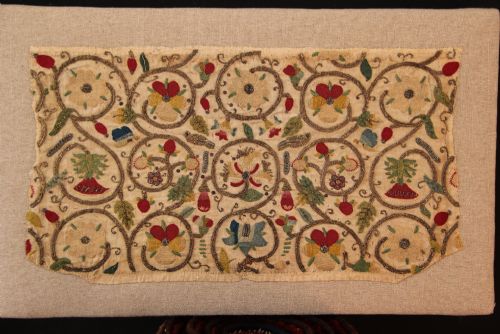
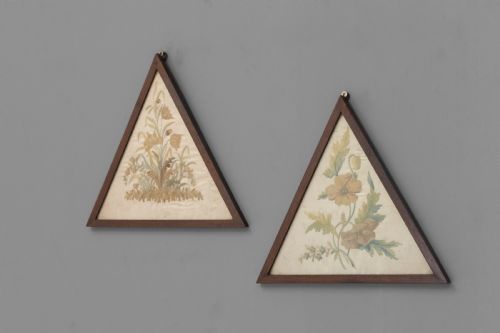
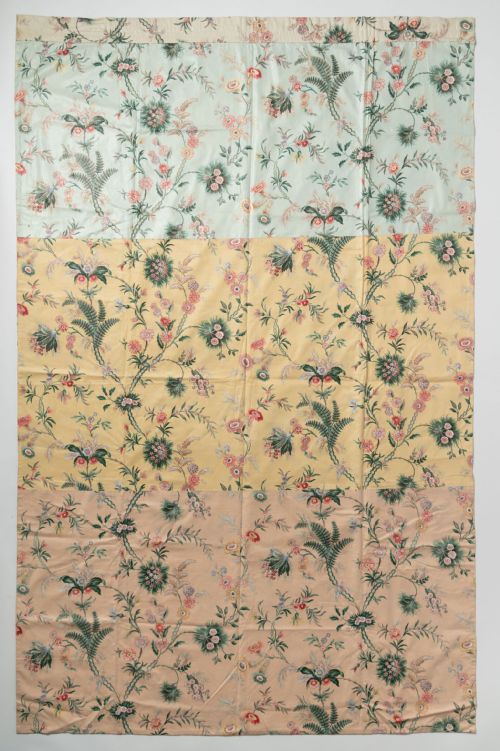
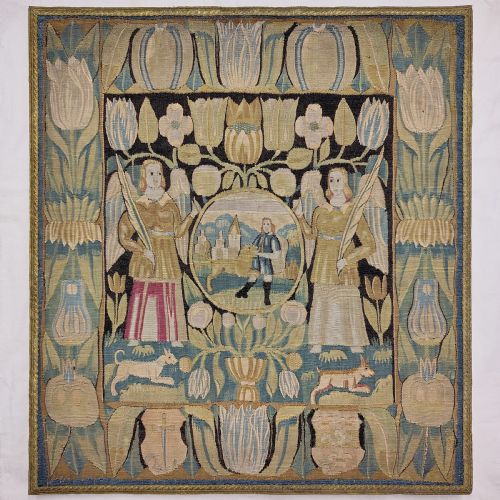
An English antique textile spans centuries of domestic needlework, framed wall art, and printed panels from the 17th century through the Georgian and Victorian eras up to the interwar period. The versions most commonly encountered on this page include framed needlework pictures, band samplers, embroidered panels, and printed fabric wall art.
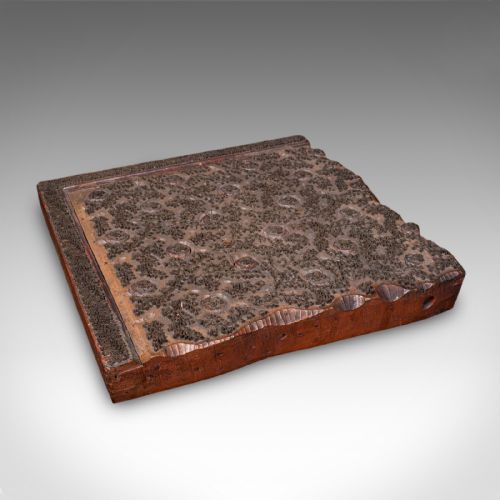
The material forms range from crewelwork and silk pictures depicting horse racing tracks and traditional stories to utilitarian printing blocks carved from brass and wood. Early examples often feature detailed wool and silk threads on linen or cotton backings, while later pieces capture the specific tastes of the Victorian Baroque revival and Art Nouveau movements.
Materials and Technique
The construction of these pieces relies on natural fibres such as silk, wool, linen, and cotton combined with hand embroidery and needlepoint techniques. Artisans utilised fine needlework stitches to build pictorial depth, often integrating hand-painted details into silk backgrounds for narrative scenes.
Wooden and brass printing blocks involve careful carving and stamping processes used to transfer patterns onto fabric and paper. Supporting frameworks incorporate walnut, pine, and rosewood, ensuring the textiles remain properly mounted or supported as framed wall art and textile displays.
Separating the Fine from the Ordinary
Quality in an English antique textile rests upon the precision of the needlework and the complexity of the design. Pieces featuring fine early crewelwork or intricate pictorial silkwork executed with tight, uniform stitches command greater visual depth than simpler student samplers.
The condition of the fibres and the integrity of the original framing play significant roles in establishing the standard of a piece. Well-preserved works maintain vibrant natural dye colours and secure mounting that protects fragile threads from environmental degradation over the centuries.
Stevens of Coventry·Fowler & Co
The English Textile Glossary
- Crewelwork
- Embroidery executed with wool yarn on a linen or cotton ground. This technique often produces dense, flowing floral and fauna designs typical of the 17th century.
- Sampler
- A piece of needlework produced as a demonstration or test of skill in various stitches. These frequently include alphabets, numerals, and maker signatures alongside decorative motifs.
- Needlepoint
- Embroidery stitched on a stiff open-weave canvas foundation. The thread completely covers the canvas to form dense pictorial or geometric surfaces.
- Printing Block
- A carved block of wood or brass utilised in textile and wallpaper production. These items stamped repeated patterns and pigments onto the fabric surface.
- Coif
- A close-fitting cap worn during the 16th and 17th centuries. Surviving examples often display delicate whitework or coloured silk embroidery.
English Textile: Frequently Asked Questions
How do I date an antique textile?
Dating relies on examining the fibre types, stitch structures, and stylistic motifs present in the piece. 17th-century works often use heavy crewel wools on linen, whereas Victorian examples favour brighter synthetic or refined natural dyes.
Secondary clues include the framing materials, maker signatures on samplers, and accompanying documentation that places the textile within a specific Georgian or Victorian context.
How should I hang textile art safely?
Textile art requires professional framing behind UV-filtered glass to protect delicate silk and wool fibres from light damage. Direct sunlight causes natural dyes to fade rapidly.
Ensure the fabric rests without tension against the backing board rather than being glued down. Proper mounting preserves the structural integrity of the antique threads over time.
What is the difference between a sampler and a picture?
A sampler functions as a demonstration piece where a maker practises various stitches, alphabets, and border patterns. They frequently include names and dates, serving as historical records of domestic education.
An embroidered picture depicts a specific narrative scene, landscape, or portrait, such as horse racing tracks or traditional stories, using pictorial needlework techniques rather than rows of alphabet exercises.
Can I clean an antique textile myself?
Cleaning antique textiles at home is generally discouraged because fragile fibres and historic dyes can dissolve or bleed upon contact with water or cleaning solvents. Professional textile conservators should assess any piece requiring restoration or cleaning.
Surface dust can be gently removed with very low suction through a mesh screen, but washing or spot-cleaning should be left to specialists.