


Framed Victorian Sampler
A framed victorian sampler brings domestic handwork into domestic space, recording the patience of young stitchers in linen, wool and silk thread.
Framed Victorian Sampler
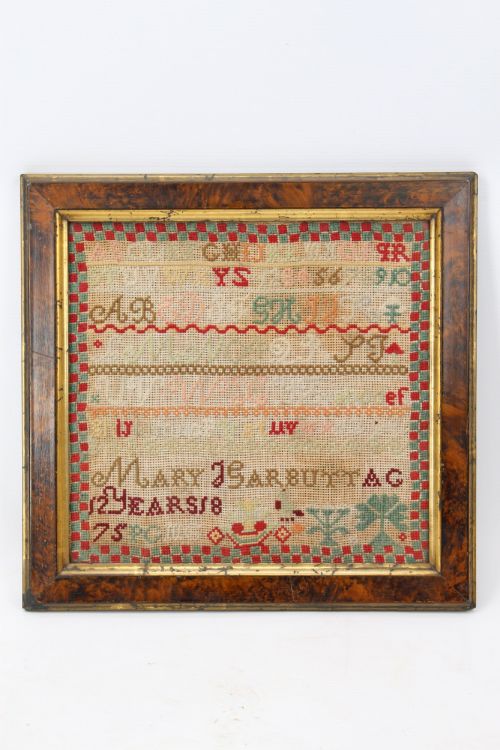
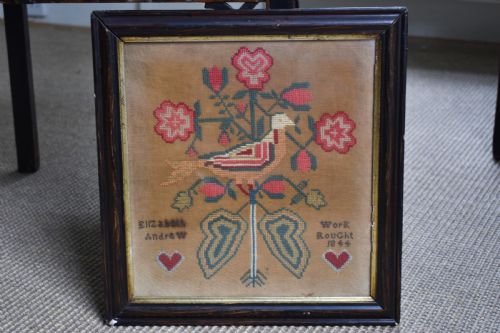
A framed victorian sampler is a textile artwork produced by hand during the nineteenth century, most frequently taking the form of alphabet panels, pictorial scenes or religious subjects worked by young girls. You will most commonly encounter pieces dated between the eighteen-forties and the eighteen-eighties, often bearing the name and age of the maker alongside dates and alphabets.
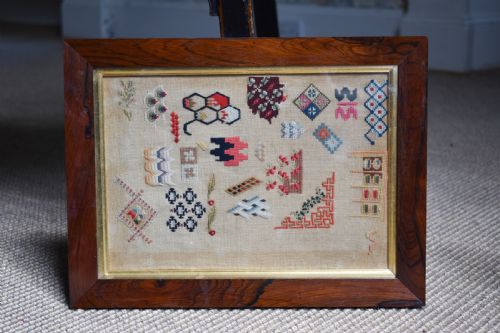
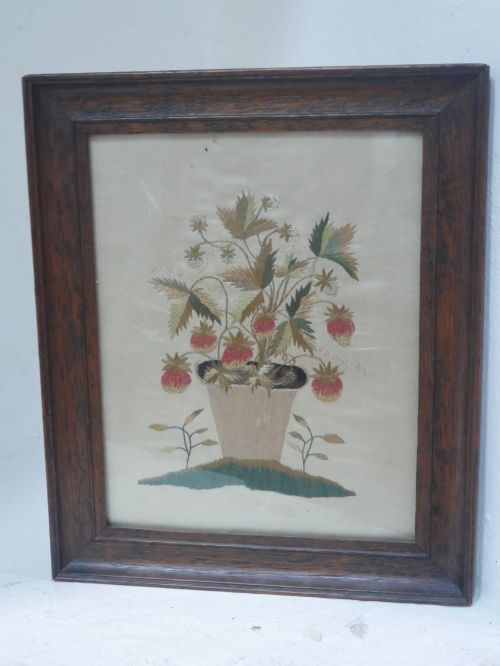
These works range from simple linen alphabet exercises to complex wool work and gros point pictures depicting figures, animals and pots of strawberries. Many survive housed in original wooden surrounds, including rosewood frames protected beneath glass.
The materials record traditional domestic needlecraft, utilising linen, canvas, silk thread and wool. They function as both historical records of childhood education and enduring examples of nineteenth-century textile art.
How they were made
Makers stitched onto grounds of linen or canvas using wool and silk thread to build up alphabets, motifs and figurative scenes. Techniques span standard needlework, gros point and petit point, alongside Berlin work employed for pictorial panels.
Finished embroideries were stretched and mounted behind glass to protect the delicate threads from dust and atmospheric damage. Many were secured within timber surrounds, notably polished rosewood frames that suited the domestic interiors of the period.
Listings feature pieces from the nineteenth century, including the regency period and the victorian era, utilising wool, linen, glass, and rosewood.
What varies in quality
Quality rests in the precision of the stitching and the ambition of the composition, distinguishing simple practice alphabets from pictorial works featuring figures, animals or architectural elements. The inclusion of clear signatures, dates and ages adds documentary weight to the textile.
The condition of the textile ground and the vibrancy of the surviving wool and silk threads determine visual impact. Original framing, particularly matched rosewood surrounds with glass, preserves the integrity of the piece.
The Framed Victorian Sampler Glossary
- Sampler
- A piece of needlework produced to demonstrate proficiency in various stitches and alphabets. They often record the maker's name, age and date of completion.
- Gros point
- A coarse counted-thread embroidery stitch used to create durable pictorial panels and tapestries. It forms the basis of many nineteenth-century wall pictures.
- Berlin work
- A style of charted embroidery popular during the Victorian era that utilised brightly coloured wools on canvas. It allowed stitchers to create elaborate pictorial scenes.
- Rosewood
- A dense, dark timber prized for its grain and polished finish during the nineteenth century. It frequently appears as the framing material for high-quality tapestries.
Framed Victorian Sampler: Frequently Asked Questions
What is a framed victorian sampler?
A framed victorian sampler is an antique textile needlework piece created during the nineteenth century, featuring alphabets, names, or pictorial scenes.
These works were stitched by hand on linen or canvas and are typically preserved under glass within wooden frames.
How can I tell the age of a sampler?
Many samplers include stitched dates, maker names, and the age of the child who worked the piece, providing a direct record of creation.
Stylistic shifts between early nineteenth-century alphabet designs and later pictorial wool work also help indicate the period.
What materials were used in these samplers?
Needleworkers utilised linen, canvas, wool, and silk thread to execute the various stitches and pictorial motifs.
Frames were commonly constructed from timber such as rosewood and fitted with protective glass panels.
How should I care for a framed textile?
Keep the piece away from direct sunlight to prevent the silk and wool threads from fading over time.
Ensure the hanging environment remains stable in humidity to protect the antique fabric and wooden frame.