




Antique Framed Canine Prints
Antique framed canine prints gather generations of breed studies, from Victorian engravings to early twentieth-century drypoints, ready to hang.
Antique Framed Canine Prints
When you search for antique framed canine prints, you encounter a focused gathering of historic dog imagery rendered through various printmaking techniques, drawings, and paintings. These works capture specific breeds and canine character across centuries, preserved within period frames.
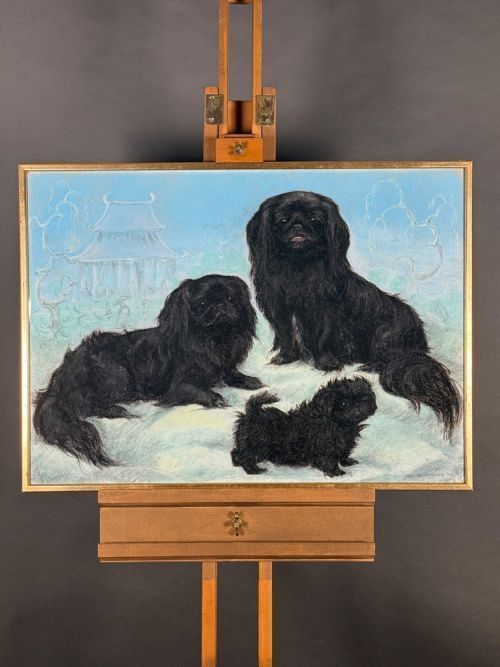
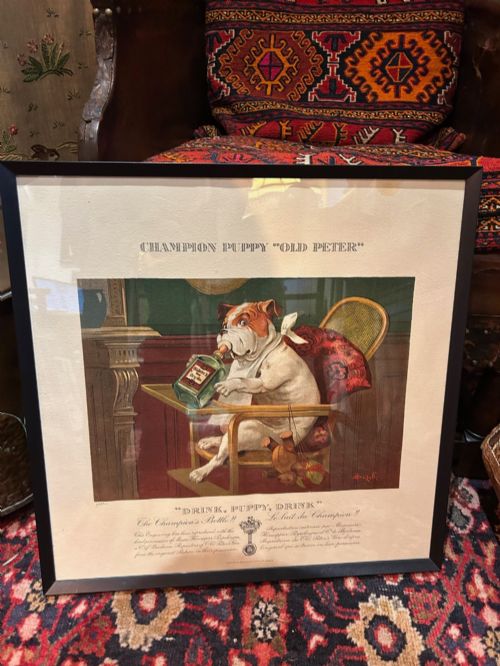
The selections span the nineteenth century through the mid-twentieth century, encompassing Victorian engravings, Edwardian etchings, and later pastels or oils. You find subjects ranging from working spaniels and setters to bulldogs and Pekingese.
Most examples arrive ready to display on the wall, combining historical print methods with framing appropriate to their period. They suit studies, hallways, and country house interiors equally well.
How they were made
Printmakers utilised paper and ink to produce etchings, drypoints, and engravings, often signing the margins in pencil. Publishers distributed these works to eager dog owners and collectors during the Victorian and Edwardian eras.
Artists also applied pastel and watercolour directly to paper, while others painted in oil on canvas or wood panels. Glazing protected these delicate surfaces from dust, secured beneath wooden and giltwood frames.
The inventory spans the 1860s to the 1960s, featuring paper, oil on canvas, pastel, and giltwood materials.
What varies in quality
The distinction between standard decorative pieces and finer works often lies in the precision of the print impression and the reputation of the artist. Original drypoints show rich burr on the copper plate, whereas later impressions lose that crispness.
Condition of the paper and the presence of original artist signatures elevate certain plates above standard book illustrations. The quality of the framing, particularly period giltwood moulding, contributes to the overall integrity of the piece.
Herbert Dicksee·Marcellin Auzolle·Paul Jones·Mabel Gear·Florence Mabel Hollams
The Antique Framed Canine Prints Glossary
- Drypoint
- A printmaking process where the artist scratches directly into a metal plate with a sharp needle, creating a velvety burr that holds ink. This technique yields rich, atmospheric lines.
- Etching
- A method where acid bites lines into a metal plate covered with an acid-resistant ground. Ink settles into these grooves before transfer to paper.
- Engraving
- A technique involving the direct cutting of lines into a metal plate using a sharp tool called a burin. It produces precise, clean lines characteristic of nineteenth-century book illustrations.
- Giltwood
- Wood carved and coated with a thin layer of gold leaf or metallic powder. It frames many traditional artworks from the Victorian period onward.
- Pastel
- A dry medium composed of powdered pigment and a binder, shaped into sticks. Artists use it on paper to achieve soft colour transitions and rich textures.
Antique Framed Canine Prints: Frequently Asked Questions
How do I identify a drypoint etching?
Look closely at the lines under magnification to see if they possess a soft, rich burr where the metal was pushed aside by the needle. This contrasts with the clean-edged grooves of a standard engraving.
Original drypoints often show plate marks indented into the paper around the printed image where the printing press squeezed the metal sheet.
Are these prints originals or reproductions?
The selections include original period etchings pulled from plates in the nineteenth and early twentieth centuries, alongside original drawings and paintings. Each listing specifies the exact medium used.
Engravings and etchings from this era were printed directly from hand-worked plates rather than produced through modern commercial photomechanical reproduction.
How should I hang dog art at home?
Group smaller framed prints together on a panelled wall to create a traditional country house gallery effect. Ensure they hang away from direct sunlight to protect the paper and ink from fading.
Keep them at eye level where the fine details of the dog breeds and artist signatures can be appreciated up close.
What framing styles do these pieces feature?
Many retain their period wooden or giltwood frames, which show appropriate signs of age and wear consistent with their history. These frames complement the traditional subject matter and protect the paper within.
Glass fronts shield the delicate watercolours, pastels, and paper prints from atmospheric moisture and handling.