

Antique Footed Glasses
Antique footed glasses are drinking vessels and table pieces raised on pedestals or folded bases, prized for their tactile weight and period character.
Antique Footed Glasses
When you search for antique footed glasses, you encounter a selection spanning the eighteenth and nineteenth centuries, featuring forms intended for wine, ale, rum, and display.
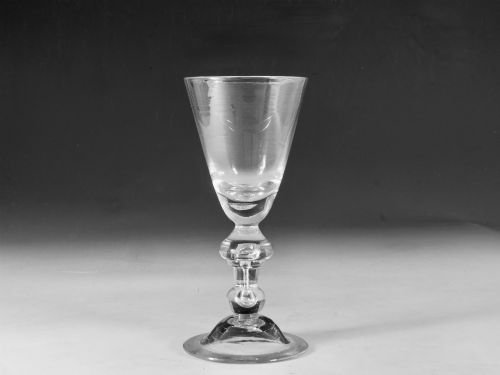
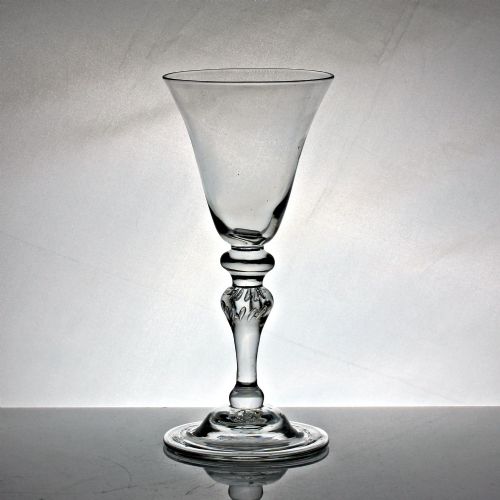
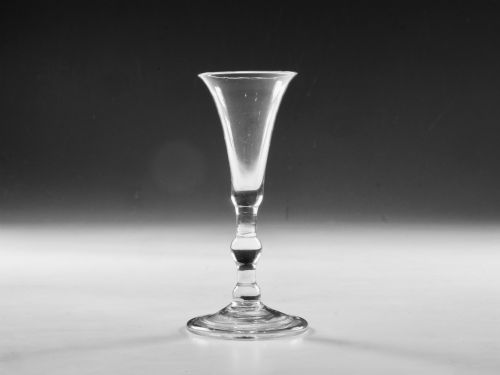
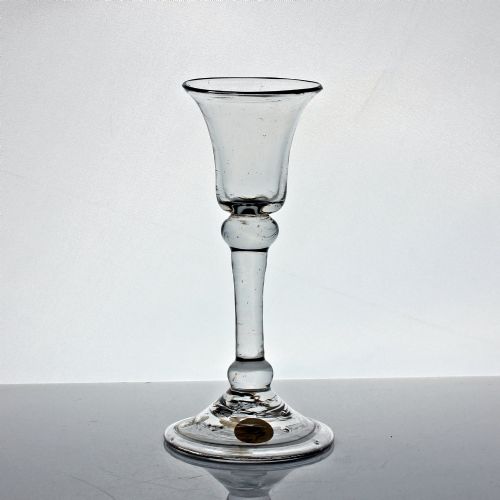
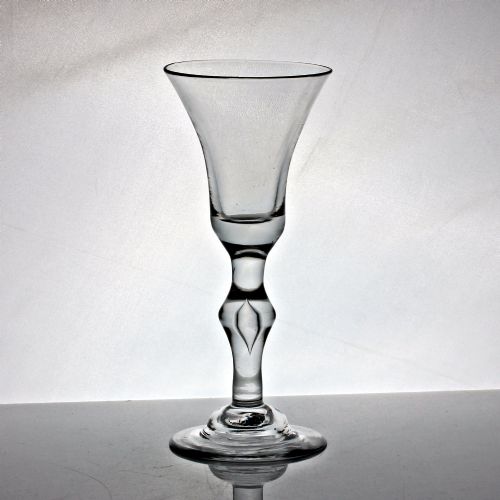
The eighteenth-century examples dominate the offerings, characterised by heavy lead glass, distinct baluster or plain stems, and folded feet designed to strengthen the rim.
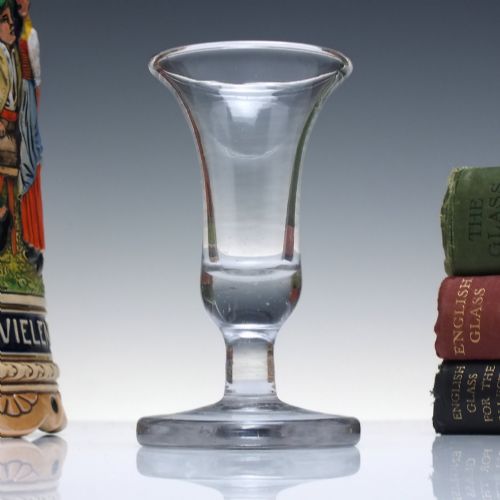
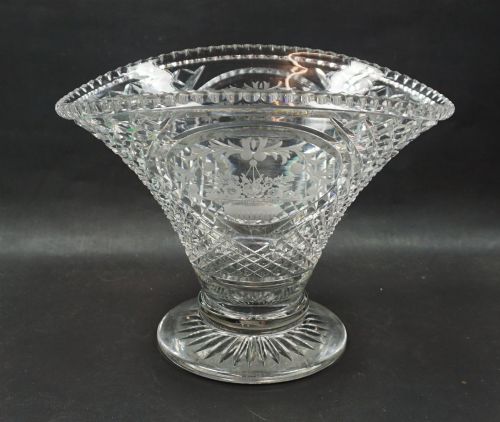
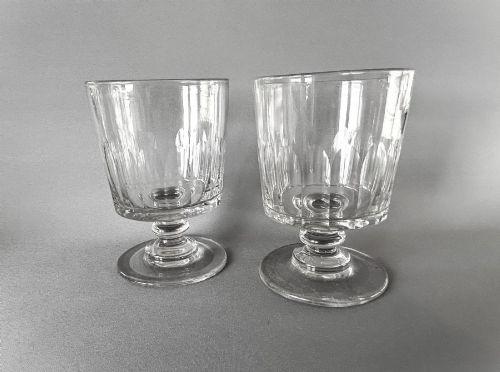
Vessels range from small dram glasses and jelly jars to substantial rummers and tazzas, reflecting the diverse dining and drinking habits of Georgian and Victorian households.
How they were made
Glassmakers shaped these pieces using lead glass and clear crystal, often employing moulds to create honeycomb patterns, panels, or ribbed bowls.
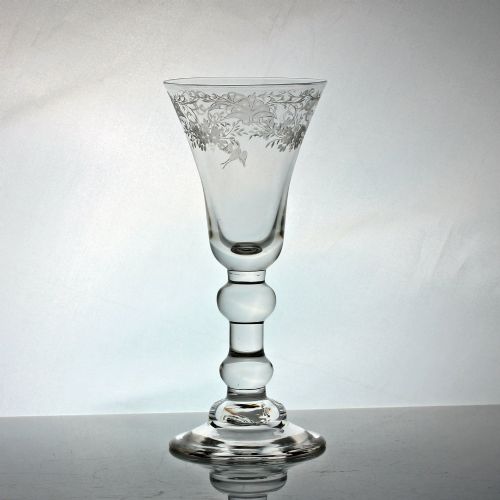
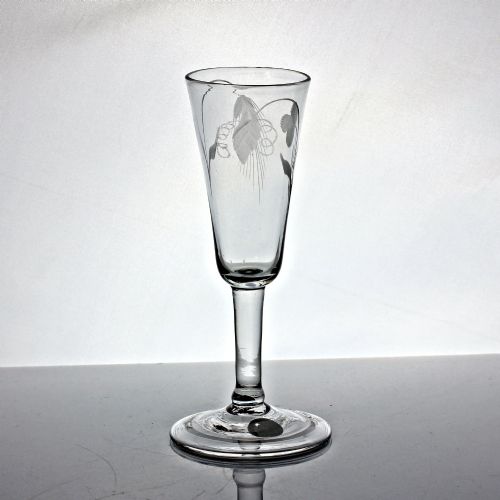
Engraving, enamelling, and gilding decorated the surfaces, while bases were formed with folded rims, domes, or flat feet to anchor the weight of the vessel.
Antique Footed Glasses Retail Price Guide 2026
Typical asking prices for footed glasses among the pieces listed under this phrase on Sellingantiques today, from the lower quarter to the upper quarter. They describe what is for sale here now, not the wider market.
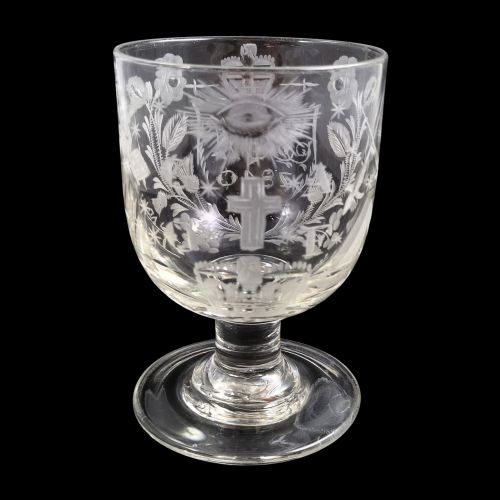
One small rummer carries the jovial instruction 'Women & Wine' engraved across its bowl.
What varies in quality
Clarity of the metal and weight of the lead crystal separate standard domestic wares from pieces intended for formal dining tables.
Crispness in the cutting, delicacy of the wheel-engraving, and stability of the formed foot indicate the skill of the glasshouse.
Galle
The Antique Footed Glasses Glossary
- Folded foot
- A rim turned under during manufacture to provide strength and a smooth edge. This technique appears frequently on eighteenth-century drinking vessels.
- Baluster stem
- A thick, swelling stem form reminiscent of architecture or furniture supports. It adds substantial weight beneath the bowl of early wine glasses.
- Tazza
- A shallow bowl or plate raised on a central foot or pedestal. These pieces function as centrepieces for serving fruit or sweets.
- Rummer
- A capacious drinking glass with a short stem and a sturdy foot. They emerged in the late eighteenth century for heavier wines, punch, and spirits.
- Air tear
- An elongation of an air bubble trapped inside the stem during blowing. Makers utilised this feature as a decorative element in eighteenth-century glass.
Antique Footed Glasses: Frequently Asked Questions
How do I identify eighteenth-century glass?
Eighteenth-century drinking vessels display heavy lead glass with a dark greyish tone and surface wear on the base. The presence of pontil marks and folded feet further distinguishes this period.
Stems often feature baluster forms, air twists, or knops rather than the machine-made uniformity seen in later manufacturing eras.
What were footed tazzas used for?
Tazzas served as elevated presentation dishes on dining tables for sweetmeats, fruits, or preserves. Their raised foot placed delicacies at eye level among other glassware.
By the nineteenth century, crystal examples also functioned purely as decorative centrepieces.
Why do some glasses have folded feet?
Makers folded the bottom rim of the glass back against the underside while the material was hot. This created a thickened edge to protect a vulnerable area from chipping.
This technique appears primarily on eighteenth-century rummers, wine glasses, and ale flutes.
How should I display antique glassware?
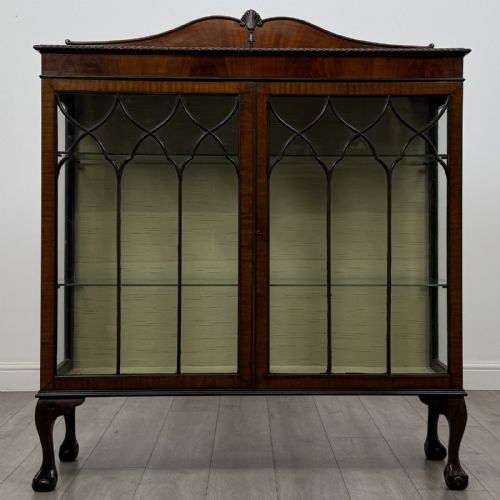
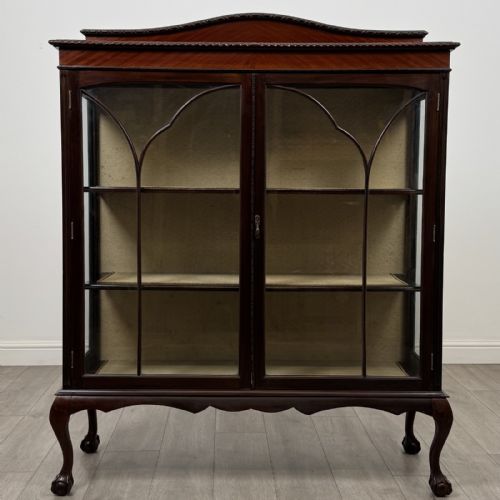
Display these vessels in cabinets with stable shelving away from direct sunlight and heavy vibrations. Adequate spacing allows the cut facets and engraved motifs to catch the light.
Avoid stacking footed glasses to prevent rim and stem damage.