

Antique Folding Room Screen
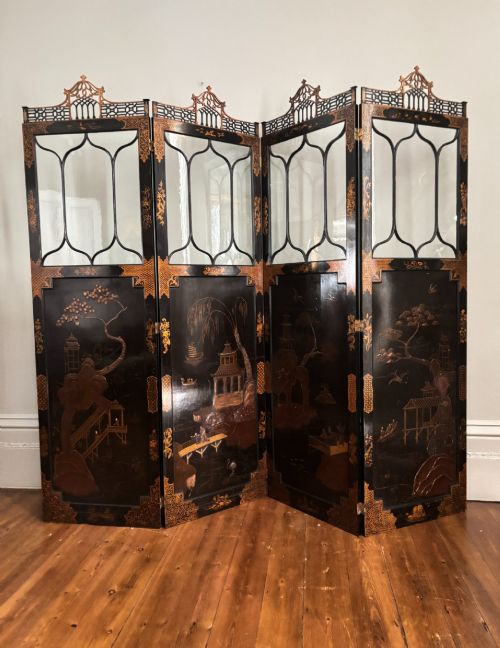
An antique folding room screen divides space and creates atmosphere, moving effortlessly from Chinoiserie lacquer to carved mahogany across various historic periods.
Antique Folding Room Screen
When searching for an antique folding room screen, buyers encounter multi-panel dividers and privacy screens originating primarily from the nineteenth and eighteenth centuries. These panels create intimate zones within large chambers, shield occupants from draughts, or serve as decorative backdrops.
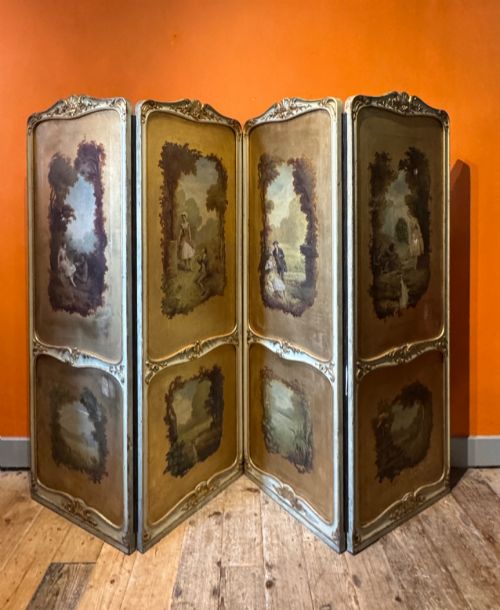
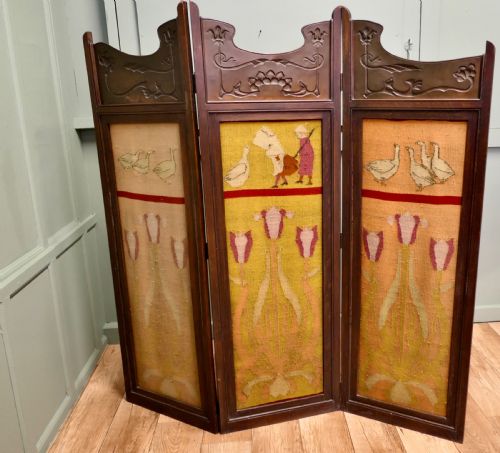
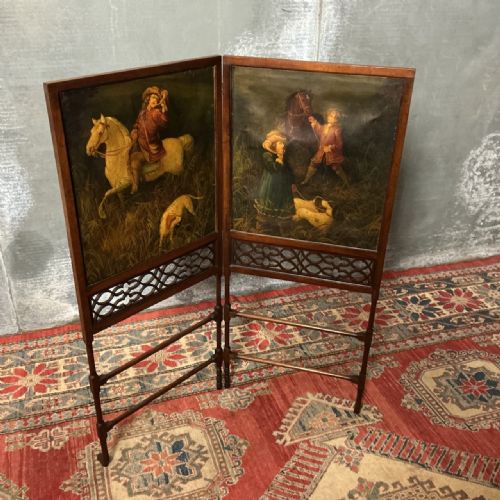
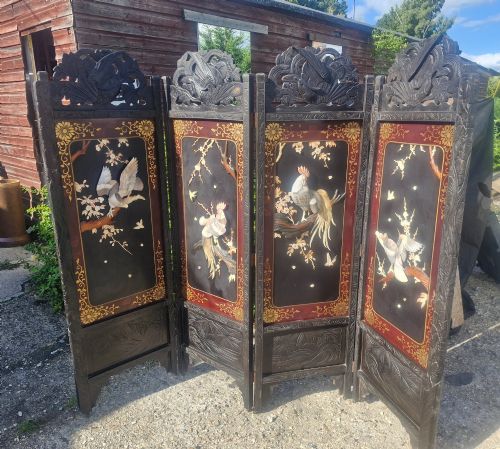
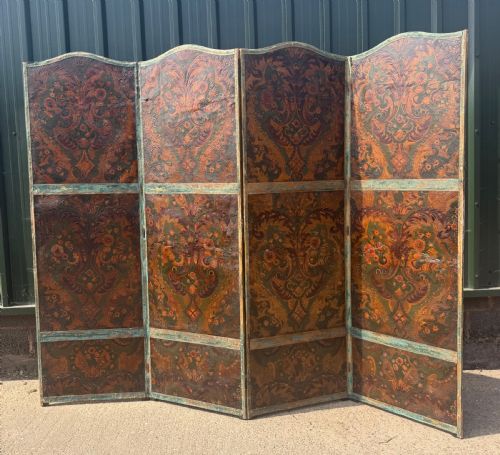
The inventory on this page shows pieces ranging from towering eight-fold Chinese Coromandel lacquer and Japanese carved bone examples to European painted canvas, leather, and needlepoint screens. Smaller variants such as fire screens, modesty screens, and table screens also appear.
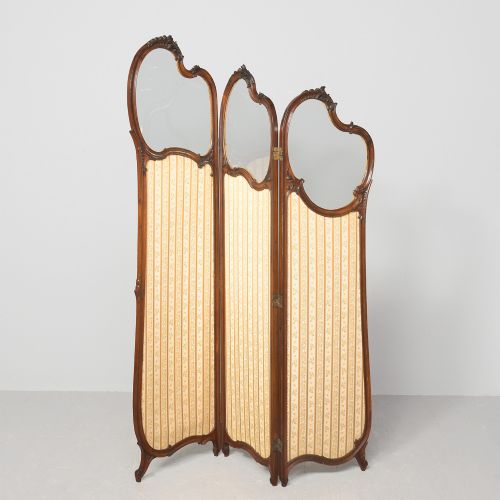
Most items survive from the Victorian era and the late nineteenth century, spanning Chinoiserie, Art Nouveau, and French taste styles. They function equally well as architectural room dividers and as standalone pieces of decorative art.
How they were made
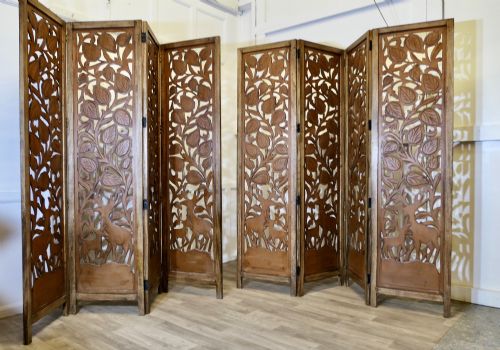
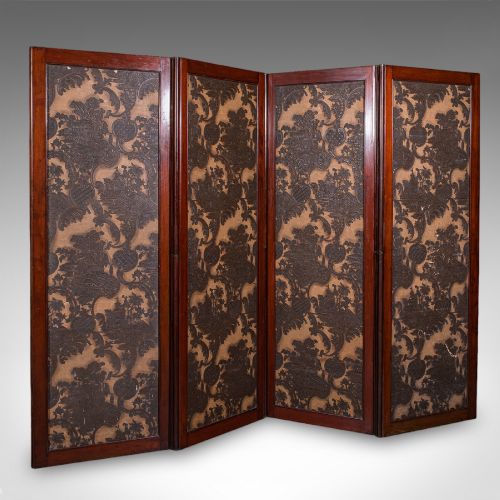
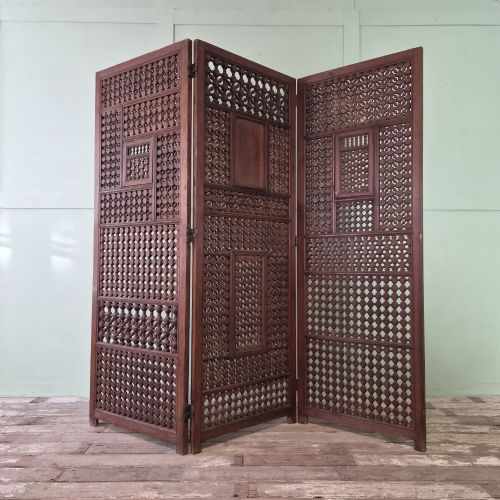
Wood provides the structural framework for the majority of these panels, utilising mahogany, oak, padauk, and giltwood joined by hinges to allow folding movement. Carved pierced woodwork, inlaid details, and brass or copper mounts frequently reinforce the structure.
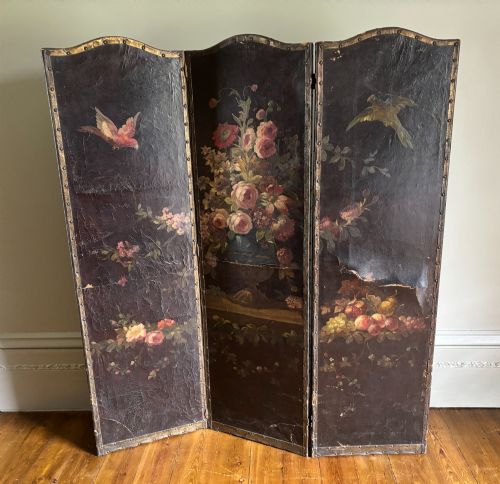
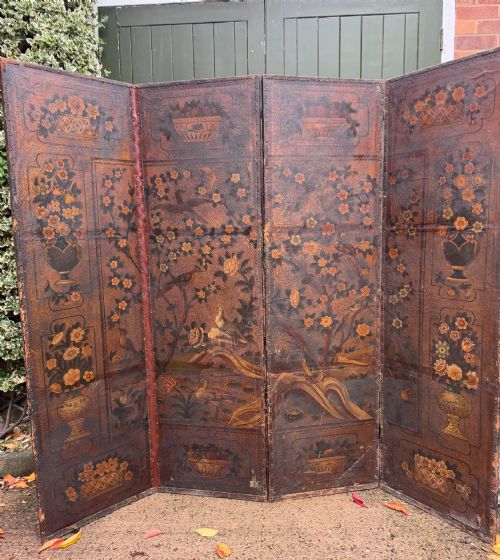
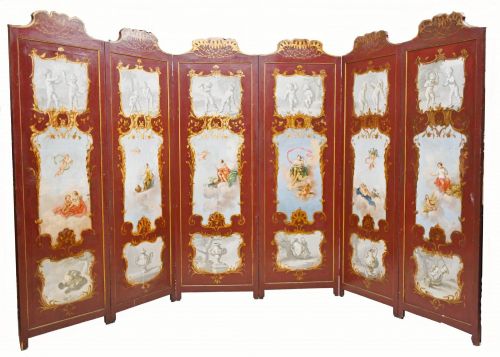
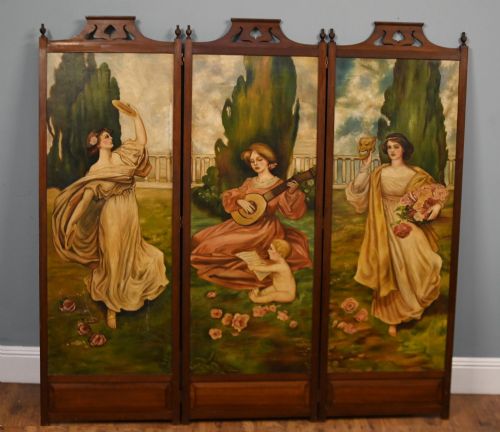
Surface decoration defines the visual impact, executed through hand-painted oils, polychrome canvas, embossed leather, lacquer, silk panels, and scrap work collages. Artisans also applied deep carving to wood, bone, and stone mounts to achieve textured relief.
Antique Folding Room Screen Retail Price Guide 2026
Typical asking prices for folding room screen among the pieces listed under this phrase on Sellingantiques today, from the lower quarter to the upper quarter. They describe what is for sale here now, not the wider market.
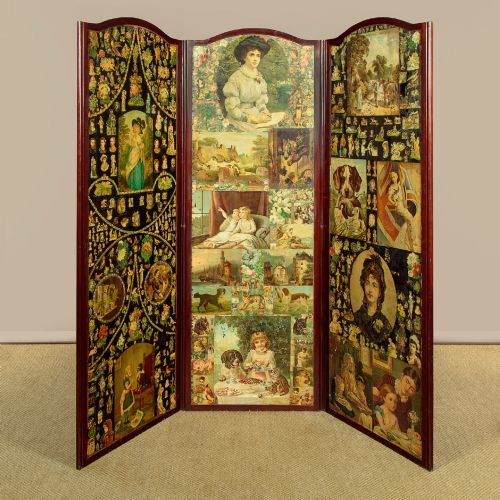
Several screens employ Victorian scrap work, turning countless tiny paper cut-outs into chaotic paper mosaics across the folds.
What varies in quality
Execution of the surface artwork dictates the distinction between standard examples and superior works, seen in the precision of hand-painted figural panels, the depth of Coromandel lacquer incision, or the intricacy of needlepoint and scrap work.
Material selection and structural joinery separate high-grade items from utilitarian pieces, evident in dense hardwoods like mahogany, robust brass hinges, and well-preserved silk, leather, or paper inserts across multiple folds.
The Antique Folding Room Screen Glossary
- Coromandel
- A type of Chinese incised lacquerware where designs are cut into a dark ground and filled with colours or gold. This technique appears on many large multi-fold screens.
- Mashrabiya
- An architectural wooden lattice screenwork traditionally used in Middle Eastern interiors. Such panels bring intricate geometric light filtering to folding room dividers.
- Modesty screen
- A small low screen historically utilised in dressing rooms to shield a person while changing clothing. These items often feature painted panels or fabric inserts.
- Scrap work
- A decorative technique involving the application of numerous printed paper cut-outs onto a backing surface. Victorian screens frequently employ this method across multiple folds.
- Fire screen
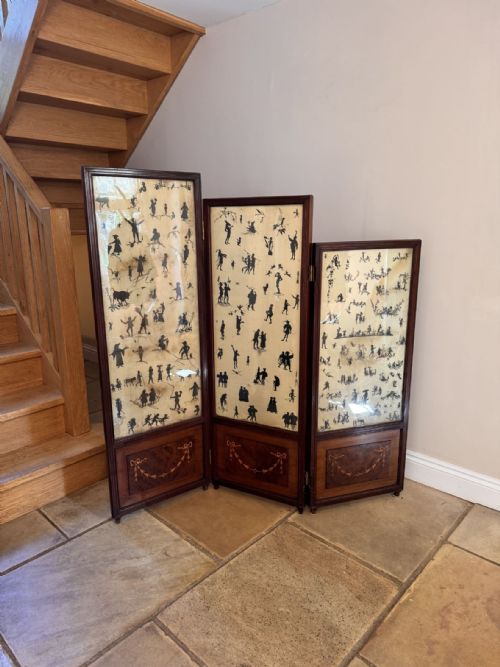
- A small freestanding panel placed before a fireplace when not in use to block residual heat or conceal the grate. Examples in the evidence include glazed, upholstered, and needlepoint variants.
Antique Folding Room Screen: Frequently Asked Questions
What is a folding room screen used for?
These screens partition large rooms, create private dressing areas, and block draughts near doors or windows. They also function as decorative focal points against plain walls.
Historically, they allowed occupants to alter the layout and intimacy of a chamber without building permanent interior partitions.
How do you distinguish between Chinese and European screens?
Chinese examples often feature dark lacquer, incised Coromandel work, or applied bone and hardstone figures. European versions typically draw on periods like the French Rococo or Regency styles.
European screens more commonly use painted canvas, embossed leather, needlepoint, or scrap work over wood frames.
How do you care for antique leather and lacquer panels?
Keep these screens away from direct sunlight, excessive heat sources, and damp environments to prevent cracking or warping. Dust them gently with a dry, soft cloth.
Avoid using modern chemical cleaning sprays on historic lacquer, painted canvas, or tooled leather surfaces.
What is the difference between a room divider and a fire screen?
Room dividers are tall multi-fold panels designed to stand on the floor and partition human-scale spaces. They usually consist of three, four, or more tall sections.
Fire screens are much smaller single or triple-fold units intended to sit directly in front of a domestic fireplace.