



Four Panel Privacy Screen
A four panel privacy screen creates instant division in a room, combining practical partitioning with rich decorative presence.
Four Panel Privacy Screen
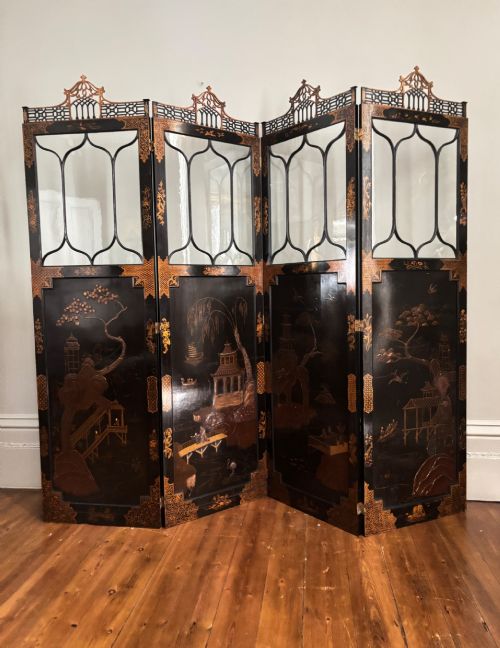
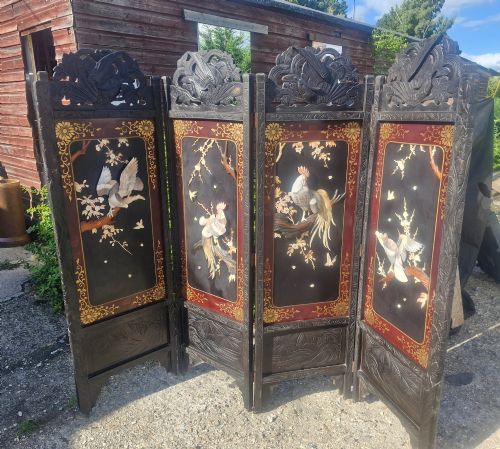
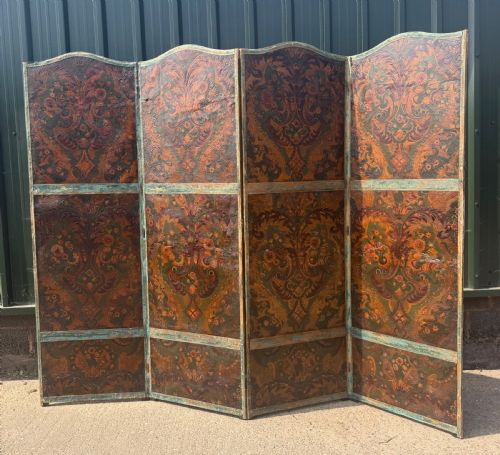
A four panel privacy screen provides a structured folding partition for dividing interior spaces, separating areas within a room, or concealing dressing spaces. The selection reflects diverse global influences and historical periods, ranging from nineteenth century English needlepoint examples to carved wooden pieces from India and lacquerwork from East Asia.
The pieces appearing on this page span several centuries of design, with particular representation from the Victorian era and the early twentieth century. Common formats include room dividers, folding screens, and dressing screens constructed with four interconnected leaves.
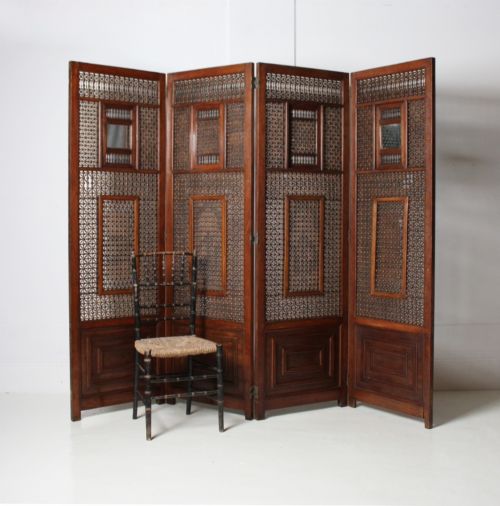
Makers drew upon varied cultural traditions, producing styles that encompass Chinese Chippendale, Japanese Meiji, Islamic Revival, and French Chateau aesthetics. These items function equally as movable architectural divisions and as substantial decorative artworks.
Materials and construction
Workshops utilised traditional timbers such as mahogany, oak, and other hardwoods for the foundational frames, often applying ebonised or giltwood finishes. Joinery and hinges linked the four folding sections to allow flexible movement and stable positioning.
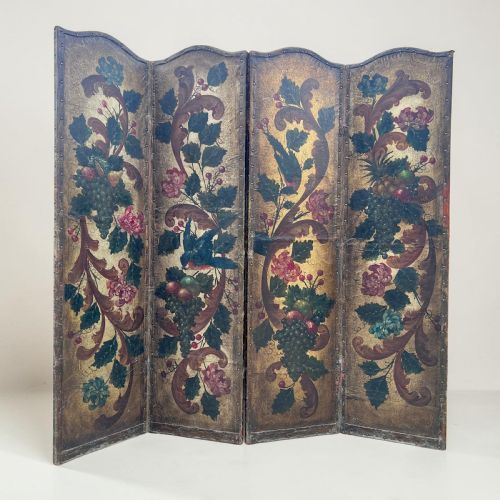
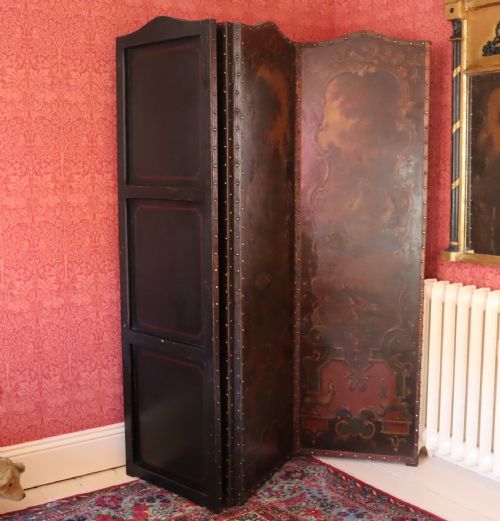
Surface decoration required specialised artisan techniques, including hand painting, lacquerwork, leather embossing, and needlepoint upholstery. Fretwork panels, carved bone figures, hardstone mounts, and mashrabiya lattice work further distinguished the construction of these decorative dividers.
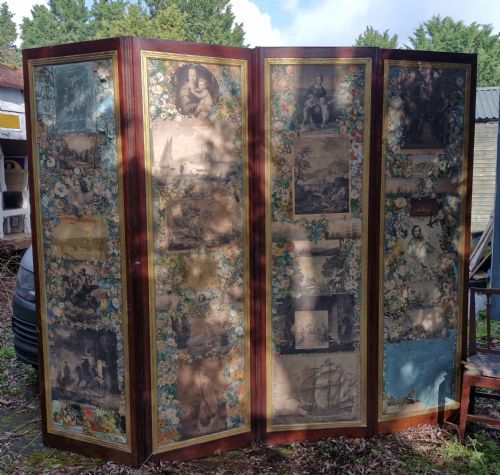
One canvas divider from the nineteenth century was built specifically as a photographic prop, ready to stage a room before the camera even arrived.
Factors determining quality
Quality rests in the execution of the surface artistry and the integrity of the structural framework. Fine examples display meticulous hand painting, deep carving, or precise leather embossing that retains its colour and detail across all four folds.
The choice of materials and the stability of the connecting hinges influence the overall substance of the piece. Superior screens maintain balanced proportions and robust joinery while supporting intricate decorative elements such as bone inlay, hardstone mounts, or elaborate needlework.
The Four Panel Privacy Screen Glossary
- Mashrabiya
- A traditional architectural element of turned wood lattice work used to create decorative panels that permit air circulation while obscuring vision. It appears on screens associated with Islamic Revival design.
- Coromandel
- A type of Chinese lacquerware featuring incised decoration filled with colours against a dark ground. These screens often depict figures, landscapes, or floral motifs.
- Chinoiserie
- European interpretations and imitations of Chinese and East Asian artistic traditions, popular in furniture and screen decoration during the eighteenth and nineteenth centuries. It typically employs black lacquer and gilt highlights.
- Giltwood
- Timber that has been coated with a thin layer of gold leaf or gilt pigment. This finish accentuates carved architectural details on nineteenth century frames.
- Needlepoint
- Canvas work embroidery executed with wool or silk yarn to create dense pictorial or geometric surfaces. It frequently forms the upholstered panels of English Regency and Victorian screens.
Four Panel Privacy Screen: Frequently Asked Questions
How are four panel privacy screens used?
These screens function primarily to divide large rooms, create private alcoves, or act as dressing partitions in bedrooms. Their folding design allows them to be repositioned easily or stored flat against a wall when not in use.
Historically, they also served to block drafts from doors and windows in high-ceilinged rooms. Today, they remain a practical method for zoning open-plan spaces while introducing decorative texture.
What materials were used to make antique screens?
Wood forms the primary structural material, with mahogany, oak, and ebonised hardwoods appearing frequently in the framing. Surface materials vary widely between painted canvas, stamped leather, silk cotton, and heavy lacquer.
Decorative additions include carved bone, hardstone mounts, needlepoint tapestry, and intricate wooden fretwork. These diverse media reflect the global reach of nineteenth and early twentieth century design.
How do I identify the period of a screen?
Dating relies on stylistic clues, framing timbers, and the nature of the surface decoration. Victorian and Regency pieces often feature needlepoint, giltwood, or heavy mahogany frames, while early twentieth century examples lean towards Japanese lacquer or Arts and Crafts ebonised oak.
Examining the hinges, joinery, and pigments provides further evidence of age. Subtle variations in manufacturing techniques help distinguish nineteenth century items from later reproductions.
Where were these screens originally made?
The pieces originate from diverse workshops across Europe and Asia. English country house screens often utilise needlepoint or canvas, whereas continental European pieces frequently feature painted leather or French Chateau styling.
Asian imports, particularly from China and Japan, showcase traditional lacquer, carved bone, and Chinoiserie motifs. Indian workshops contributed intricate fretwork and mashrabiya lattice designs.