



Carved Panel Room Partition
A carved panel room partition breaks a large interior into quiet corners while showing the cabinetmaker's hand.
Carved Panel Room Partition
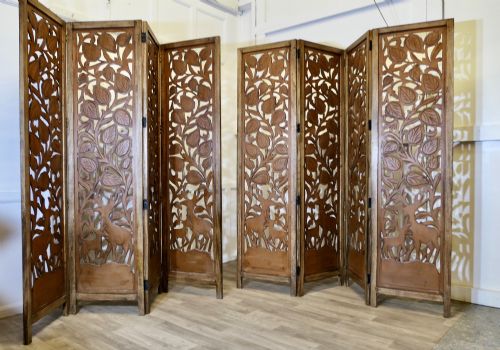
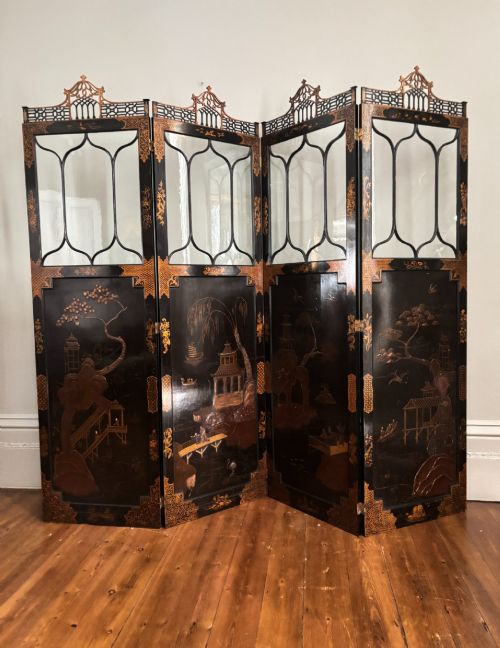
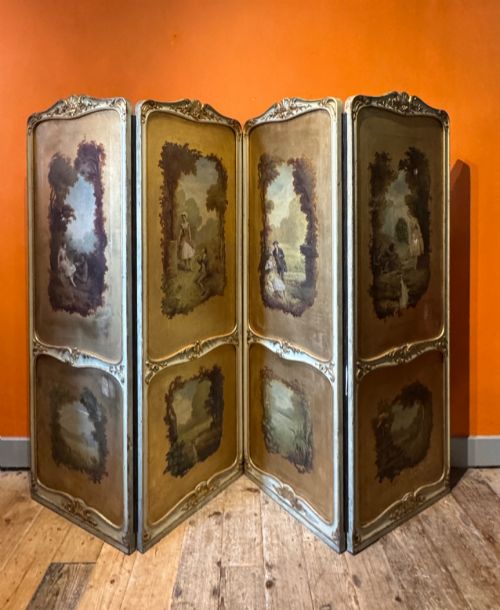
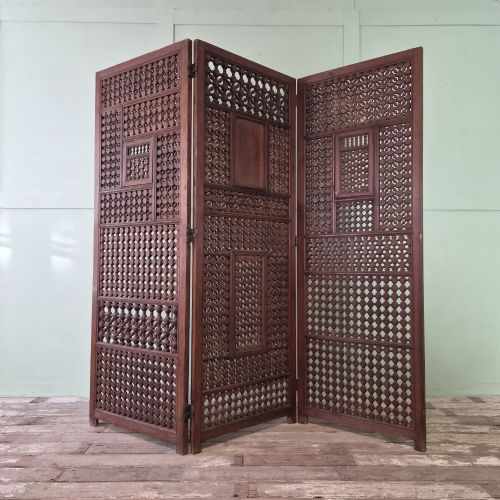
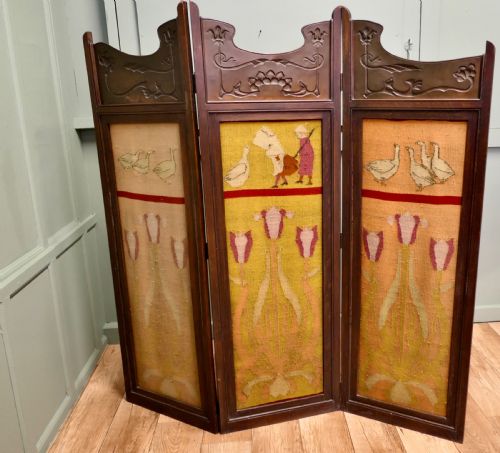
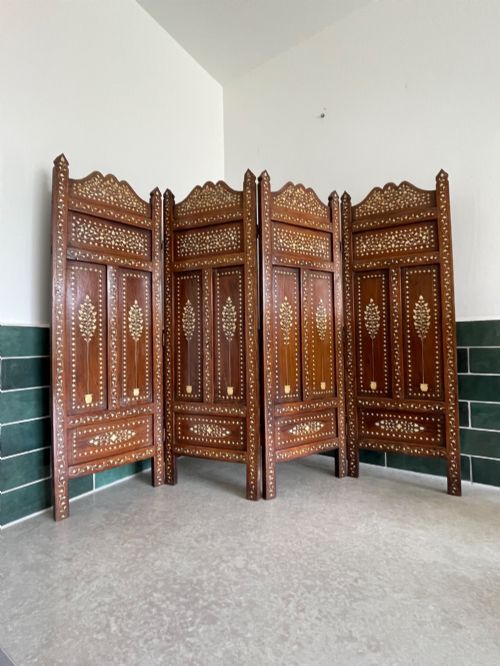
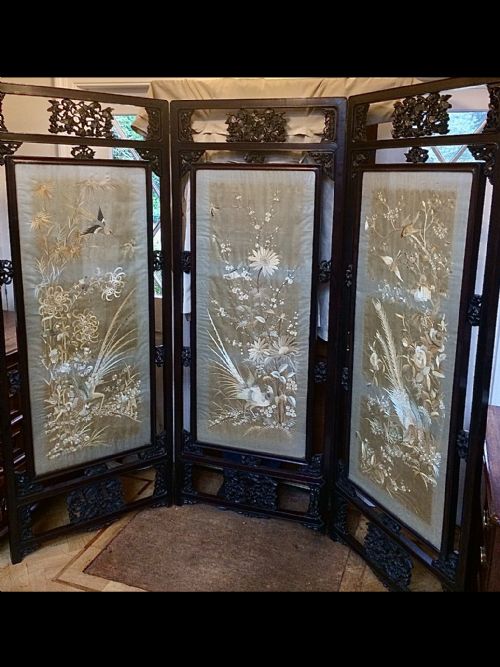
A carved panel room partition creates physical boundaries within domestic spaces through hinged wooden leaves. These panels draw upon Chinese Chippendale, French Rococo Revival, and Islamic Revival styles to shape interiors.
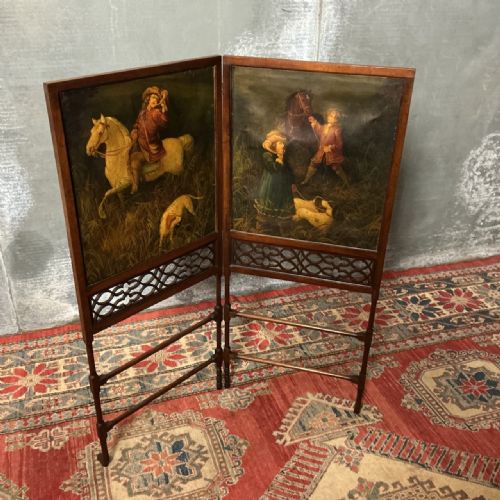
The selection ranges from tall folding privacy screens and room dividers down to smaller table screens and fire screens. The pieces span the nineteenth century through the Edwardian period and the early twentieth century.
Makers utilised hardwood, giltwood, and walnut, often incorporating painted panels, glass, brass, and needlepoint. Folding screens form the most frequent encounters on this page, structured in three, four, or more hinged folds.
What varies in quality
The depth and clarity of the wood carving distinguish the execution of the panels, particularly in complex floral and figural motifs. Crisp fretwork and secure joinery across the hinges indicate attentive workshop production.
The integration of secondary materials such as hand-painted panels, needlepoint, or coromandel lacquer alters the visual weight of the piece. Superior examples maintain balanced proportions and intact original surfaces across all folds.
Carved Panel Room Partition Retail Price Guide 2026
Typical asking prices for carved panel room partition among the pieces listed under this phrase on Sellingantiques today, from the lower quarter to the upper quarter. They describe what is for sale here now, not the wider market.
Listings feature woods including hardwood, walnut, and giltwood, paired with textiles like wool, silk cotton, and needlepoint.
Paul Sormani
The Carved Panel Room Partition Glossary
- Coromandel
- A type of Chinese carved lacquerware where designs are incised into a dark ground and filled with pigments. This technique appears frequently on nineteenth-century folding screens.
- Mashrabiya
- An architectural element adapted into screen panels featuring intricate wooden turned lattices. These pieces originate from Islamic design traditions.
- Aubusson
- A woven tapestry technique named after a French town, often incorporated into the panels of nineteenth-century room dividers. These textile inserts introduce soft pictorial scenes.
- Fretwork
- Ornamental perforated woodwork created by cutting patterns through the board. This method defines much of the Chinese Chippendale and Anglo-Indian work.
Carved Panel Room Partition: Frequently Asked Questions
How do I support a tall folding screen safely?
Keep the panels arranged in a zig-zag or accordion stance rather than pulling them completely straight. This natural angle provides the stability needed to stand upright on level flooring.
Avoid placing heavy screens in areas with constant foot traffic where they might be easily nudged. Let the weight distribute evenly across all the hinges.
Can these partitions block light effectively?
Solid wooden panels and dense lacquer surfaces block visibility and light entirely when positioned across a room. Lighter screens with fretwork or silk inserts allow filtered illumination to pass through.
Consider the density of the specific panels when deciding where to place the divider. Carved and pierced designs intentionally cast patterned shadows.
What is the difference between a room divider and a table screen?
Room dividers stand tall on the floor to partition spaces and create privacy within a room. Table screens are much smaller decorative objects designed to sit on furniture.
Both utilise similar carving and panel techniques but serve entirely different spatial scales. Table screens function purely as ornamental focal points.