

Antique Fold Top
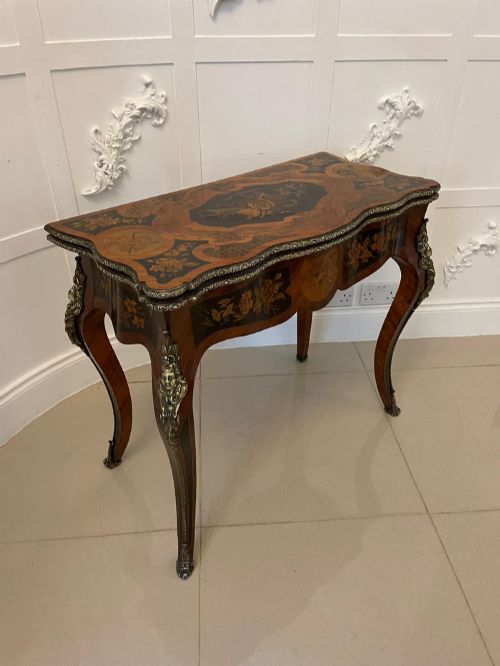
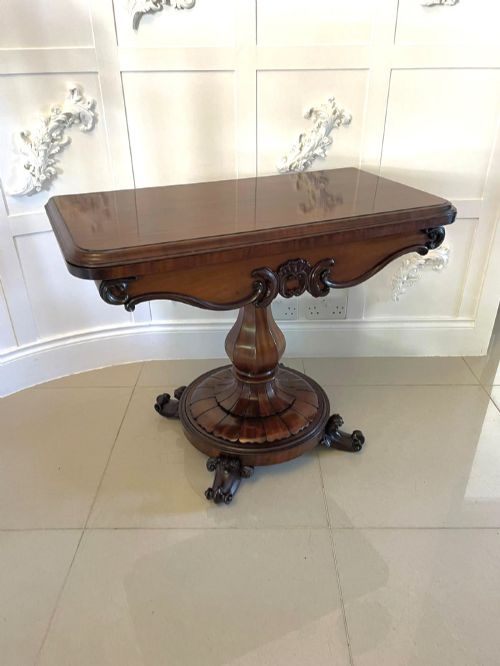
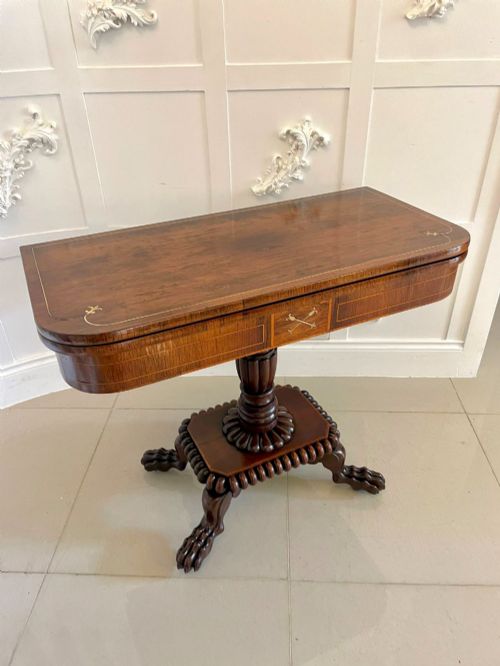
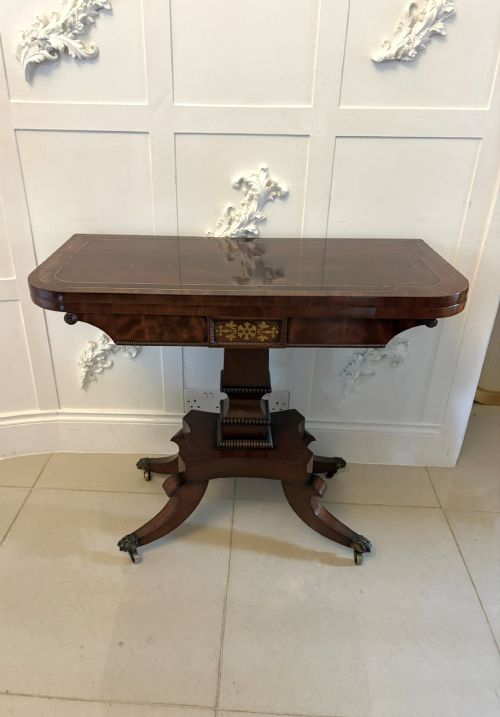
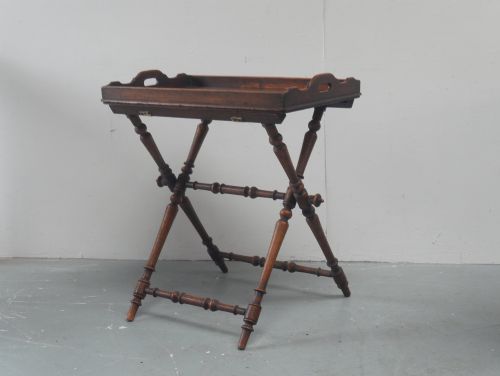
These pieces of antique fold top furniture are clever transforming tables designed to double their surface area when needed.
Antique Fold Top
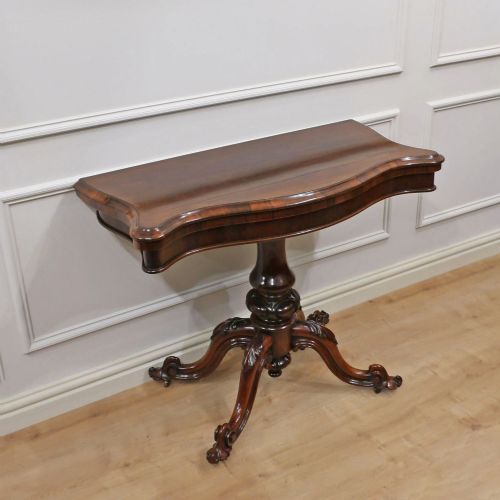
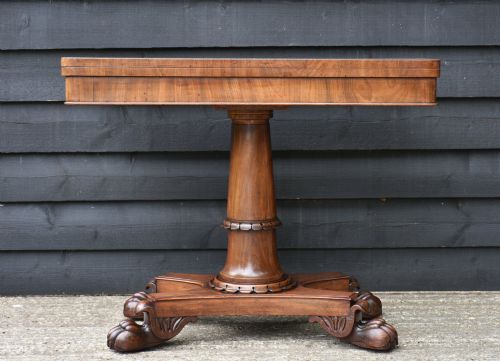
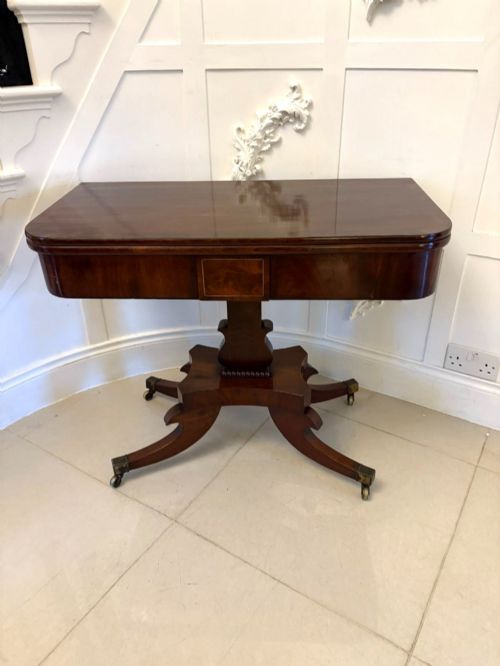
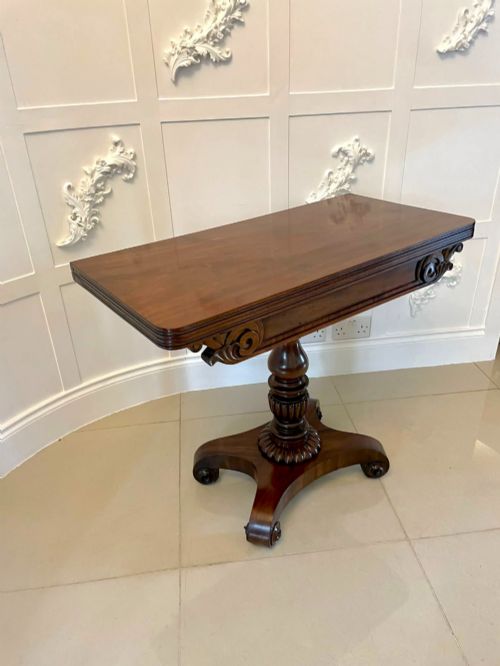
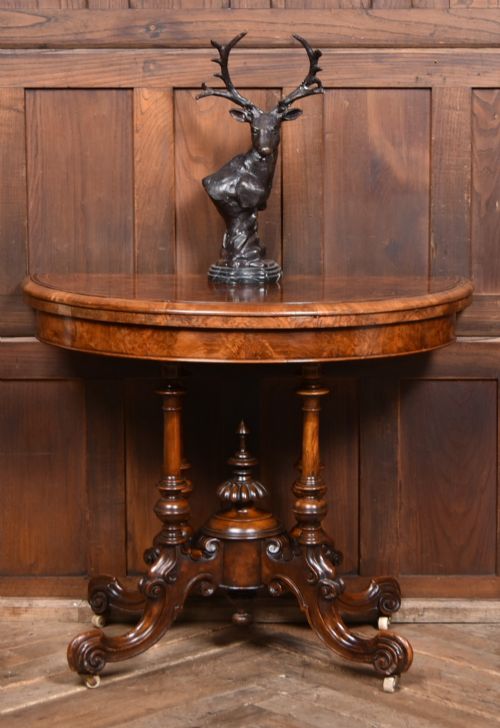
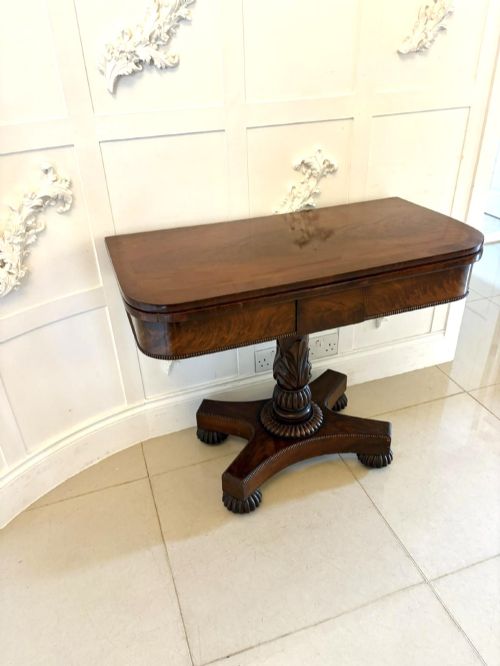
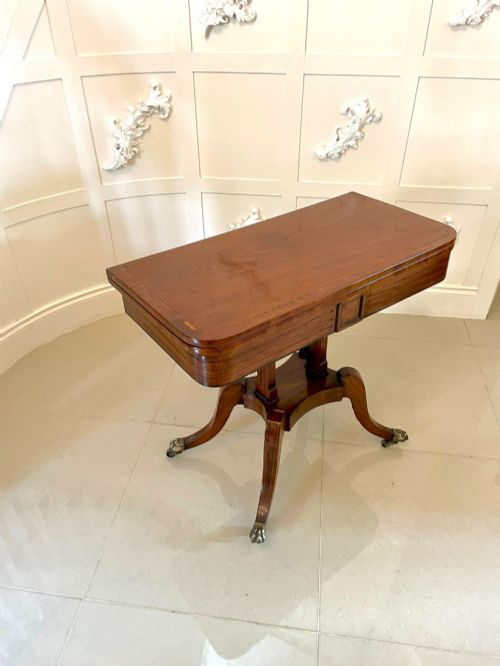
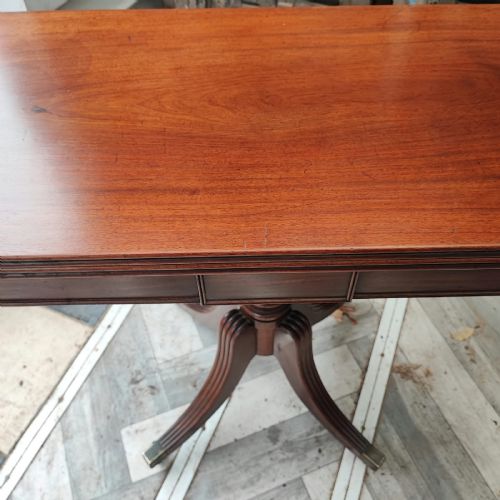
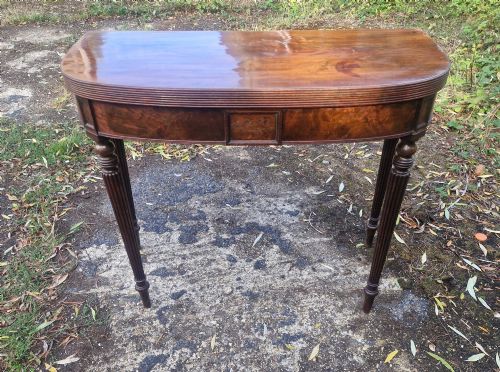
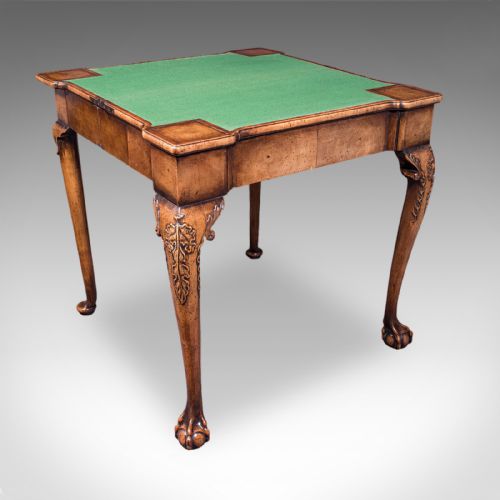
An antique fold top piece is primarily a table designed with a hinged leaf that opens to reveal a larger surface, taking the form of card tables, games tables, tea tables, and console tables.
The version most commonly met on this page is the 19th-century mahogany or rosewood card and tea table, originating from the Georgian, Regency, and Victorian periods.
These dual-purpose items served domestic needs in period homes where furniture had to adapt efficiently from a compact side piece to a hospitality or gaming station.
How they were made
Cabinet makers utilised dense native and exotic timbers such as mahogany, walnut, and rosewood, frequently applying decorative veneers like burr walnut, satinwood, and flame mahogany to the primary surfaces.
Inlay work in brass, alongside intricate wood marquetry and crossbanding, defined the decorative ornamentation of Regency and Victorian examples.
Structural ingenuity relied on sturdy pivot, swivel, or gateleg mechanisms to support the heavy folded top safely when open.
The listings span the 17th, 18th, 19th, and 20th centuries, featuring materials from oak and mahogany to brass, walnut, and rosewood.
What varies in quality
The refinement of the timber selection dictates the upper tier of the range, visible in deeply figured grain patterns and matched veneers rather than plain stock.
Joinery execution around the hinge mechanism and the crispness of carved elements, such as sabre legs or reeded edges, separate standard workshop output from exceptional cabinet work.
The Antique Fold Top Glossary
- Fold-over top
- A hinged table surface that opens flat on a pivot or gateleg action to double the usable area. This clever mechanism allowed a compact side table to function as a dining or card table.
- Crossbanding
- A narrow strip of veneer laid across the grain of the primary panel to form a contrasting border. It frames the top edge of high-quality tables.
- Marquetry
- Elaborate patterns created by fitting together small pieces of tinted woods, ivory, or shell onto a carcase. It is frequently seen on refined Victorian games tables.
- Demi-lune
- A half-moon shape used for table tops and frames designed to stand flush against a wall. These elegant surfaces fold open to form a full circle or oval.
Antique Fold Top: Frequently Asked Questions
How did people use fold top tables?
These tables served multiple functions in period drawing rooms and parlours, remaining compact against a wall when not in use.
When guests arrived, the hinged leaf opened to accommodate tea service, card playing, or board games.
What is the difference between a tea table and a card table?
Tea tables generally feature plain or moulded wooden surfaces intended to hold porcelain and silver during afternoon hospitality.
Card tables often contain lined interiors with baize or leather surfaces specifically designated for gaming.
How do I date an antique fold top table?
Dating relies on identifying the prevailing timber fashions, leg styles, and construction techniques characteristic of specific eras like Georgian or Victorian.
Mahogany and classical lines typically point to the late 18th or early 19th century, while heavier burr walnut often indicates mid-Victorian production.
Where should I place a fold top table at home?
These versatile items work exceptionally well in hallways, living rooms, or dining spaces as console or side tables.
Keeping them closed highlights the decorative veneer top, while opening them provides instant surface space when entertaining.