
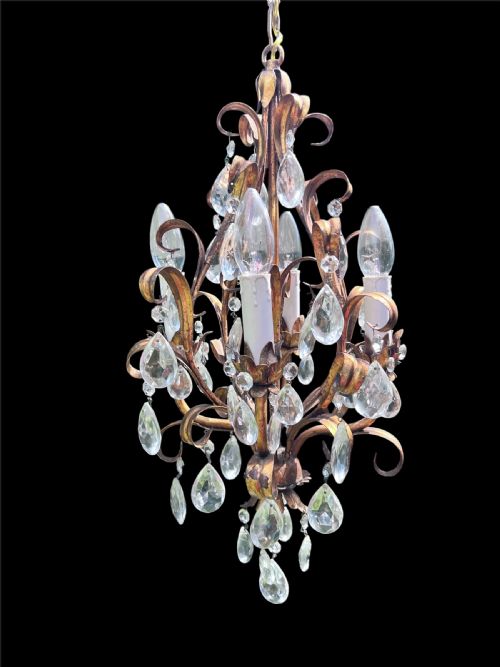


Antique Florentine Lighting
Antique florentine lighting brings carved gesso and gilded metal together to illuminate rooms with the ornate warmth of Italian craftsmanship.

Antique Florentine Lighting
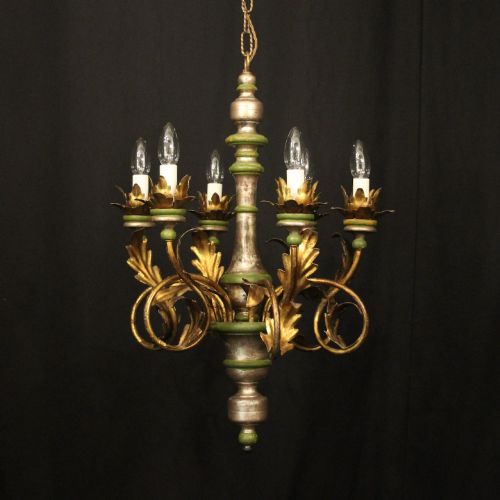
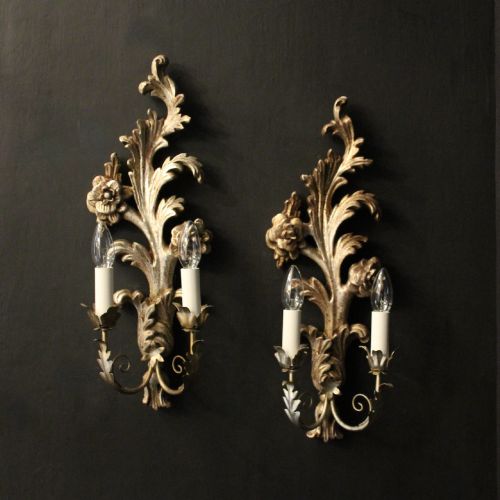
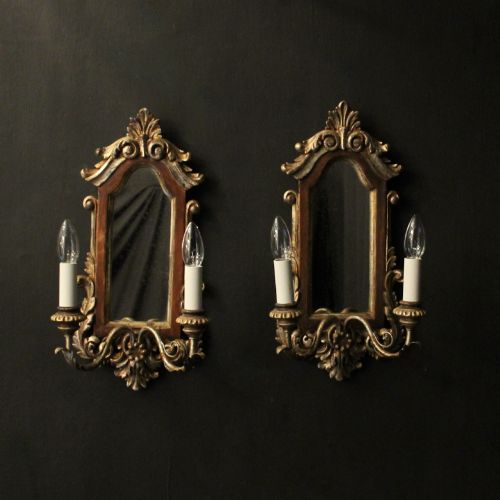
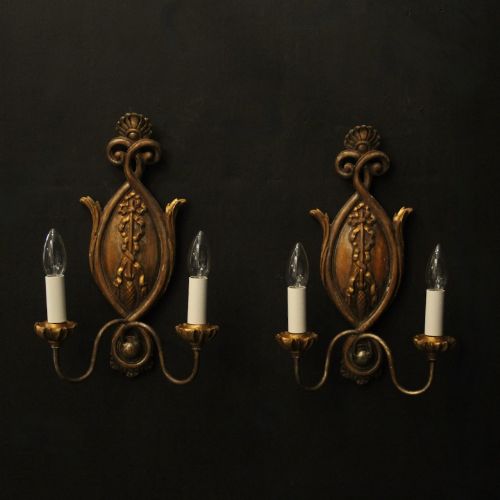
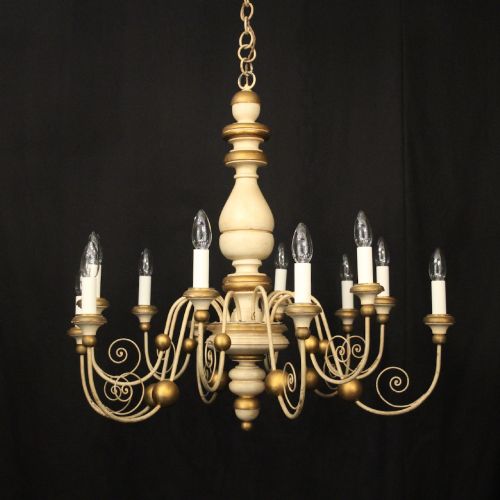
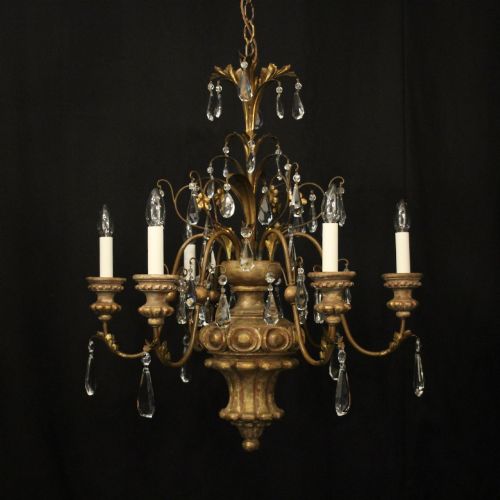
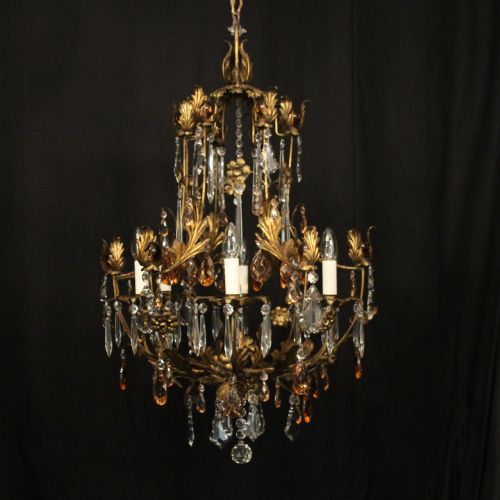
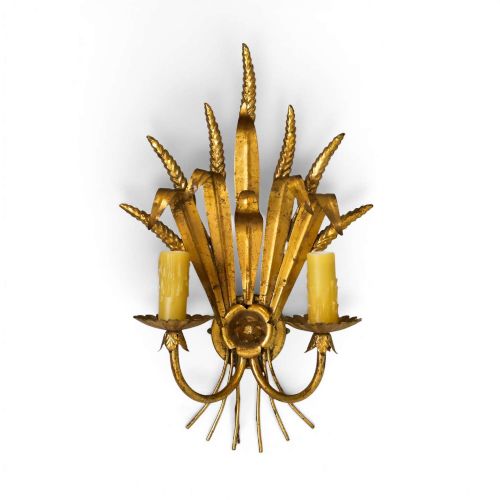
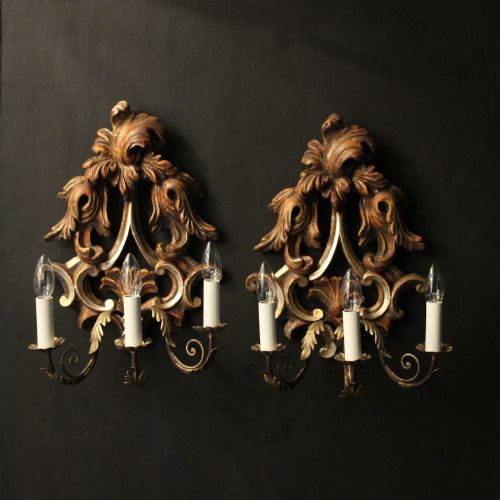
Antique florentine lighting spans grand multi-tiered chandeliers and matched pairs of wall sconces designed to catch the candlelight. These pieces draw on eighteenth-century baroque traditions alongside later twentieth-century revivals.
Chandeliers and wall lights dominate the selection, often carrying elaborate foliate forms shaped from wood and gesso. Standard lamps and table lamps also appear, extending the vocabulary of Italian carving into floor-standing formats.
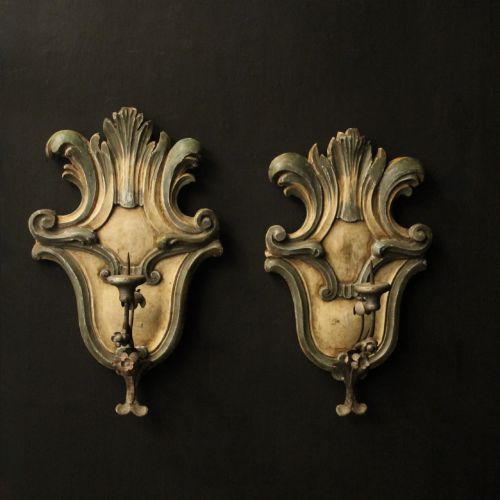
The materials lean heavily toward applied gold leaf, polychrome paint, and crystal drops. Pieces frequently date from the early decades of the twentieth century, with nineteenth-century examples appearing among the wooden wall lights and pricket candle sconces.
Materials and Technique
Carvers shaped wood and applied gesso to build up the intricate scrolling arms and leafy crests seen on girandoles and wall lights. Artisans then laid gold leaf over these prepared surfaces, sometimes adding polychrome highlights in muted pigments.
Glass and crystal elements frequently hang from the gilded metal or wooden frames, adding refraction to multi-light chandeliers. Metal armatures support heavier multi-tier arrangements, ensuring structural stability beneath the decorative carvings.
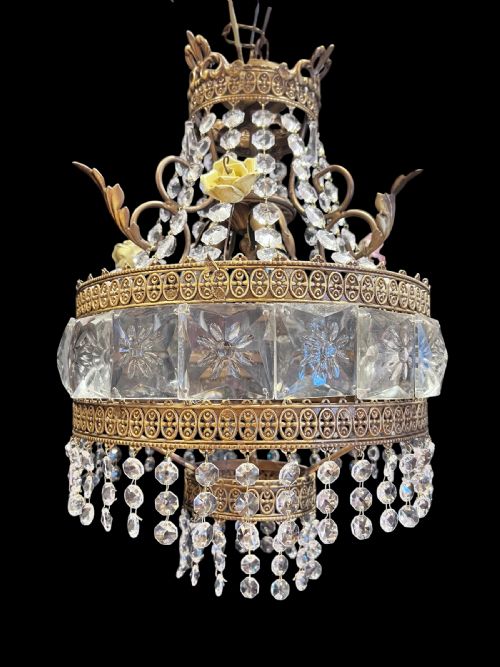
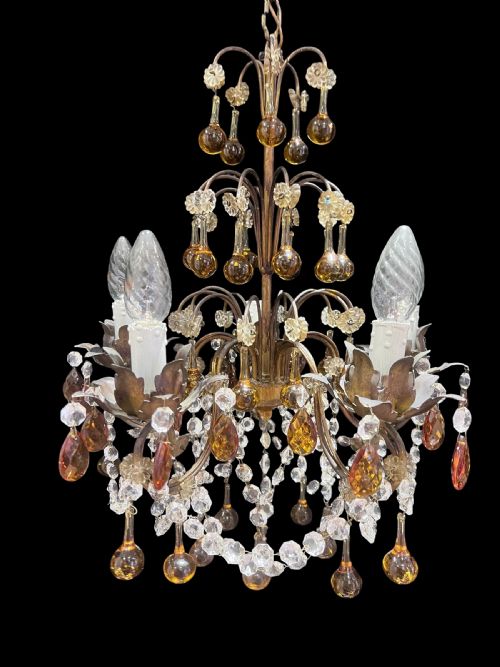
Delicate porcelain flowers bloom unexpectedly among the gilded leaves of mid-century chandeliers, offering a botanical twist to grand Italian illumination.
Craftsmanship and Detail
The depth and crispness of the carving determine the visual strength of giltwood components, separating finely rendered acanthus leaves from softer, mass-produced mouldings. The application of gold leaf and the subtlety of polychrome pigments also define the finish.
The integration of crystal drops and porcelain flowers affects the overall balance of larger chandeliers. Pierced metalwork and substantial wooden armatures command attention through their structural integrity and weight.
The Antique Florentine Lighting Glossary
- Giltwood
- Wood that has been prepared with gesso and covered with thin sheets of gold leaf. This surface treatment gives Italian lighting its characteristic metallic warmth.
- Girandole
- An ornamental bracket wall light featuring a mirror or highly reflective gilded backplate. The reflective surface multiplies the illumination from the candles.
- Gesso
- A plaster mixture applied to wood surfaces as a base for gilding and painting. It allows carvers to achieve sharp, intricate relief details before applying gold leaf.
- Pricket
- A sharp spike on a candlestick or sconce designed to hold a candle in place. These iron or wooden points appear on older ecclesiastical and domestic wall fittings.
Antique Florentine Lighting: Frequently Asked Questions
How do I clean gilded wooden chandeliers?
Dust these delicate surfaces gently with a dry, soft brush to preserve the fragile gold leaf and gesso layers. Avoid commercial chemical sprays or excessive moisture, which can damage the antique finish.
Take care around dangling crystal drops and porcelain flowers during maintenance. Professional restoration is recommended if structural components require tightening.
Were these lights originally electrified?
Most surviving pieces began as candle or oil-burning fixtures before receiving later electrical wiring. Chandeliers and wall lights often show adaptations made to accommodate modern bulbs safely.
Original sockets and wiring are rarely present on pieces dating from the nineteenth or early twentieth centuries. Qualified electricians should inspect older fittings before installation.
How do I date a Florentine wall light?
Examine the base wood, the preparation layers of gesso, and the hand-tool marks left by the carver. Nineteenth-century examples often display heavier wooden construction and darker patination.
Twentieth-century revivals frequently utilise brighter gilt finishes and lighter pine or composition cores. Comparing the wiring channels and metal fixings also helps establish the era of manufacture.
Where should I hang a large chandelier?
High ceilings provide the necessary clearance for multi-tiered chandeliers adorned with crystal drops and extensive wooden arms. Dining rooms and entrance halls serve as traditional locations for substantial Italian light fixtures.
Ensure the ceiling joists can support the combined weight of carved wood, metal, and glass elements. Professional hanging ensures safe suspension at the correct height above furniture.