

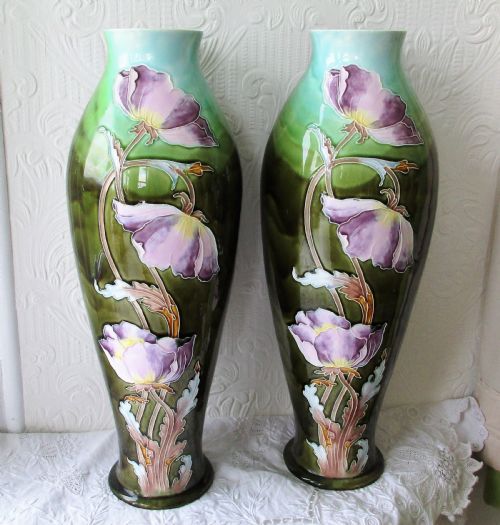
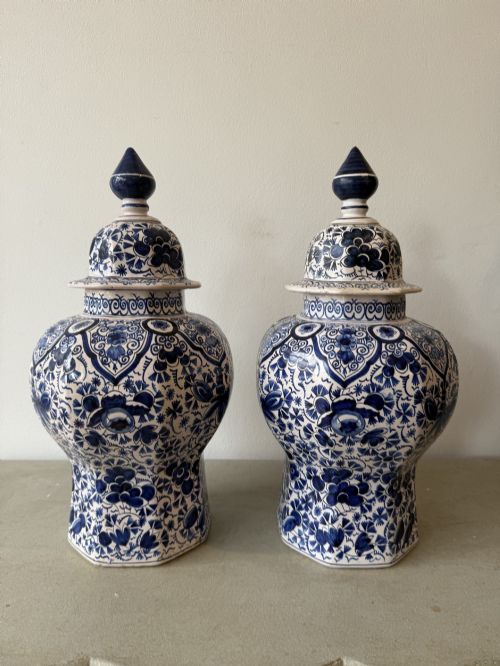
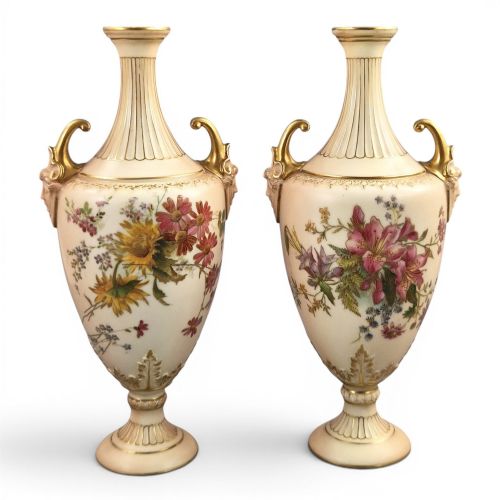
Antique Floral Vases Pair
An antique floral vases pair brings balanced symmetry and painted botanical detail to a mantel or side table, drawing the eye with matching forms.
Antique Floral Vases Pair
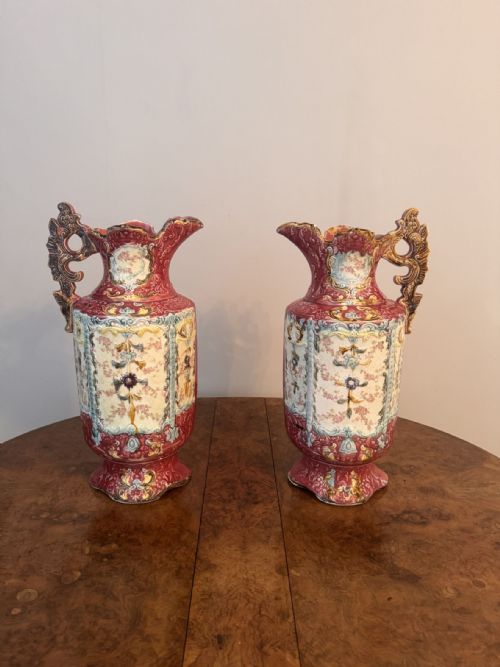
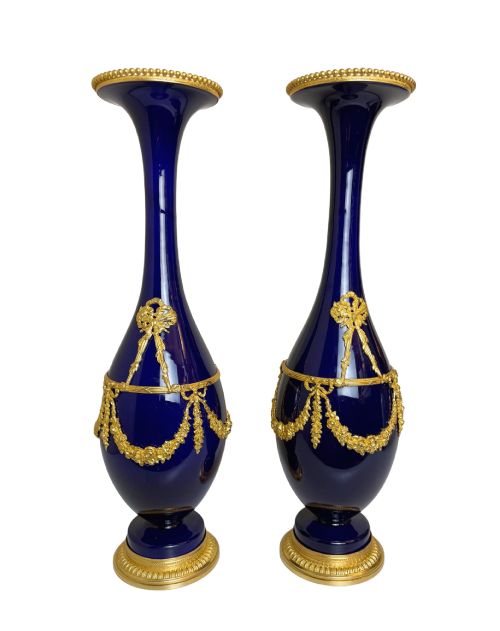
An antique floral vases pair consists of matching decorative vessels created to display botanical motifs symmetrically in a room. Buyers seeking an antique floral vases pair encounter matched sets originating from British potteries, European factories, and Japanese workshops.
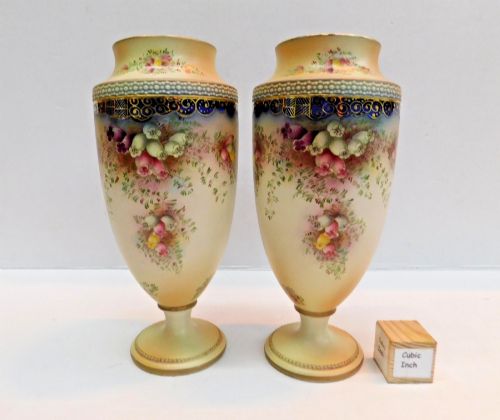
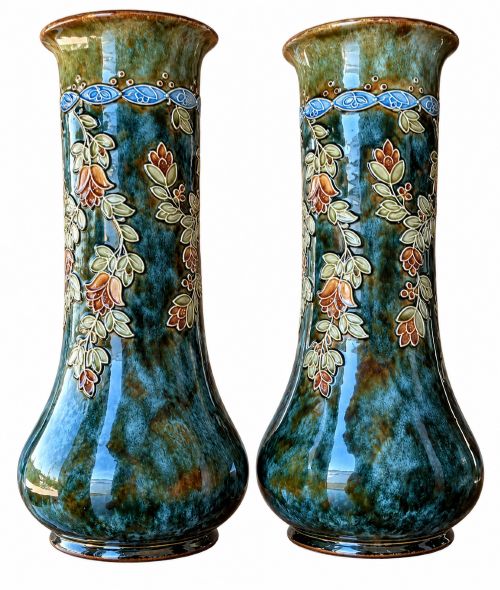
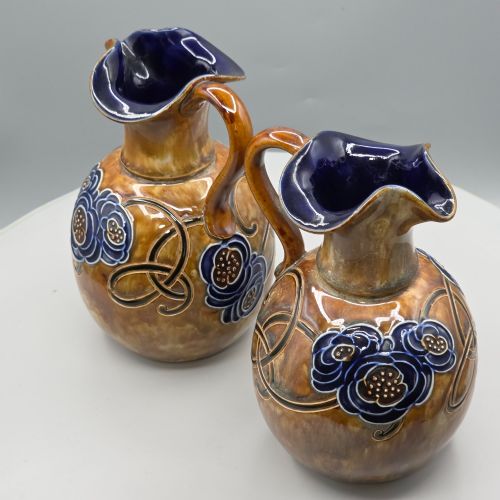
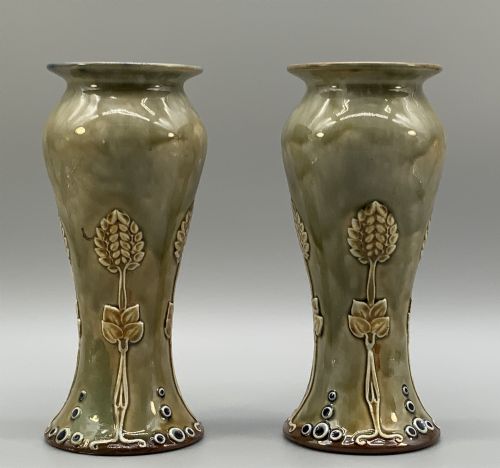
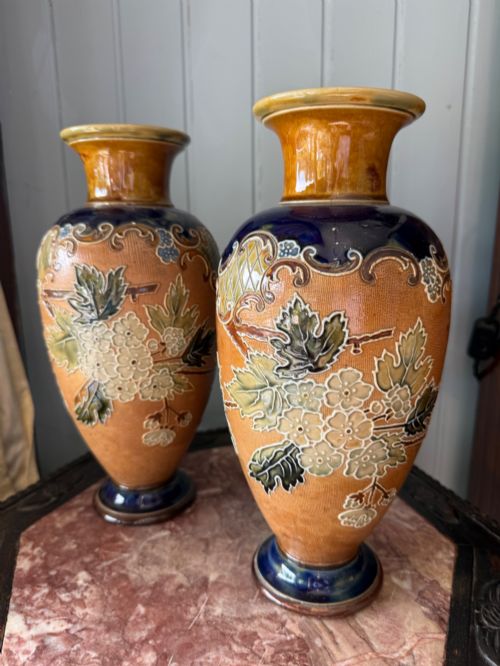
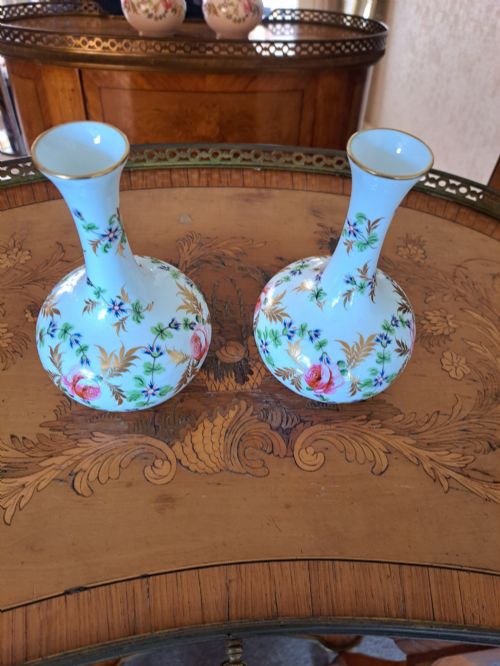
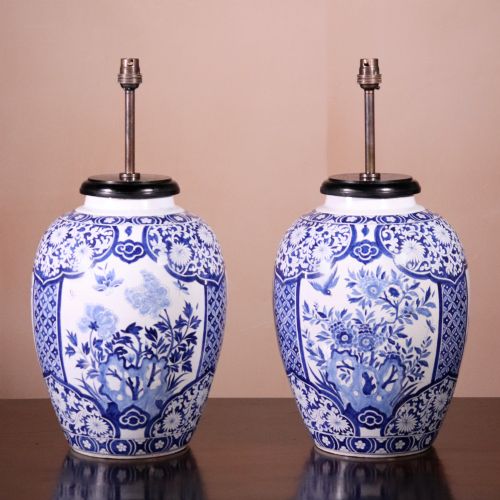
The selections span the Victorian, Edwardian, and Meiji periods, taking the form of baluster vessels, ewers, and ginger jars. These items serve as decorative centrepieces, frequently decorated with hand-painted blossoms, enamel leaves, and gilt accents.
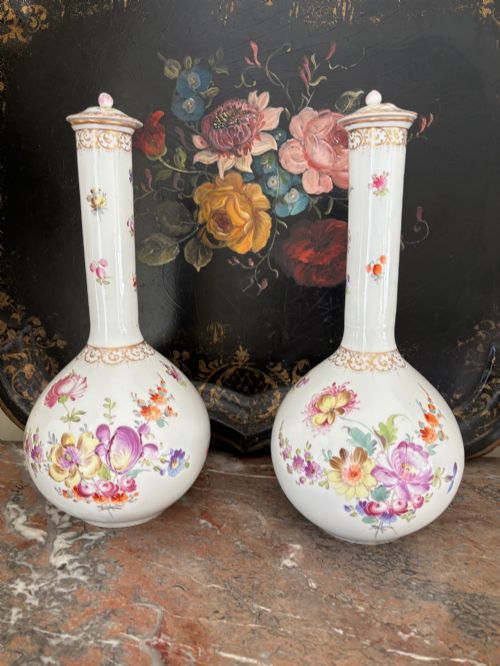
Makers such as Royal Doulton, Royal Worcester, and various Meiji period Japanese studios dominate the output. Pieces range from earthenware jugs to porcelain urns with covers, offering distinct regional interpretations of floral design.
Materials and production methods
Potters shaped ceramic, porcelain, earthenware, and stoneware bodies on wheels or cast them in moulds before applying glazes. Stoneware and porcelain received high-temperature firings to achieve durable, vitrified structures capable of holding liquids.
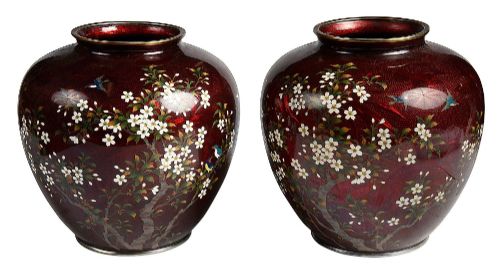
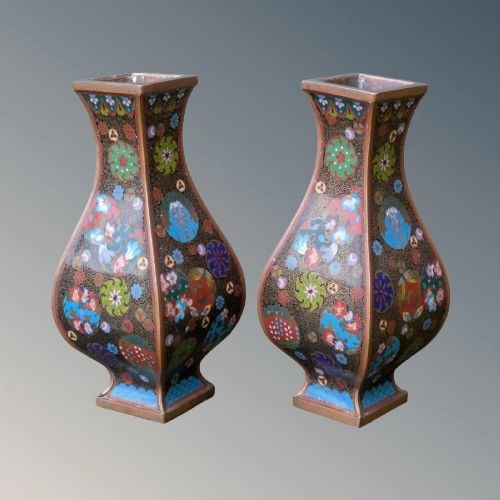
Artisans applied surface decoration using underglaze pigments, coloured enamels, and gold leaf highlights. Cloisonné examples utilised wire soldered to metal bases to form compartments filled with vitreous enamel pastes before firing and polishing.
The inventory includes baluster vases, ginger jars, ewers, and table lamps adorned with hand-painted floral motifs.
Determining quality and execution
Quality rests in the precision of the hand-painted brushwork and the crispness of moulded or incised details. Superior examples display confident, individual floral execution rather than repetitive transfer-printed outlines.
The integration of the glaze, the depth of enamelling, and the purity of the ceramic body separate standard production wares from master studio outputs. Well-preserved gilding and intact enamel surfaces indicate careful preservation over generations.
Royal Doulton·Royal Worcester·W&R Carlton Ware·Sitzendorf·Crown Derby·Minton·TG Green·Mason·Maruni Kobe·Manpei·Hakusan
The Antique Floral Vases Pair Glossary
- Baluster
- A vase shape with a rounded lower body that tapers towards a narrow neck and flaring rim. This profile resembles the architectural baluster column common in classical staircases.
- Cloisonne
- A decorative metalwork technique where wire partitions hold enamel pastes before firing. The surface is then ground smooth to reveal the metal outlines between the coloured fields.
- Ewer
- A large jug featuring an oval body, a wide spout, and a curved handle designed for pouring. Victorian examples often function purely as decorative mantel ornaments rather than serving vessels.
- Imari
- A Japanese export porcelain style featuring cobalt blue, iron red, and gold overglaze decoration. The palette creates dense geometric and floral patterns across the ceramic surface.
- Satsuma
- A type of Japanese earthenware featuring a crackled ivory glaze decorated with polychrome enamels and gold. Workshops in Kyoto and Kobe produced these wares extensively for export.
Antique Floral Vases Pair: Frequently Asked Questions
How do I display a pair safely?
Place the vessels on stable, level surfaces away from heavy foot traffic or edge hazards. Using museum wax underneath the bases prevents accidental tipping on wooden furniture.
Keep them out of direct sunlight to protect enamel pigments and gold leaf from fading over time. Ensure the display area allows adequate space around each piece to appreciate the symmetry of the set.
Can these hold water for flowers?
Most antique ceramic and porcelain vessels hold water safely, but porous earthenware or pieces with repaired cracks require caution. Test the interior with a small amount of water first to check for historical hairline fractures.
Using a hidden glass insert protects the interior glaze and body from mineral deposits and moisture damage. Hand wash the interior gently without submerging metal-trimmed or delicate enamelled surfaces.
How are Japanese and European styles different?
Japanese pieces from the Meiji period frequently feature dense Satsuma crackle-glaze or Imari patterns incorporating nature scenes and gold detailing. European makers like Royal Doulton and Royal Worcester focused on Art Nouveau contours, blush ivory grounds, and naturalistic British flora.
European factories often utilised stoneware and heavy earthenware bodies, whereas Japanese makers specialised in refined porcelain and fine-pored pottery. Both traditions emphasised hand-painted floral motifs but expressed them through distinct regional aesthetics.
What does blush ivory mean?
Blush ivory refers to a soft, creamy porcelain body developed by factories like Royal Worcester in the late nineteenth century. The matte or semi-matte background mimics the warm tone of unbleached ivory.
Painters applied delicate floral decorations directly over this tinted glaze before adding subtle gilt highlights. This technique created a gentle backdrop that made painted roses and spring blossoms stand out.