


Antique Floral Slipper Seat
An antique floral slipper seat is a low-slung domestic chair upholstered in textile, offering a comfortable and compact perch for dressing rooms and bedrooms.
Antique Floral Slipper Seat
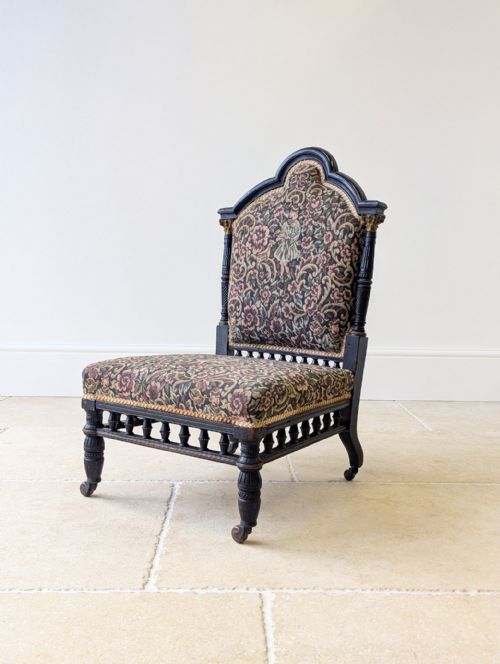
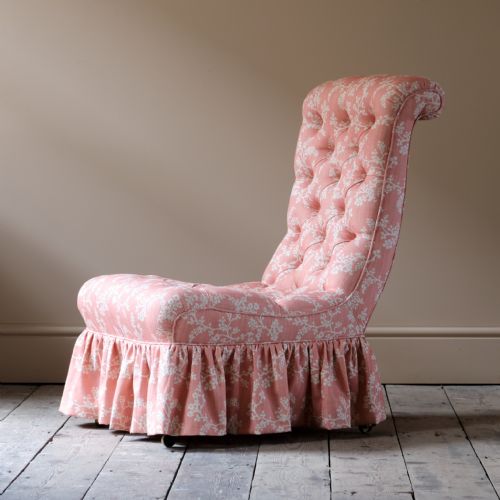
When you search for an antique floral slipper seat, you find low-seated Victorian and Edwardian chairs designed for bedrooms and dressing rooms. These pieces appear in forms such as nursing chairs, boudoir chairs, and low salon chairs that put the sitter closer to the floor for ease of putting on shoes.
The examples on this page span the mid nineteenth century through to the early twentieth century, taking in Victorian, Edwardian, and Aesthetic Movement periods. Makers and workshops from London, Edinburgh, and France produced these low-slung frames in walnut, mahogany, and ebonised wood.
Upholstery defines these seats, frequently employing original floral tapestry, vintage linen, and contemporary patterned textiles. The low proportions and open frames make them versatile accent chairs in modern rooms where space is at a premium.
How they were made
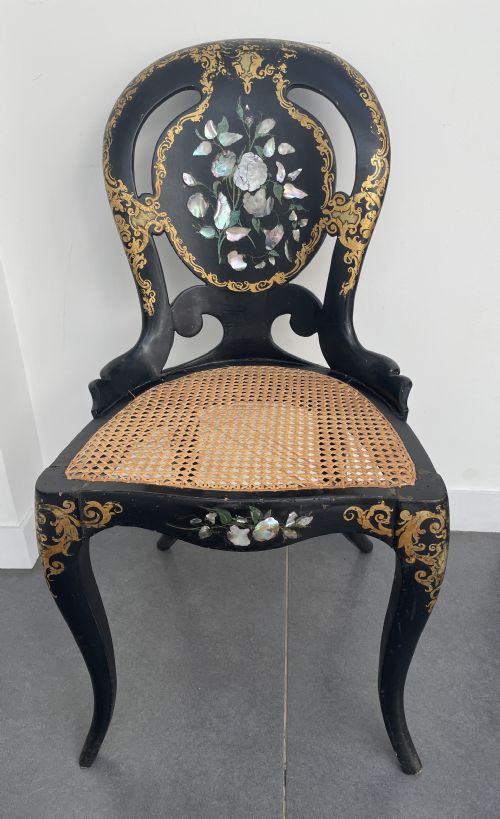
Cabinetmakers shaped the foundational frames from dense timbers such as mahogany, walnut, and ebonised wood, sometimes incorporating gilt legs or mother of pearl inlay. Brass castors often supported the short legs, allowing easy movement across carpets.
Traditional stuffing and webbing built up the sprung or pad seats before finishing with durable textiles like wool tapestry, patterned linen, and woven floral fabrics. Button-backing and hand-tacked borders secured the upholstery to the wooden frames.
Several chairs retain their original floral tapestry, offering a colourful snapshot of Victorian needlework skills.
What varies in quality
The integrity of the timber frame and the sophistication of its carving dictate the hierarchy of these chairs. Plain turned legs sit at one end of the scale, while crisp hand-carved walnut woodwork, inlaid mother of pearl, and stamped maker details denote superior workshop production.
The survival of original textiles, such as period floral tapestry or early printed linen, elevates the historical interest of a piece. Substantial mahogany and walnut frames also distinguish better examples from lighter, standard bedroom chairs.
Gillows·Hindley & Sons·R Whytock of Edinburgh
The Antique Floral Slipper Seat Glossary
- Slipper chair
- A low-seated upholstered chair traditionally used in bedrooms for changing footwear. These pieces lack arms to accommodate bulky nineteenth-century garments.
- Nursing chair
- A low armchair designed to give a mother a comfortable seat for nursing infants. They share the low profile and upholstered comfort of slipper chairs.
- Prie-Dieu chair
- A devotional prayer chair characterised by a high, narrow back and a low seat, often covered in tapestry. Victorians frequently adapted them as general bedroom seating.
- Ebonised wood
- Timber treated with chemical stains or dark finishes to imitate costly ebony. This technique was favoured during the Aesthetic Movement and late Victorian periods.
Antique Floral Slipper Seat: Frequently Asked Questions
Why are antique slipper chairs so low?
These chairs were designed for dressing rooms and bedrooms where women sat to put on shoes, stockings, and heavy Victorian garments. The low height made the task considerably easier.
Over time, the form transitioned from a utilitarian dressing room item into a decorative salon and bedroom accent chair.
Can I use an antique slipper chair every day?
Yes, provided the wooden frame is structurally sound and the internal webbing has been properly maintained. Many owners place them in bedrooms or corners of living rooms as accent seating.
Their compact footprint makes them particularly useful in smaller spaces where standard armchairs overwhelm the room.
How do I date a Victorian slipper chair?
Dating relies on combining the timber species, leg turning style, and upholstery evidence. Mid nineteenth-century examples often employ solid mahogany with simple turned legs, while later Victorian versions frequently use walnut or ebonised wood.
Maker stamps or stamps from retailers on the wooden frame or webbing slats offer the most precise chronological indicator.
What is the difference between a nursing chair and a slipper chair?
Nursing chairs typically feature slightly higher backs and occasionally small arms to support a person holding an infant. Slipper chairs generally remain armless with a very low profile.
Both types share a reduced seat height intended for comfortable domestic repose in private rooms.