

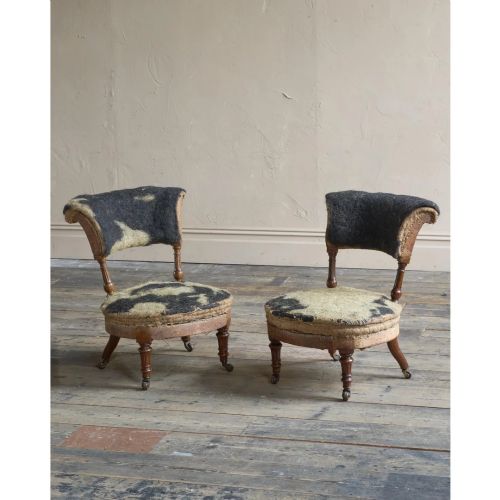
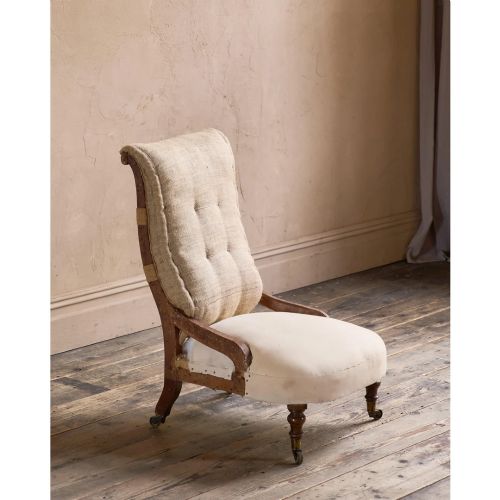
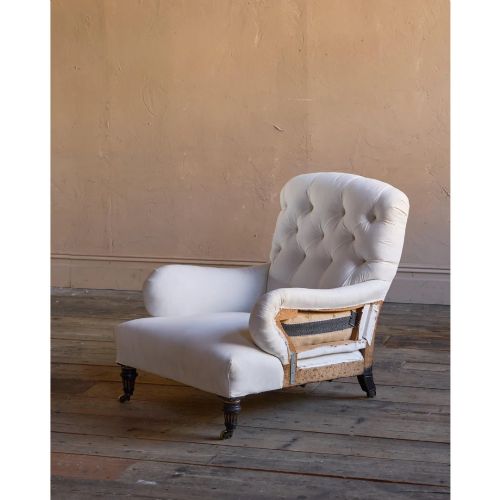
Low Upholstered Seat Chair
A low upholstered seat chair provides a compact footprint with deep padding, bringing nineteenth-century comfort into modern reception rooms.
Low Upholstered Seat Chair
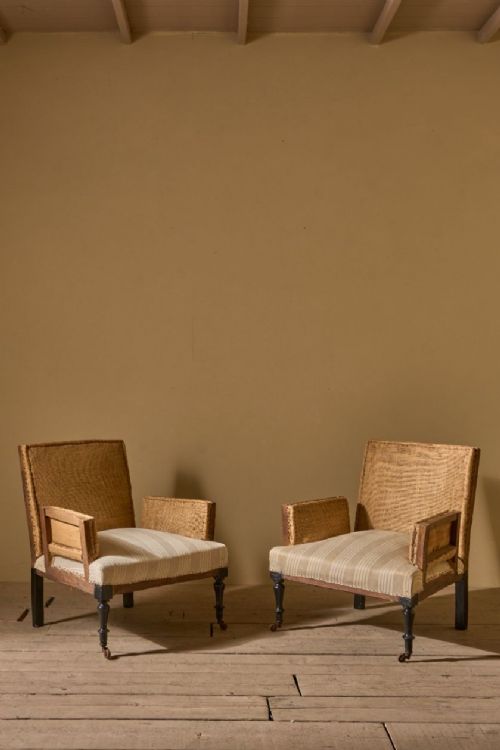
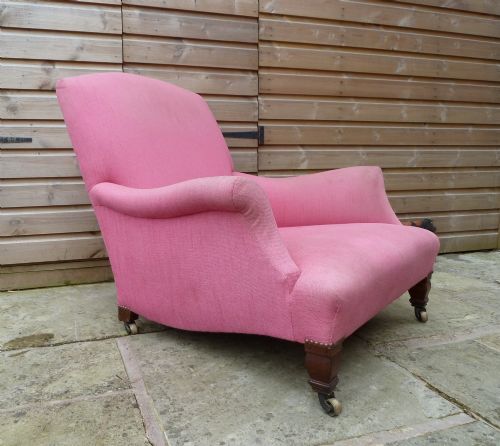
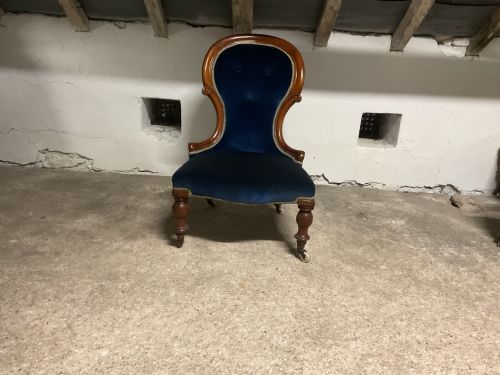
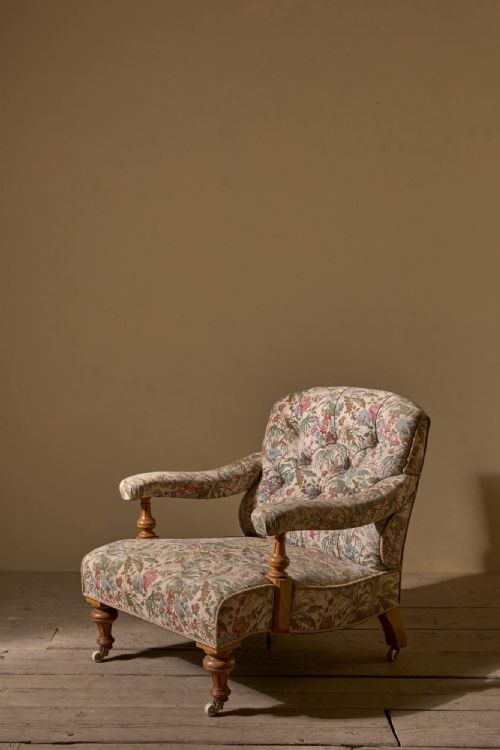
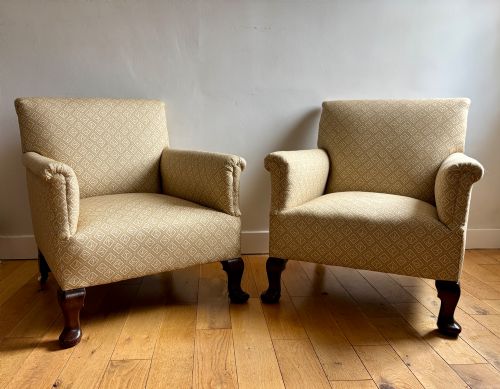
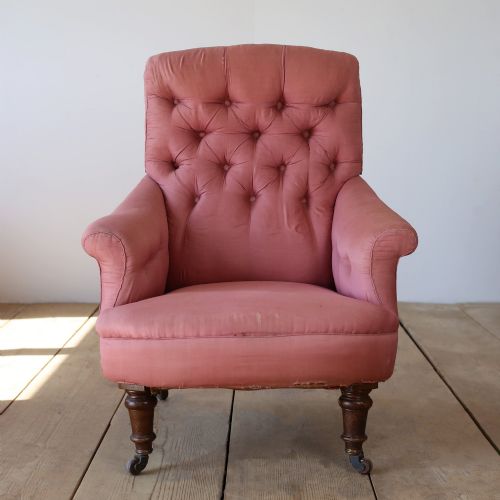
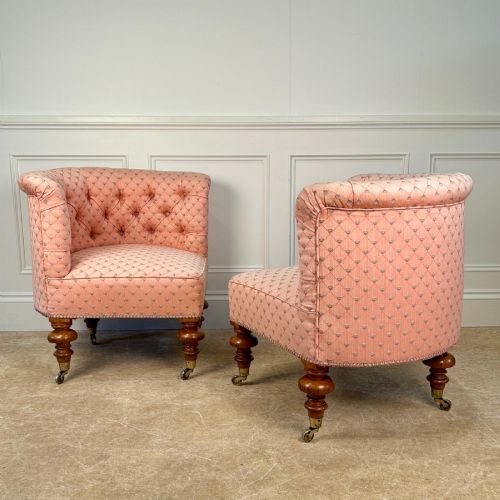
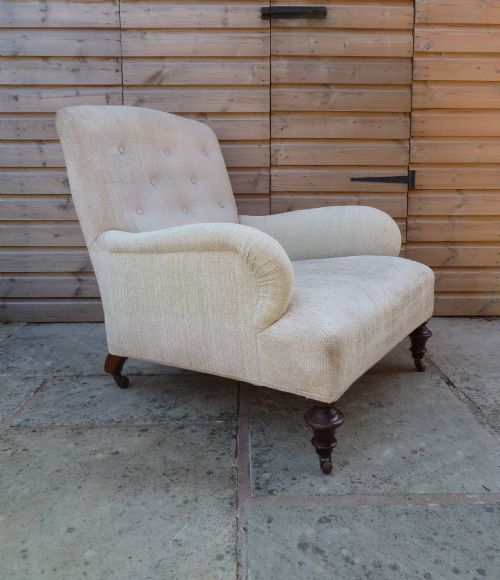
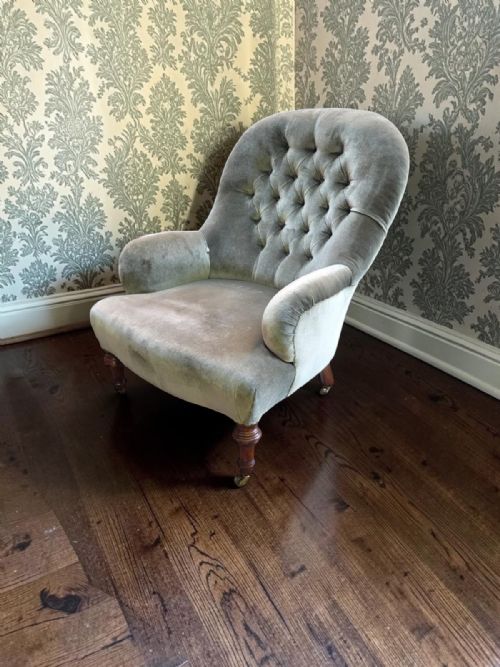
When you search for a low upholstered seat chair, you encounter a variety of compact forms designed for nineteenth-century parlours, bedrooms, and drawing rooms. The selection includes nursing chairs, slipper chairs, and low club armchairs originating from the Victorian and Edwardian periods.
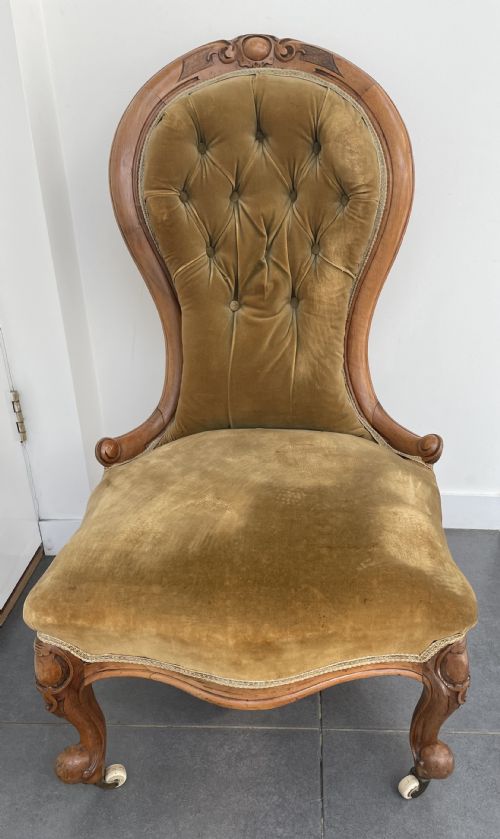
The nursing chair and slipper chair dominate this selection, featuring low frames designed originally for fireside comfort or dressing. These pieces sit close to the floor, often supported by turned wooden legs or carved walnut supports.
Makers of the period utilised stylistic influences ranging from Queen Anne revivals to the Aesthetic Movement and Napoleon III designs. English country house pieces appear frequently alongside button-backed occasional seating.
How they were made
Makers constructed the foundational frames using timber such as mahogany, walnut, and oak. These robust wooden skeletons supported internal stuffing and heavy springing systems.
Upholstery materials included velvet, calico, and various woven fabrics, often finished with button backs, decorative fringe, and brass castors. Carved giltwood and turned wooden legs frequently anchored the base of the chair.
Listings feature Victorian and Edwardian periods alongside materials such as walnut, mahogany, velvet, and calico.
What varies in quality
The integrity of the underlying wooden frame and the precision of the joinery set the baseline standard for these chairs. Walnut and mahogany examples with carved detailing or stamped maker signatures demonstrate superior workshop origin.
The execution of the upholstery work, from the tension of the button backing to the selection of quality velvet or fabric, distinguishes standard production from high-end bespoke pieces.
Howard and Sons·Whytock and Reid·Hampton and Sons·Gillows
The Low Upholstered Seat Chair Glossary
- Nursing chair
- A low-seated Victorian chair designed originally to assist mothers with infant care. These pieces usually feature a buttoned back and slender legs.
- Slipper chair
- An upholstered chair sitting close to the floor without arms, traditionally used in bedrooms for putting on shoes. They often feature fringed trim or castors.
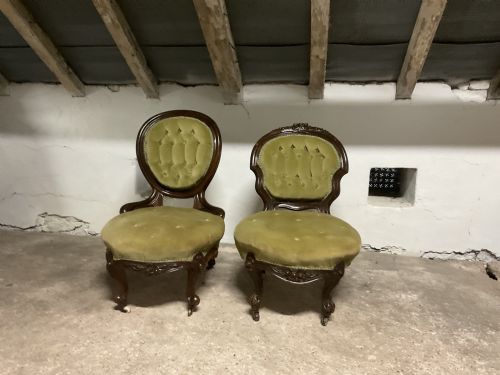
- Button back
- An upholstery technique where deep buttons are pulled through the padding to create a padded diamond pattern. This method secures the internal stuffing.
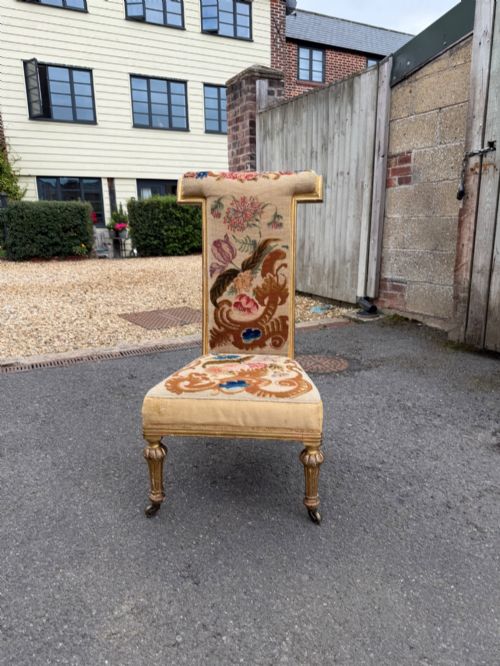
- Prie Dieu
- A devotional chair featuring a low seat and an upper rest designed for kneeling and prayer. These pieces date predominantly to the mid-nineteenth century.
- Aesthetic movement
- A late nineteenth-century design style focusing on visual beauty rather than narrative or moral function. Pieces in this style often incorporate refined wooden legs.
Low Upholstered Seat Chair: Frequently Asked Questions
Where should I place a low upholstered seat chair?
These compact chairs suit bedrooms, dressing rooms, and low-ceilinged reception spaces where standard armchairs overwhelm the room layout.
Their reduced height makes them effective fireside seating or occasional chairs in a corner.
How do I identify a Victorian nursing chair?
Look for a low seat height combined with a tall, button-backed sprung upper section designed for comfort.
Turned walnut legs and original brass castors are common indicators of nineteenth-century origin.
What is the difference between a slipper chair and a nursing chair?
Slipper chairs typically lack arms entirely and sit lower to the ground to facilitate dressing.
Nursing chairs may include low arms or open sides designed to accommodate bulky Victorian garments.
Can I reupholster an antique low chair?
Many of these chairs require new fabric or complete re-webbing due to the age of the materials.
Using calico as a base layer before applying velvet or patterned fabric maintains the traditional construction methods.