

Low Upholstered Bedroom Chairs
Low upholstered bedroom chairs are compact Victorian and Edwardian seats designed for dressing rooms and parlours, offering low-slung comfort with decorative flair.
Low Upholstered Bedroom Chairs
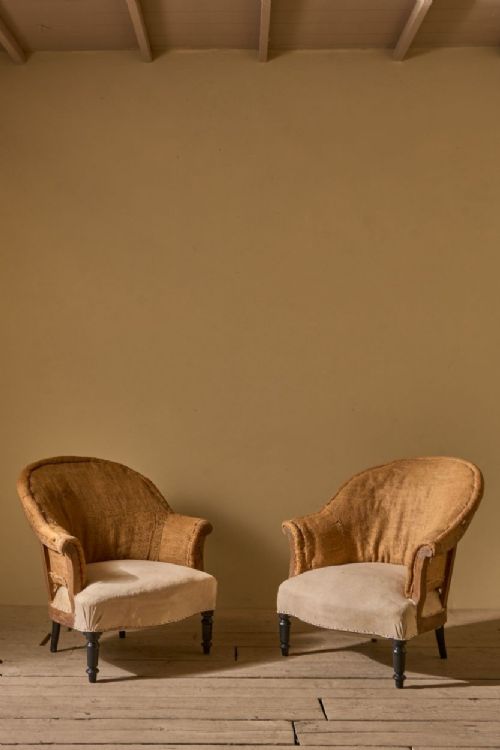
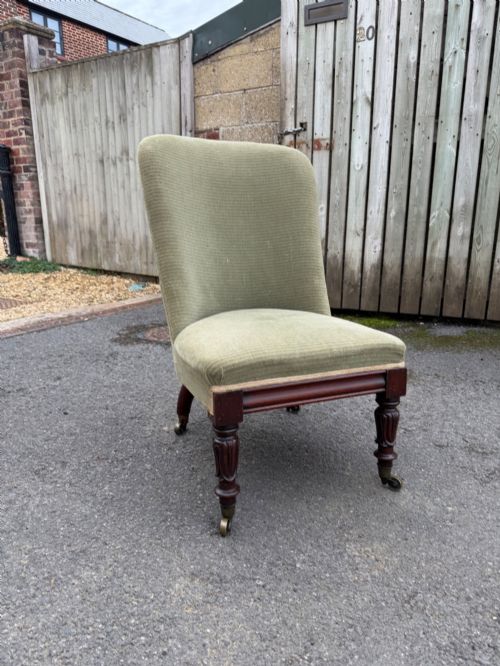
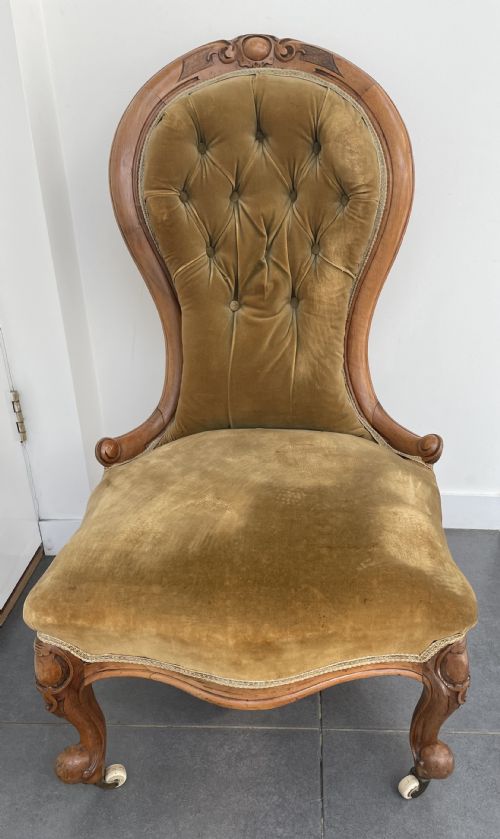
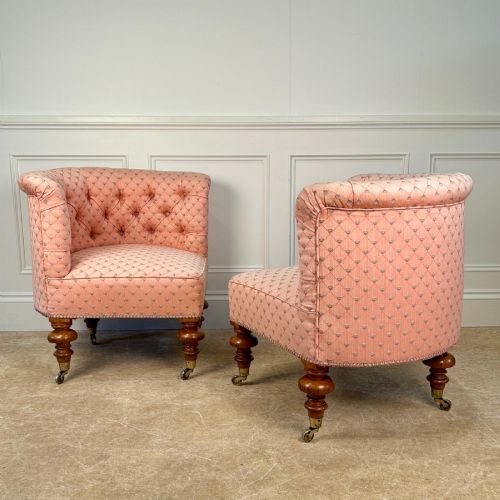
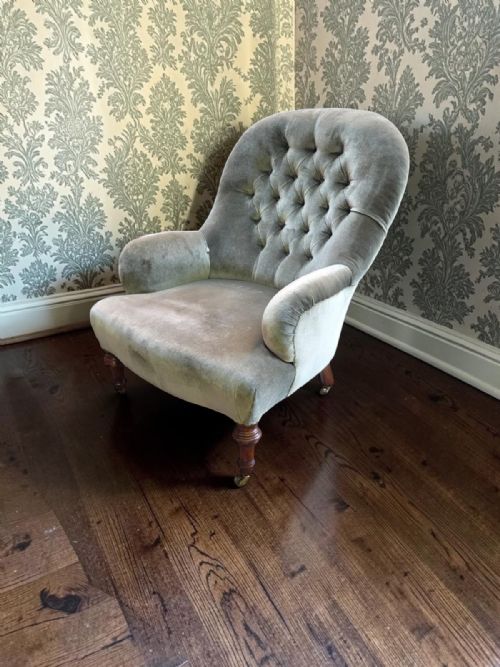
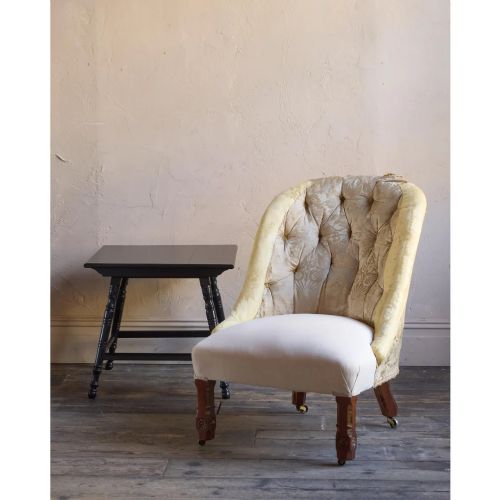
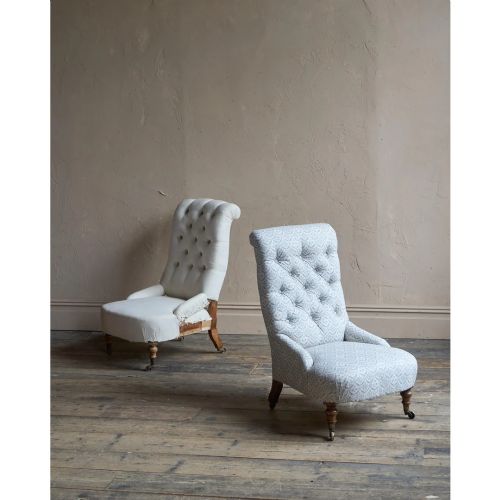
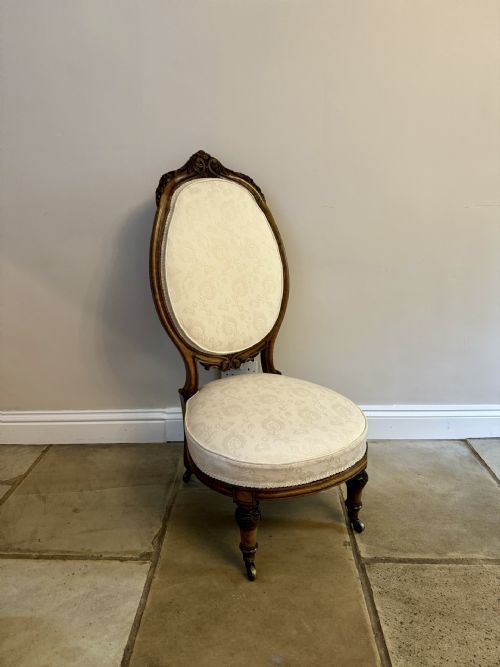
Low upholstered bedroom chairs encompass a variety of compact forms including nursing chairs, slipper chairs, and tub chairs originating mainly from the nineteenth century. These pieces were originally designed for domestic chambers and dressing rooms where a lower seat height facilitated sitting comfortably while dressing or tending to a hearth.
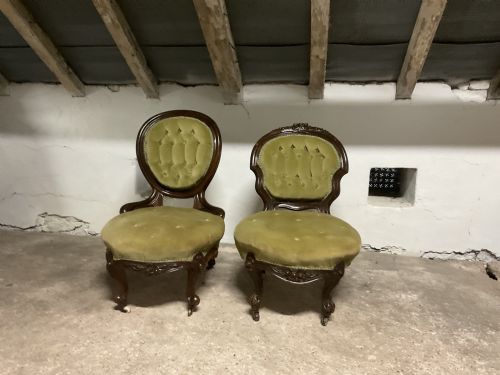
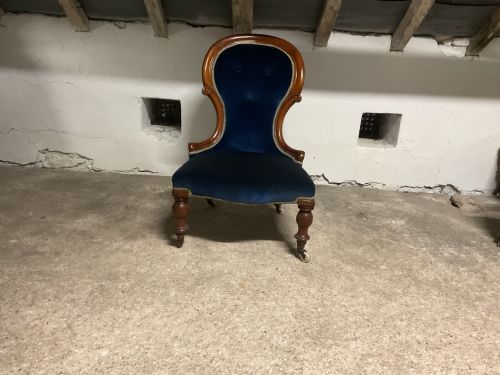
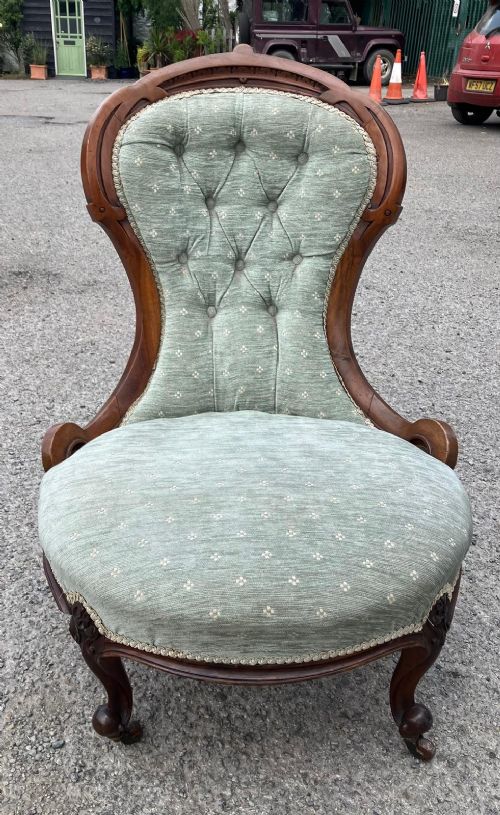
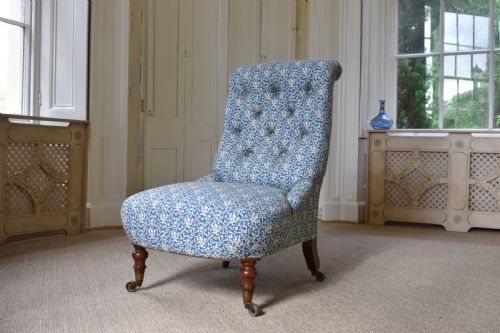
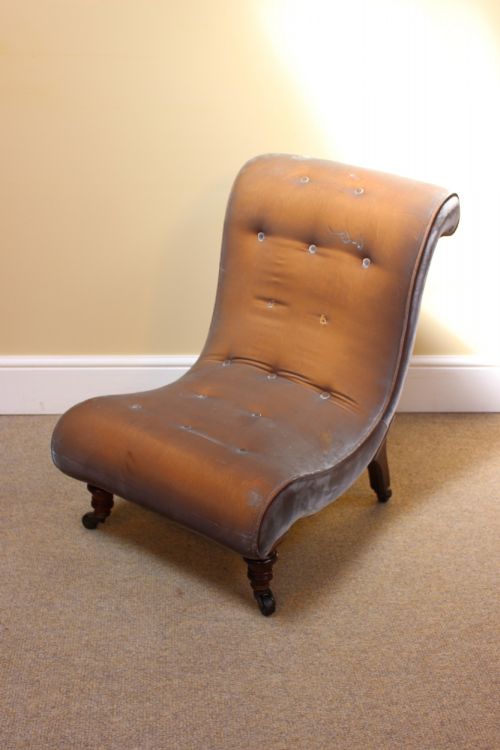
The most common examples on this page date from the Victorian and Edwardian eras, constructed in walnut, mahogany, and various woods, often featuring button backs and turned legs. Alongside traditional nursing and slipper chairs, the selection includes occasional chairs and small armchairs influenced by French Napoleon III and aesthetic styles.
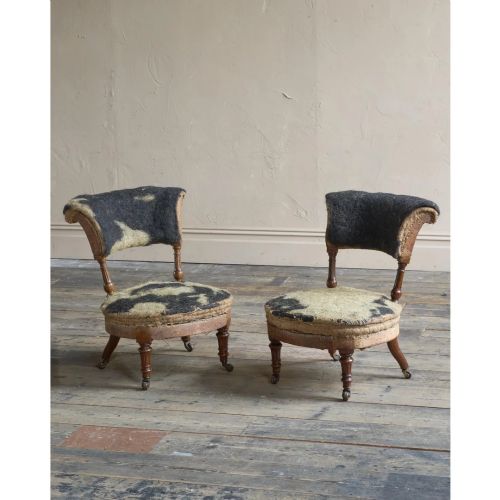
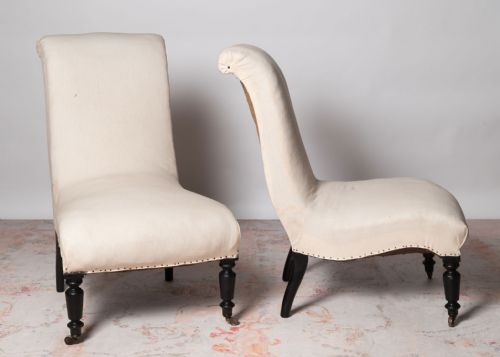
The form of these chairs shifted across decades, moving from ornate carved walnut frames of the mid-nineteenth century to simpler Edwardian mahogany frameworks. Buyers encounter variations in proportion, from low round-seat models to taller scroll-backed French slipper chairs.
Materials and construction
The structural framework of these chairs relies on traditional hardwoods such as mahogany and walnut, alongside oak and birds-eye maple, joined to support compact seating frames. Turned wooden legs sometimes incorporate brass castors, while specialised iron backs appear in specific Victorian nursing chair designs.
Upholstery techniques employ traditional materials beneath top covers of velvet, cotton, hessian, and tapestry, often finished with button backs, fringes, or decorative braid. Frame decoration ranges from carved giltwood and barley twist turnings to simpler moulded walnut edges.
Listings feature nineteen-century Victorian and Edwardian periods, utilising mahogany, walnut, oak, and brass alongside velvet, cotton, and tapestry fabrics.
Judging quality and proportion
The distinction between standard commercial pieces and superior examples rests on the crispness of timber carving, the integrity of the underlying frame, and the retention of original maker stamps. Finer nineteenth-century chairs display balanced proportions and careful timber selection, such as figured walnut or birds-eye maple.
Makers known for exceptional joinery and upholstery, such as Howard and Sons or Gillows, elevate the standing of a piece through rigorous construction methods and branded components. The sophistication of the frame turning, whether barley twist or fluted, further distinguishes workshop output.
Howard and Sons·Gillows
The Low Upholstered Bedroom Chairs Glossary
- Nursing chair
- A low-seated chair historically designed to allow women to nurse infants comfortably without obstruction from high arms or stiff posture. These pieces frequently feature low profiles and padded button backs.
- Slipper chair
- An upholstered chair with a low seat, originally used in a bedroom or dressing room for putting on shoes and slippers. They typically lack arms to accommodate voluminous nineteenth-century garments.
- Tub chair
- An upholstered armchair with a rounded back that curves continuously into the arms, forming a deep, enclosed seat. This form provides a snug and supportive seating experience.
- Button back
- An upholstery technique where indentations are formed in the padding by pulling thread or twine tight and securing it with covered buttons. This creates a diamond pattern that holds the filling firmly in place.
- Barley twist
- A decorative turning style resembling the spiral twist of barley sugar, commonly found on nineteenth-century chair legs and structural supports.
Low Upholstered Bedroom Chairs: Frequently Asked Questions
What is a nursing chair?
A nursing chair is a low-seated Victorian chair designed for sitting close to a hearth or dressing table. They typically feature low profiles to make everyday tasks easier.
These chairs often include buttoned upholstery and sprung seats, making them practical and comfortable additions to a modern bedroom or sitting room.
How do I use a slipper chair today?
Slipper chairs work well in bedrooms, dressing rooms, or corners of living spaces where floor space is limited. Their armless design allows them to fit easily into tight spots.
Paried with low dressing tables or used as occasional seating, they provide a decorative accent without overwhelming the room.
How do I date a Victorian bedroom chair?
Dating these chairs involves examining the wood types, such as walnut or mahogany, and the style of the turned legs. Mid-nineteenth-century examples often feature elaborate carved walnut frames.
Later Victorian and Edwardian pieces tend to show simpler lines, lighter mahogany frames, and different upholstery treatments characteristic of the turn of the century.
What is the difference between a nursing chair and a slipper chair?
Nursing chairs generally feature slightly higher backs and sometimes enclosed tub designs, whereas slipper chairs are typically armless and built very low to the ground. Both serve similar compact seating functions.
Historically, slipper chairs assisted with putting on footwear, while nursing chairs accommodated domestic tasks in private chambers.