


Antique Floral Dessert Dishes
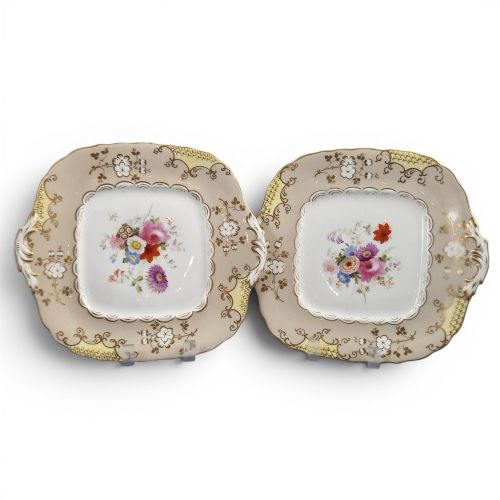
Antique floral dessert dishes bring hand-painted botanicals and rich gilding from eighteenth and nineteenth-century dining rooms directly to modern tables.
Antique Floral Dessert Dishes
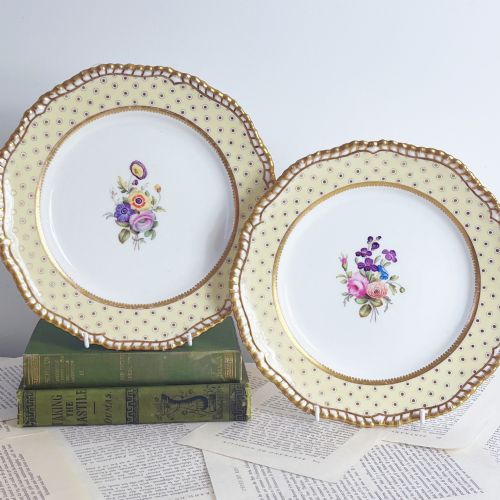
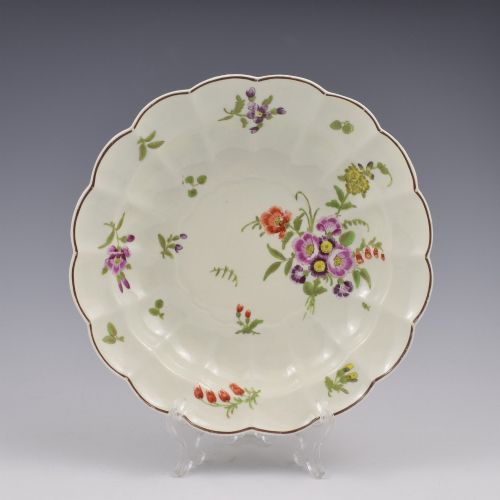
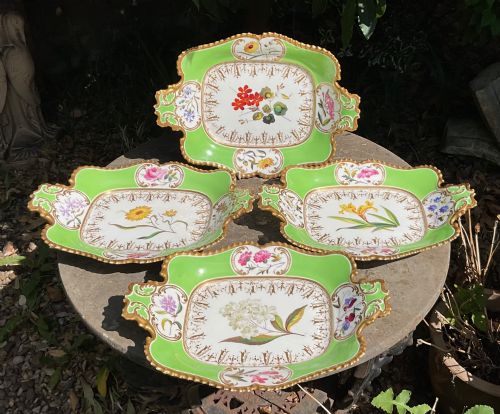
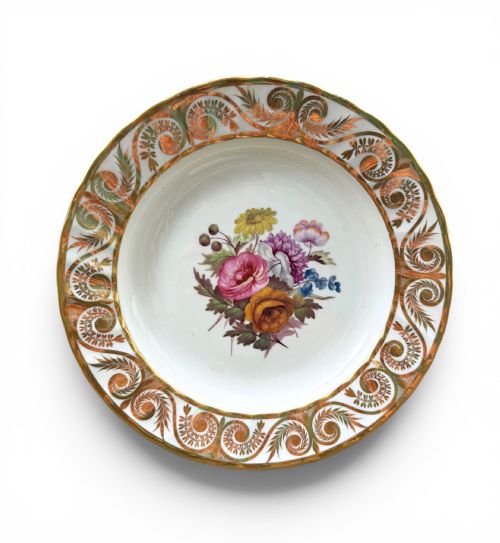
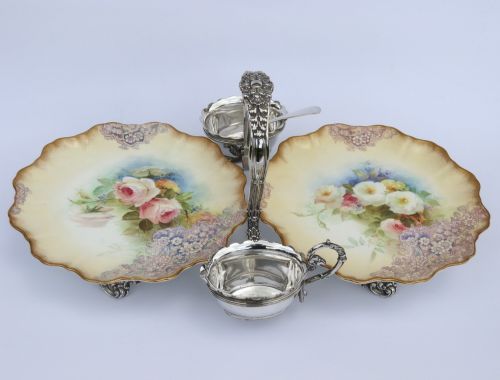
When you search for antique floral dessert dishes, you are looking at serving plates, pedestal tureens, and shaped plates designed to present fruit and sweet courses at the end of a formal meal. These pieces arrive from Georgian, Regency, and Victorian periods, created by major English potteries rather than casual makers.
The most common forms on this page include individual plates with lobed or basketweave edges and larger serving dishes intended to anchor a matched dessert service. Porcelain and bone china dominate the selection, carrying botanical motifs painted by hand during the eighteenth and nineteenth centuries.
How they were made
Potters shaped porcelain, bone china, and ironstone on wheels or pressed them into moulds to create shaped plates and pedestal tureens. Artisans then applied underglaze foundations before adding polychrome floral paintings by hand.
Makers integrated gold leaf and heavy gilding around rims and handles, fixing the precious metals through secondary kiln firings. Glazes provided a protective glassy coating over the painted botanical details to withstand table use.
A nineteenth-century strawberry dessert set required specialised plates with integrated drainage wells for rinsing fruit at the table.
What varies in quality
Quality rests in the crispness of the moulded porcelain body and the artistic skill behind the hand-painted floral motifs. Superior pieces display finely detailed botanical studies executed by named artists rather than repetitive factory transfers.
The weight and purity of the gold leaf application distinguish finer services from standard wares. Well-preserved enamel colours and clean, unblemished glaze surfaces separate top-tier cabinet examples from heavily worn service items.
Spode·Worcester Porcelain·Chamberlains Worcester·Coalport·Doulton Burslem·John Ridgway·Rockingham Pottery·Minton Porcelain·Flight Barr And Barr·Davenport·Wedgwood·Mason·Bloor Derby·Royal Crown Derby
The Antique Floral Dessert Dishes Glossary
- Bone china
- A type of soft-paste porcelain strengthened with animal bone ash, producing a durable and slightly translucent body favoured by English factories.
- Gilding
- The application of gold leaf or gold paint to ceramic surfaces, typically accenting rims, handles, and raised moulding.
- Ironstone
- A heavy earthenware body patented in the nineteenth century for its durability and resistance to chipping during daily service.
- Pedestal tureen
- A covered serving vessel raised on a fixed foot or stand, used for sauces or preserved fruits within a dessert service.
- Polychrome
- Decoration employing multiple distinct enamel colours, standard for depicting naturalistic floral arrangements across these plates.
Antique Floral Dessert Dishes: Frequently Asked Questions
How were dessert dishes used in the dining room?
These dishes held the final course of a formal meal, which typically consisted of fresh fruit, nuts, cheeses, and sweet confections. Servants placed them centrally on the table or arranged them in tiered sets alongside finger bowls.
Dining rooms of the Georgian and Regency periods treated dessert as a separate, highly visual ritual. Matching plates and serving tureens emphasised the host's wealth and taste through coordinated botanical decoration.
Can I still use these antique plates for food?
Most collectors avoid using nineteenth-century porcelain and enamel plates for heavy daily dining due to potential wear on fragile hand-painted glazes. Light service involving dry fruits or pastries remains acceptable provided hand washing is strictly employed.
Historic glazes and older ceramic bodies can be sensitive to modern detergents and thermal shock. Displaying them on walls or within cabinets protects the delicate gold leaf and botanical artwork.
How do I identify a Regency period dessert plate?
Regency pieces often feature vibrant enamel colours, apple green or cobalt blue borders, and rich gilding applied to fine bone china or porcelain bodies. Moulded scrollwork and shell motifs around the edges reflect the dominant aesthetic of the early nineteenth century.
Many plates from this era carry impressed factory marks or handwritten pattern numbers on the underside. Stylistic cues like lobed rims and botanical painting styles help narrow down the production decade.
What is the difference between ironstone and porcelain dishes?
Porcelain contains kaolin and petuntse, firing into a fine, translucent body with a delicate ringing tone when tapped. Ironstone is a dense, opaque earthenware developed to resist heavy service while mimicking the appearance of true porcelain.
Ironstone dishes feel significantly heavier and thicker in the hand than fine bone china dessert plates. Both materials accommodated hand-painted floral decoration, but porcelain was reserved for higher-status dining sets.