


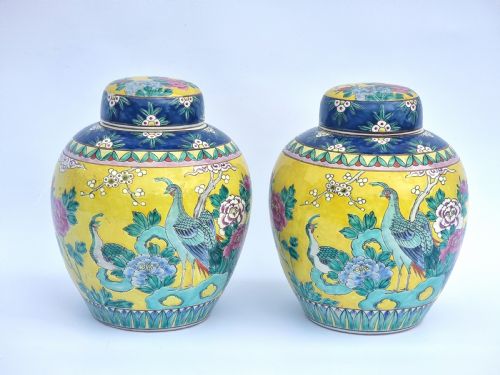


Antique Floral Covered Urn
When you search for an antique floral covered urn, you are looking for a decorative vessel that brings intricate painted botanical motifs and classic form into a room.
Antique Floral Covered Urn
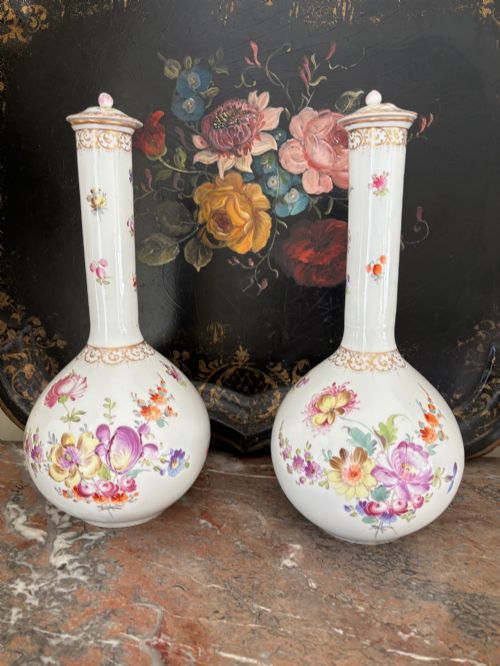
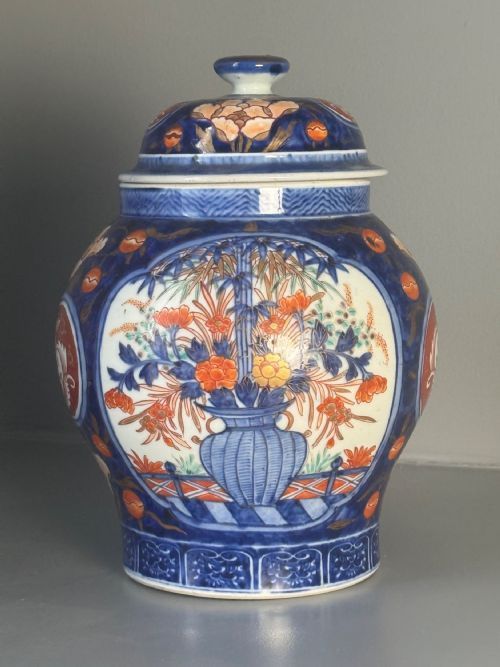
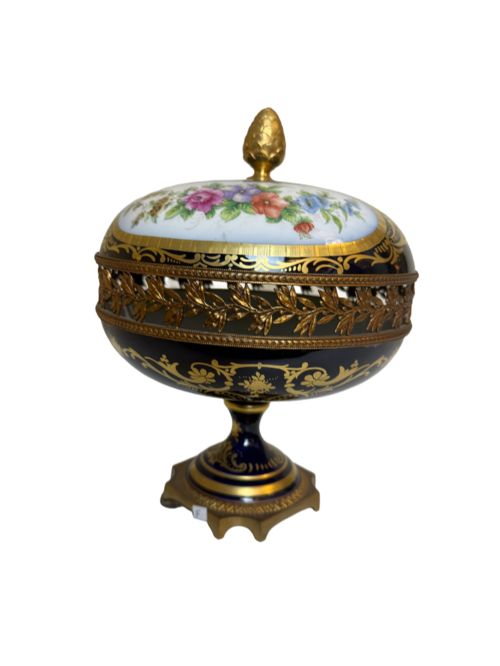
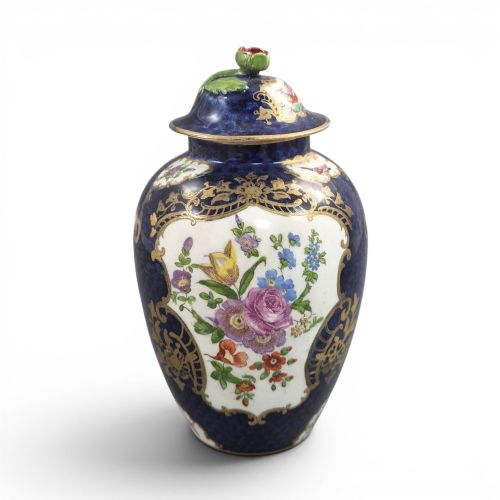
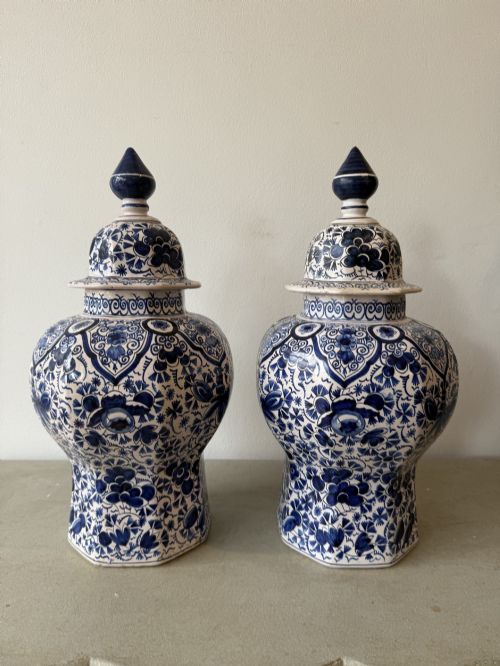
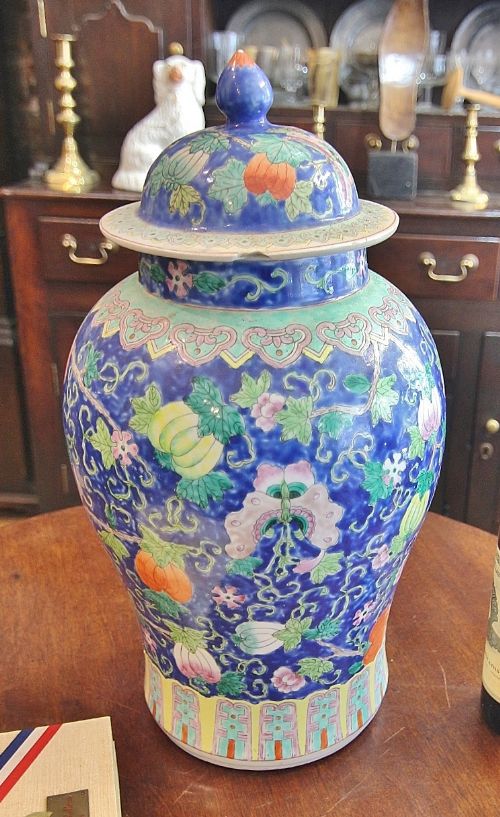
An antique floral covered urn is a lidded vessel designed for display, often taking the form of a ginger jar, pot-pourri jar, or pedestal vase. These pieces appear across the nineteenth century and the Edwardian period, manifesting in styles ranging from French Rococo Revival to Japanese Imari and Chinese porcelain.
The domestic interior of the Victorian era welcomed these covered vessels as mantelpiece centrepieces or cabinet ornaments. Makers applied hand-painted botanical decoration, exotic birds, and transfer-printed patterns onto ceramic, porcelain, and cloisonne bodies.
Buyers encountering this selection will find examples originating from English factories like Royal Worcester and Derby, continental porcelain houses such as Limoges and Sitzendorf, and Japanese workshops of the Meiji period.
How they were made
Potters shaped porcelain, ceramic, and ironstone on the wheel or in moulds to create bulbous bodies, ovoid jars, and footed pedestals. Workers fitted matching lids, sometimes featuring crown or domed covers designed to sit flush with the vessel rim.
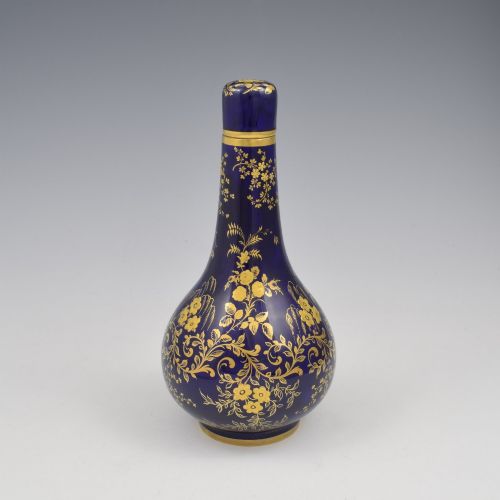
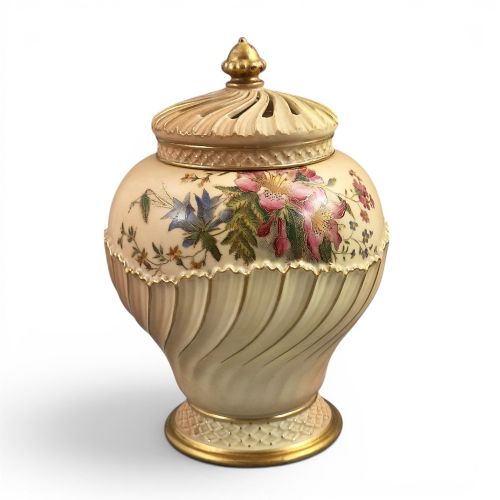
Decoration relied on hand-painting, transfer printing, and enamelling, frequently enhanced with gold leaf and gilding applied to blue grounds, scale blue patterns, or blush ivory surfaces. Japanese workshops utilised cloisonne techniques, fusing enamel within wire cells soldered onto copper bases.
Some Victorian householders filled these lidded jars with crushed rose petals and spices, turning the living room into a fragrant garden.
What varies in quality
The standard of an antique floral covered urn depends upon the precision of the hand-painting and the crispness of the modelled form. Superior examples display delicate brushwork in floral motifs and securely fitted lids that align naturally with the body.
Material application also separates tiers of production, seen in the depth of gilding, the richness of cobalt blue underglazes, and the clean execution of enamel work in cloisonne pieces. Factory origin influences this division, with established porcelain manufacturers achieving finer ceramic bodies and more controlled kiln firings.
Royal Worcester·Royal Crown Derby·Crown Staffordshire·Samuel Alcock·Sitzendorf
The Antique Floral Covered Urn Glossary
- Blush ivory
- A soft, creamy ceramic ground developed by manufacturers like Royal Worcester to imitate ivory, often decorated with delicate floral painting in muted tones and gold.
- Imari
- A style of Japanese porcelain featuring a characteristic palette of underglaze blue, iron red, and gold, typically depicting floral and natural motifs.
- Cloisonne
- A metalwork technique where enamel paste is applied within compartments created by soldering flat wires onto a copper base, then fired and polished.
- Pot-pourri jar
- A lidded vessel perforated to allow dried scented plant materials to release fragrance into a room, frequently ornamented with painted flowers.
- Gilding
- The application of gold leaf or gold powder to the surface of ceramic or porcelain to highlight rims, handles, and decorative borders.
Antique Floral Covered Urn: Frequently Asked Questions
What is an antique floral covered urn used for?
These lidded vessels served primarily as ornamental items on mantelpieces, side tables, and in cabinets during the nineteenth and early twentieth centuries. Some variants functioned specifically as pot-pourri jars to scent domestic spaces with dried petals.
Today, collectors use them as standalone decorative accents to introduce period character, colour, and traditional ceramic artistry into interior schemes.
How do I date an antique floral covered urn?
Dating relies on identifying maker marks, factory stamps, and stylistic markers recorded in the ceramic design. Victorian pieces often exhibit elaborate gilding and continental influences, while Edwardian examples frequently showcase blush ivory finishes.
Examining the glazing technique, body material, and any registration numbers helps narrow the production era down to specific decades like the eighteen-eighties or nineteen-hundreds.
What is the difference between Japanese Imari and European styles?
Japanese Imari pieces originate from Arita and display a distinct palette of deep cobalt blue, iron red, and gold, often featuring dense floral and panel designs. European interpretations replicate these Eastern motifs or draw upon domestic traditions like French Rococo Revival and English transfer printing.
Continental and English factories produced their own versions of these covered jars using local porcelain bodies, soft paste compositions, and distinct regional painting techniques.
How should I care for porcelain and cloisonne urns?
Display these vessels away from direct sunlight to protect hand-painted enamel colours and delicate gilding from fading over time. Dust them gently with a dry, soft cloth rather than using liquid cleaners that might seep into unglazed areas or historic repairs.
Handle the matching lids with care, lifting them straight up without twisting to prevent chipping the delicate rim margins of the ceramic or cloisonne body.