


Antique Floral Carver
An antique floral carver brings period woodwork and patterned upholstery together to anchor a traditional dining or writing room.
Antique Floral Carver
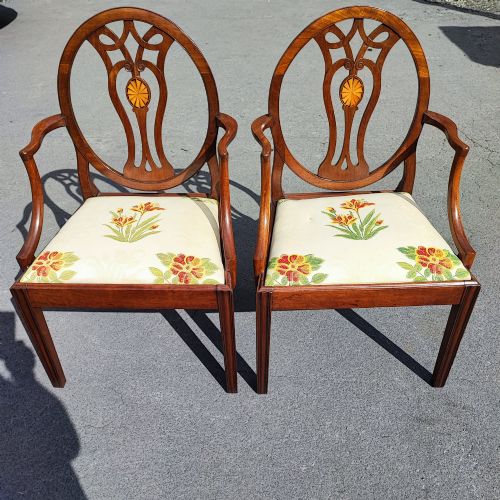
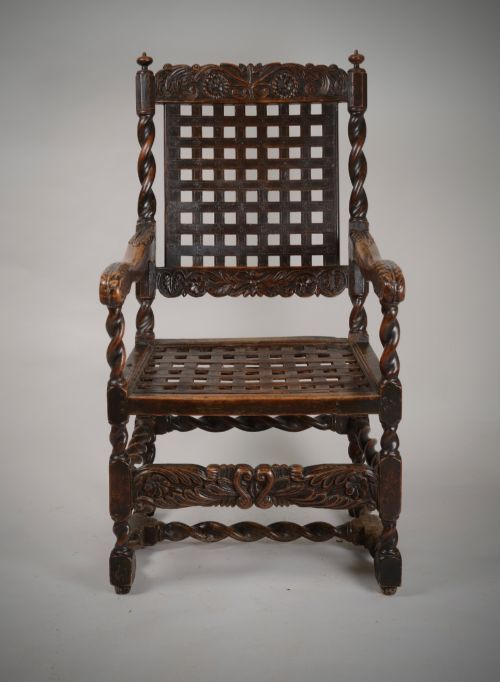
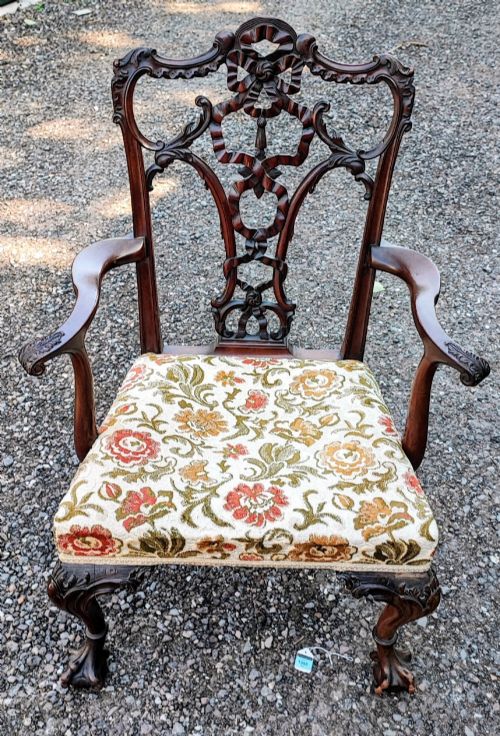
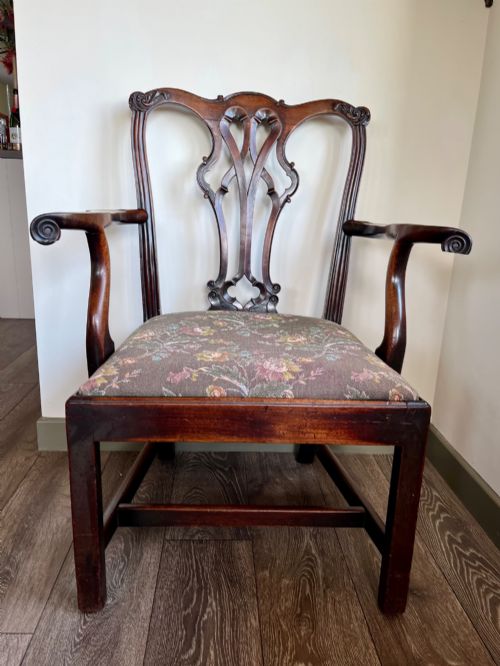
When you search for an antique floral carver, you encounter single armchairs and elbow chairs designed for the head of a table or a desk. These seating forms span the Georgian, Victorian, and Edwardian periods, bringing substantial arm support and decorative presence to a room.
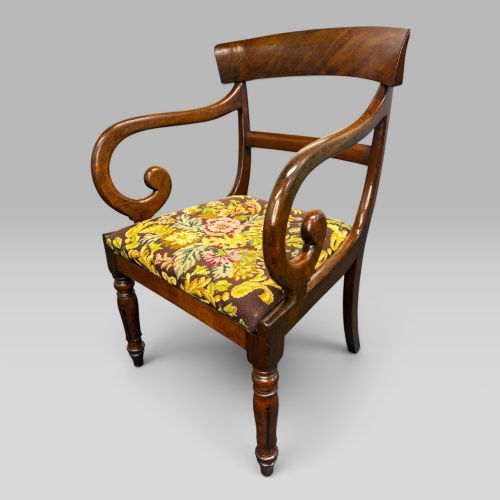
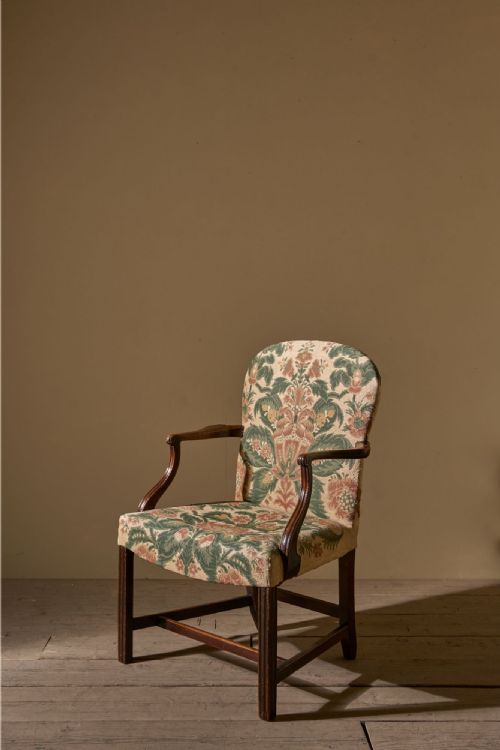
The pieces listed on this page predominantly feature mahogany, walnut, and oak frames paired with textile, fabric, and tapestry upholstery. Maker output ranges from Dutch marquetry armchairs to English Sheraton and Chippendale styles.
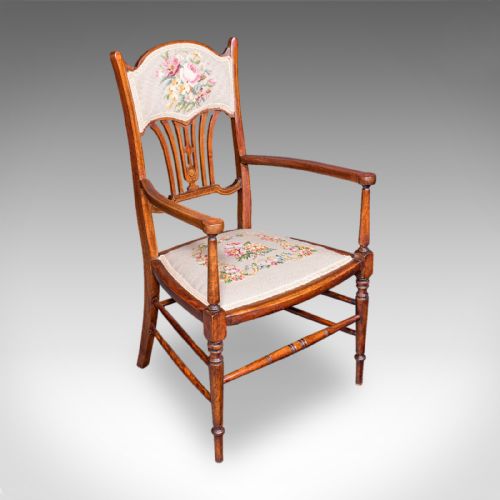
You will find armchairs equipped with floral upholstered seats alongside carved wooden frames bearing floral and painted motifs. They serve practical seating roles while displaying the craftsmanship of earlier centuries.
Materials and construction methods
Cabinetmakers constructed these frames using solid hardwoods like mahogany, walnut, oak, and beech, often incorporating satinwood stringing or intricate marquetry. Turnings, carved splats, and sabre or straight legs provide structural integrity and visual rhythm.
Upholstered elements rely on traditional textiles, ranging from woven tapestry fabric to hand-painted decorative panels. Joinery techniques such as mortise and tenon secure the arms and backs to withstand daily use.
Several armchairs incorporate floral painted decorations directly onto the wood, ensuring the flowers bloom even when the upholstery wears out.
Distinctions in craftsmanship and condition
The distinction between standard examples and finer pieces lies in the crispness of the wood carving and the sophistication of the inlay work. Finer chairs display detailed floral motifs, balanced proportions, and well-executed joinery that remains tight over centuries.
The integration of the upholstery elevates certain examples, particularly where tapestry fabric or hand-painted details complement the timber frame. Original surface patination and restrained decorative flourishes denote higher workshop standards.
Jas Shoolbred·Louis Majorelle
The Antique Floral Carver Glossary
- Carver
- An armchair, typically larger and more substantial than the side chairs in a matching dining set, originally intended for the head of the table.
- Elbow chair
- An alternative term for an armchair, referencing the supportive armrests designed to accommodate a seated person.
- Marquetry
- The art and craft of applying pieces of veneer to a structure to form decorative patterns, frequently featuring floral designs in these pieces.
- Tapisserie
- Woven textile used for upholstery, appearing across several period armchairs to provide durable and patterned seating surfaces.
Antique Floral Carver: Frequently Asked Questions
What is a carver chair?
A carver chair is an armchair traditionally made to match a set of dining chairs but built with armrests for use at the head of a table. These pieces offer a wider seat and greater structural presence than standard dining chairs.
Cabinetmakers designed them to provide comfort during long meals or desk work, often incorporating elaborate woodwork on the arms and back splat.
How do I date an antique armchair?
Dating relies on examining the timber species, joinery methods, and stylistic cues such as leg shapes and back splat designs. Georgian and Victorian pieces carry distinct proportions and carving styles that separate them from later revival eras.
Comparing the primary wood, such as mahogany or oak, alongside the upholstery materials helps narrow down the period of manufacture.
Where should I place an elbow chair?
An elbow chair works well at a desk, in a morning room, or paired with a dining table as a host seating option. Their decorative carved frames and upholstered seats allow them to function as standalone accent pieces in hallways or bedrooms.
Ensure the arm height clears your desk or table apron if you plan to tuck the chair underneath.
How do I care for antique upholstery?
Protect antique textiles by keeping them out of direct sunlight to prevent fading of the floral patterns and threads. Gentle vacuuming with a low suction attachment helps remove dust without straining aged fabrics.
Avoid harsh chemical cleaners on both the wood frame and the fabric to preserve the original surface integrity and patina.