

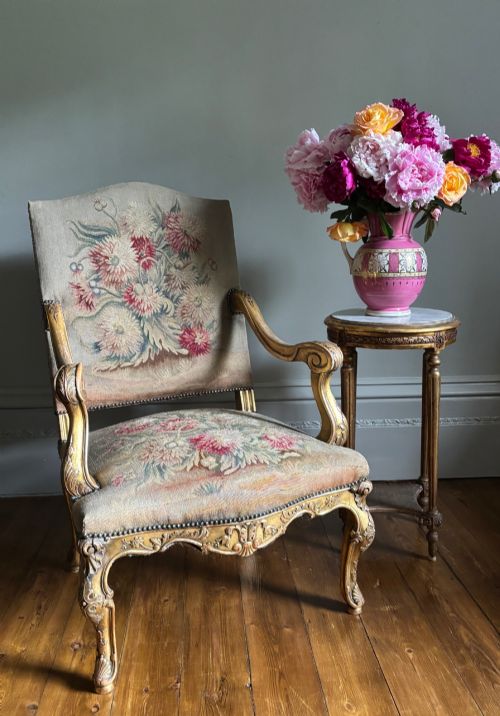
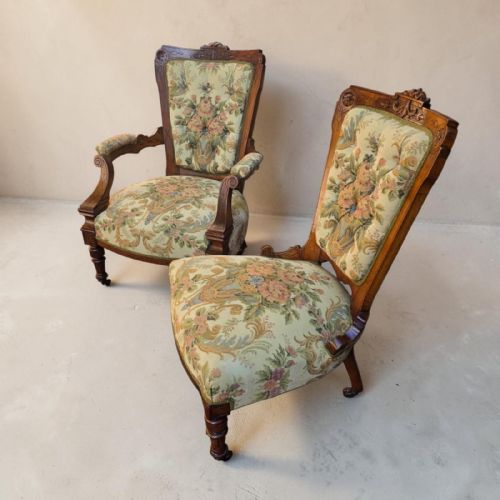
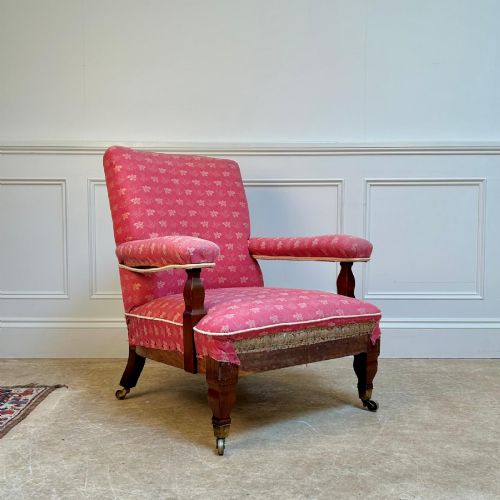
Antique Floral Armchair
An antique floral armchair brings pattern and history into a room, offering comfortable seating shaped by centuries of changing craft.
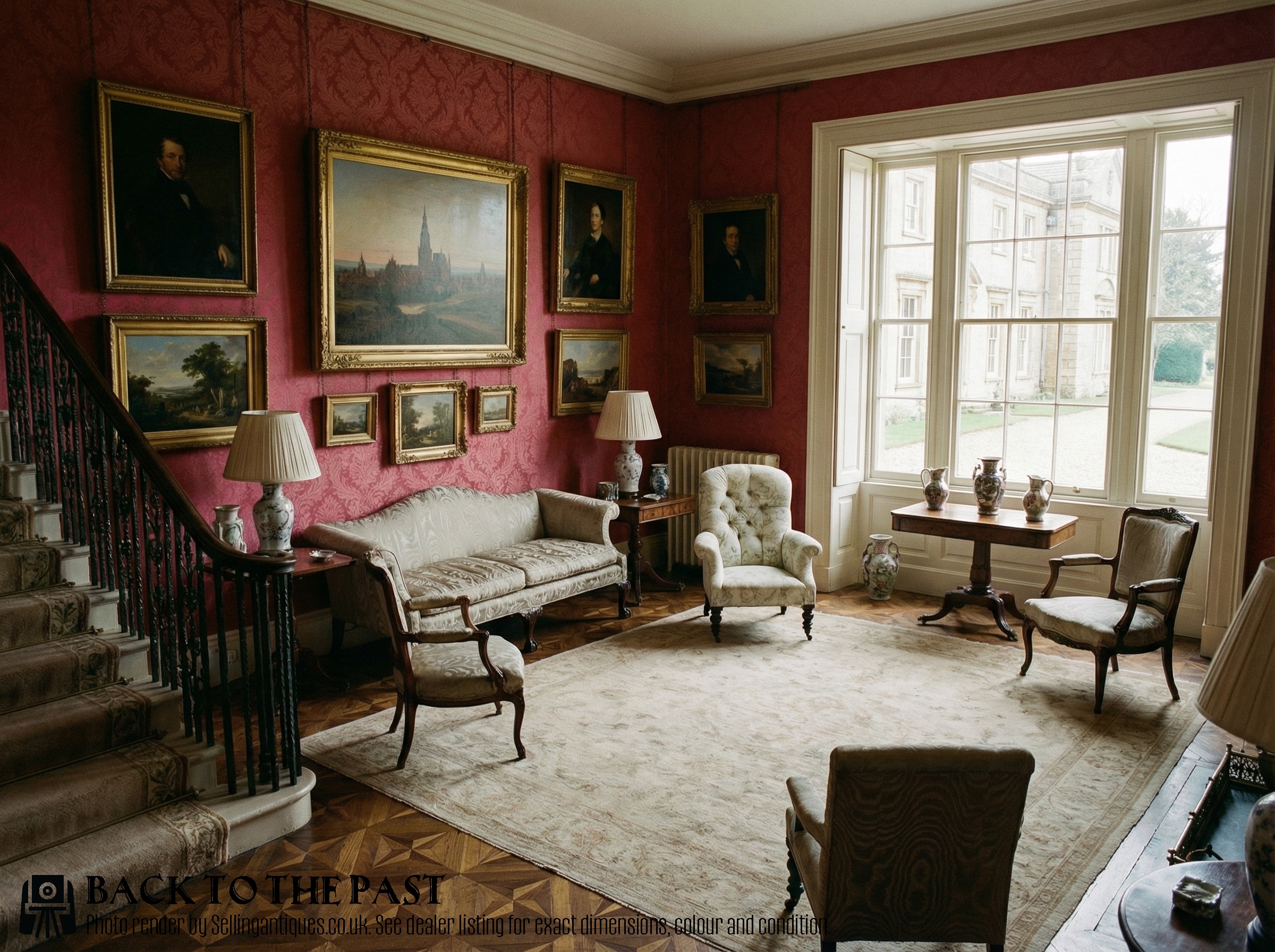
Antique Floral Armchair
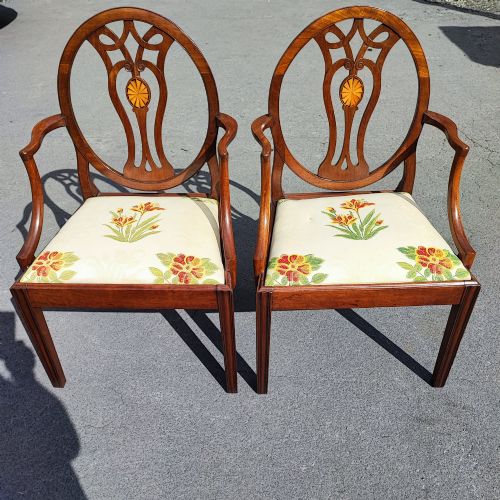
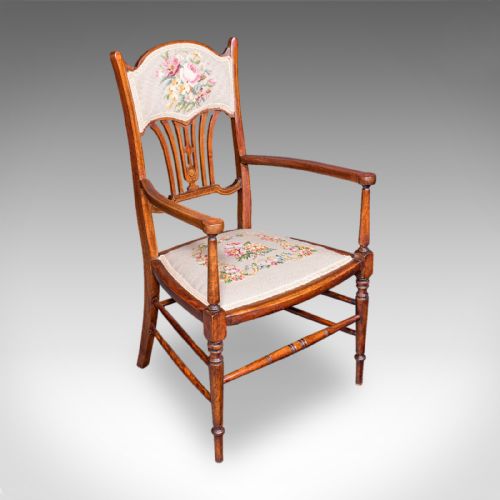
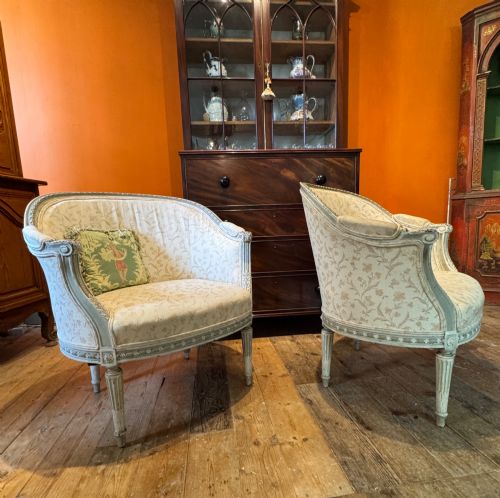
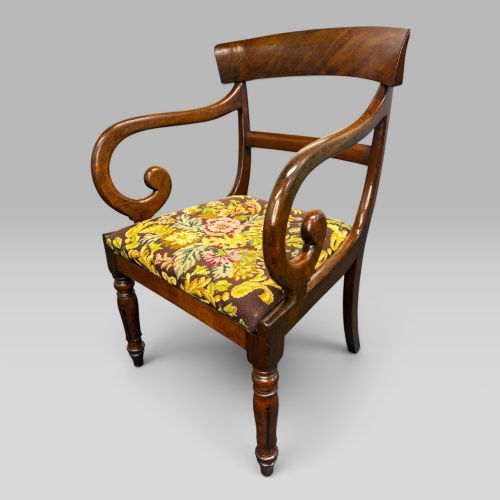
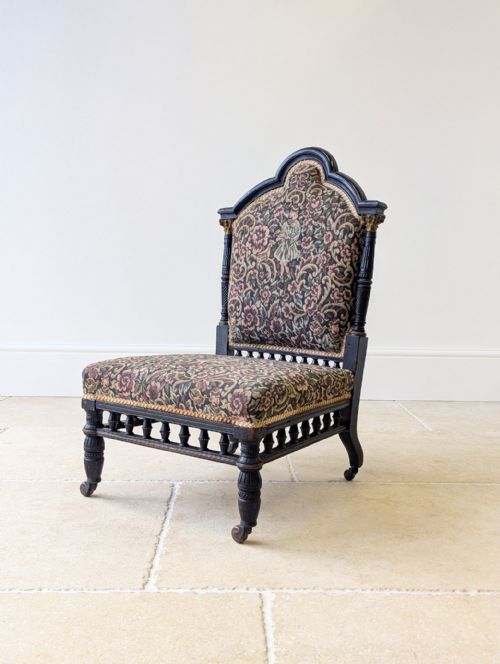
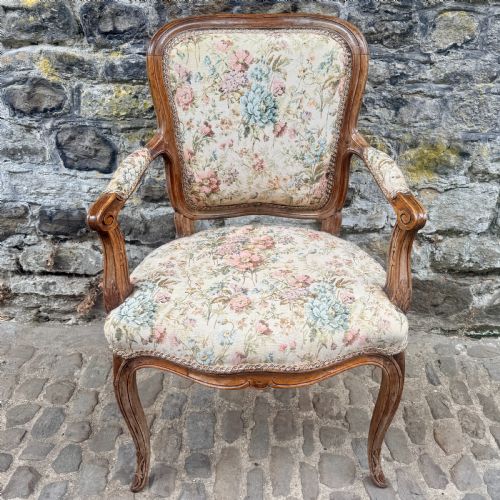
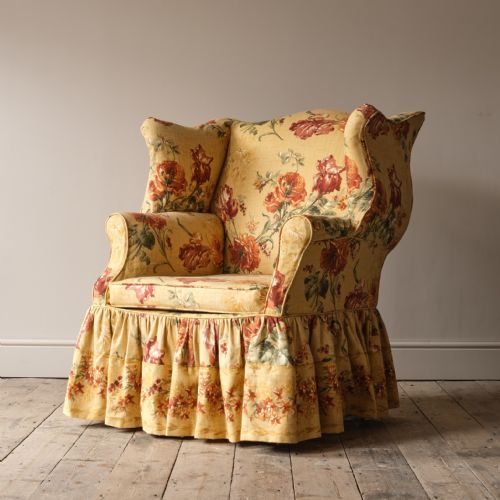
When searching for an antique floral armchair, buyers encounter a variety of forms ranging from wingback chairs to low salon seats and elbow chairs. These pieces span multiple centuries, with Victorian and nineteenth-century examples appearing frequently alongside Georgian and Edwardian designs.
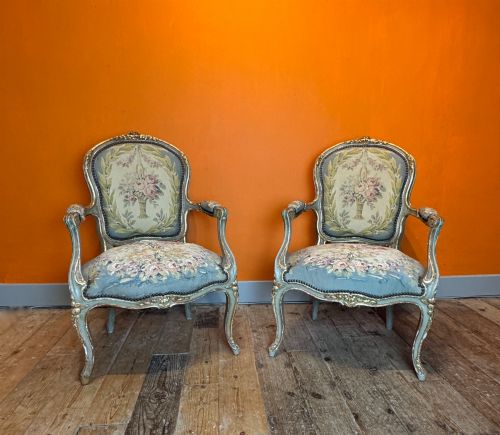
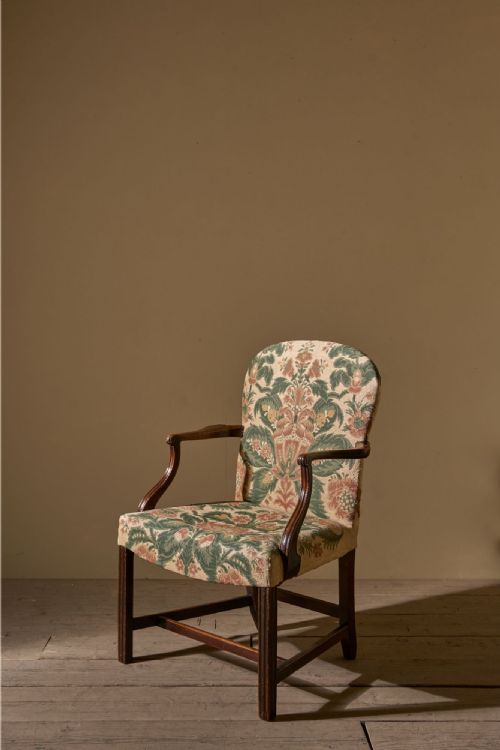
The styles cover English country house seating, French provincial models, and Sheraton or Queen Anne revivals. Frames are constructed in woods such as mahogany, walnut, beech, and giltwood, paired with textile coverings.
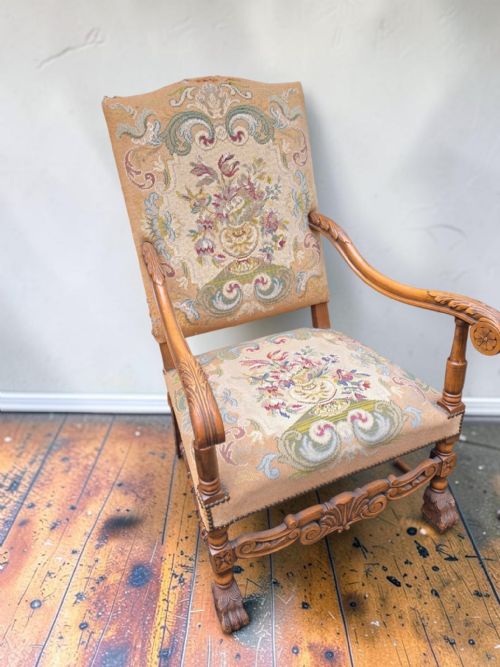
The upholstery itself varies significantly across the selection, featuring tapestry fabric, vintage chintz, and patterned linen. Armchairs, desk chairs, and tub chairs make up the primary seating forms seen within these categories.
Materials and construction
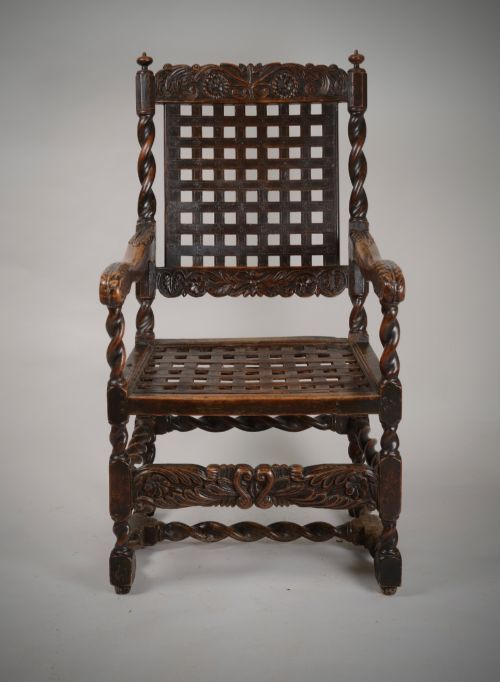
Makers utilised solid timbers like mahogany, walnut, and beech to build the structural frames of these armchairs, often applying carving, ebonising, or parcel gilding for decorative effect. Some pieces incorporate inlay work using satinwood or other contrasting woods.
Upholstery techniques relied on traditional stuffing methods, securing layers of textile, tapestry fabric, or printed linen over supportive interior padding. Details such as original paint, exposed brass tacks, and feather filling complete the construction of the seating.
Antique Floral Armchair Retail Price Guide 2026
Typical asking prices for floral armchair among the pieces listed under this phrase on Sellingantiques today, from the lower quarter to the upper quarter. They describe what is for sale here now, not the wider market.
Materials recorded across the selection include mahogany, walnut, beech, brass, tapestry, and various textile fabrics.
Assessing the execution
The distinction between tiers rests upon the crispness of the timber carving and the integrity of the frame construction. Pieces produced by notable cabinet makers display superior joinery and finely proportioned arms and legs.
The character of the upholstery also shapes the overall standard, particularly where historic tapestry fabric or specialist printed linen has been preserved or matched to the period of the frame.
Morris & Co·Holland & Sons·Whytock & Reid·Beresford And Hicks
The Antique Floral Armchair Glossary
- Bergere
- An enclosed upholstered armchair with wooden framing around the back and sides. Cane work is often substituted for solid wood panels in certain variants.
- Wingback
- A high-backed armchair featuring projecting side pieces designed to shield the sitter from draughts. This form appears across eighteenth and nineteenth-century English and country house pieces.
- Elbow chair
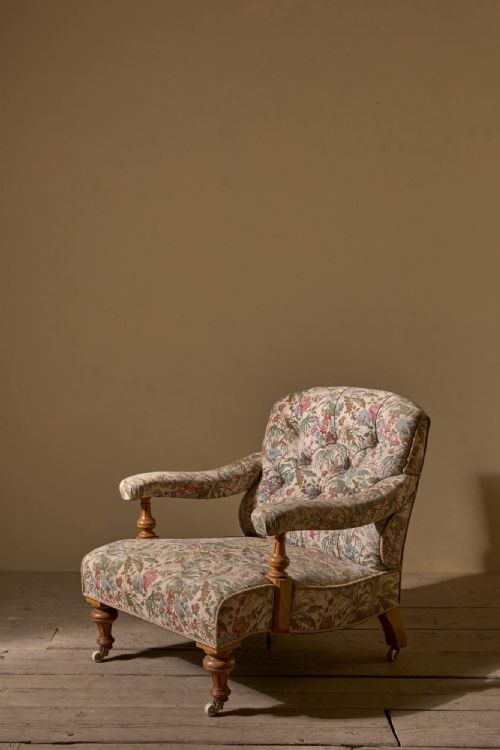
- An armchair featuring open sides with padded or carved armrests supported directly above the seat rails. These were frequently used in libraries or morning rooms.
- Giltwood
- Timber that has been coated with a thin layer of gold leaf. It is commonly found on decorative French provincial and nineteenth-century salon furniture.
- Tapestry
- A heavy hand-woven or machine-woven textile depicting pictorial scenes or repeating patterns. It serves as a durable upholstery fabric on traditional frames.
Antique Floral Armchair: Frequently Asked Questions
How do I clean antique fabric?
Surface dust should be gently removed using a soft brush attachment on a low-powered vacuum. Deeper cleaning requires specialist textile conservation methods rather than standard household detergents.
Harsh liquids can damage historic fibres and warp the underlying stuffing materials. Professional assessment is recommended for fragile antique textiles.
Are these chairs suitable for daily use?
Many nineteenth and twentieth-century armchairs remain structurally sound for regular seating. Solid timber frames and robust joinery allow them to withstand everyday domestic life.
Earlier eighteenth-century pieces or delicate giltwood examples may require a more cautious approach. Assessing the internal webbing and joints ensures safe daily deployment.
How do I identify a Victorian armchair?
Victorian frames often utilise dark hardwoods like walnut and mahogany, frequently displaying deep buttoning, ebonised finishes, or carved spoon backs. Stylistic revivals of earlier periods are also characteristic of this era.
Proportions tended to be heavier and more enveloping compared to slender Georgian alternatives. Examining the secondary woods and fixing methods helps confirm the nineteenth-century origin.
What is a country house style?
This aesthetic reflects relaxed, accumulated domestic interiors featuring comfortable upholstered seating paired with patterned floral linen or chintz. Pieces show signs of comfortable ageing rather than rigid formality.
Such armchairs prioritize deep seating depths and loose feather fillings. They blend easily into eclectic traditional and modern room schemes.