
Antique Flint Glass
Antique flint glass brings tactile weight and clarity to the table through heavy lead composition and historic hand-formed vessels.
Antique Flint Glass
Antique flint glass comprises drinking vessels, decanters, and serveware originating primarily from the eighteenth and nineteenth centuries. These items reflect domestic life, dining traditions, and social toasts across Georgian and Victorian periods.
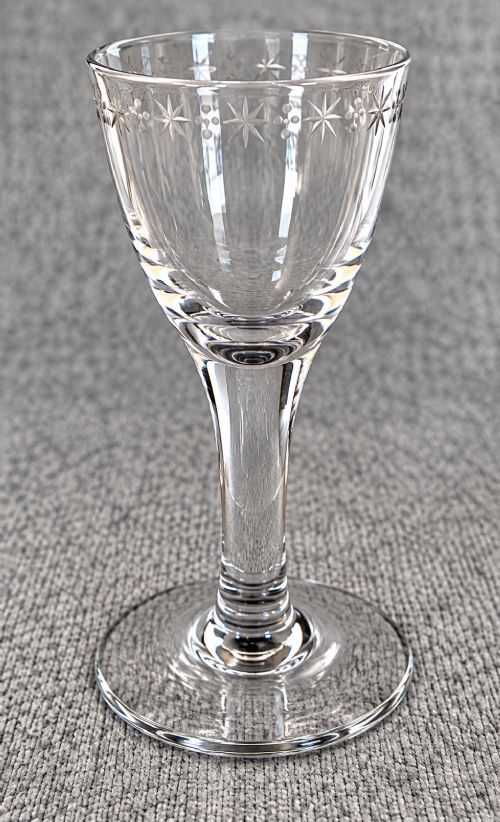
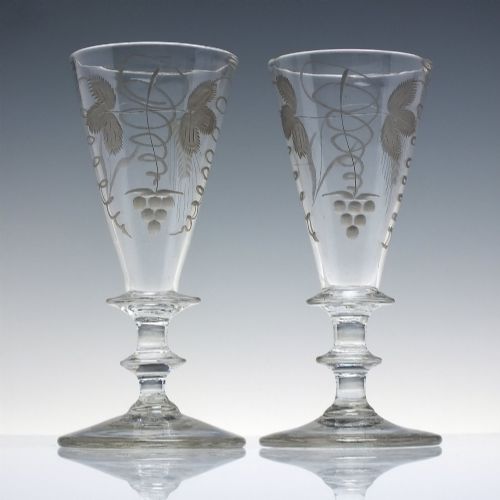
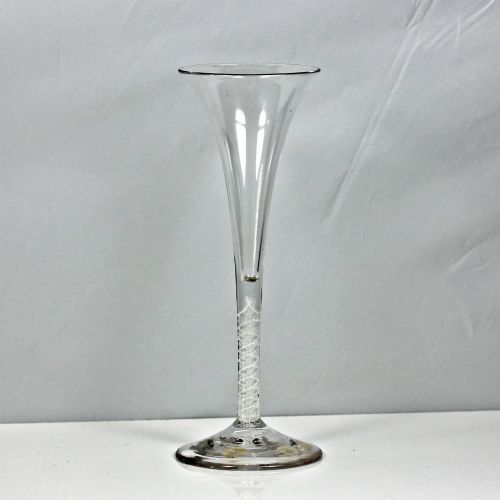
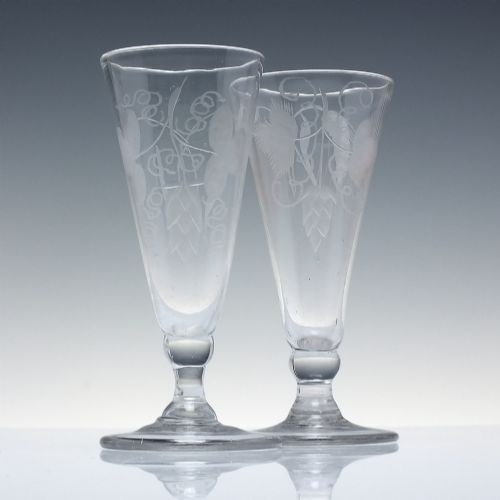
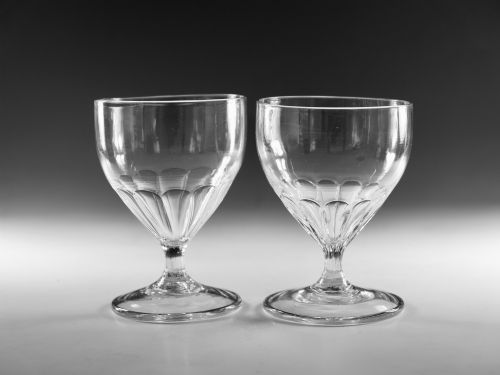
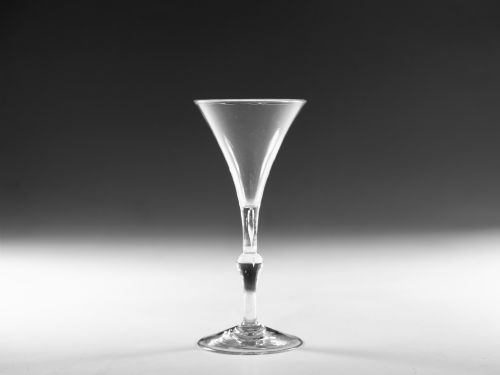
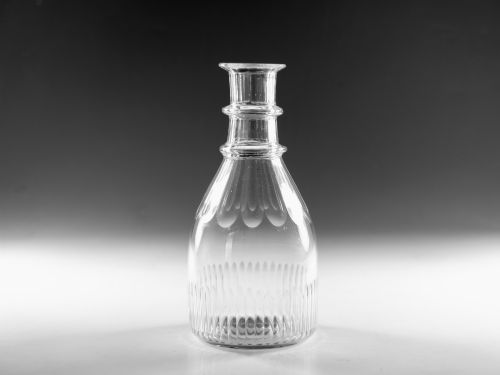
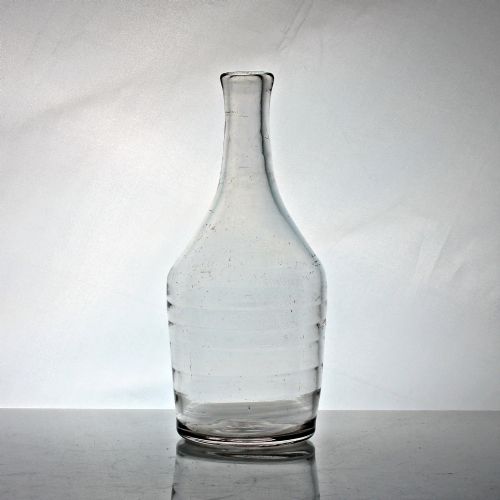
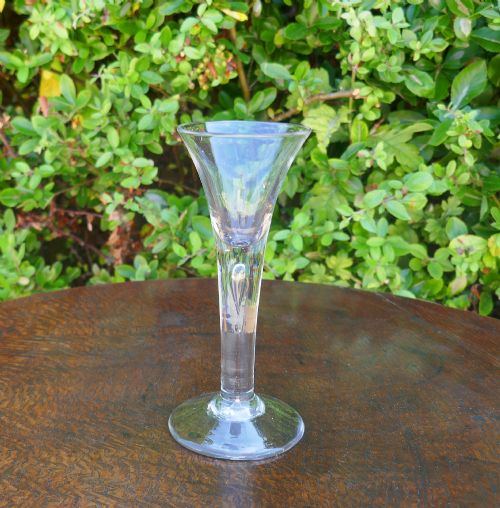
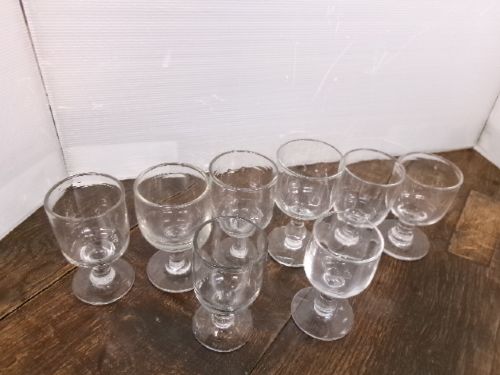
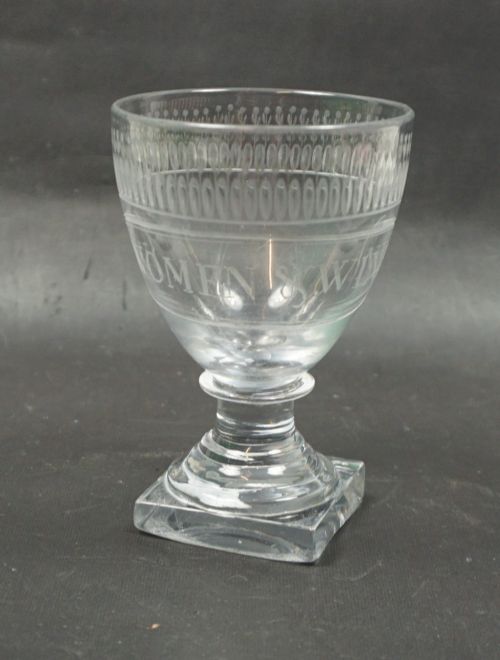
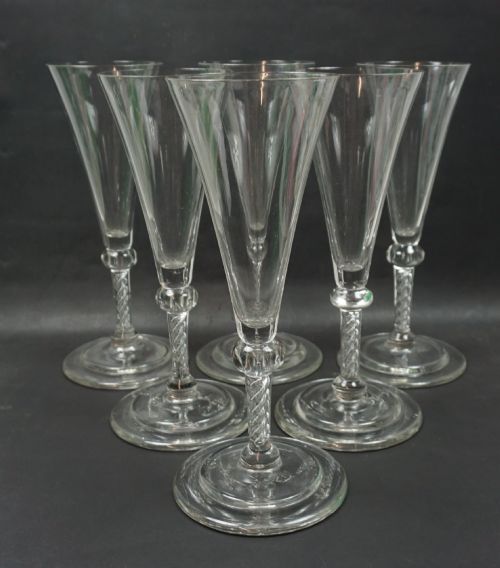
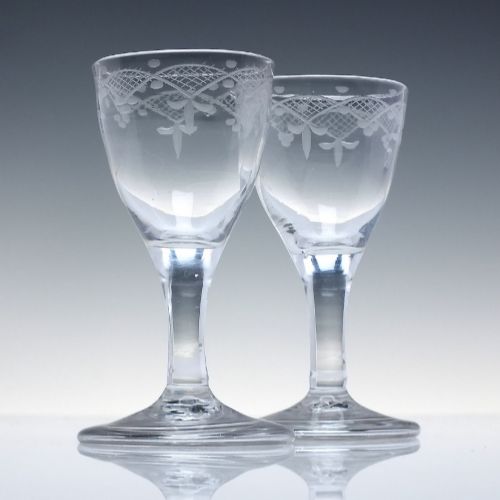
Wine glasses featuring air twists, opaque twists, and baluster stems dominate the selections on this page. Alongside these drinking glasses, buyers frequently encounter heavy rummers, decanters, carafes, and jelly glasses.
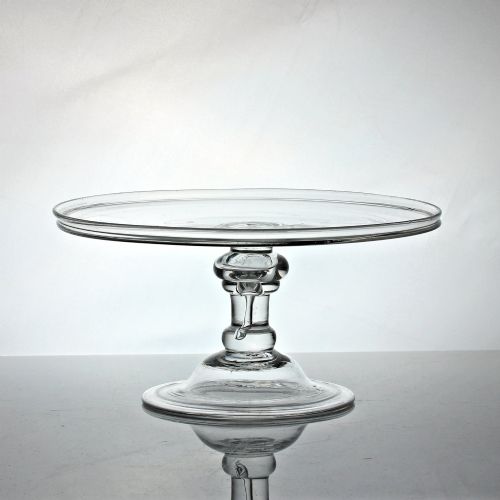
Originating largely from English workshops, these pieces showcase diverse bowl shapes including trumpet, bell, ogee, and pan top forms. Serveware pieces such as tazzas and patch stands also appear within the collection.
How they were made
Makers utilised lead glass, lead crystal, and clear flint glass compositions to achieve high refractive brilliance and substantial heft. This dense material permitted deep cutting, fine engraving, and complex stem formations.
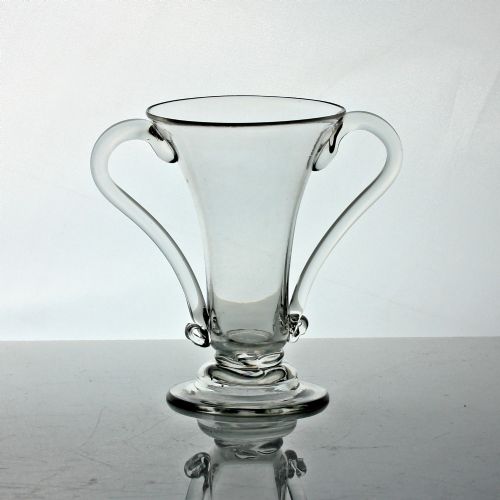
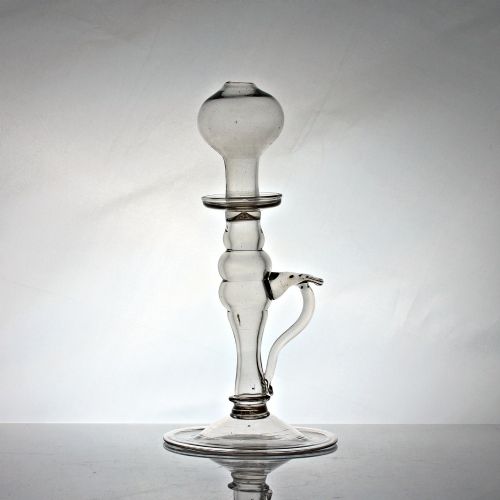
Hot glass manipulation produced optical phenomena such as trapped air bubbles in stems and folded feet for stability. Craftsmen drew stems, applied handles, and formed twists while the metal remained pliable.
Some eighteenth-century drinkers hid secret political loyalties inside a glass, raising tiny engraved portraits to toast distant monarchs in whispered rooms.
What varies in quality
The refinement of the stem formation dictates much of the visual interest, particularly in air twists and mixed twists where the regularity of the threads matters. Clarity of the metal and absence of heavy cloudiness or excessive internal impurities distinguish superior vessels.
Engraving depth and artistic execution separate standard production from exceptional work, especially on commemorative or Jacobite pieces. The proportion between bowl, stem, and foot also influences the overall balance and aesthetic success of the glass.
The Antique Flint Glass Glossary
- Flint glass
- A heavy, brilliant glass containing lead oxide, historically developed to imitate rock crystal and improve light refraction.
- Air twist
- A stem formation created by drawing out elongated air bubbles within the molten glass during manipulation.
- Opaque twist
- A stem containing threads of white or coloured enamel glass enclosed within clear flint glass.
- Rummer
- A large, sturdy drinking glass popular in the eighteenth and nineteenth centuries, often used for ale, wine, or punch.
- Tazza
- A shallow ornamental bowl or plate raised on a stem and foot, used for serving sweetmeats or fruit.
- Folded foot
- A base edge turned under during manufacture to provide extra strength and weight at the perimeter.
Antique Flint Glass: Frequently Asked Questions
Can I use these glasses for daily dining?
These historic vessels can certainly hold drinks for special occasions if handled with steady care and mindful placement. Their substantial lead content makes them sturdier than modern thin crystal.
Keep in mind that eighteenth-century vessels have delicate elements like folded feet and drawn stems that warrant gentle treatment at the table.
What is an air twist stem?
An air twist stem contains spiral threads of tiny elongated bubbles trapped inside the clear glass during the pulling process. Glassmakers manipulated the hot metal to draw these internal air channels into elegant corkscrew patterns.
This technique required considerable skill to maintain uniform thickness and thread spacing throughout the length of the stem.
How do I date an old rummer?
Dating relies on examining the bowl shape, pontil mark on the base, metal weight, and any engraved decoration typical of the period. Georgian examples often display bucket bowls and heavier proportions compared to later Victorian iterations.
Look closely at the underside for the rough scar left where the pontil rod was snapped away after shaping.