




Antique Flemish Cupboard
An antique flemish cupboard brings heavy architectural presence and deep relief carving into a room, offering both display and secure storage.
Antique Flemish Cupboard
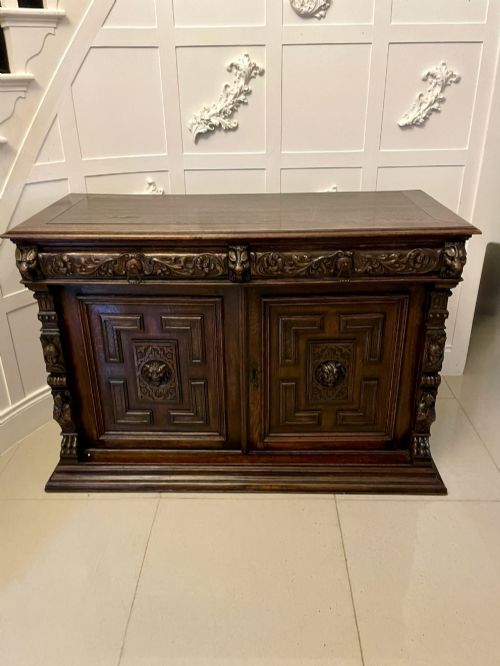
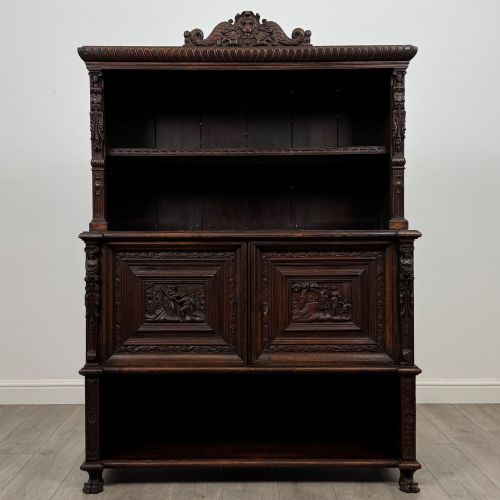
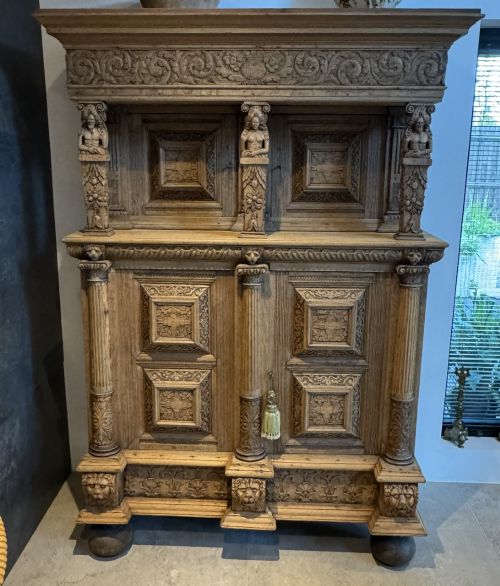
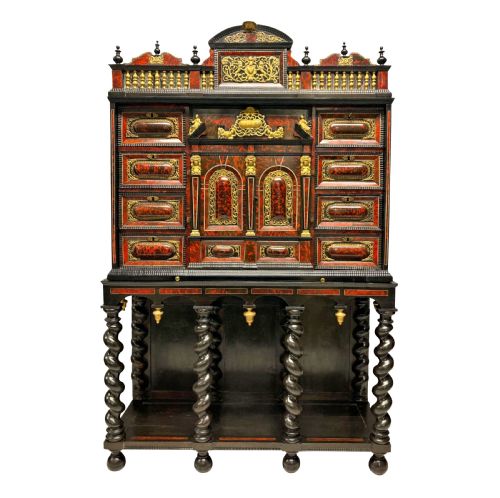
When you search for an antique flemish cupboard, you encounter substantial forms spanning several centuries, from early sixteenth-century examples to nineteenth-century revivals. The listings here show pieces originating mainly from the seventeenth, eighteenth, and nineteenth centuries, taking the form of large sideboards, hall cupboards on stands, and smaller table cabinets.
You are most likely to meet nineteenth-century carved oak interpretations on this page, reflecting the heavy Victorian interest in Renaissance styles. These range from narrow bookcases on cupboards to grand sideboards and cabinets on stands, showing the enduring appeal of continental joinery.
What varies in quality
The depth and crispness of the hand-carving separate standard nineteenth-century revival pieces from superior sixteenth or seventeenth-century originals. Sharp undercut foliage and expressive figural work indicate a more accomplished hand at the bench.
The selection of timber grain and the integrity of architectural elements, such as moulded cornices and column supports, dictate the overall stature of the piece. Subtle details like original brass mounts and untouched patination elevate the status of a cabinet above heavily restored equivalents.
The inventory spans the sixteenth, seventeenth, eighteenth, and nineteenth centuries, alongside specific nineteenth-century revival movements.
The Antique Flemish Cupboard Glossary
- Cabinet on stand
- A cabinet designed to sit upon a separate supporting base or frame with legs. This form raises the display surface to a comfortable height.
- Kast
- A large Dutch or Flemish wardrobe or cupboard used for linen and valuables. These pieces feature substantial double doors and heavy cornices.
- Renaissance Revival
- A nineteenth-century design movement drawing inspiration from sixteenth-century architectural and decorative motifs. It frequently utilises heavy oak and classical carving.
- Tortoiseshell
- The mottled shell of certain sea turtles applied as a decorative veneer on luxury cabinets. It creates a rich, translucent brown and amber surface.
- Baroque style
- An ornate design period characterised by dramatic movement, deep relief, and exuberant ornamentation. It emphasises grandeur and theatrical visual impact.
Antique Flemish Cupboard: Frequently Asked Questions
How do I clean an antique oak cupboard?
Dust the surfaces regularly with a soft, dry cloth to prevent dirt accumulation in the deep carvings.
Apply a quality beeswax occasionally to nourish the dry timber, buffing it gently to maintain a soft sheen without building up a heavy residue.
Can I place a heavy cabinet on modern flooring?
These substantial pieces distribute their considerable weight across large footprints or base frames, but proper levelling is essential.
Use discreet load-bearing coasters beneath the feet if placed on delicate hardwood floors to prevent indentation and ensure the doors hang square.
What rooms suit a large flemish sideboard?
Dining rooms and spacious hallways provide the ideal architectural scale to balance the heavy presence of these large oak pieces.
Ensure adequate wall clearance and consider the swing path of deep doors before positioning the sideboard in a narrow passage.
How do I distinguish a 17th-century piece from a 19th-century revival?
Examine the construction marks, timber shrinkage, and tool signatures on the interior panels for clues to the period of origin.
Nineteenth-century revival pieces often display mechanical saw marks and standardised joinery, whereas earlier examples show hand-riven boards and irregular peg placement.