



Antique Flat Weave Runner
An antique flat weave runner brings centuries of tribal and nomadic weaving traditions into a long hallway, offering bold geometric patterns and flat textiles underfoot.
Antique Flat Weave Runner
An antique flat weave runner is a long, narrow textile produced without a pile by tribal and village weavers across the Caucasus, Anatolia, Persia, and Central Asia. These pieces function primarily as floor coverings for corridors and passages, though many originate as storage bags or tent dividers before entering the market as runners.
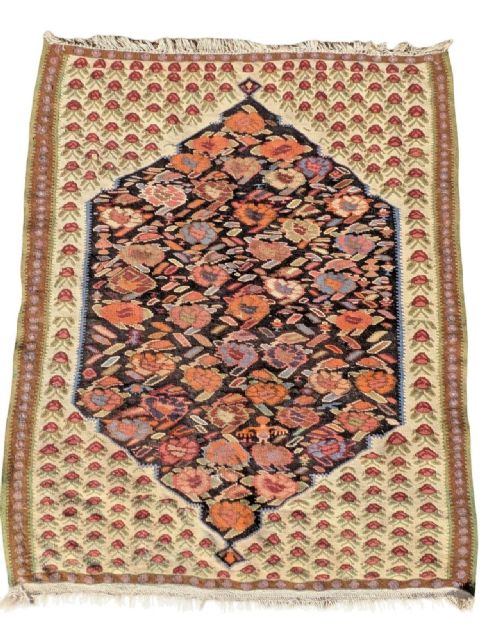
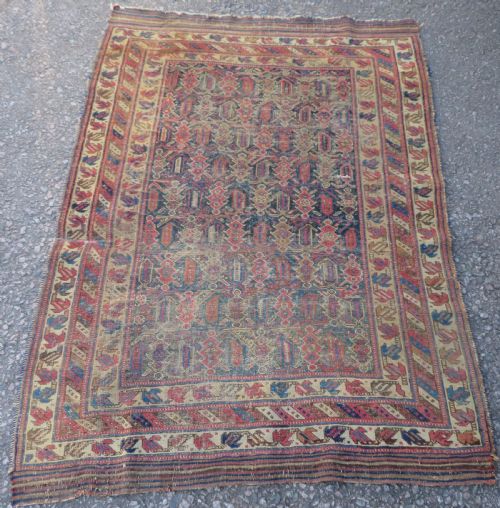
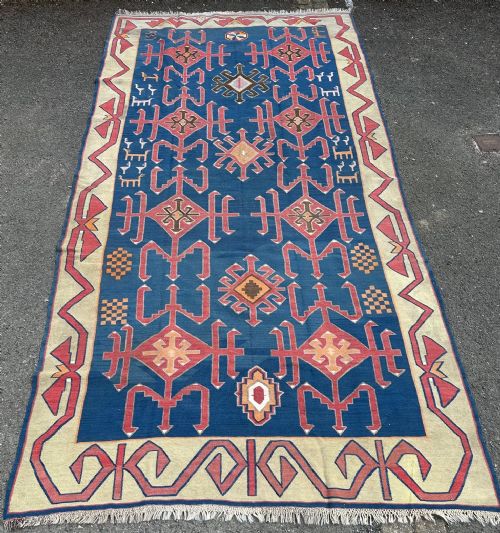
Buyers browsing this selection encounter kilims and soumaks spanning the late nineteenth and early twentieth centuries, created by groups such as the Qashqai, Yomut Turkmen, Shahsevan, and Kurdish weavers. The forms range from single narrow panels to textiles woven in two parts and joined down the centre, reflecting traditional nomadic loom widths.
Originating from diverse regional cultures, these runners display distinct structural and aesthetic traits, from the banded designs of Shirvan and Pirot kilims to the graphic medallions of Senneh and Bidjar. Each piece bears the unmistakable marks of hand-weaving traditions passed down through generations of tribal makers.
What Varies in Quality
Quality rests heavily on the tightness and consistency of the weave, with finer yarn preparation and dense packing yielding a more durable and structurally stable textile. Tighter tension prevents warping along the long edges of narrow runners and preserves the crispness of geometric motifs.
The harmony and balance of the palette dictate the visual success of the piece, as natural dye variations create organic abrash and tonal shifts across the surface. Distinct regional drawing, precise symmetry in tribal medallions, and intact original kilim ends also elevate the standing of an individual runner.
Nomadic weavers frequently incorporated intentional minor errors into geometric borders to ward off the evil eye and preserve their humility before the divine.
The Antique Flat Weave Runner Glossary
- Kilim
- A flat-woven carpet or rug produced without a pile by tightly interweaving warp and weft strands. This technique results in a lightweight, reversible textile with smooth surfaces.
- Soumak
- A flat-weave technique involving wrapping decorative weft threads over and under warp threads in a herringbone or braided pattern. This method adds structural weight and surface texture.
- Warp
- The stationary vertical threads stretched tightly on a loom before weaving begins. The density of these foundational threads determines the fineness of the finished runner.
- Weft
- The horizontal threads passed through the warp to build the design and colour fields. In flat weaves, these visible threads carry the entire pattern.
- Abrash
- A natural variation in colour shading caused by uneven dye batches or different yarn lots. This tonal fluctuation is a hallmark of hand-dyed wool.
Antique Flat Weave Runner: Frequently Asked Questions
Where were these runners made?
These runners originate from weaving traditions across Anatolia, the Caucasus, Persia, and Central Asia. Specific tribal groups and towns such as the Qashqai, Yomut Turkmen, and Senneh produced distinct regional styles.
Local materials and indigenous dye recipes shaped the unique visual characteristics associated with each weaving origin.
How do you care for an antique runner?
Maintenance requires regular gentle vacuuming without a rotating brush bar to protect the delicate flat-woven structure and ends. Using a quality underlay prevents slipping and cushions the textile against hard flooring.
Professional cleaning suited to antique wool textiles ensures that natural dyes and hand-spun fibres remain stable over decades of use.
Are flat weave runners reversible?
Most traditional kilims and flat weaves present nearly identical patterns on both sides because the weaving technique conceals few structural floats on the reverse. This reversibility allows owners to alternate the wear surfaces over time.
However, supplementary techniques like soumak feature a distinctly textured front and a messy backside with trailing yarn ends.