





Antique Fishing Scene Painting
When you collect an antique fishing scene painting, you secure a maritime or river record rendered in oil or watercolour from centuries past.
Antique Fishing Scene Painting
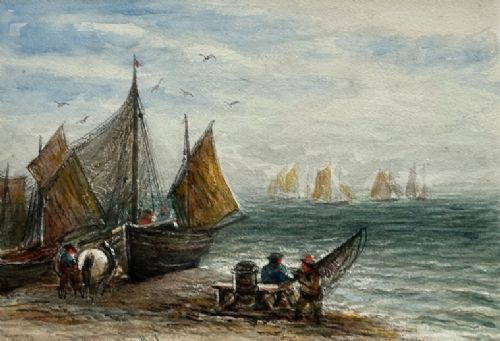
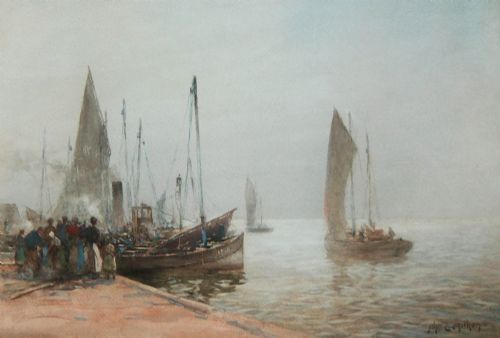
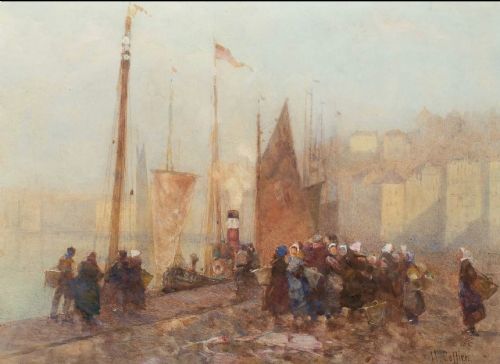
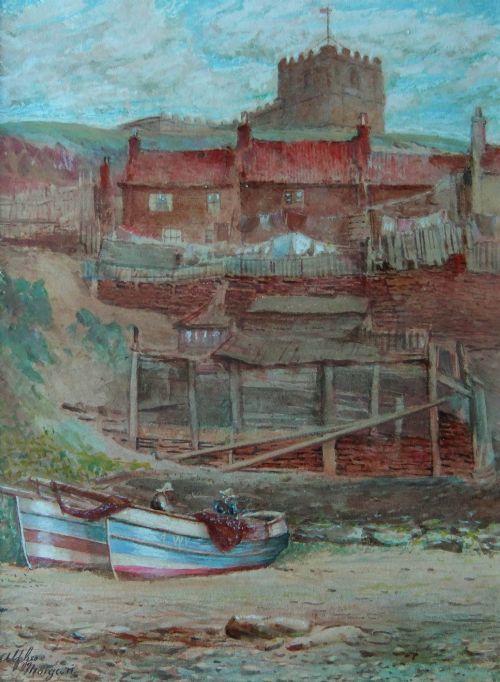
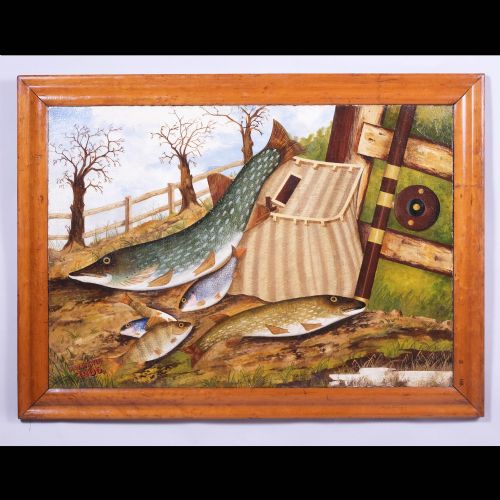
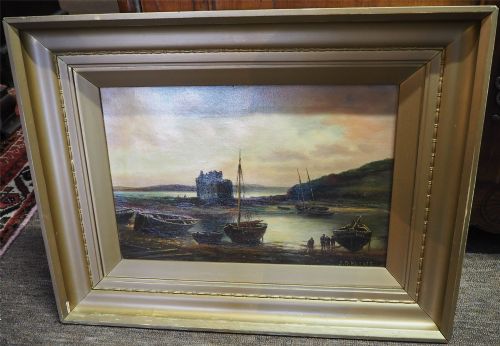
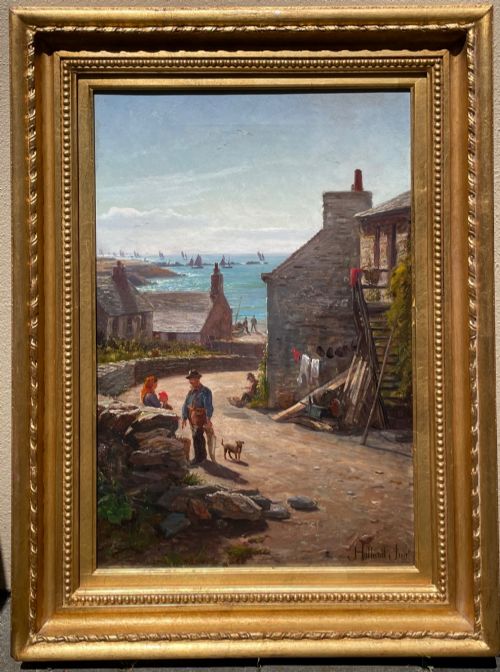
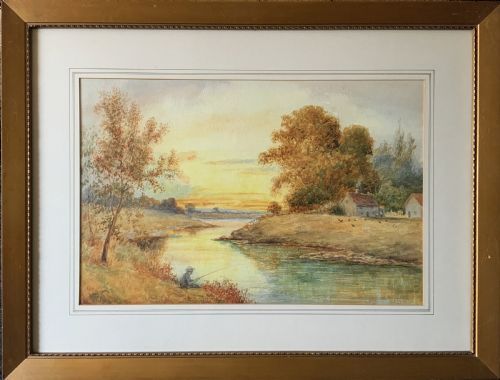
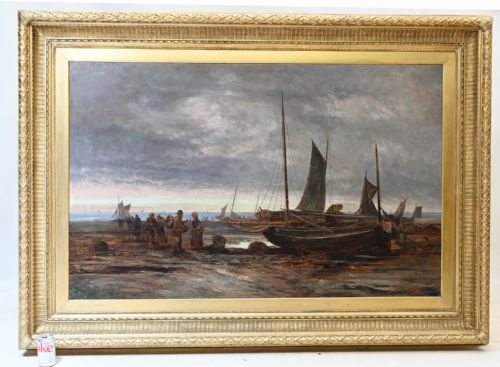
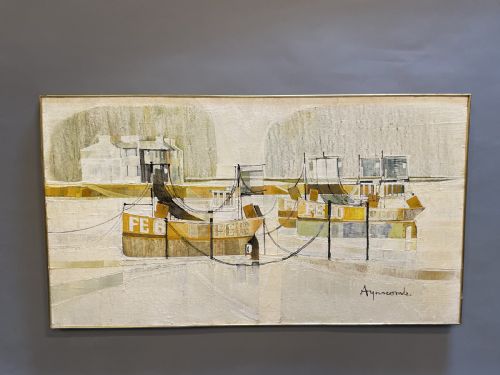
An antique fishing scene painting depicts maritime harbours, coastal docks, and quiet river banks populated by anglers, fish, or working vessels. The selections on this page span the eighteenth, nineteenth, and mid-twentieth centuries, capturing both quiet inland rivers and dramatic tidal waters.
Most examples you meet here are framed watercolours on paper or oil paintings on canvas and panel, executed in British, Scottish, and European schools. Subjects range from large coastal seascapes with fishing boats to intimate depictions of boys fishing under willow trees.
Makers and artists of various regional traditions recorded the daily labour of coastal communities and the leisure of anglers. Works frequently carry signatures or attributions to named painters working within Victorian, Edwardian, and impressionist movements.
How They Were Made
Painters applied oil paint to stretched canvas, wooden panel, or card, building up rich textures for stormy seas, rustic boats, and skies. Watercolour pigment was applied to paper, often capturing the luminous atmospheric conditions of coastal harbours and river valleys.
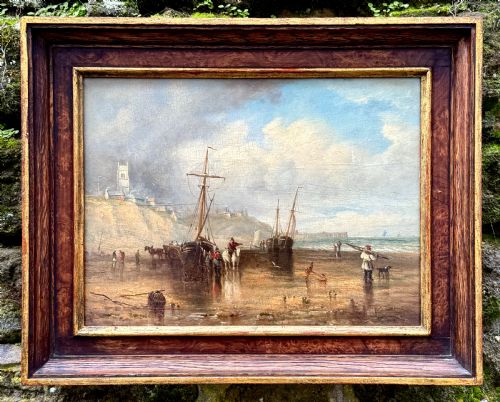
Substantial giltwood frames frequently house these works, providing decorative borders that complement the pigments and protect the edges of the canvas or paper support. Many pieces rely on a preparatory sketch before the application of washes or heavier impasto strokes.
Listings feature works created across the eighteenth, nineteenth, and twentieth centuries, utilising oil paint, watercolour, and pastel on canvas, panel, paper, and card.
What Varies in Quality
The strength of the composition and the confidence of the brushwork separate standard topographical records from masterful artistic interpretations of light and movement. Superior works capture the specific atmosphere of a tide, harbour, or riverbank with notable depth and tonal harmony.
The condition of the canvas, panel, or paper support and the preservation of the original pigment heavily influence the visual impact. Works housed in their original period giltwood frames retain a greater historical integrity than those re-framed at later dates.
James Orrock·George Graham·James E Aitken·Hector Caffieri·Thomas Creswick·Alfred G Morgan·Florence Adelina Hess·John Holland·Gustave De Bréanski·James Kyd·George Gregory·George Morland·Frederick William Hattersley·Kate E Booth·Harry Davis·Percy Brooke·William Lambert Bell·Paul H Ellis·Owen Bowen·Henry Sykes·Walter Sweet·Hendrik Yan Wolter·Emil Ekman
The Antique Fishing Scene Painting Glossary
- Seascape
- A painting depicting the sea, coastal views, or maritime activity involving ships and boats. These works form a large portion of marine art collections.
- Impressionism
- An art style focused on accurate depiction of light in its changing qualities, often using small, thin brush strokes. British and European followers of this style captured outdoor harbour scenes with loose handling.
- Giltwood
- Wood that has been carved and covered with a thin layer of gold leaf. Period frames utilising this material add significant presence to nineteenth-century canvases.
- Watercolour
- A painting method in which the paints are made of pigments suspended in a water-based solution. Artists applied these mixtures to paper to achieve transparent washes of colour.
- Impasto
- The process of laying down paint thickly on an area of the surface. This technique allows brush or palette knife marks to stand proud of the canvas.
Antique Fishing Scene Painting: Frequently Asked Questions
How do I care for an old watercolour painting?
Keep watercolours away from direct sunlight to prevent the pigments from fading over time. Display them in rooms with stable humidity and temperature to protect the paper support.
Ensure the framing remains sealed against dust and moisture. Consult a professional paper conservator if the mount or paper shows signs of foxing.
What is the difference between oil on canvas and oil on panel?
Oil on canvas involves pigment applied to a woven fabric stretched across a wooden frame, offering slight give and characteristic surface texture. Oil on panel uses a rigid wooden board or card as the foundation.
Panels are generally less prone to punctures than canvas but can be sensitive to severe changes in humidity. Both supports were widely used across the nineteenth and twentieth centuries.
How can I tell a Victorian painting from an Edwardian one?
Victorian paintings, produced during the reign of Queen Victoria, often display detailed realism or dramatic maritime action. Edwardian works frequently lean towards softer palettes and early impressionist brushwork.
Examining the stretcher, framing style, and any artist signatures or dates helps confirm the era of production. Documentation on the reverse of the frame can also provide clues.
Where should I hang a coastal painting at home?
Select a wall with indirect lighting to prevent glare on the glass of watercolours or the varnished surface of oils. Match the scale of the piece to the surrounding furniture so the artwork anchors the room.
Avoid placing paintings above working fireplaces or in damp spaces such as unventilated bathrooms. Stable environmental conditions ensure the longevity of both canvas and pigment.