





Antique Fireplace Clock
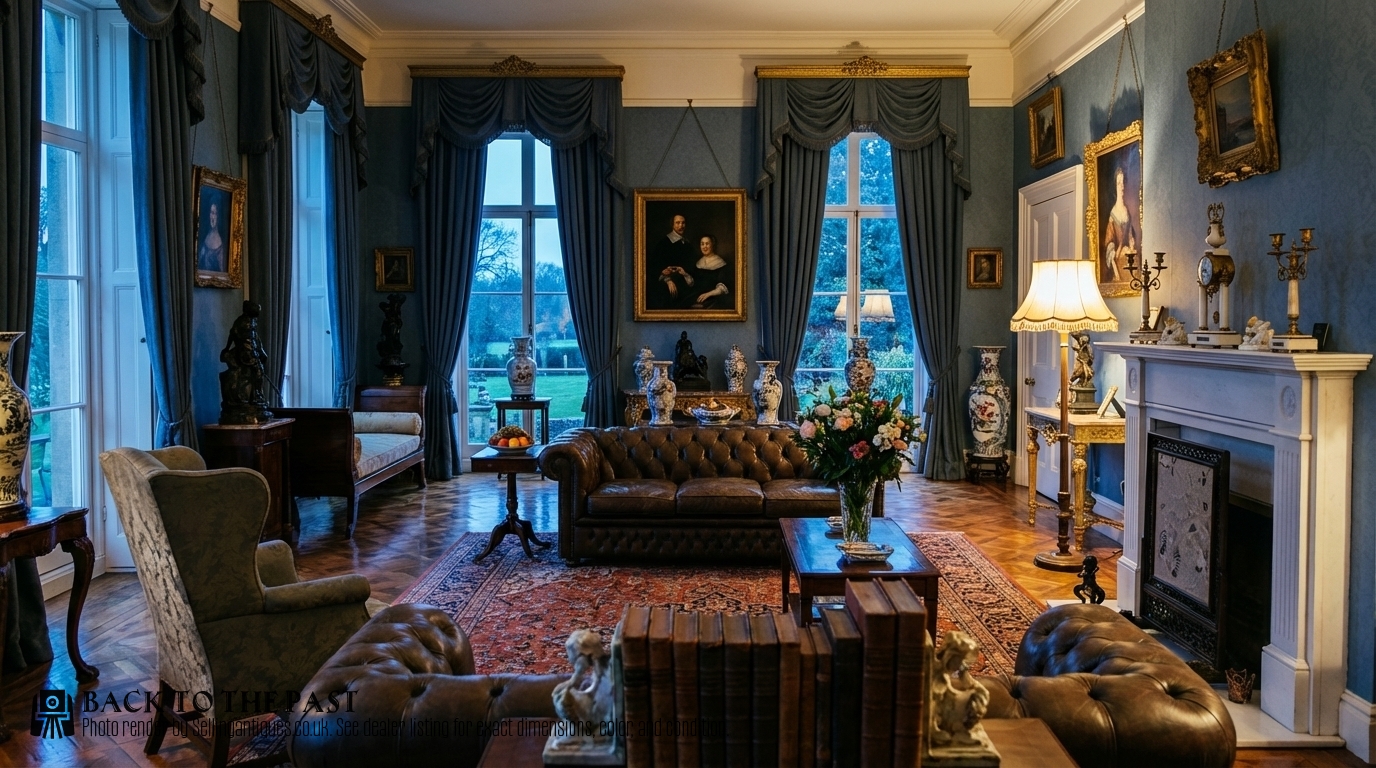
An antique fireplace clock anchors a room with mechanical precision and grand presence, bringing nineteenth-century craftsmanship directly to the mantelpiece.
Antique Fireplace Clock
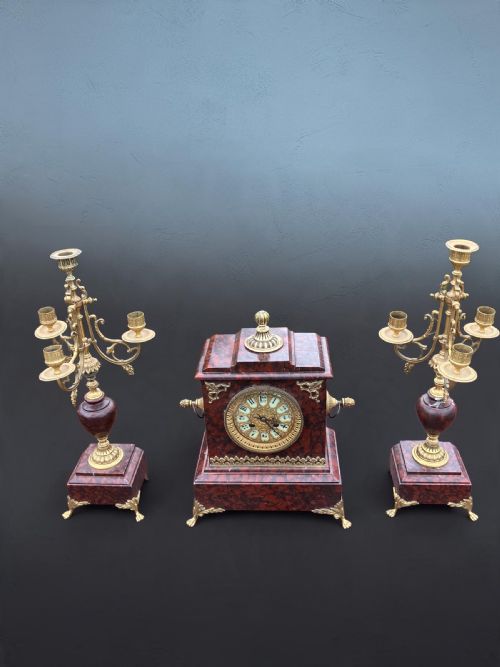
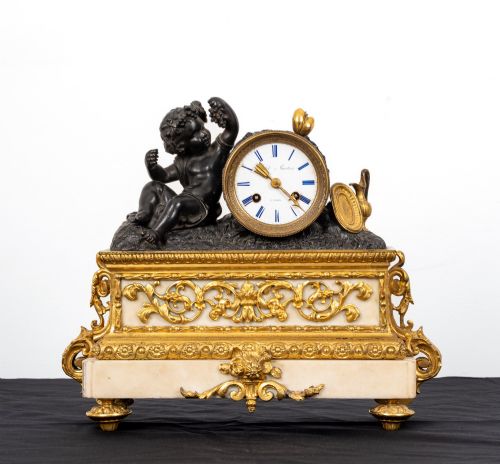
An antique fireplace clock serves as the visual centrepiece of a room, combining timekeeping with sculptural display. Buyers seeking an antique fireplace clock will most frequently encounter nineteenth-century French and Victorian designs, often accompanied by matching side garnitures or candelabra.
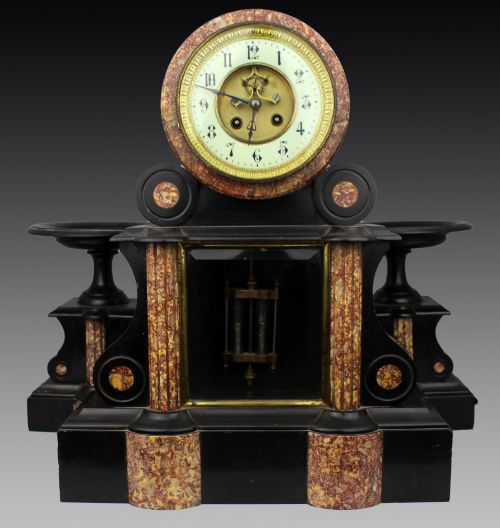
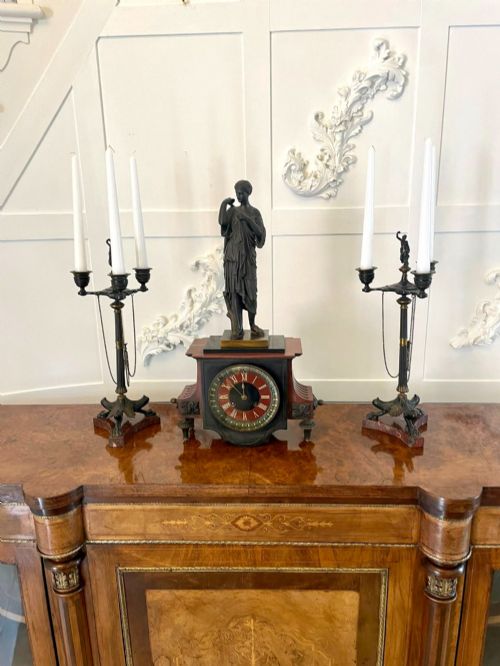
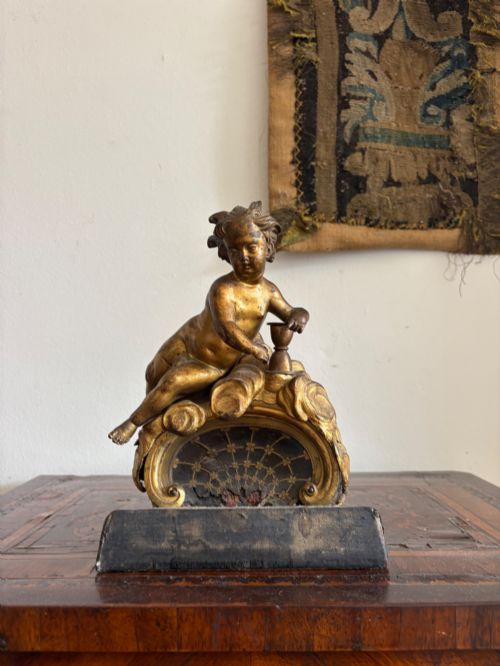
The objects span varied architectural and decorative forms, including portico clocks, drumhead shapes, and elaborate figural arrangements. Materials range from weighty black slate and rouge marble to polished brass and gilt bronze.
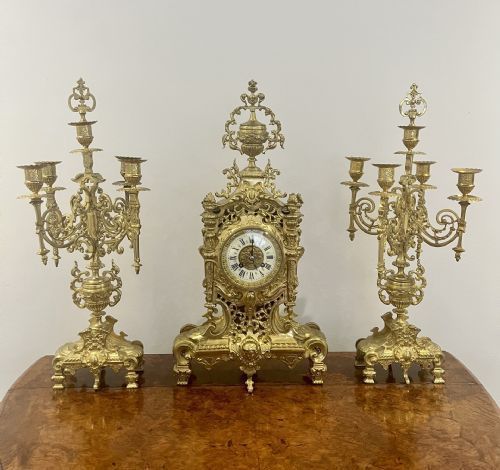
Many examples arrive as complete three-piece sets, pairing the central timepiece with matching decorative ornaments designed for mantel placement. These domestic timekeepers reflect the shifting tastes of the nineteenth century, moving from rigid neoclassical symmetry to ornate rococo curves.
Materials and Construction
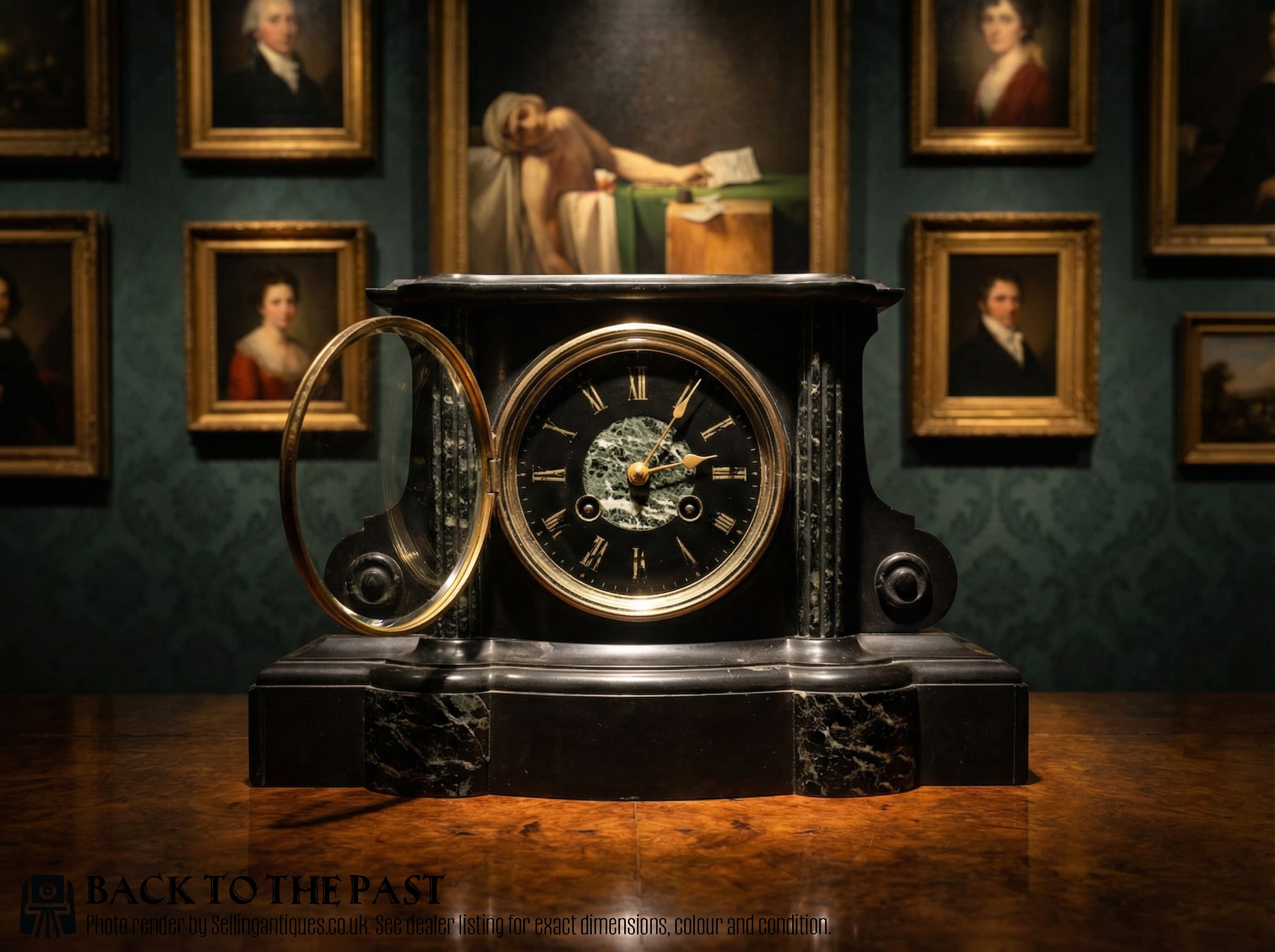
Makers utilised dense natural stones such as black slate, white marble, and red marble to build robust architectural cases. These stone bodies were frequently mounted with cast brass, gilt bronze, and ormolu details.
Metal components involved detailed casting and chasing, often finished with fire-gilding or patination. Enamel dials, sometimes paired with painted porcelain panels, provided legible and decorative faces for the internal eight-day mechanical movements.
Antique Fireplace Clock Retail Price Guide 2026
Typical asking prices for fireplace clock among the pieces listed under this phrase on Sellingantiques today, from the lower quarter to the upper quarter. They describe what is for sale here now, not the wider market.
Several clocks arrive protected beneath glass domes, keeping Victorian timekeeping safe from nineteenth-century hearth dust.
Markers of Quality
The distinction between ordinary production and superior work lies in the crispness of the bronze casting and the depth of the ormolu chasing. Finer examples display hand-finished detailing on sculptural mounts rather than soft, mass-produced edges.
The integration of the case materials also signals grade, where heavy natural marble and slate bodies align with robust, signed mechanical movements. Complete sets featuring matching candelabra and undamaged glass domes demonstrate higher preservation standards.
Japy Freres·Siffel and Cartier·PH Mourey·Budgen Croydon·Lemerle Charpentier·Deniere and Cailleaux
The Antique Fireplace Clock Glossary
- Garniture
- A set of matching ornamental objects designed to sit together on a mantelpiece, typically comprising a central clock flanked by two matching vases or candelabra.
- Ormolu
- Gilded bronze produced by applying a mercury and gold amalgam to a bronze base and heating it. This technique creates a durable, golden finish characteristic of fine French metalwork.
- Portico clock
- A mantel clock constructed in the architectural form of a classical temple with supporting columns. The pendulum often swings visibly within the open central space.
- Drumhead clock
- A clock featuring a circular dial housing mounted atop a rectangular or stepped plinth base. This form is common in nineteenth-century slate and marble timepieces.
- Fusee movement
- A conical pulley mechanism connected to the mainspring by a chain or cord, designed to equalise the torque as the spring unwinds. It represents a higher standard of clockmaking precision.
Antique Fireplace Clock: Frequently Asked Questions
How do I wind an antique fireplace clock?
Use the designated winding key in the appropriate dial holes, turning gently until resistance increases. Avoid over-winding to protect the internal spring mechanism.
Ensure you match the correct key size to prevent stripping the winding square. Most nineteenth-century mechanical movements require attention approximately once every eight days.
What is a clock garniture set?
A clock garniture set includes a central timepiece accompanied by matching decorative pieces like candelabra or urns. These items were designed to create a balanced arrangement across a mantelpiece.
Matching sets share identical materials, styles, and decorative motifs, such as gilt bronze mounts or specific types of marble.
How do I identify French styles?
French styles reveal themselves through distinct decorative vocabularies, from the symmetrical restraint of Empire design to the asymmetrical curves of Rococo. Look at the motifs used in the bronze mounts and the overall architectural silhouette of the case.
Napoleon III and Second Empire pieces often mix classical elements with heavy proportions, while Louis XVI examples favour straight lines, urns, and floral garlands.
Where should I place a heavy marble clock?
Place heavy marble and slate clocks on a sturdy, level surface capable of supporting significant weight. Mantelpieces must be structurally sound to bear the load of dense stone cases.
A level foundation ensures the mechanical pendulum swings evenly and the clock keeps accurate time without stopping.