



Antique Fireplace Clock Set
An antique fireplace clock set brings classical French bronze, marble and ormolu into a room with striking presence.
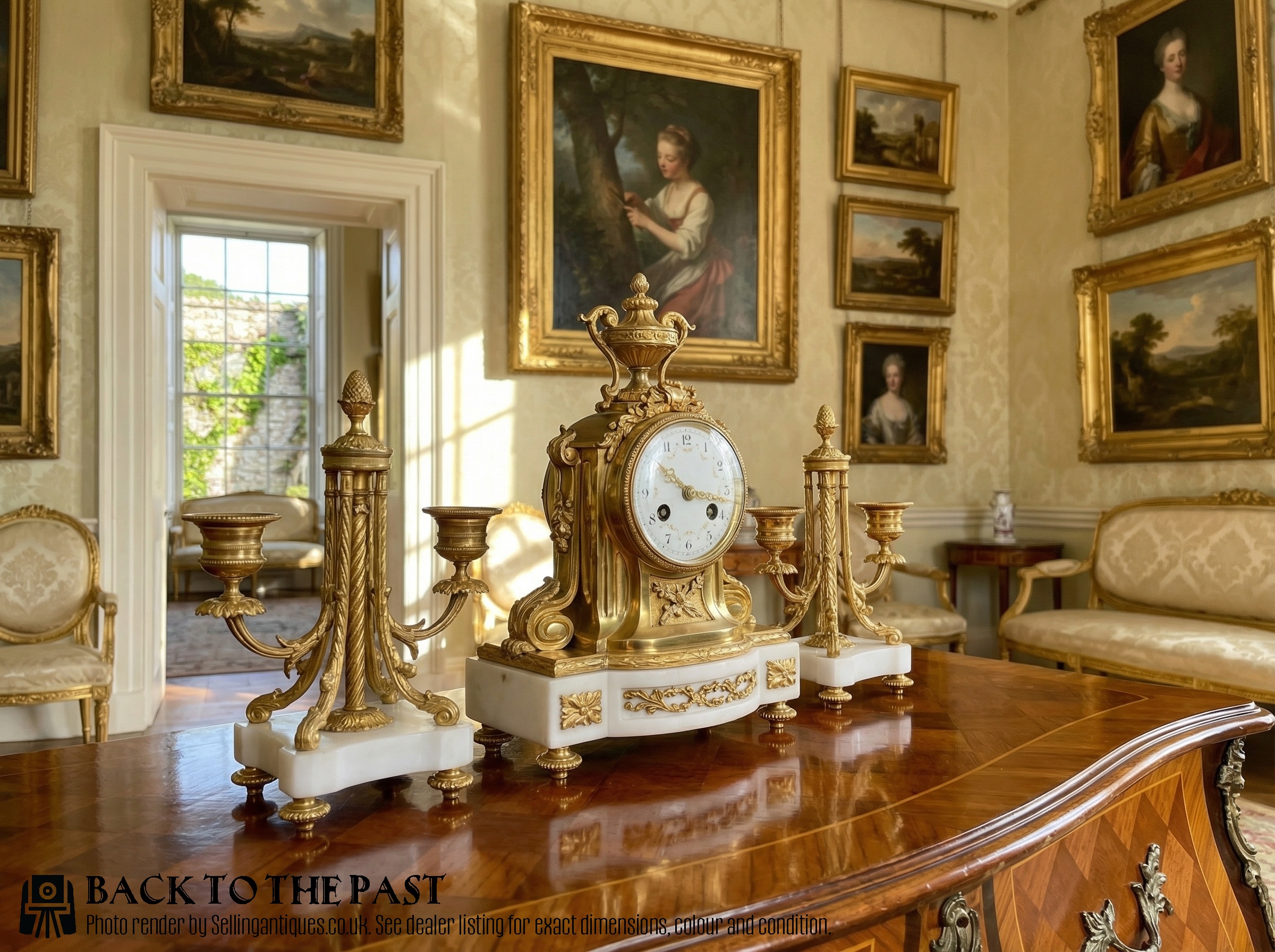
Understanding antique fireplace clock set pieces
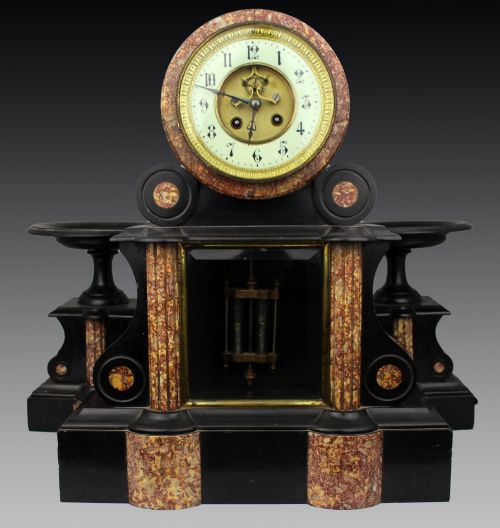
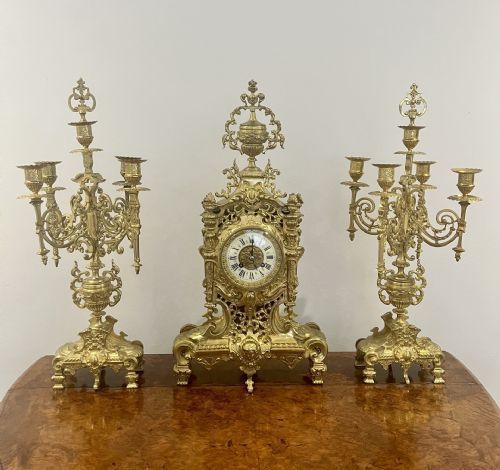
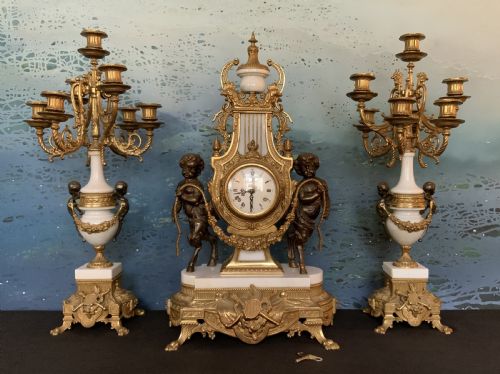
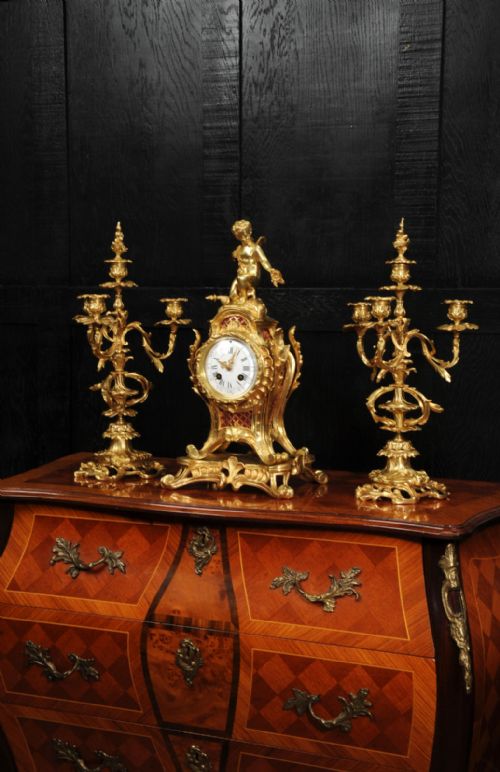
An antique fireplace clock set typically comprises a central mantel clock accompanied by matching side ornaments such as candelabra or urns, forming a balanced arrangement for a mantelpiece. The pieces seen on this page span the nineteenth century and mid-twentieth century, capturing periods from the mid-nineteenth century and eighteen-eighty back to eighteen-sixty, alongside a nineteen-sixty Italian bronze and marble creation.
Most examples originate from French workshops, executed in styles such as French Rococo Revival, Neoclassical, French Second Empire, Louis XVI Revival, and French Sevres style. These formations turn a simple timekeeper into a grand decorative ensemble designed to anchor the hearth.
Makers represented in the evidence include Japy Freres and Vincenti, whose works define the standard output of the era. Buyers frequently encounter black slate, variegated marble, gilt bronze, and ormolu paired with enamelled dials and protective glass domes.
Materials and construction methods
Craftsmen built these sets using heavy stones like black slate and variegated marble as the structural base, often mounted with cast ormolu and gilt bronze mounts. The weight of the materials demanded robust internal engineering, typically featuring eight-day mechanical movements to drive the clock reliably.
Finer details relied on hand-finishing, where brass and bronze elements were chased and gilded to create sharp contrast against polished stone surfaces. Enamel dials, frequently marked with delicate numerals, completed the face of the clock while glass protected delicate components.
Retail Price Guide 2026
Typical UK retail prices for fireplace clock set, calculated from the Sellingantiques database of over a million retail prices indexed since 2003. This retail price guide relies exclusively on Sellingantiques data; no external sources or auction records are used, so the figures do not describe the wider market.
Some heavy marble garniture sets weigh enough to make a strong mantelpiece groan in polite appreciation.
Distinguishing quality across the range
Quality reveals itself in the crispness of the bronze casting and the depth of the ormolu gilding rather than mere surface shine. Superior sets display finely chiselled detailing on mountings and seamless integration between the clock body and its matching side garnitures.
The choice of stone also dictates the grade of the piece, with richly variegated marble and dense black slate carrying greater visual weight than simpler alternatives. Furthermore, signed movements by established makers elevate an ensemble above anonymous workshop production.
Japy Freres·Vincenti
The Antique Fireplace Clock Set Glossary
- Garniture
- A matching set of ornamental pieces designed to be displayed together, usually consisting of a central clock flanked by two candelabra, vases, or urns. These sets create symmetry on a mantelpiece.
- Ormolu
- Finely ground high-carat gold applied to a bronze base using a mercury amalgamation technique, or later electroplating methods. It imparts a rich, warm golden glow to metal mounts.
- Japy Freres
- A prominent nineteenth-century French clockmaking dynasty known for producing robust and reliable movements. Their mechanisms appear frequently in quality mantel clocks.
- Vincenti
- A notable medal-winning nineteenth-century French clockmaker whose movements powered many fine architectural and decorative clocks. Collectors prize signed examples for their mechanical reliability.
- Black Slate
- A dense, dark stone frequently utilised in nineteenth-century French clock bodies to imitate more costly marbles. It provides a heavy, formal backdrop for gilt bronze mounts.
Frequently Asked Questions
What is included in a clock set?
A clock set typically includes a central mantel clock paired with two matching side pieces, such as candelabra or decorative urns. These elements are designed to be displayed together on a mantelpiece to create visual balance.
The matching side pieces share the same materials and stylistic motifs as the clock, pulling the decorative scheme of a room together.
How do I wind an antique clock?
Antique mechanical clocks require a key to wind the springs through dedicated holes on the enamel dial. Care must be taken not to overwind the mechanism to ensure the longevity of the movement.
Most traditional movements found in these sets run for eight days before requiring another wind.
Where should I place a garniture set?
These sets are traditionally designed for the mantelpiece above a fireplace, where the central clock and flanking garnitures command attention. They also sit well on heavy sideboards or console tables.
Because many pieces feature delicate glass components and heavy marble or slate bases, they require a sturdy, level surface.
How do I identify French styles?
French styles like Rococo Revival and Neoclassical are identified through their distinct decorative vocabulary, featuring scrolling foliage, classical urns, or formal architectural columns. The presence of Sevres-style porcelain panels further points to French manufacture.
Examining the casting style and dial markings helps distinguish between mid-nineteenth-century revivals and later interpretations.