
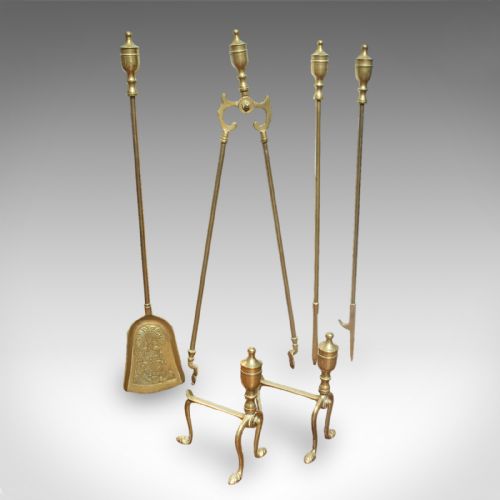


Antique Fire Tongs
These antique fire tongs are essential hearth accessories crafted to manage solid fuel fires with practical utility and period style.
Antique Fire Tongs
When searching for antique fire tongs, buyers encounter functional fireplace accessories designed for managing coal, wood, or peat fires in domestic hearths. These items appear primarily as part of matched sets alongside pokers and shovels, or occasionally as individual hand-forged examples.
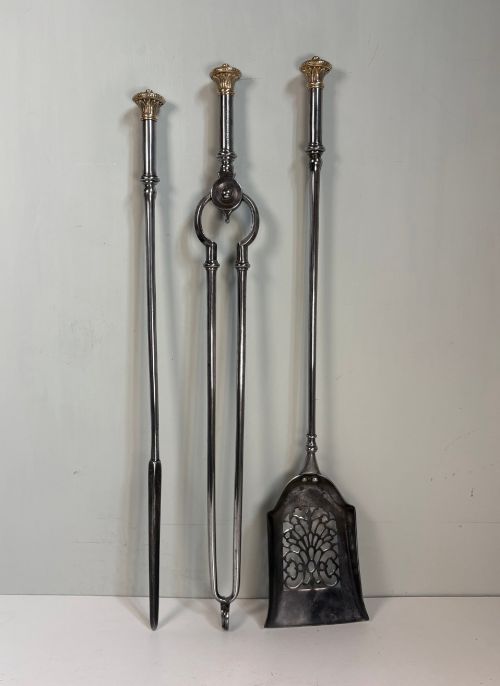
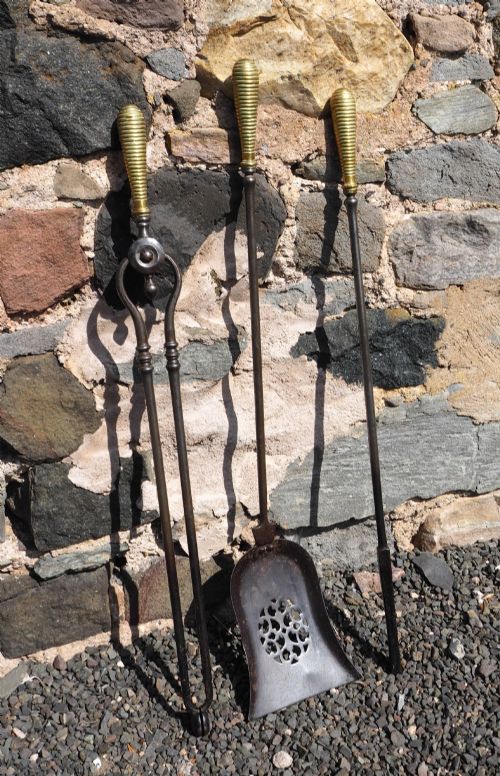
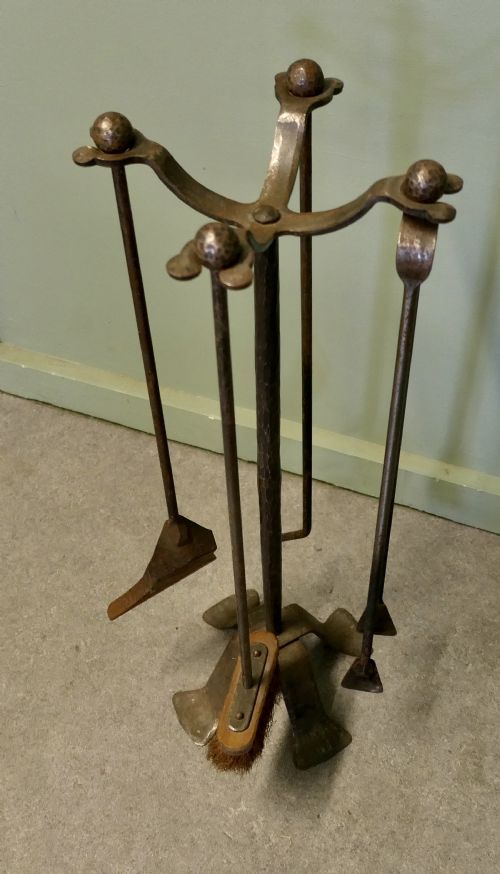
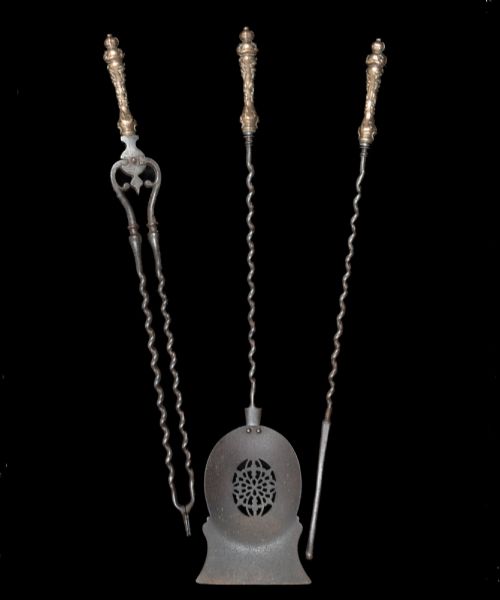
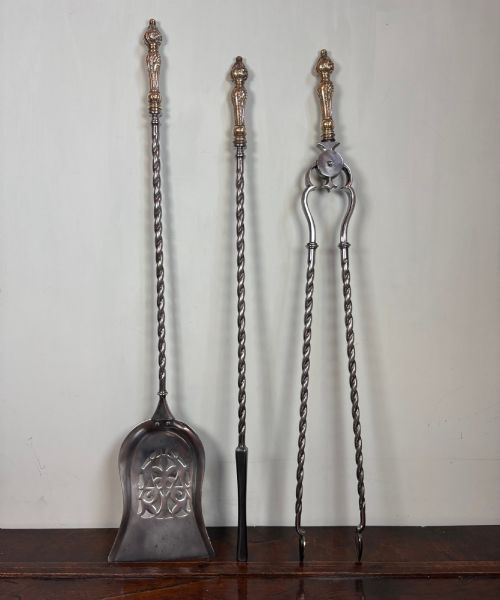
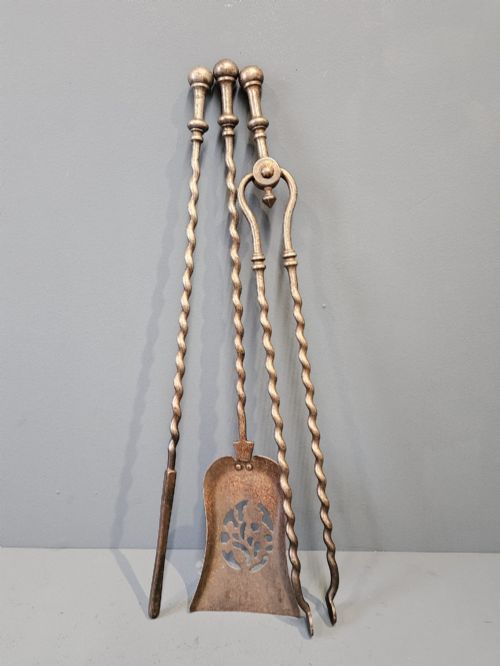
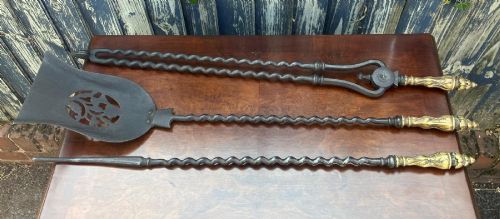
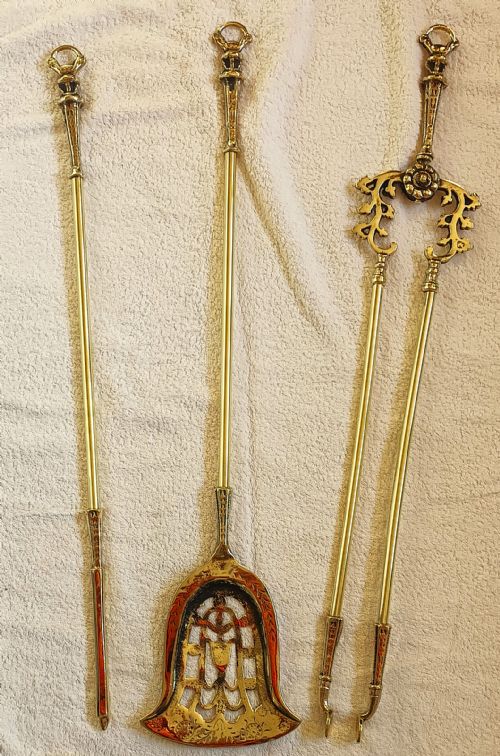
The pieces on this page span the Georgian, Victorian, and Edwardian eras, alongside distinct Arts and Crafts and Gothic Revival designs. Brass and polished steel predominate, often paired together within a single companion set for aesthetic contrast beside the grate.
How They Were Made
Makers utilised forged iron and wrought iron for robust utility, hammering hot metal into shape on an anvil to create durable spring arms and articulated joints. Early examples often display hand-forged arrow-head or stirrup designs resulting from traditional blacksmithing techniques.
Brass, gunmetal, and gilt brass components provide decorative brilliance, frequently shaped with rope twist handles or cast ornamental finials. Polished steel requires meticulous surface finishing to achieve a bright, reflective sheen that complements formal hearth furnishings.
Early blacksmiths forged stirrup and arrow-head designs into iron tongs so they hung straight.
What Varies in Quality
The standard of a pair of fire tongs depends heavily on the integrity of the metalwork and the precision of the pivot or spring action. Superior examples maintain balanced proportions and secure joints that withstand regular use without loosening.
Decorative refinement distinguishes the best items from utilitarian workshop productions, seen in crisp casting details, substantial metal gauge, and thoughtful integration with matching companion sets or fire dogs.
The Antique Fire Tongs Glossary
- Companion set
- A matched group of fireside implements, usually comprising tongs, a poker, and a shovel, often displayed together in a stand or with fire dogs. These collections provided a unified aesthetic for the Victorian or Edwardian fireplace.
- Fire irons
- The collective term for functional metal implements used to tend a domestic fire. They formed a standard part of household furnishings across the Georgian and later periods.
- Wrought iron
- Iron that has been heated and hammered by hand into shape, notable for its fibrous texture and tensile strength. Blacksmiths utilised this malleable material for heavy-duty hearth tools.
- Gilt brass
- Brass that has been coated with a thin layer of gold or a gold-coloured finish to enhance its decorative brilliance. This treatment appeared on finer fireplace accessories designed for formal drawing rooms.
- Stirrup
- A traditional loop-shaped terminal design found on the grip end of early iron fire tongs. This form allowed the user to hang the tool securely from a rack or fender.
Antique Fire Tongs: Frequently Asked Questions
How do I date antique fire tongs?
Dating relies on observing the prevailing style of handles, the choice of materials, and manufacturing techniques such as hand forging versus machine casting. Georgian examples often display simpler wrought iron or steel forms, whilst Victorian and Edwardian pieces frequently incorporate decorative brass casting and rope twist patterns.
Examining the wear patterns and construction methods helps place an item within its historical period. Comparing the tongs to documented companion sets from the same era provides further contextual accuracy.
What metals were commonly used?
Makers most frequently utilised brass, steel, and iron to construct functional hearth equipment. Polished steel and gunmetal provided bright reflective surfaces, whilst wrought iron offered exceptional durability for heavy-duty tools.
Combinations of brass and steel appeared regularly across the nineteenth century to create visual contrast. Gilt brass was reserved for more decorative items intended for formal reception rooms.
Were fire tongs sold individually?
Whilst individual pieces occasionally survive, the majority of surviving examples formed part of larger fireside tool suites. These matched sets included companions such as pokers and shovels designed to sit together by the grate.
Complete sets ensured a uniform appearance across all hearth accessories within a room. Individual pieces often turned up when companion sets became separated over generations of use.
How were fire tongs used?
These implements allowed residents to adjust burning logs or reposition coal within the grate without touching the fuel directly. The hinged arms provided leverage to grip and move hot material safely.
Their placement near the fireplace ensured they remained immediately accessible during daily hearth maintenance. Sturdy construction was essential to withstand the intense heat of open fires.