
Antique Filing Storage
Antique filing storage turns practical office management into fine furniture, offering timber cabinets and banks of drawers built to organise paper.
Antique Filing Storage
When you search for antique filing storage, you uncover a utilitarian category spanning Victorian and Edwardian office furniture alongside industrial workshop pieces. The listings here present practical forms designed to sort correspondence, music sheets, and documents in domestic or commercial workspaces.
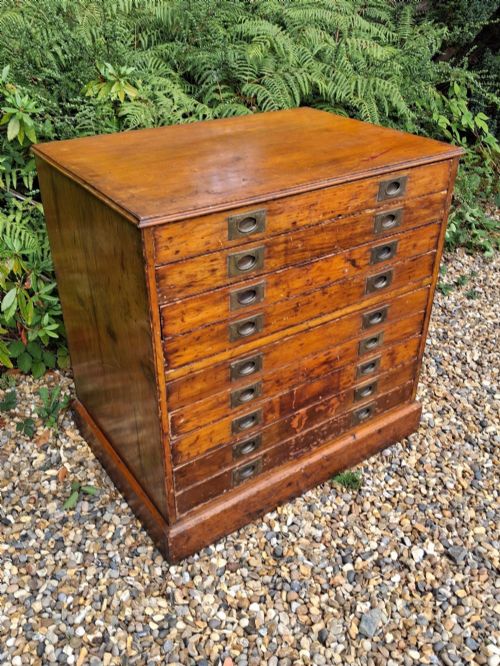
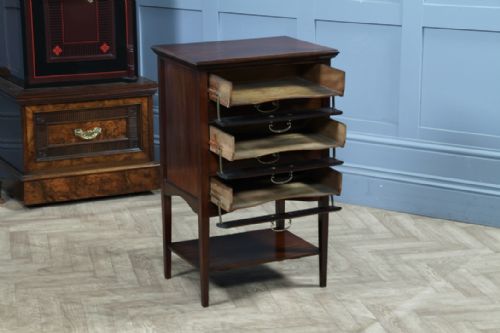
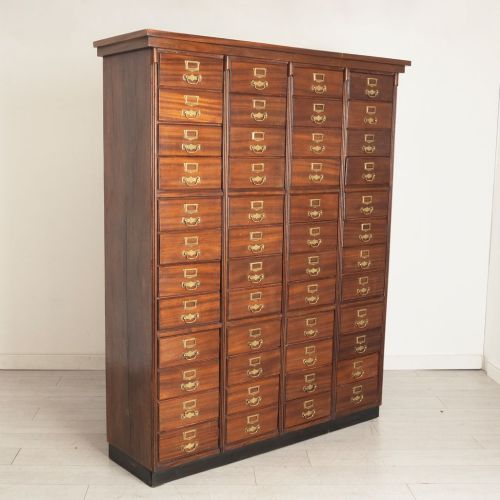
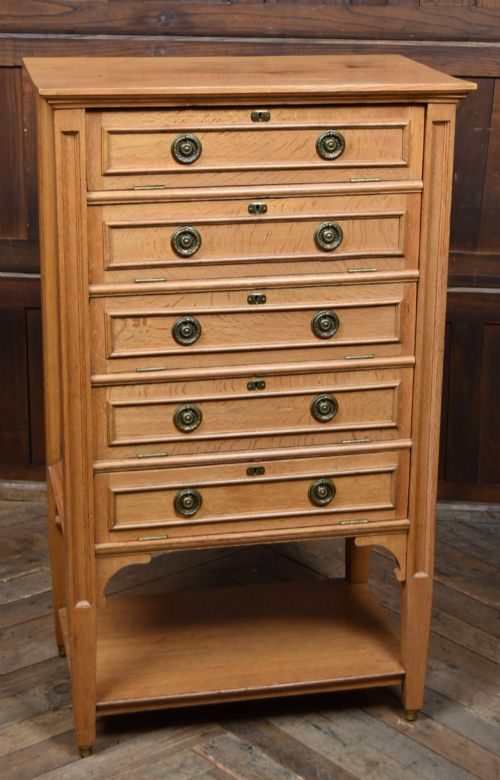
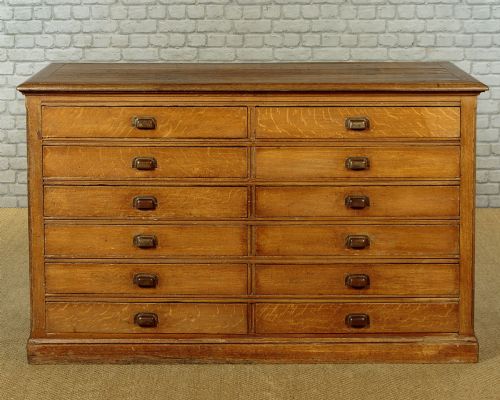
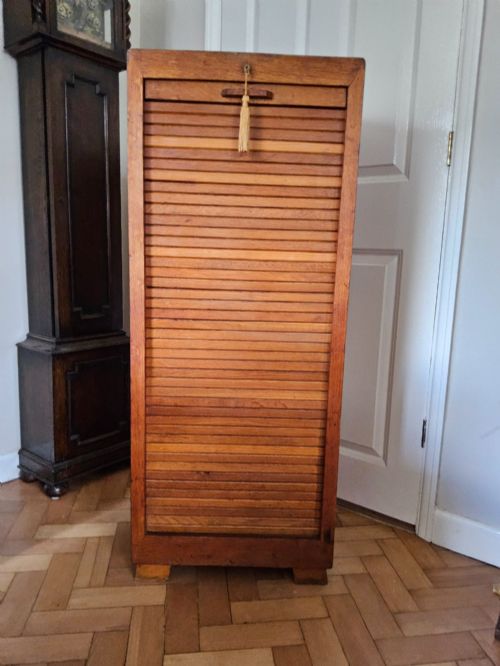
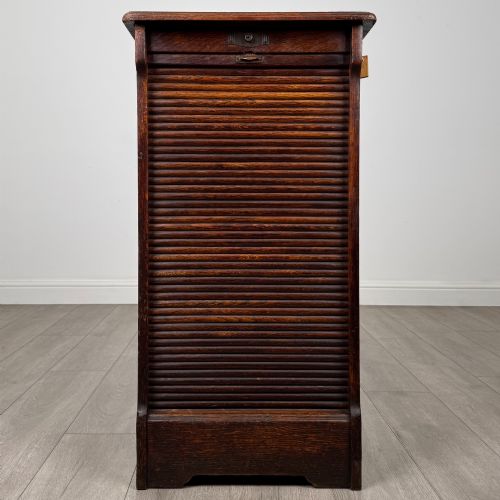
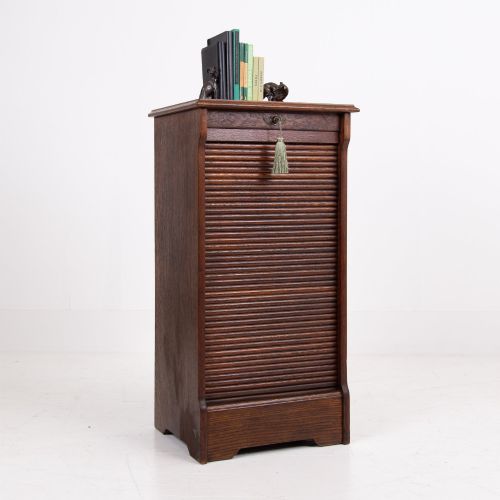
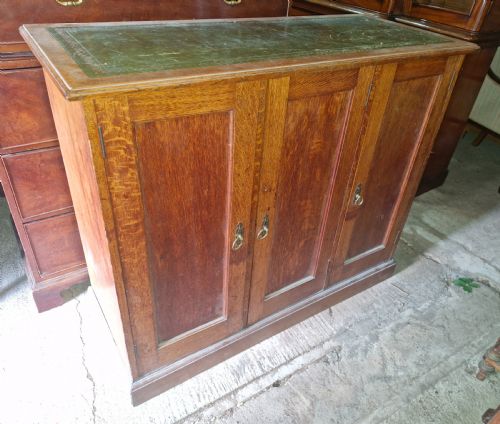
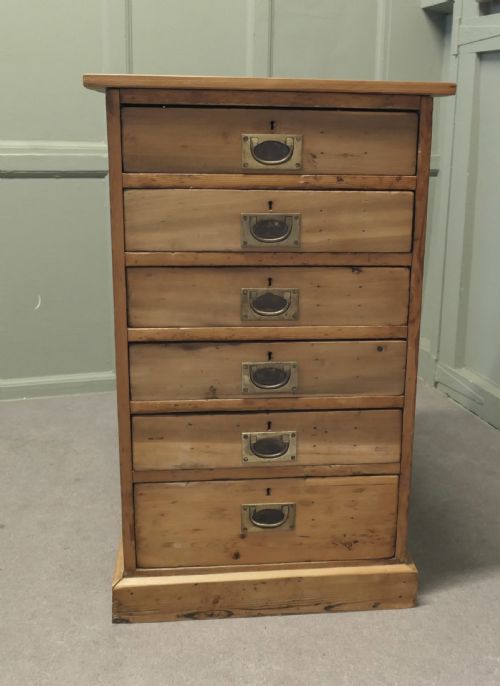
You are most likely to meet oak and mahogany filing cabinets featuring vertical shutter doors or multiple shallow drawers. These pieces range from compact single column units to large multi-drawer banks originating from the nineteenth and early twentieth centuries.
How they were made
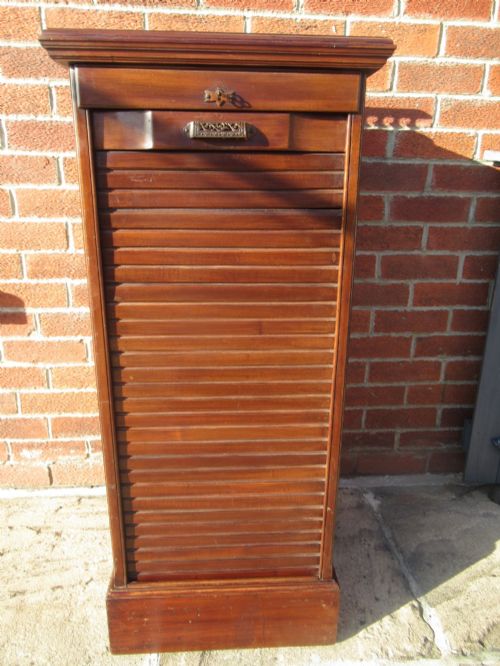
Cabinet makers utilised solid hardwoods such as oak, mahogany, and walnut, often pairing them with pine carcass framing and durable metal hardware. Tambour doors utilised individual wooden slats glued to canvas backing to curve smoothly around tracks.
Brass fittings such as shell pulls and dedicated label holders served an entirely functional purpose for daily office work. Joinery relied on sturdy construction methods suited to heavy daily use in busy commercial environments.
Specialised storage formats recorded in the inventory include music cabinets, haberdashery units, military chests, and patent letter files.
What varies in quality
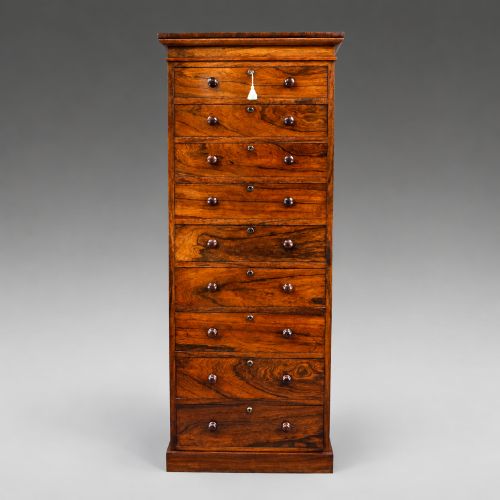
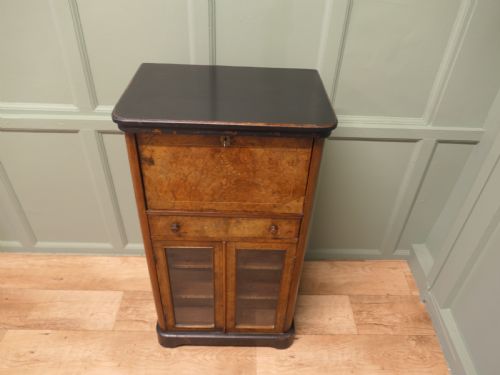
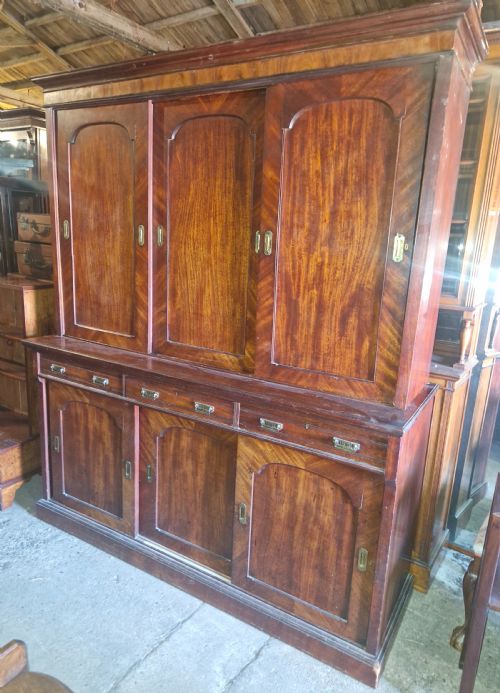
The distinction between standard utility furniture and finer cabinet work rests in timber selection and mechanical execution. Pieces displaying figured mahogany veneers or carefully matched oak grain sit above plain utilitarian workshops items built strictly for factory utility.
Mechanism precision dictates overall standard, particularly in the smooth operation of tambour shutters and the exact fit of drop-front or multi-drawer banks. Original hardware, including branded patent mechanisms and matching brass label holders, elevates the integrity of the piece.
The Antique Filing Storage Glossary
- Tambour
- A flexible door constructed from narrow strips of wood attached to a fabric backing. It slides along grooved tracks to conceal interior shelving or files.
- Wellington chest
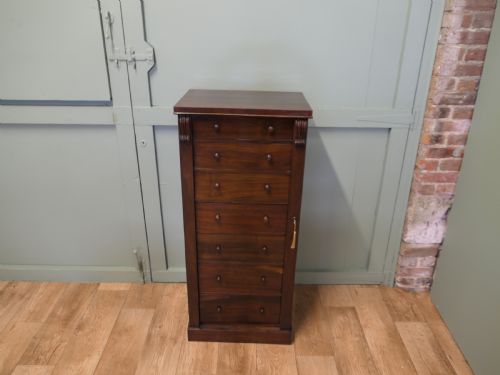
- A tall, slender chest of drawers secured by a hinged vertical locking bar on one side. This bar fastens with a padlock to secure all drawers simultaneously.
- Bank of drawers
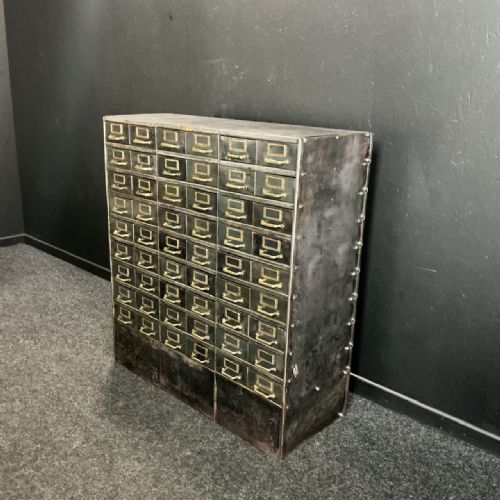
- A multi-drawer storage unit designed for sorting documents, specimens, or hardware. These units feature numerous shallow compartments.
- Drop-front
- A drawer front that pivots downward when opened to provide easy access to filed papers or sheet music inside. This mechanism appears frequently in music cabinets.
- Shell pull
- A pressed or cast metal handle shaped like a half-shell, frequently incorporating a slot for paper index labels. They appear on Edwardian and early twentieth century filing furniture.
Antique Filing Storage: Frequently Asked Questions
How do tambour doors work?
Tambour doors consist of narrow vertical wooden slats fixed to a flexible canvas backing that slides inside hidden side channels. This design allows the door to curve around the cabinet corner and disappear completely when opened.
Regular cleaning and light waxing of the wooden tracks keep the mechanism running smoothly without requiring modern lubricants.
Where were these cabinets used?
These storage units served in professional offices, Victorian studies, post offices, and music rooms to organise correspondence, ledgers, and sheet music. Their robust construction handled heavy daily retrieval of documents before standard steel filing cabinets took over.
Today, they transition easily into modern homes as practical storage for paperwork, craft supplies, or media.
How do I care for oak and mahogany office furniture?
Protect timber surfaces by placing pieces away from direct heat sources and strong sunlight that can dry out the wood. Apply a traditional beeswax polish occasionally to nourish the grain and maintain the finish.
Avoid using silicone-based sprays, which build up over time and attract dust to the carved details and hardware.
What is the difference between a music cabinet and a file cabinet?
Music cabinets generally feature shallow drop-front drawers specifically dimensioned to hold large sheets of bound music and scores. Standard filing cabinets utilise vertical drawers or tambour fronts designed for upright folders and letters.
Both forms belong to the wider category of antique filing storage due to their compartmentalised interior layouts.