
Antique Office Chest
When you handle an antique office chest, you touch practical history through multi-drawer banks, tambour files and campaign pieces designed for daily work.
Antique Office Chest
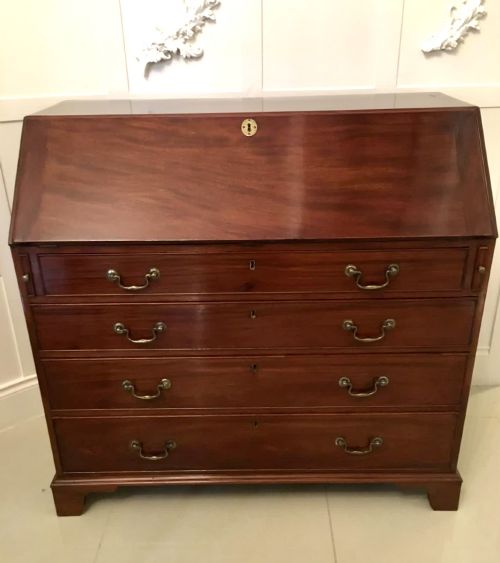
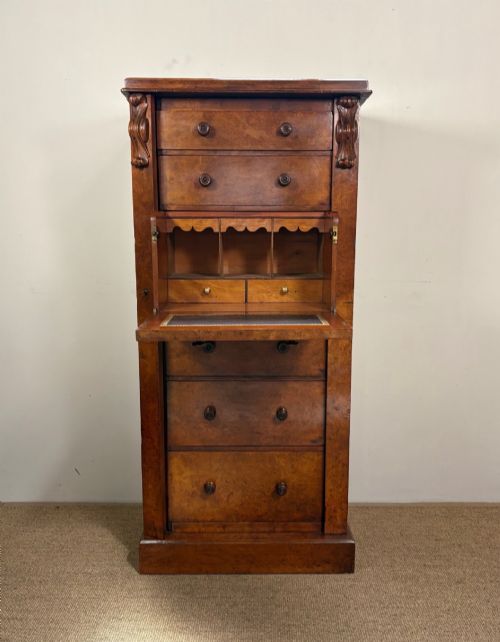
An antique office chest encompasses functional storage furniture designed for paperwork and administration, spanning filing cabinets, banks of drawers and bureau forms. You encounter pieces originating from the Georgian, Victorian and Edwardian eras, alongside early twentieth-century examples.
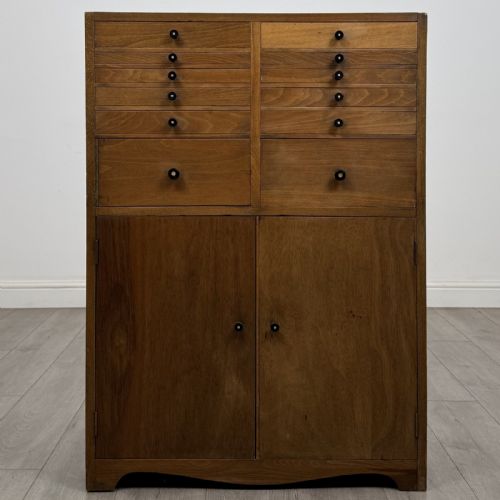
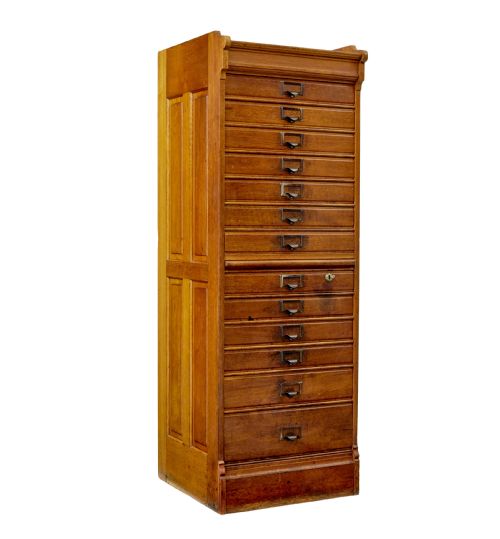
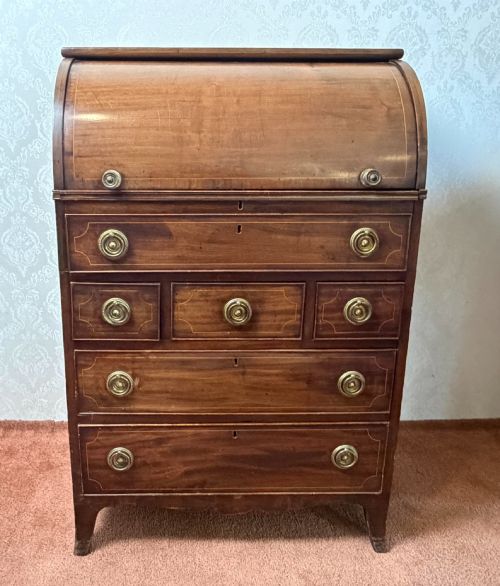
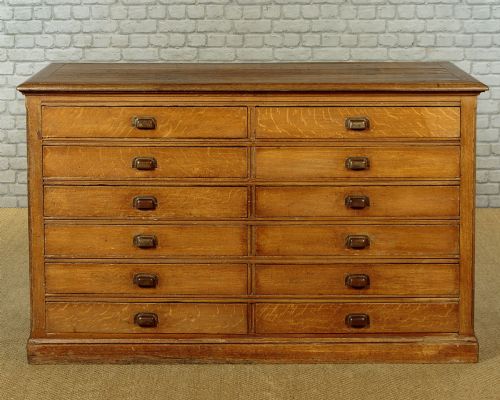
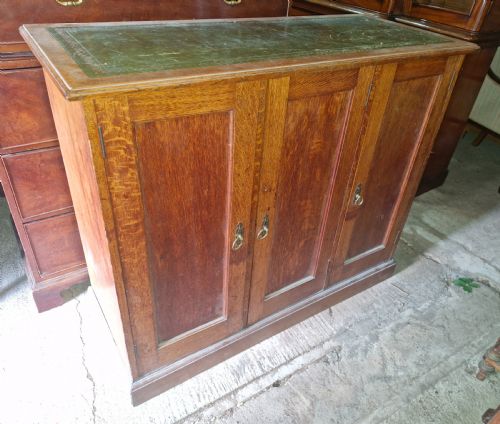
The most common formats on this page include oak and mahogany filing cabinets, multi-drawer workshop banks and tambour front units. These items transition easily from historic workspaces into contemporary domestic settings for organised storage.
Materials and construction
Cabinet makers utilised dense hardwoods like mahogany, oak, walnut and rosewood for durable carcases, complemented by utility timbers such as pine for internal framing and drawer construction. Timber selection directly dictated the structural integrity required for heavy administrative use.
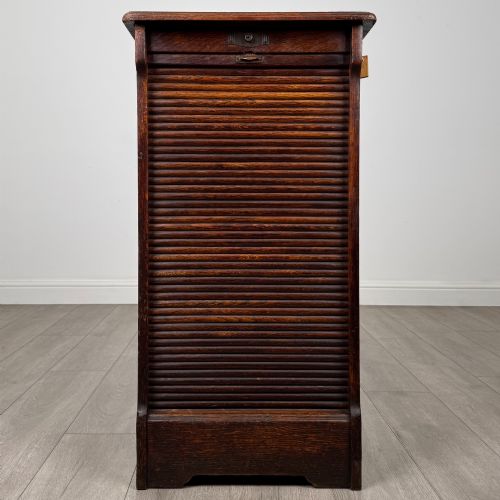
Hardware played an essential mechanical role, incorporating brass label holders, shell pulls and iron locking mechanisms alongside specialised tambour slats glued to canvas backings for sliding doors.
Listings feature oak, mahogany, walnut, pine and rosewood alongside brass and iron hardware across Georgian, Victorian and Edwardian periods.
Quality variations
Quality rests upon the execution of timber joinery, drawer lining construction and the precision of mechanical elements like tambour tracks and locking bars. Superior pieces retain original hardware, smooth drawer action and harmonious grain matching across primary surfaces.
Lesser examples display utilitarian pine replacements, sluggish sliding mechanisms or mismatched replacement handles that alter the intended proportion and aesthetic unity of the piece.
G. Bartholomew & Co·Edwards & Roberts
The Antique Office Chest Glossary
- Tambour
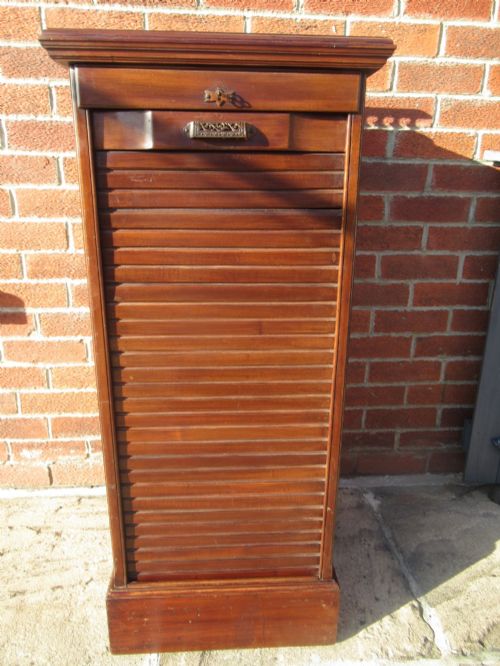
- A flexible sliding door formed of narrow strips of wood glued to canvas backing. This mechanism allows access to internal filing slots without projecting doors.
- Wellington chest
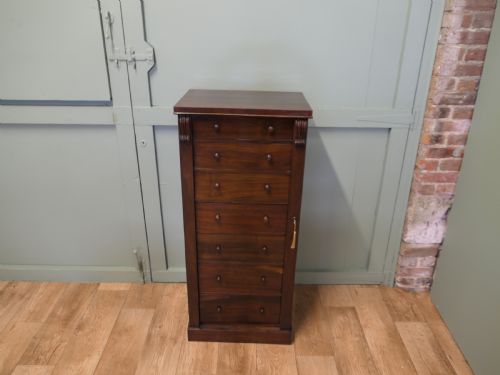
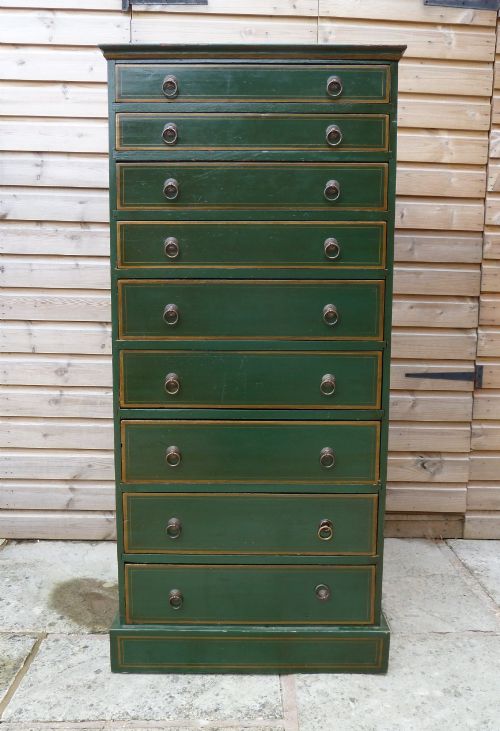
- A tall, slender stack of drawers secured by a hinged vertical locking bar on one side, which fastens with a key.
- Bank of drawers
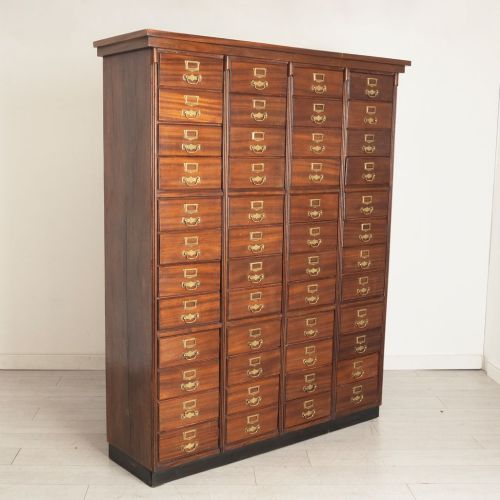
- A multi-compartment cabinet featuring numerous shallow or deep drawers designed for sorting documents, letters or specimens.
- Bureau
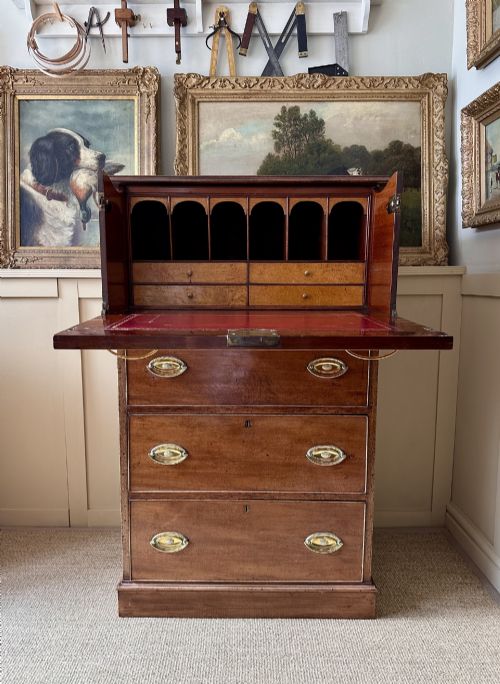
- A writing desk featuring a sloping fall-front lid that opens to reveal internal pigeon holes and small compartments.
- Campaign furniture
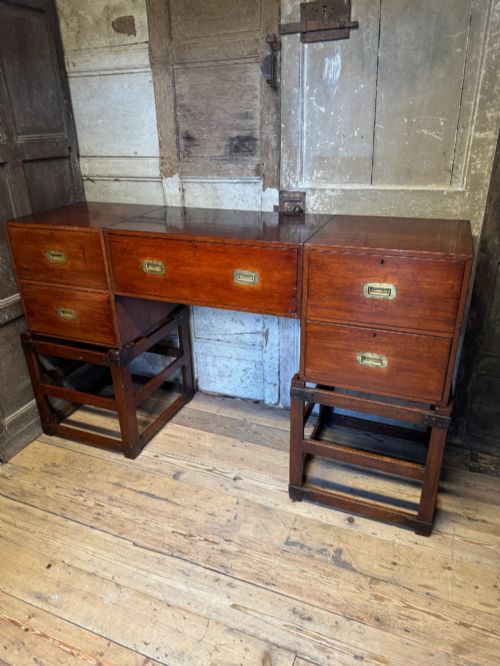
- Portable storage and desks constructed in sections with brass corners and recessed carrying handles for travel.
Antique Office Chest: Frequently Asked Questions
Where were antique office chests originally used?
These pieces served administrative roles in merchant offices, legal chambers, libraries and private Victorian studies.
Owners relied on them to sort correspondence, architectural plans, ledgers and confidential documents before modern steel furniture dominated the workplace.
How do I maintain tambour doors?
Tambour tracks require occasional cleaning to remove dust and debris that can impede the smooth sliding action of the wooden slats.
Avoid heavy liquid polishes inside the runner grooves, preferring a dry brush or microfibre cloth to preserve the historic canvas backing.
Can I fit modern paper in these drawers?
Many Edwardian and Victorian multi-drawer cabinets accommodate standard modern paper sizes within their shallow document slots.
Larger filing cabinets and banks of drawers offer deep capacity suitable for contemporary folders, stationery and media storage.
How do I distinguish Edwardian from Georgian pieces?
Georgian office chests typically display heavier mahogany framing, bracket feet and hand-cut dovetailing characteristic of eighteenth-century cabinet making.
Edwardian examples often incorporate lighter oak frames, machine-made internal components and specialised filing mechanisms developed for twentieth-century offices.