




Antique Letter Chest
An antique letter chest is a sturdy receptacle designed to organise correspondence, bringing both practical storage and period character to a desk.
Antique Letter Chest
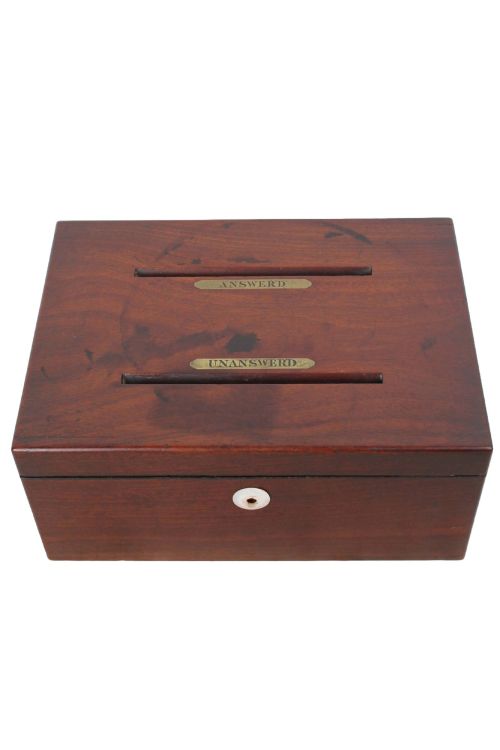
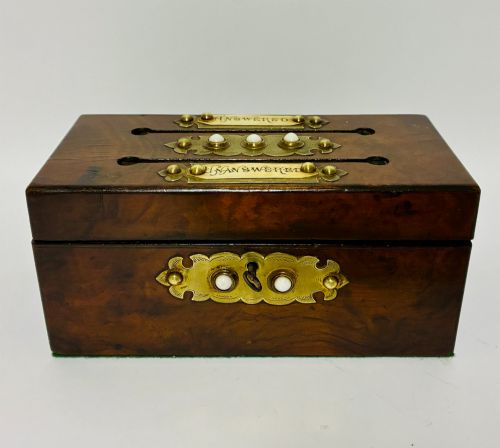
An antique letter chest serves to organise correspondence and document storage, drawing upon forms from the Georgian, Victorian, and Edwardian periods. These pieces appear as tabletop stationery boxes, fall-front deed cases, and small multi-drawer cabinets.
Most examples found on this page date from the nineteenth century, constructed in mahogany, oak, walnut, or lacquer. They range from country house correspondence boxes to patent filing cabinets and brass-mounted strongboxes.
How they were made
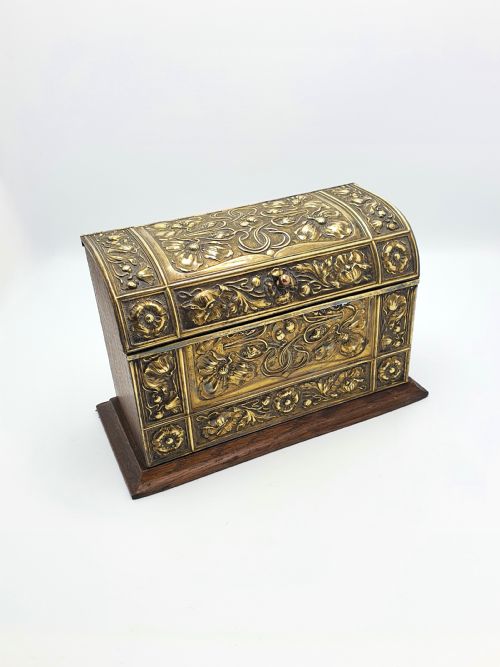
Cabinet makers utilised dense hardwoods such as mahogany, pollard oak, and walnut, often applying brass mounts, handles, and lock escutcheons for structural reinforcement. Interiors frequently incorporate fitted compartments, bone details, and sloped writing surfaces.
Specialist techniques include Japanese lacquerwork on nineteenth-century boxes and patent mechanical systems found on office and filing pieces from later decades. Steel and bronze also appear in utilitarian deed and strong boxes.
Listings feature woods spanning mahogany, oak, walnut, and pollard oak, alongside brass, steel, and Japanese lacquer.
What varies in quality
Quality rests in the selection of timber veneers, the precision of brass joinery, and the integrity of internal fittings such as partitions and secret drawers. Superior pieces retain original hardware and working locks with matching keys.
The degree of hand-finishing marks the distinction between standard utilitarian storage and fine decorative examples, such as those featuring detailed lacquer or pollard oak figuring.
Ermen & Roby·Amberg
The Antique Letter Chest Glossary
- Correspondence box
- A fitted container designed specifically to hold writing paper, envelopes, and incoming letters. These boxes often feature internal dividers and sloped ledges.
- Deed box
- A secure metal or wood storage chest utilised for legal documents and important papers. They frequently include heavy-duty brass carrying handles and robust locking mechanisms.
- Fall-front
- A hinged panel that drops forward to reveal interior pigeonholes and drawers. This mechanism allows easy access to paperwork without moving the box contents.
- Stationery box
- An upright desktop cabinet with a sloping or dome top, housing tiered compartments for envelopes and writing requisites. They are typically encountered in Victorian walnut and oak.
Antique Letter Chest: Frequently Asked Questions
What is an antique letter chest?
An antique letter chest is a designated box or small cabinet built to sort and store paper correspondence, envelopes, and documents.
These pieces reflect the writing habits of past centuries, offering compartmentalised interiors designed for a well-ordered desk.
How were letter chests used?
Owners utilised them to keep incoming mail private, organise household accounts, and store writing paper near a desk or parlour table.
Many incorporate locks to safeguard personal letters, deeds, and receipts from prying eyes.
Where should I place one?
They sit comfortably on top of desks, sideboards, or bookcases where their polished wood and brass details add a period touch.
Tabletop stationery and correspondence boxes require minimal surface space while providing practical storage for modern stationery.
How do I date an antique letter chest?
Dating relies on observing the timber species, construction methods, and hardware styles associated with periods like the Georgian or Victorian eras.
Patented mechanisms and applied labels also provide precise clues to the manufacturing decade.