
Antique Filing Chest
An antique filing chest organises papers with weight and gravity, bringing solid timber and brass into a modern study.
Antique Filing Chest
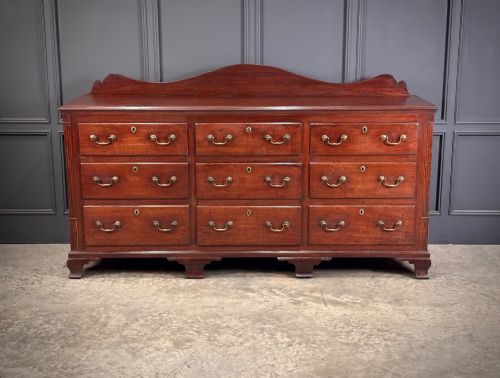
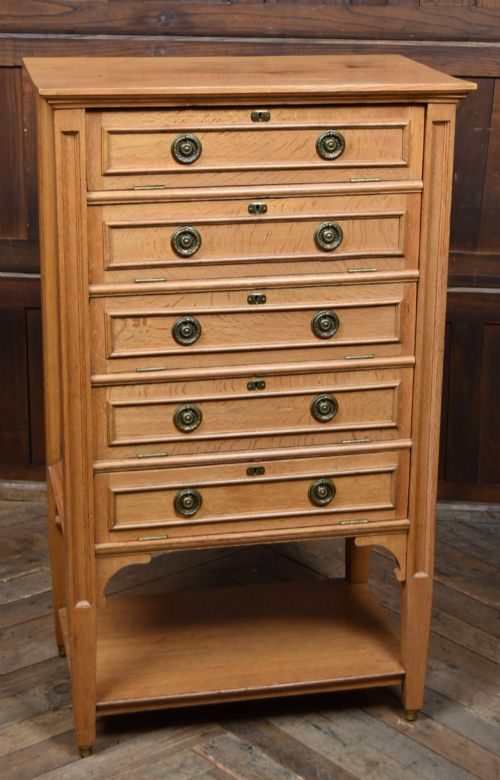
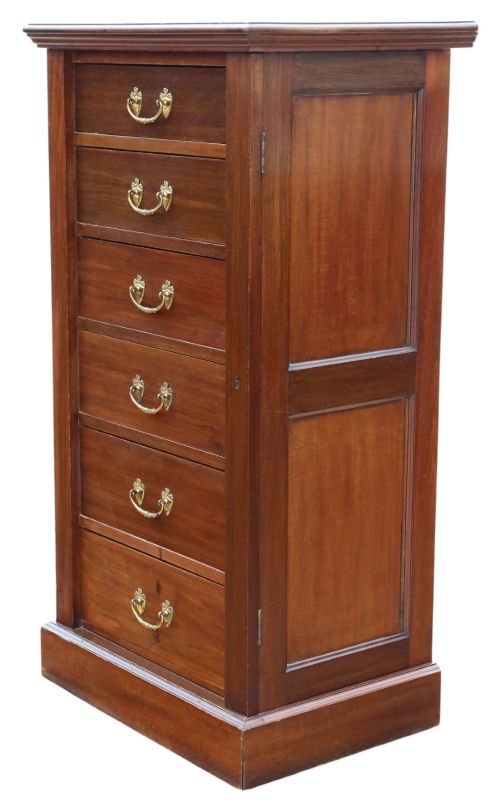
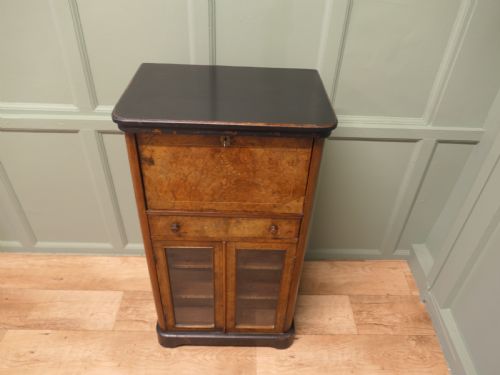
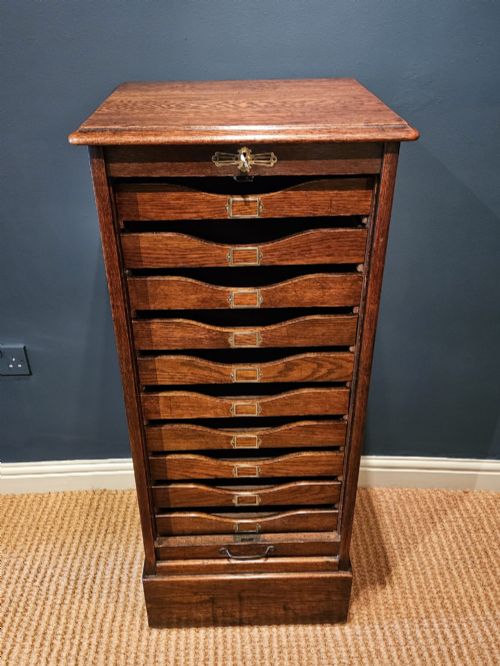
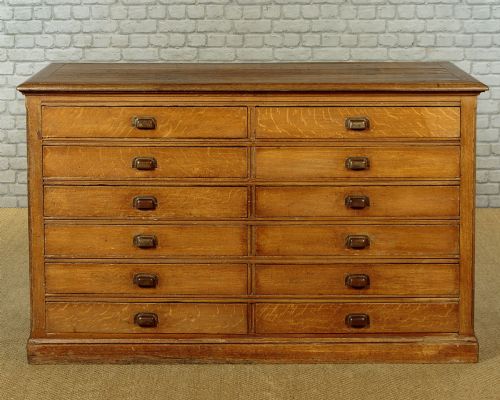
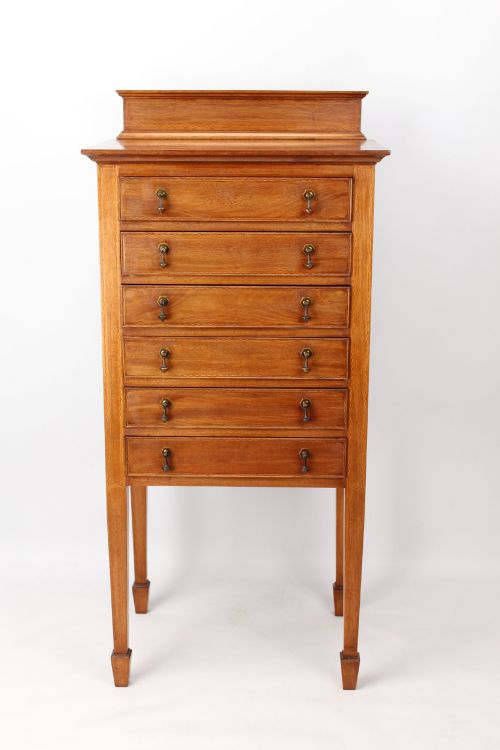
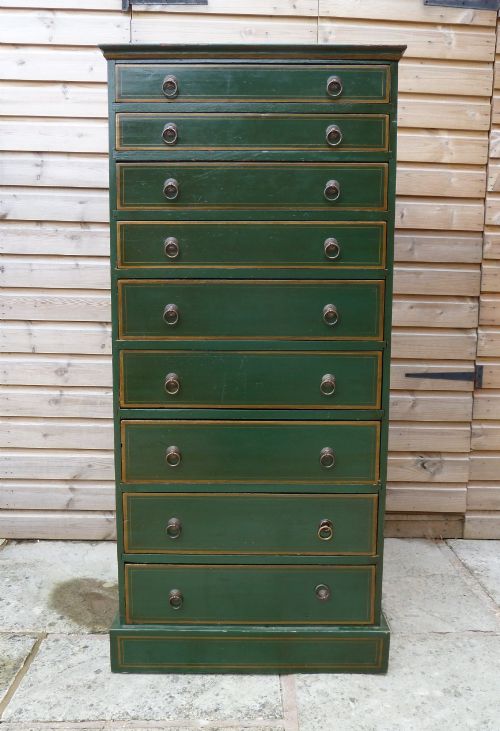
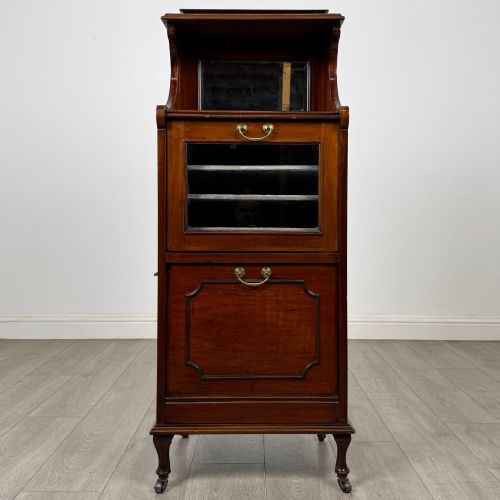
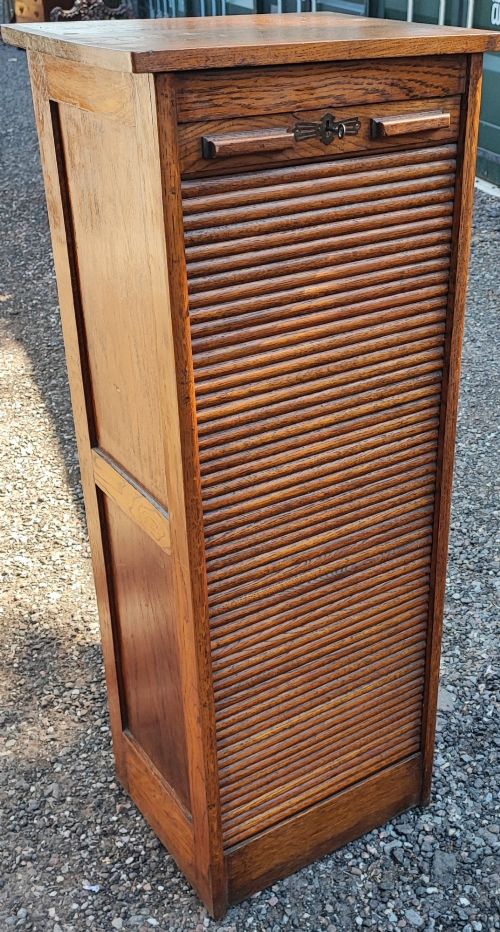
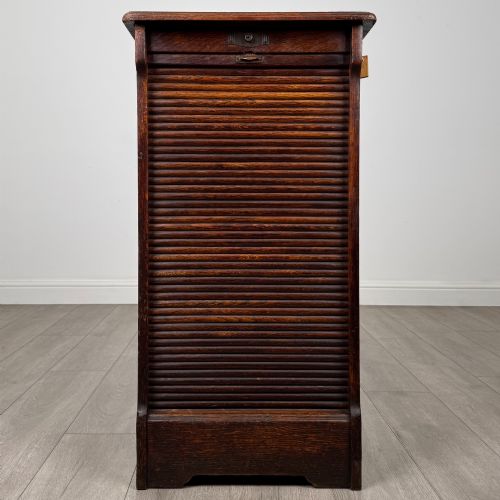
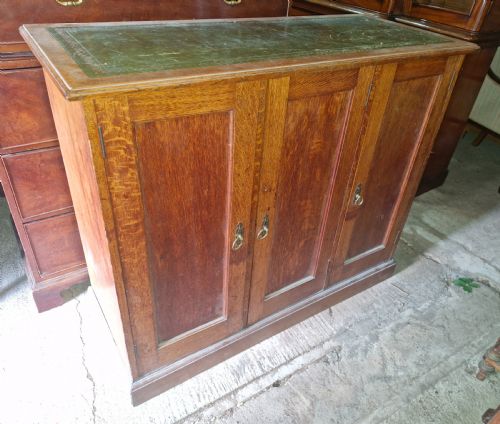
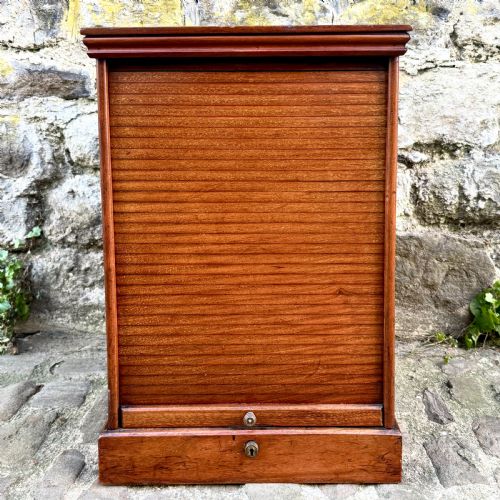
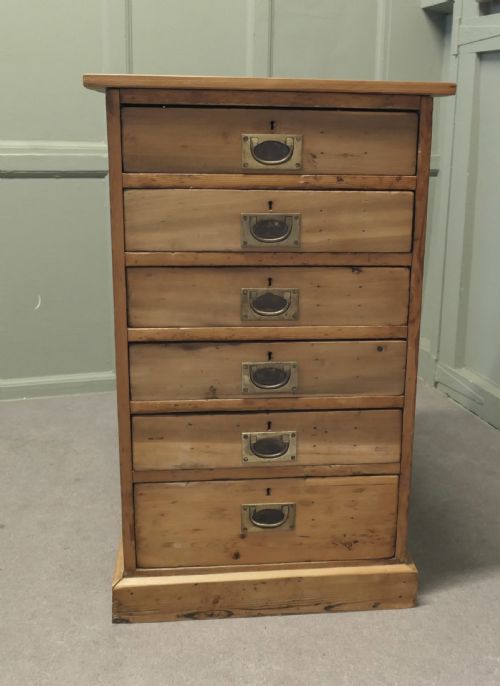
When you search for an antique filing chest, you look at banks of drawers, tambour front cabinets, and tall storage designed for letters, documents, and music. The versions met most often on this page range from Edwardian oak designs and multi-drawer banks to Victorian walnut pieces and mahogany Wellington chests.
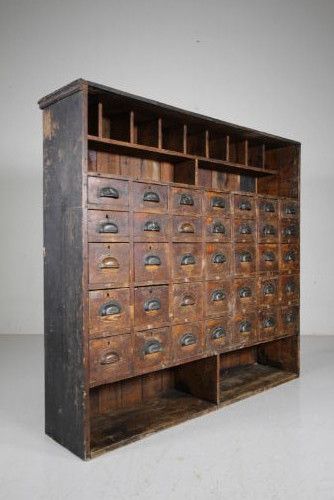
Forms span large eighteenth-century banks of drawers, narrow music cabinets, and industrial workshop units. Makers adapted these pieces for offices, solicitors, and musicians, utilising deep drawers and specialised labelling systems.
Materials shift between domestic hardwoods like oak and mahogany, decorative burr walnut, and utilitarian pine or metal. Pieces date across the nineteenth and early twentieth centuries, reflecting the administrative shifts of the Victorian and Edwardian eras.
How these chests were constructed
Joiners built these filing chests primarily in solid oak, mahogany, and walnut, often applying veneers of burr walnut or rosewood to prominent drawer fronts. Carcases relied on sturdy dovetail joints and sturdy timber backs to support the heavy loads of stacked paper.
Hardware played a functional role through cast brass shell pulls, label holders, and patent locking mechanisms. Tambour fronts utilised narrow slats of wood glued to canvas backing to slide smoothly around curved tracks.
The listings show filing chests executed primarily in oak and mahogany, spanning periods from the eighteenth century through the 1920s.
What separates the fine examples
Quality rests on the selection of timber and the precision of the internal drawer construction. Fine pieces show figured mahogany, burr walnut, or quarter-sawn oak matched across every drawer front rather than mixed secondary woods.
Original hardware, working patent locks, and branded mechanisms elevate a piece significantly. Smooth sliding tambour doors and original brass label holders indicate a higher standard of manufacture from workshops.
S & H Jewells·D Napier & Sons
The Antique Filing Chest Glossary
- Wellington chest
- A tall, narrow chest of drawers secured by a hinged locking side pilaster that fastens over the drawer edges. This form originates from the nineteenth century and often houses documents or shirts.
- Tambour front
- A flexible door constructed from narrow wooden strips glued to a fabric backing, sliding in horizontal tracks. This mechanism conceals letter files while saving space in compact offices.
- Bank of drawers
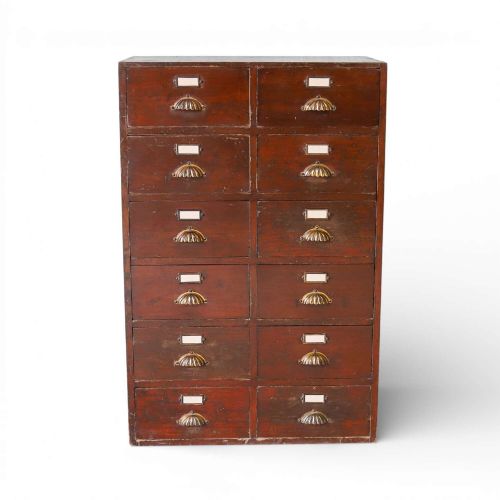
- A large multi-drawer cabinet designed to hold extensive collections of papers, specimens, or hardware. These functional units feature numerous shallow drawers with brass pulls.
- Shell pull
- A stamped or cast brass handle shaped like a scalloped shell, frequently incorporating a small slot for a paper label. These fittings appear on nineteenth and early twentieth-century office furniture.
- Cartonnier
- A piece of furniture fitted with upright compartments or drawers designed to hold cardboard document boxes and files. French examples frequently utilise polished mahogany.
Antique Filing Chest: Frequently Asked Questions
What is the difference between a music cabinet and a filing chest?
Music cabinets generally offer shallow drawers tailored for sheet music, whereas filing chests accommodate standard paper documents and letters. Both share multi-drawer formats across Edwardian and Victorian periods.
Many music cabinets convert easily for modern paper and stationery storage due to their similar proportions.
How were documents filed in these antique chests?
Documents lay flat within shallow banks of drawers or slotted vertical compartments designed for specific solicitors and businesses. Brass label holders on the drawer fronts helped clerks sort correspondence quickly.
Some specialised pieces incorporated patent index systems or drop-front mechanisms for rapid retrieval.
Where do I place a tall filing chest at home?
Tall Wellington chests and narrow filing cabinets fit well beside a desk or in a corner of a home study. Their vertical orientation provides substantial storage without occupying excessive floor space.
Pairing an oak or mahogany chest with a traditional desk anchors the room visually.