





French Filing Cabinet
These pieces of french filing cabinet design bring historical order to modern workspaces through sliding tambour doors and drop-front cartonnier compartments.
French Filing Cabinet
A french filing cabinet organises correspondence and documents through specialised forms ranging from industrial metal lockers to elegant residential pieces. Buyers searching for a french filing cabinet encounter utilitarian storage alongside formal writing furniture designed for domestic or professional administration.
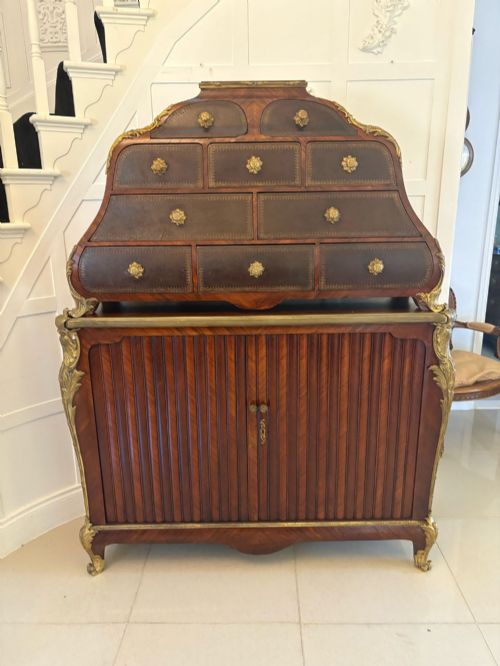
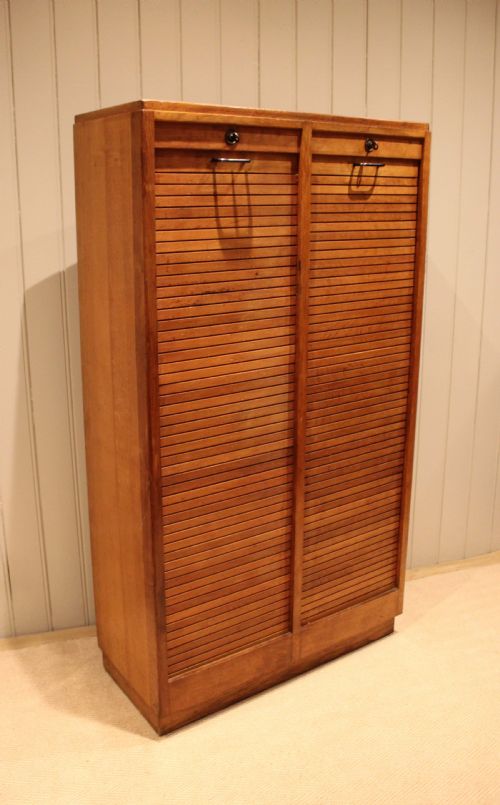
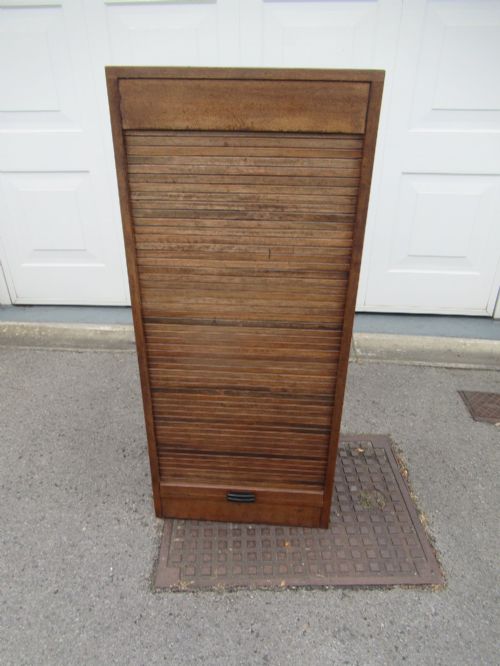
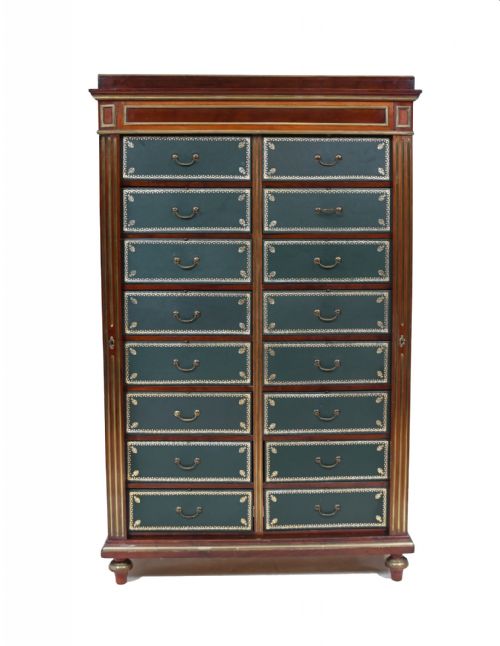
The selection here encompasses substantial oak double tambour units, leather-trimmed cartonnier chests, and industrial metal pieces. Oak tambour front examples from the early twentieth century dominate the inventory, accompanied by nineteenth-century mahogany and kingwood variants.
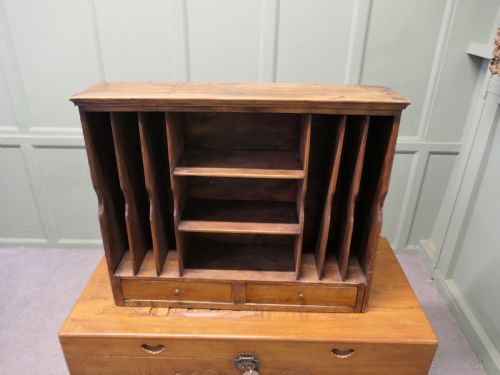
Formations vary from single column boxes to triple tambour banks and tall chests of drawers. Each configuration reflects the administrative needs of past offices, post offices, and private chambers in France.
How they were made
Cabinet makers utilised dense hardwoods including oak, mahogany, walnut, and kingwood alongside structural pine and industrial metal. Timber carcasses frequently incorporate flexible tambour slats glued to canvas backings to create smooth sliding closures over curved tracks.
Surface detailing ranges from restrained polished wood grains to ornate ormolu mounts and tooled leather inserts. Brass handles, label holders, and stamp boxes complete the construction of functional administrative furniture.
French Filing Cabinet Retail Price Guide 2026
Typical asking prices for french filing cabinet among the pieces listed under this phrase on Sellingantiques today, from the lower quarter to the upper quarter. They describe what is for sale here now, not the wider market.
Periods represented span the eighteenth century, the nineteenth century, and specific decades from 1850 through to 1940.
What varies in quality
Construction standards differ between mass industrial items and bespoke cabinet work featuring decorative veneers and gilt bronze mounts. The smoothness of tambour mechanisms and the integrity of internal wooden dividers mark the standard of execution.
The choice of primary timbers elevates certain pieces, moving from utilitarian oak and pine to figured mahogany and kingwood. Finer examples display meticulous marquetry, stamped signatures, and intact original leather work.
Victor Raulin
The French Filing Cabinet Glossary
- Tambour
- A flexible sliding door constructed from narrow strips of wood attached to a fabric backing. This mechanism allows access to internal filing shelves without requiring clearance for swinging doors.
- Cartonnier
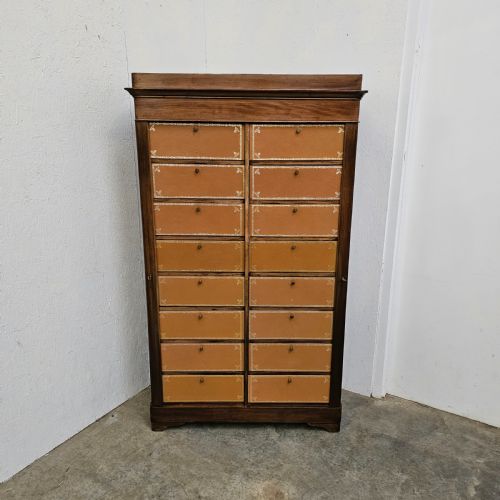
- A decorative cabinet or desk superstructure designed to hold flat cardboard boxes or loose papers. These pieces often feature tiered compartments faced in leather.
- Ormolu
- Gilt bronze mounts applied to furniture for decorative enrichment. The technique involves treating bronze with a gold amalgam.
- Kingwood
- A dense, richly figured Brazilian timber used for decorative veneers on fine cabinetry. It displays dark violet and brown contrasting streaks.
- Notaire's Cartonniere
- A tall professional document cabinet associated with French legal professionals. These tall units provide numerous dedicated slots for sorting legal briefs.
French Filing Cabinet: Frequently Asked Questions
How do tambour doors operate?
Tambour doors slide along concealed grooves routed into the sides of the cabinet frame. The narrow wooden slats flex around tight corners to expose the interior shelving.
Regular cleaning of the tracks ensures the mechanism continues to glide smoothly without binding. Proper alignment of the wooden laths prevents jamming during daily use.
Where were cartonnier cabinets used?
These cabinets stood in private studies, notarial offices, and government bureaus for sorting correspondence. They kept important documents accessible yet protected from dust.
Their structured compartments suited the precise filing methods of nineteenth-century administration. Today they serve similar organisational roles in domestic home offices.
Are these cabinets suitable for modern files?
Many internal shelf dimensions accommodate standard modern paper sizes and folders quite easily. Some configurations require minor adjustments to internal vertical dividers for lateral hanging files.
Measuring the internal width and depth before purchase ensures compatibility with contemporary stationery. Most wooden and metal iterations offer versatile shelf heights.
How do I care for leather desk inserts?
Leather surfaces benefit from periodic cleaning with a damp cloth followed by neutral leather cream. Avoiding direct sunlight prevents the coloured hide from drying and cracking over time.
Preserving the original tooling requires gentle handling when dusting around raised borders. Proper conditioning maintains the supple texture of nineteenth-century writing surfaces.