



Antique Figure Candlestick
An antique figure candlestick combines functional illumination with sculptural art, bringing figural form, animal figures, and character studies straight to the mantelpiece.
Antique Figure Candlestick
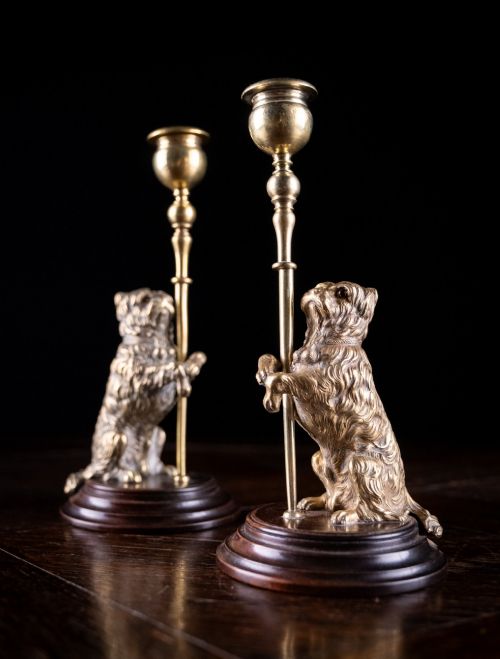
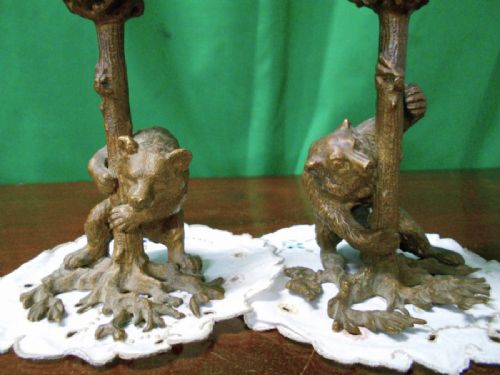
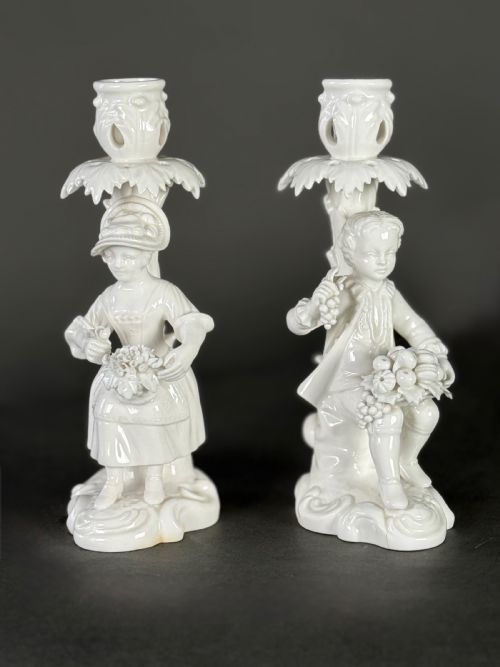
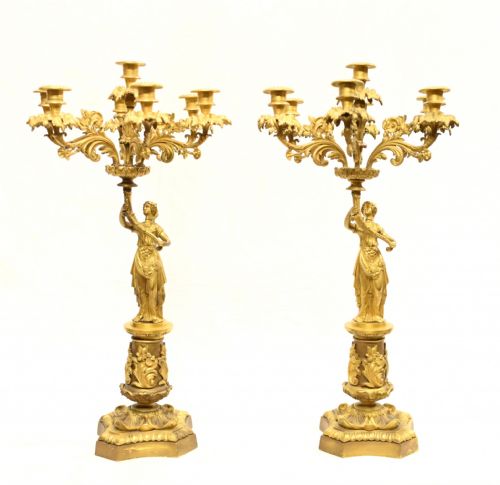
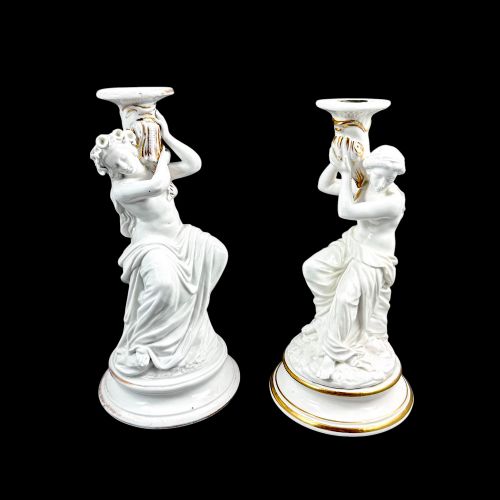
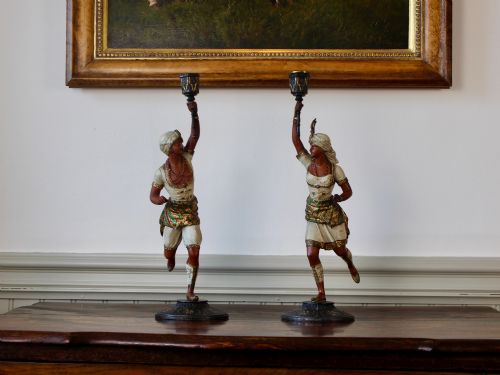
An antique figure candlestick unites a functional lighting mount with a modelled human, animal, or allegorical subject. The forms range from porcelain putti and children to bronze animals, soldiers, and classical figures holding the socket aloft.
The pieces on this page span the eighteenth, nineteenth, and early twentieth centuries, drawing on Georgian, Victorian, Regency, and French styling. Buyers encounter everything from early hard paste porcelain bocage groups to heavy bronze and spelter mantel pieces.
Makers and factories across England and continental Europe produced these items in pairs for balance or as single chambersticks and shelf figures. They serve as sculptural focal points that reflect historical tastes for revivalism, whimsy, and classical allegory.
Materials and construction methods
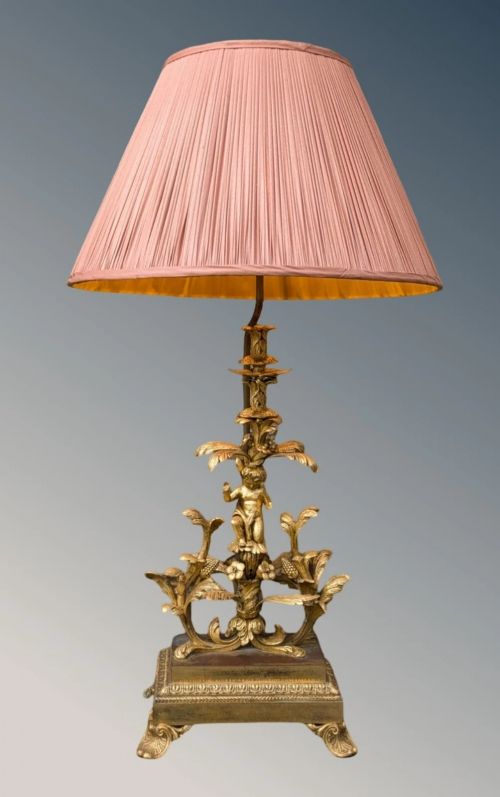
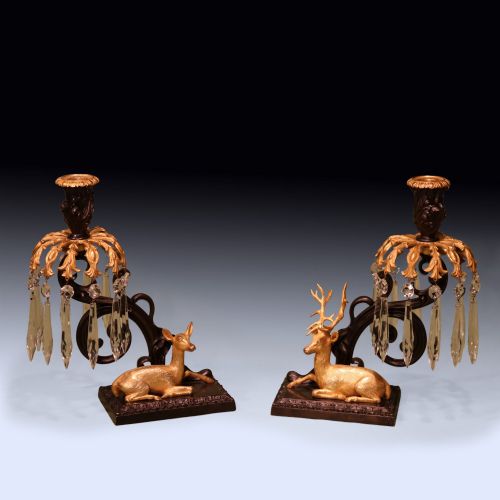
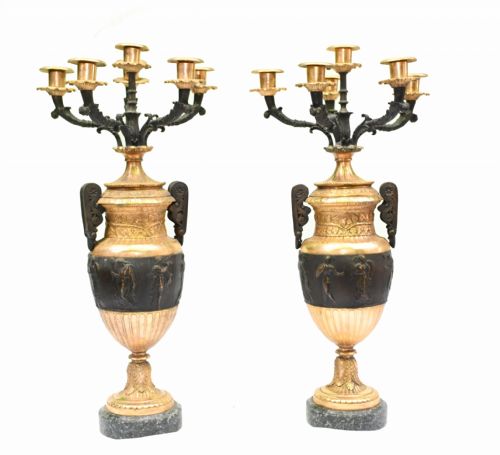
Foundry casting brought together metals such as bronze, brass, ormolu, and spelter, often finished with cold painting, patination, or gilt bronze. These metal pieces frequently combine with marble bases, onyx plinths, or silver plating to add weight and contrast.
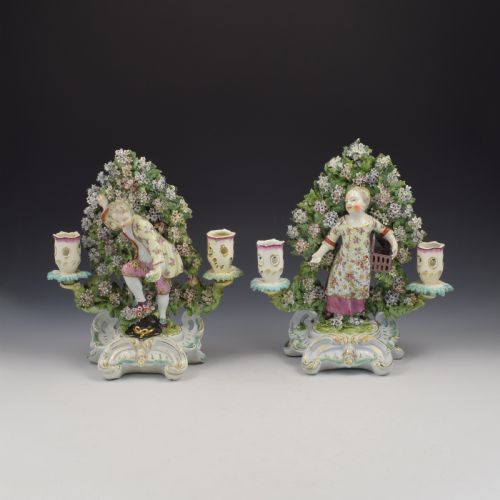
Ceramic examples rely on hard paste porcelain, soft paste bodies, and earthenware, shaped into figures adorned with enamel colours, gold leaf, and delicate porcelain foliage known as bocage. Carved wooden variants utilise traditional joinery and socle mounts for structural support.
Listings feature items spanning the eighteenth to early twentieth centuries, utilising porcelain, bronze, brass, and spelter in diverse revivalist styles.
Distinguishing quality across ranges
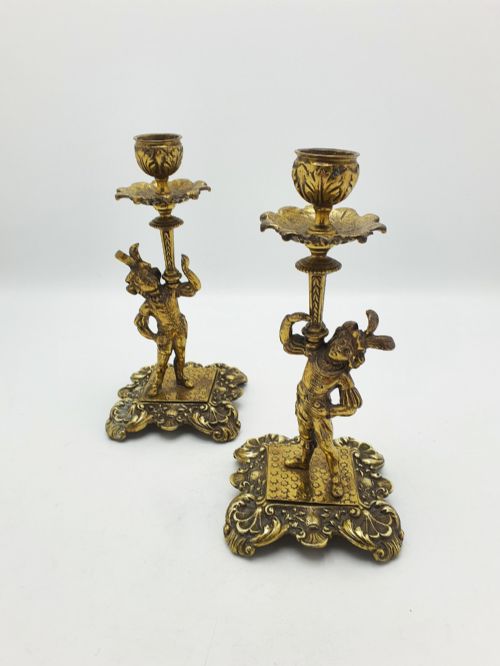
Metal castings demonstrate quality through weight, depth of chasing, and the integration of ormolu highlights against patinated bronze. The fidelity of the original design, whether depicting a medieval character on stilts or a classical maiden, dictates the artistic merit of the surviving piece.
Derby·Chelsea·Minton·Royal Worcester Hadley·Sitzendorf·Volkstedt
The Antique Figure Candlestick Glossary
- Bocage
- Foliate background ornament made of porcelain leaves and flowers common behind eighteenth-century figures. This delicate ceramic shrubbery surrounds the candlestick subject to create a wooded backdrop.
- Ormolu
- Gilt bronze ornamentation produced by applying a mercury and gold amalgam to cast bronze. This technique imparts a rich golden sheen popular in French and English decorative arts.
- Spelter
- An alloy of zinc and lead used as a cheaper substitute for bronze in nineteenth-century figures. It takes patination and paint well but carries less weight than genuine bronze.
- Socle
- A short plinth or pedestal supporting a bust, figure, or candlestick base. It elevates the sculptural element above the surface of a table or mantel.
- Putto
- A chubby male child figure, often winged, derived from classical art and frequently seen supporting candle holders. These mythological motifs populate numerous nineteenth-century bronze and porcelain designs.
Antique Figure Candlestick: Frequently Asked Questions
How were figural candlesticks used historically?
In past centuries, these objects provided necessary illumination in domestic interiors before the widespread adoption of electric lighting. They held wax or tallow candles to light rooms during evening hours.
Beyond simple utility, matching pairs served as decorative garnitures on mantelpieces, often symbolising seasonal themes, classical allegories, or popular stories.
How do I care for an antique candlestick?
Maintenance requires gentle dusting with a soft, dry cloth to protect delicate surfaces, porcelain enamels, and metal patinations. Avoid using harsh chemical polishes that can strip original gilding or cold paint.
Keep the items away from direct sunlight and excessive moisture to preserve the integrity of both ceramic bodies and mixed metal mounts.
How can I tell porcelain periods apart?
Identifying the period involves examining the paste, glaze characteristics, underglaze factory marks, and style of modelling. Eighteenth-century figures often feature hand-modelled bocage and patch marks, while later nineteenth-century examples display different firing techniques and base stamps.
Stylistic shifts from rococo revival to Victorian aesthetic movements also offer strong clues to a piece's manufacturing era.