


Rococo Style Porcelain Holder
These rococo style porcelain holders bring sculptural drama to a mantelpiece, pairing intricate glazed figures with scrolling metal mounts.
Rococo Style Porcelain Holder
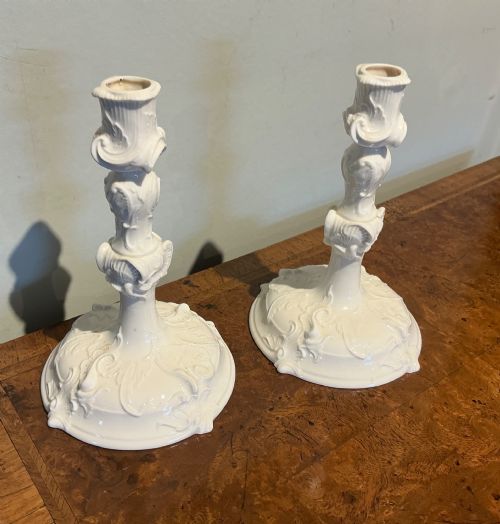
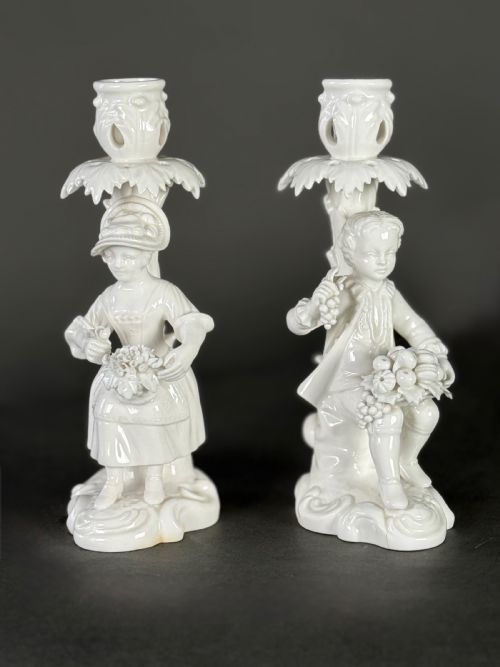
A rococo style porcelain holder takes the form of candlesticks and candelabra, often featuring figural groups like allegorical figures, musicians, animals, or gardeners with baskets. These objects emerge from periods ranging across the eighteenth, nineteenth, and early twentieth centuries, drawing on Georgian, Regency, and French Rococo Revival aesthetics.
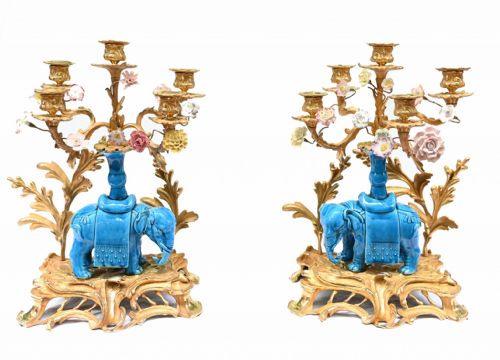
The most common examples encountered on this page are German and English factory productions, including pieces from Meissen, Derby, Sitzendorf, and Dresden. They span single chambersticks to elaborate multi-arm candelabra mounted in ormolu or gilt bronze.
Makers utilised hard-paste porcelain alongside soft-paste variations, shaping items that lean heavily into asymmetric scrolls, naturalistic floral bases, and playful or pastoral narratives.
Materials and construction methods
The foundation of every rococo style porcelain holder is fired ceramic, modelled either as plain blanc de chine or painted in polychrome glazes accented with gold leaf and gilt. Artisans shaped intricate floral appliques and figurative elements by hand before glazing and firing.
Metal components form a crucial part of the construction, particularly in candelabra where porcelain figures are integrated into ormolu, gilt bronze, or ormolu frames. These metal mounts provide structural stability and architectural weight to the delicate ceramic elements.
Listings span multiple nineteenth-century decades alongside eighteenth-century Georgian items, utilising hard-paste porcelain, ormolu, and gilt bronze.
Distinctions in quality and execution
Quality rests heavily on the crispness of the modelling in both the porcelain figures and the surrounding foliage, as well as the delicacy of the hand-painted details. Earlier eighteenth-century pieces often display sharper definition in facial expressions and drapery than later mass-produced revivals.
The integration between the ceramic body and the metal mounts marks another clear tier of quality. Superior examples feature custom-cast ormolu or gilt bronze that follows the asymmetrical contours of the rococo form precisely, rather than generic fittings.
Nymphenburg·Derby·Volkstedt·Minton·Sitzendorf·Dresden·Helena Wolfsohn·Meissen·Sevres·Saxony
The Rococo Style Porcelain Holder Glossary
- Ormolu
- Gilded bronze used widely for mounts and bases in French and English decorative arts. It provides a warm metallic contrast to the glazed porcelain bodies.
- Blanc de chine
- A French term for white Chinese porcelain that was later adopted by European factories to describe unpainted white glazed wares. It highlights the purity of the modelled form without colour distraction.
- Hard-paste porcelain
- A dense, durable ceramic composed of kaolin and petuntse fired at high temperatures. It resists scratching and takes glaze uniformly.
- Candelabra
- A branched candlestick designed to hold multiple taper candles simultaneously. In this category, they frequently incorporate figural porcelain columns.
- Chamberstick
- A low candlestick fitted with a pan and a vertical handle for carrying from room to room. These domestic items often feature charming figural or floral motifs.
Rococo Style Porcelain Holder: Frequently Asked Questions
How do I clean a porcelain holder?
Dust gently with a soft brush, avoiding harsh chemical cleaners that might damage the delicate gilt or enamel surfaces.
Take care around hand-modelled floral appliques and metal mounts, keeping moisture away from any exposed plaster or adhesive repairs.
Were these items meant for daily use?
While originally functional lighting devices for aristocratic and middle-class homes, surviving antique examples are treated primarily as decorative display objects today.
Burning candles in them requires extreme caution to prevent wax damage to the antique glaze and delicate painted details.
How do I distinguish eighteenth-century pieces from later revivals?
Examination of the paste, base finish, and painting style helps differentiate original eighteenth-century porcelain from nineteenth-century revival wares.
Factory marks, where present, offer further clues, though nineteenth-century makers frequently emulated earlier styles and marks.
Why do some items combine porcelain and ormolu?
Makers combined fired ceramic figures with gilded bronze mounts to create more stable and grandiose lighting pieces for formal reception rooms.
This practice was especially popular in French-influenced interiors during the nineteenth century, blending sculpture with functional metalwork.