


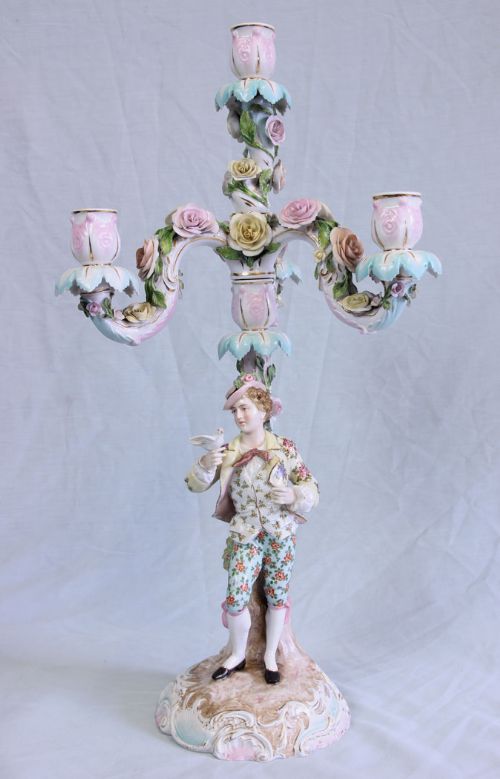


Porcelain Figurine Candle Holder
Porcelain figurine candle holders combine sculptural figures with practical lighting, and this selection ranges from Georgian musician pairs to Victorian chambersticks.
Porcelain Figurine Candle Holder
A porcelain figurine candle holder brings together modelled human or animal figures and functional sockets for illumination. These pieces frequently feature elaborate background foliage known as bocage or take the form of seated musicians, gardeners and dancers.
The selections encountered here span multiple centuries, originating from eighteenth-century English factories such as Derby and Bow alongside nineteenth-century German workshops and later Victorian manufacturers.
Forms vary from single chambersticks designed for bedside use to grand pairs of candelabra with multiple sconces. Collectors encounter everything from early soft-paste figures to later bone china and glazed porcelain compositions.
How they were made
Potters utilised soft-paste porcelain and bone china for the body of these figures, shaping them by hand or in moulds before firing. Artisans then applied detailed enamel colours and liquid glaze to seal the surface.
Many eighteenth-century examples incorporated delicate applied floral elements and leafy bocage backgrounds that required immense skill to assemble prior to kiln firing. Guilders added finishing touches of gold leaf and gilding to enhance the decorative appeal of the sconces and bases.
Materials documented across these items include enamel, gold leaf, gilding, and glazed porcelain shaped into candlesticks and candelabra.
What varies in quality
Quality rests upon the crispness of the modelling in the figures and the delicacy of the painted enamel details. Early Derby and Bow pieces display a lifelike fluidity in the facial expressions and drapery of the garments.
The preservation of fragile bocage foliage and applied petals distinguishes superior examples from heavily restored ones. Furthermore, the presence of original sconces and clear factory marks elevates the standing of a piece considerably.
Derby·Minton·Sitzendorf·Bow·Royal Worcester·James Hadley·Royal Bayreuth
The Porcelain Figurine Candle Holder Glossary
- Bocage
- An applied background of leaves and flowers modelled around the back of a figure. This ceramic foliage is characteristic of eighteenth-century English porcelain figures.
- Chamberstick
- A low candle holder fitted with a small pan to catch wax and a loop handle for carrying. These portable lights were common in bedrooms and corridors before electric lighting.
- Soft-paste porcelain
- An artificial porcelain body composed of clay, glass frit and other materials fired at lower temperatures than true hard-paste porcelain. It produces a warm, creamy translucency.
- Sconce
- The socket or cup at the top of a candle holder designed to catch the base of a candle. In figural pieces, these are often integrated into the modelled branches or held by the figures.
- Enamel
- Opaque vitreous colours painted onto the glazed porcelain surface and fixed in a muffle kiln. These pigments provide the bright clothing and floral details seen on the figures.
Porcelain Figurine Candle Holder: Frequently Asked Questions
How do I date a porcelain figurine candle holder?
Dating relies upon examining the paste, glaze characteristics, factory marks and styling conventions of the period. Eighteenth-century pieces often utilise soft-paste porcelain with patch marks, whereas Victorian examples display heavier bone china bodies and different glaze formulations.
Comparing the modelling style to known factory output from makers such as Derby or Bow helps establish a reliable timeframe. Reference books detailing factory histories and period clothing styles also assist in verification.
What is bocage on antique porcelain?
Bocage is the leafy, flowered background modelled behind figures on certain eighteenth-century and nineteenth-century candlesticks. It mimics natural shrubbery and serves both a decorative purpose and a structural function to support fragile limbs.
Because this foliage is made from delicate ceramic clay, it is particularly prone to chipping over the centuries. Intact bocage indicates careful handling and preservation by previous owners.
Were these candle holders used or just displayed?
Most of these pieces served a dual purpose as functional lighting and decorative ornaments for grand interiors. Wealthy households placed them on mantelpieces, side tables and dressing areas where they provided ambient light alongside sculptural beauty.
While some chambersticks saw practical daily use in bedrooms, many elaborate figural candelabra remained primarily as decorative status items. This explains why many retain their original gilt sconces and vibrant enamel paints today.