
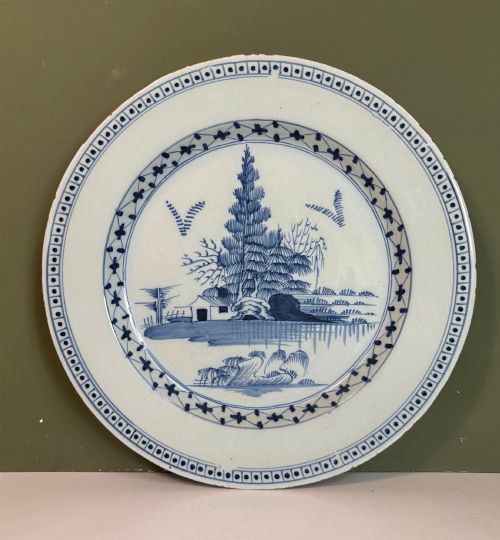
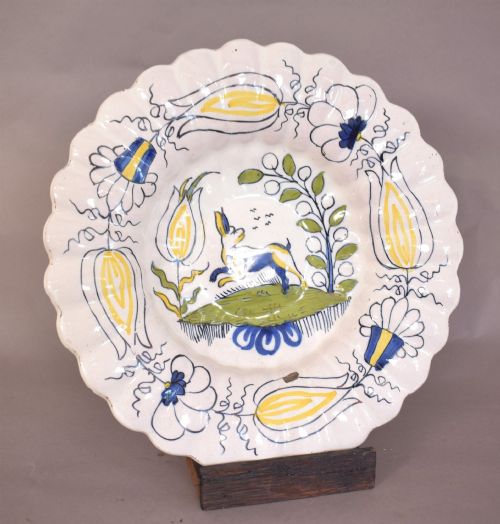
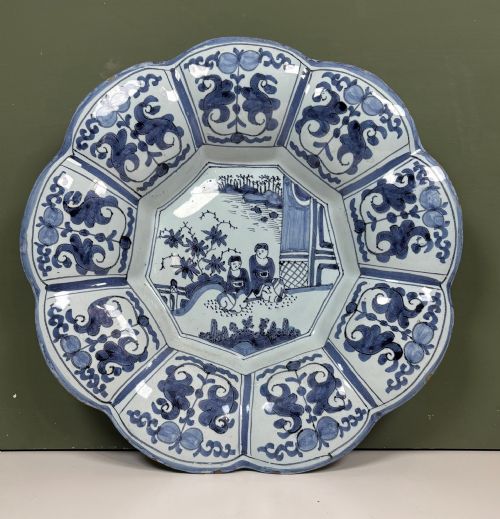
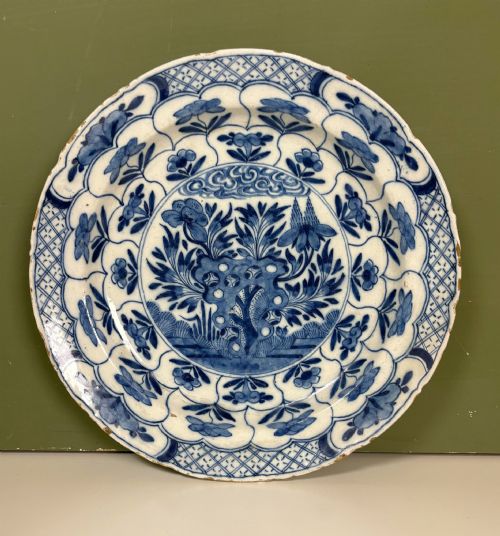
Antique Faience Charger
An antique faience charger is a broad earthenware wall plate or serving dish covered in an opaque tin glaze, bringing centuries of painted pattern into domestic interiors.
Antique Faience Charger
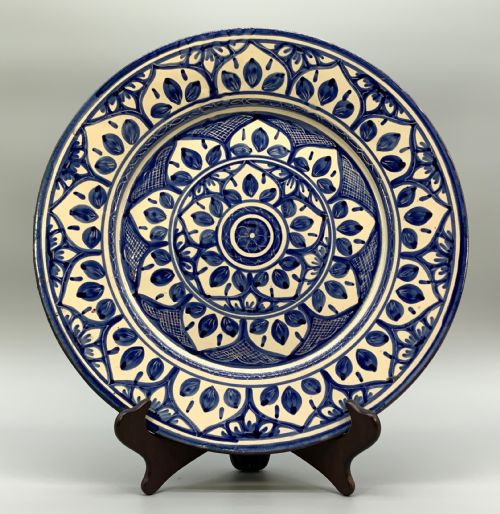
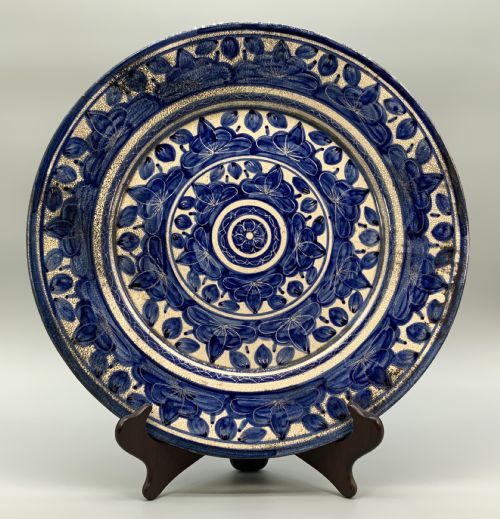
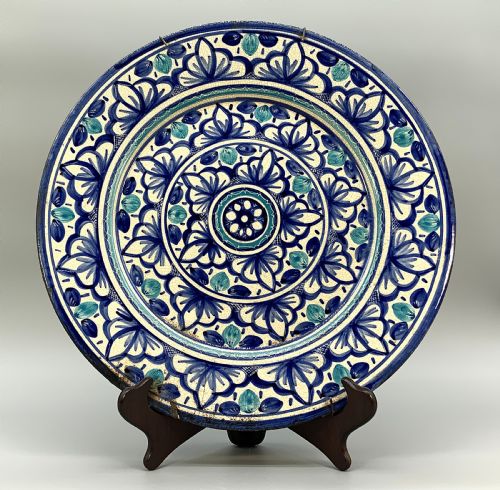
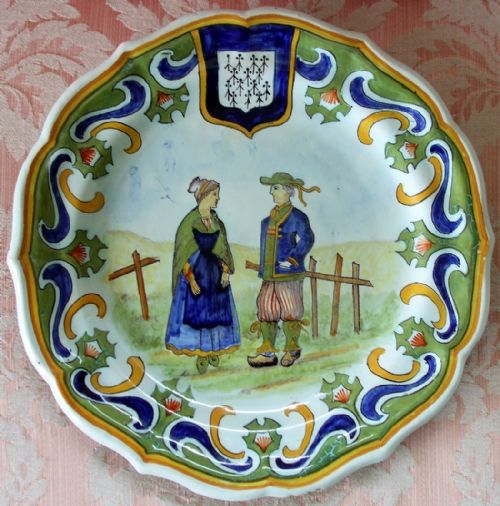
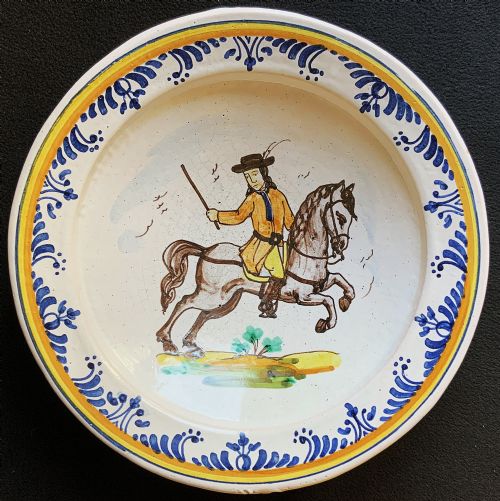
An antique faience charger sits at the grander end of domestic pottery, made to be displayed on walls or sideboards rather than used for daily dining. These substantial dishes span centuries of European production, appearing in early Dutch Delftware, French regional faience from Desvres and Lille, Spanish Catalana pieces, and Italian maiolica.
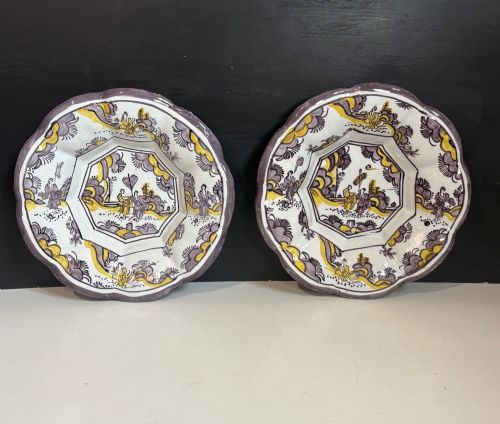
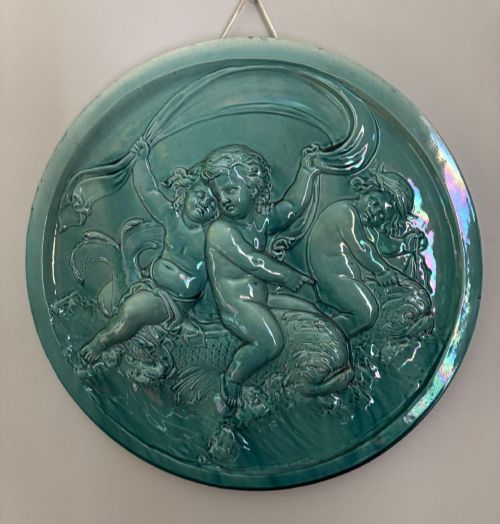
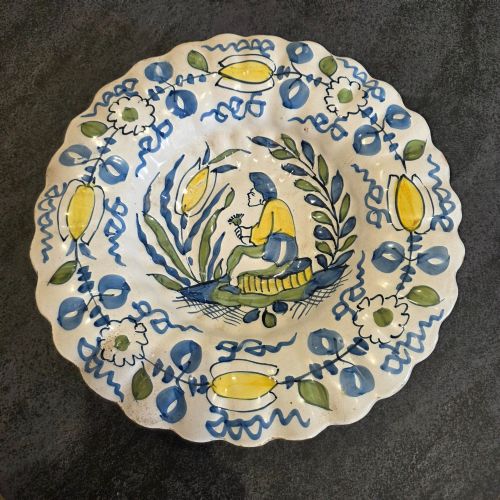
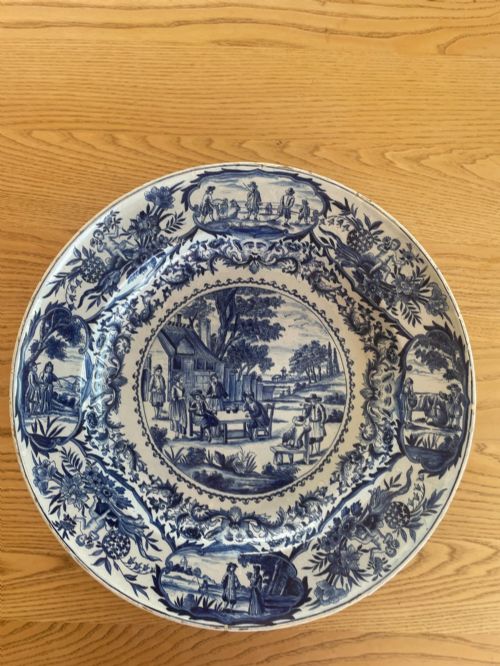
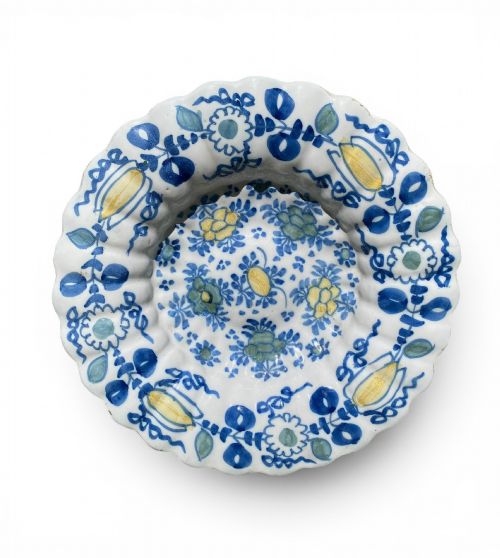
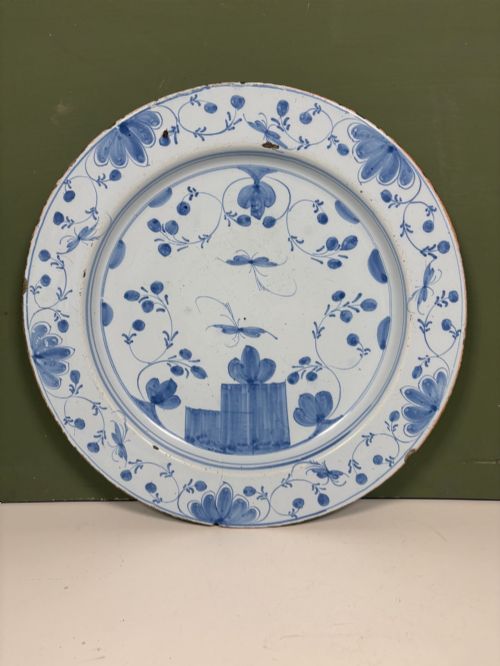
The pieces on this page lean heavily towards eighteenth-century Dutch production alongside nineteenth-century revivals in Moorish and Renaissance styles. Forms range from deep charger plates and wall plaques to lobed dishes and broad serving platters painted with floral, geometric, or historical scenes.
How they were made
Potters shaped earthenware bodies from local clays, firing the base paste before coating the surface in a liquid tin glaze that dried to a chalky white finish. This opaque glaze provided an absorbent canvas for pigments.
Painters applied cobalt blue, manganese purple, yellow, and other mineral colours directly onto the unfired tin glaze in a single stroke, absorbing the metal oxides before the final kiln firing locked the colours beneath a glossy surface.
Materials recorded on this page include ceramic, earthenware, tin glaze, cobalt pigment, and standard tin-glazed earthenware bodies.
What varies in quality
Quality rests upon the crispness of the painted brushwork and the ambition of the design, moving from repetitive floral borders to complex narrative or istoriato historical scenes executed by skilled hands. The control of the cobalt pigment and the purity of the white tin glaze dictate visual depth.
Physical execution also separates standard domestic wares from ambitious exhibition pieces, visible in the weight of the earthenware body, the evenness of the glaze application, and the stability of the large disc during high-temperature kiln firings.
Clement Messier·Bassano pottery works
The Antique Faience Charger Glossary
- Faience
- Tin-glazed earthenware originating in Europe, particularly associated with French, Dutch, and Italian workshops. The technique creates an opaque white background suitable for detailed painted decoration.
- Charger
- A large decorative plate or shallow bowl traditionally hung on walls or used for ceremonial service. These pieces measure significantly wider than standard dining plates.
- Tin Glaze
- A ceramic glaze made opaque by the addition of tin oxide, turning white and glossy in the kiln. It forms the essential base layer for traditional European painted earthenware.
- Polychrome
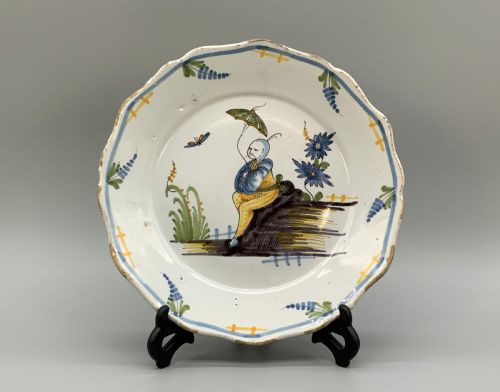
- Decoration employing multiple distinct colours rather than a single pigment. In these ceramics, painters combined blues, yellows, oranges, and manganese purples.
- Maiolica
- Italian tin-glazed earthenware famous for rich pigments and narrative painting styles. Production spans from the Renaissance through later nineteenth-century revivals.
- Chinoiserie
- European decorative art imitating Chinese artistic motifs and landscapes. Painters adapted Asian figures, pavilions, and flora onto standard earthenware forms.
Antique Faience Charger: Frequently Asked Questions
How do I hang a heavy charger?
Large plates require specialised wall mountings that distribute the weight evenly across the entire foot ring without putting pressure on the rim. Spring-loaded brass clips or custom-fitted wire baskets provide secure support for display.
Ensure the wall fixing is anchored into solid masonry or a timber stud rather than relying on standard plasterboard plugs. Check the mounting periodically to confirm the wire or clips remain secure against the ceramic body.
Were these chargers used for food?
Most antique faience chargers served decorative functions in wealthy households, displayed on dresser shelves or mounted on dining room walls to impress guests. Their large surface area made them ideal canvases for painted landscapes and historical scenes.
While some sturdy examples could hold dry foods during grand feasts, the soft earthenware body and porous biscuit base meant heavy culinary use risked chipping the brittle tin glaze.
How can I tell Dutch Delft from French faience?
Dutch Delft pieces often rely on a stark white tin glaze painted with deep cobalt blue motifs inspired by imported Chinese porcelain. The palette frequently remains restrained to blue and white, or simple geometric polychrome borders.
French faience from centres like Desvres or Lille often incorporates warmer earth tones, manganese purple, and mustard yellow alongside distinct regional borders. Examining the foot ring and glaze characteristics helps pinpoint the likely workshop origin.