
Antique Fabric Settee
An antique fabric settee brings profound comfort and historic presence to a room, offering deep seats and generous proportions forged across centuries of design.
Antique Fabric Settee
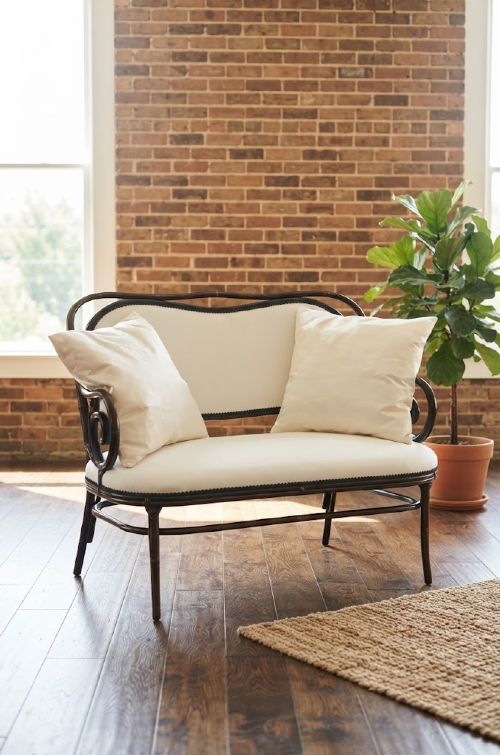
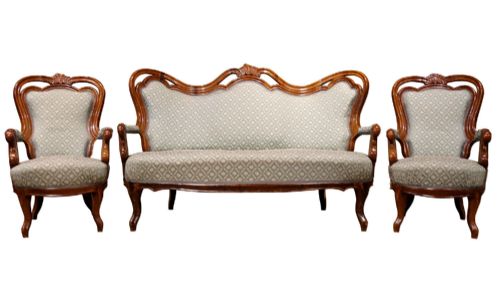
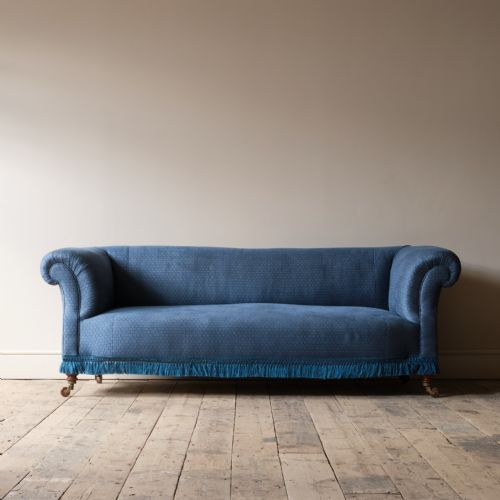
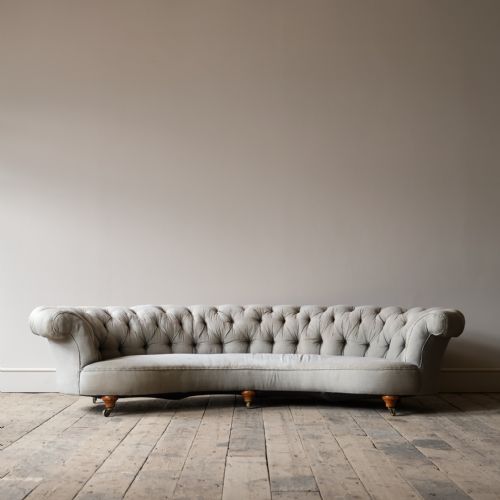
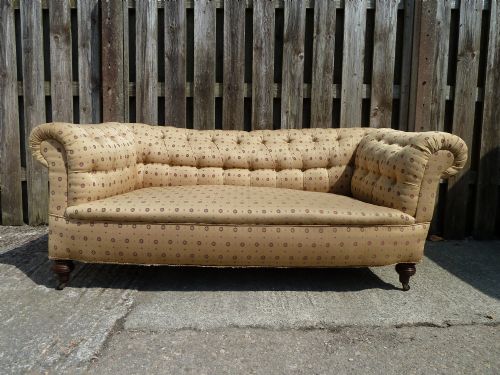
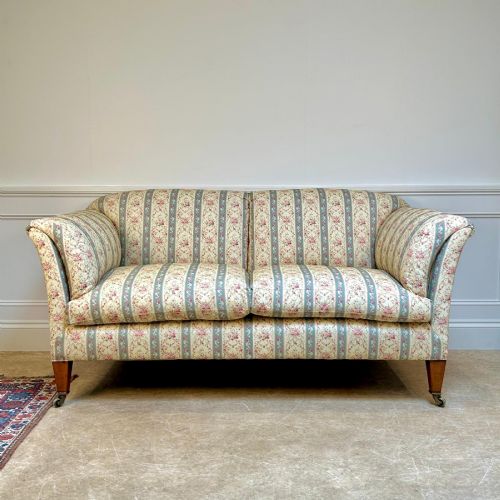
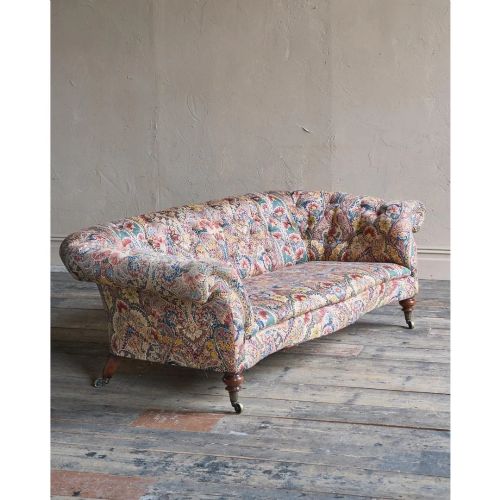
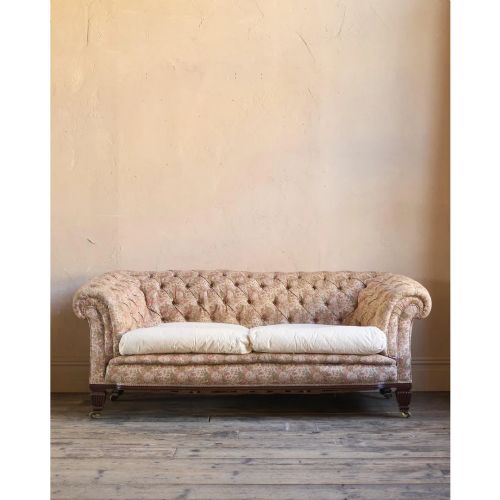
An antique fabric settee encompasses a broad spectrum of seating forms, ranging from the deep proportions of nineteenth-century Chesterfields to elegant Edwardian frames and nineteenth-century salon suites. These pieces emerge primarily from Victorian, Edwardian, and nineteenth-century workshops, capturing the shifting domestic tastes for both formal reception seating and relaxed country house comfort.
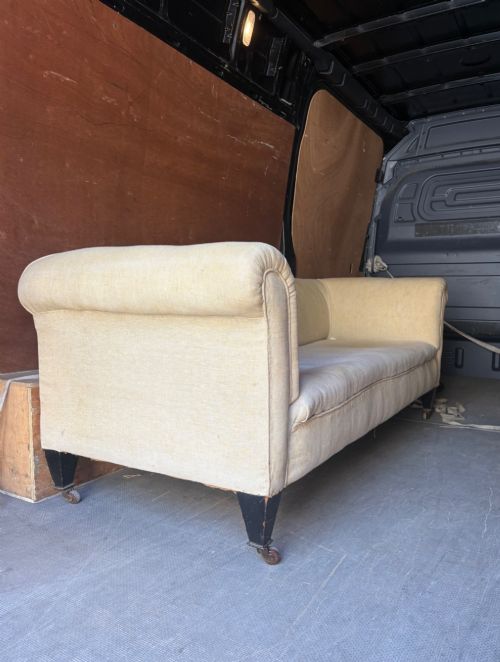
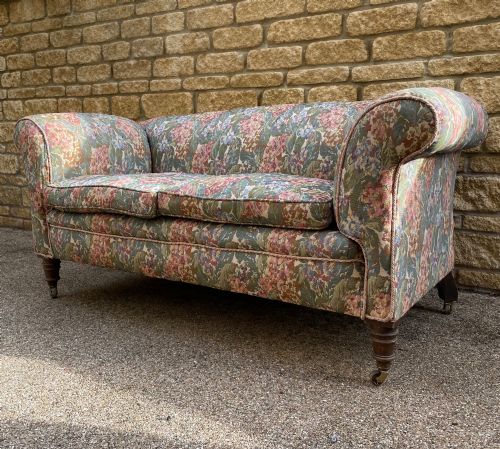
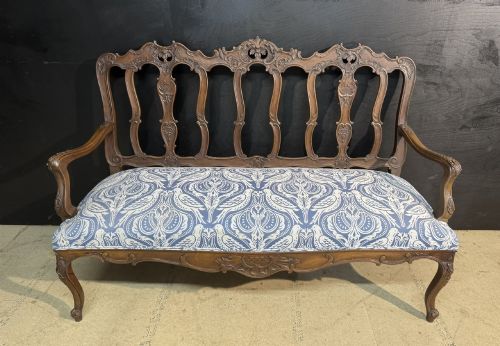
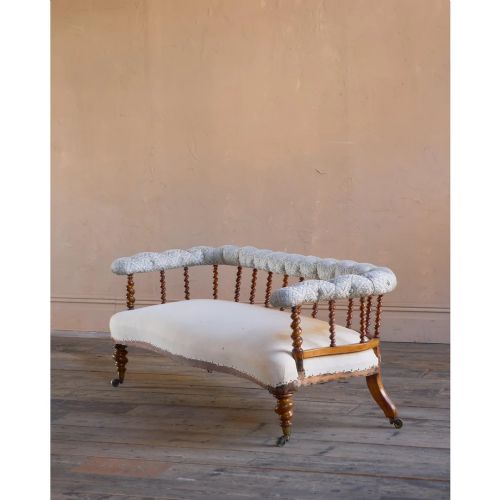
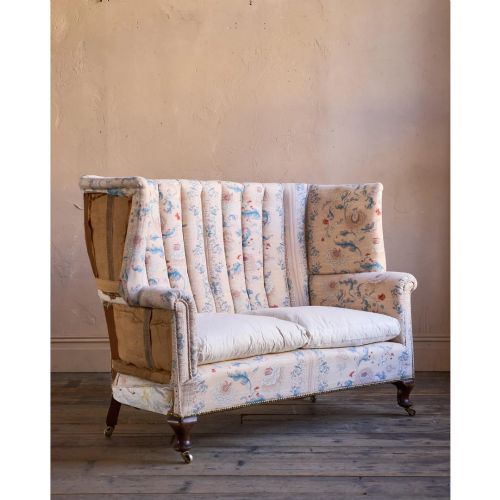
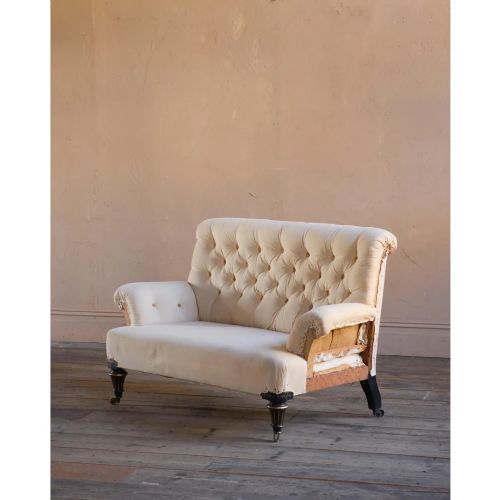
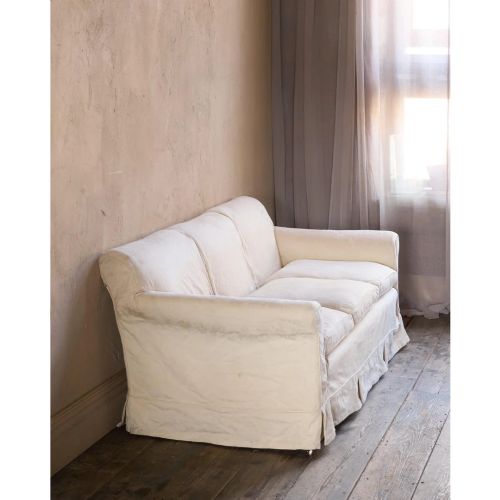
Buyers seeking an antique fabric settee most frequently encounter pieces upholstered in calico, linen, or patterned textiles, resting upon exposed timber frameworks of mahogany, walnut, or ebonised wood. The offerings span compact two-seater drops and expansive three-seater couches, reflecting how earlier households adapted seating to specific parlour and drawing-room layouts.
Stylistic influences across the selection move from revivalist Rococo and Queen Anne curves to Aesthetic Movement austerity and early twentieth-century lounge suites. Each piece reveals the distinct structural vernacular of its era, whether built with sturdy internal webbing for deep lounging or carved wooden rails for formal display.
Materials and construction
Makers constructed the primary frames of an antique fabric settee using dense timbers such as mahogany, walnut, and satinwood, often pairing structural integrity with decorative veneers or fine inlay work. Turned legs, brass castors, and hand-carved mahogany rails appear frequently, providing both mobility and architectural definition to the base.
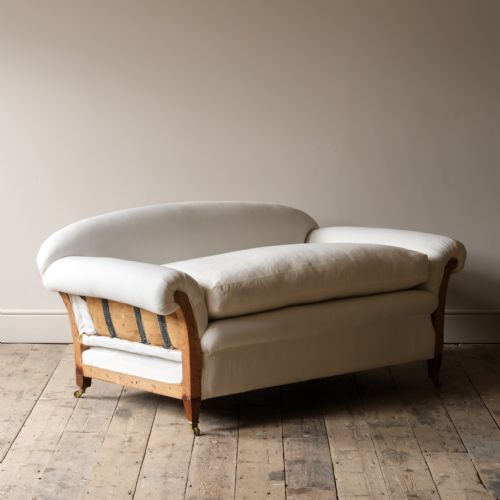
Upholstery methods relied on traditional stuffing techniques applied over robust internal webbing and coil springs, finished with outer coverings of calico, linen, or specialist decorative textiles. Brass tacks and careful stitching secure these layers to the frame, ensuring the deep, resilient seating capacity valued in period Chesterfields and country house sofas.
Drop-arm mechanisms let Victorian occupants nap with social grace.
The measure of craftsmanship
Distinction in an antique fabric settee rests upon the integrity of the underlying timber frame and the precision of its joinery. Pieces featuring dense, uncompromised mahogany or walnut foundations demonstrate superior structural endurance compared to those with altered or heavily repaired internal framing.
The sophistication of the maker's hand also dictates standing, particularly where documented cabinet-makers or renowned upholstery firms employed meticulous spring-coiling and hand-tied suspension. Original upholstery components, untouched timber patination, and balanced proportions separate utilitarian workshop output from the finest commission pieces.
Thonet·Hampton & Sons·Howard & Sons·C. Hindley & Sons·Jackson and Graham
The Antique Fabric Settee Glossary
- Chesterfield
- A deep-buttoned upholstered sofa traditionally characterised by low back and arms of the same height. It remains a cornerstone of British seating design known for generous proportions.
- Drop arm
- A mechanical sofa arm that lowers on hinges to form a daybed or extended lounge surface. This clever mechanism adds versatility to nineteenth-century drawing-room seating.
- Calico
- A plain-woven unbleached cotton fabric frequently used as the foundational inner upholstery layer on period sofas. It often serves as the durable base beneath decorative top covers.
- Aesthetic Movement
- A late nineteenth-century design current prioritising artistic integrity, simplicity, and ebonised finishes over excessive ornamentation. Pieces from this ethos display clean lines and dark surfaces.
- Salon suite
- A matching set of upholstered seating comprising a settee and matching chairs designed for formal reception rooms. These suites unify the decorative aesthetic of a Victorian or Edwardian interior.
Antique Fabric Settee: Frequently Asked Questions
How do I choose the right size?
Measure your floor space carefully and account for the generous scroll arms and depth typical of period settees. Ensure doorways and stairwells offer sufficient clearance for rigid wooden frames that cannot be dismantled.
Consider how the piece will sit within the room's traffic flow, leaving adequate perimeter space around large nineteenth-century Chesterfields or multi-piece salon suites.
Were these settees used in bedrooms?
Period settees primarily occupied formal drawing rooms, parlours, and expansive entrance halls where households received guests. Smaller two-seater formats occasionally appeared in private boudoirs or dressing rooms.
Their substantial construction and upholstery meant they belonged firmly in the primary reception spaces of grand townhouses and country estates.
How should I care for antique upholstery?
Protect delicate historic fabrics by limiting direct exposure to intense sunlight and regular gentle vacuuming with a soft brush attachment. Professional textile cleaning preserves fragile fibres without disturbing underlying stuffing.
Nourish exposed mahogany and walnut wooden frames periodically with appropriate cabinet wax to maintain the timber's natural lustre and prevent drying.
Can I reupholster a period settee?
Many buyers acquire frames specifically for reupholstering, using traditional materials like calico, horsehair, and hessian to maintain historical integrity. Skilled craftspeople can strip back modern alterations to restore the original spring tension and profile.
Selecting textiles appropriate to the sofa's era ensures the finished piece retains its architectural character while accommodating modern interior schemes.