
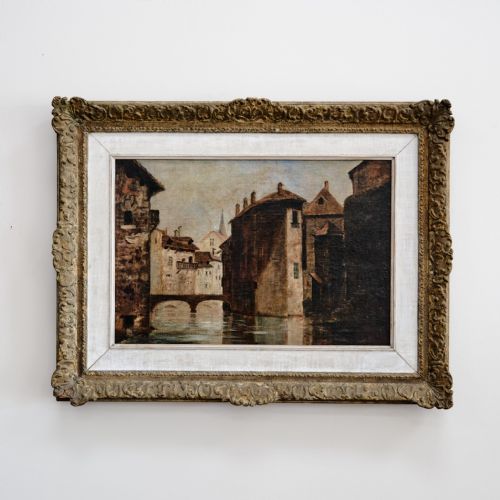
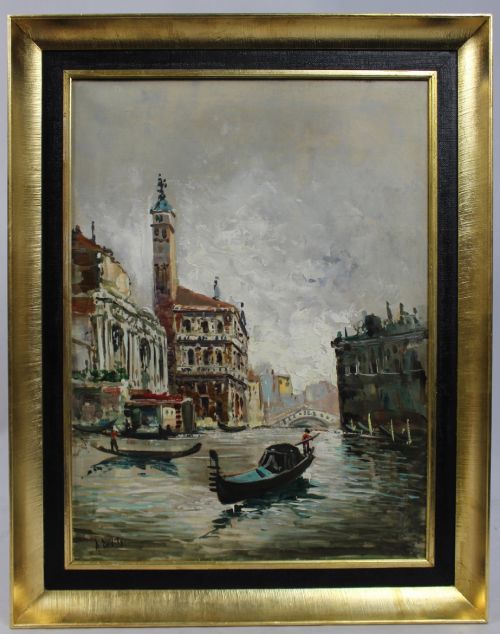
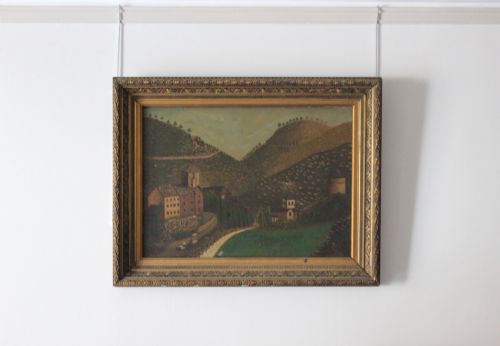
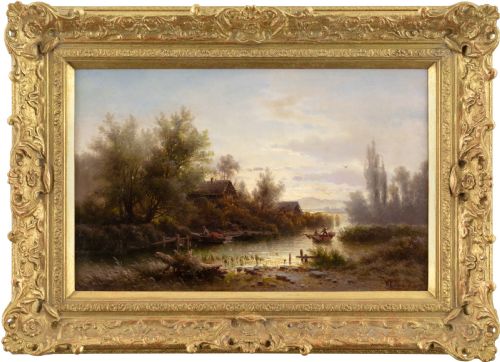

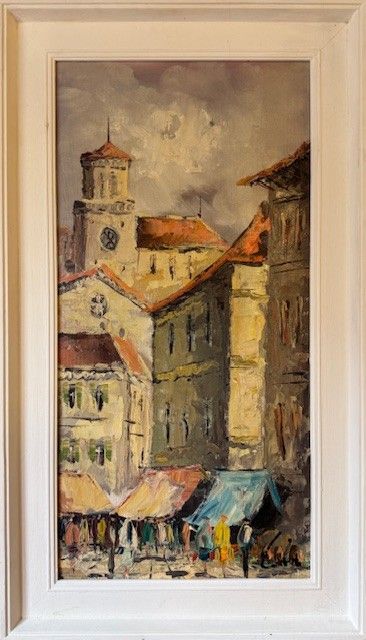


Antique European Landscape Artwork
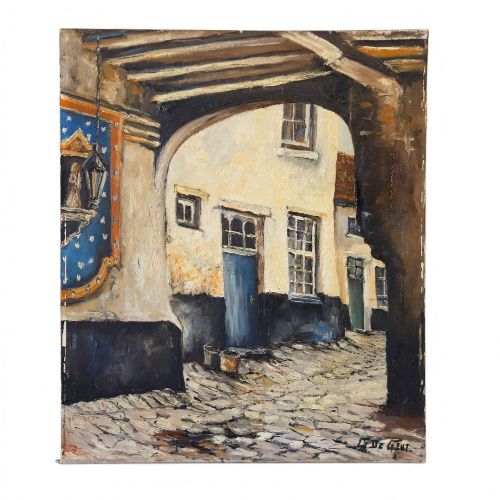
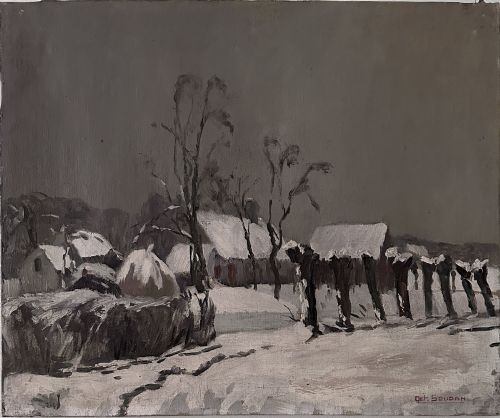
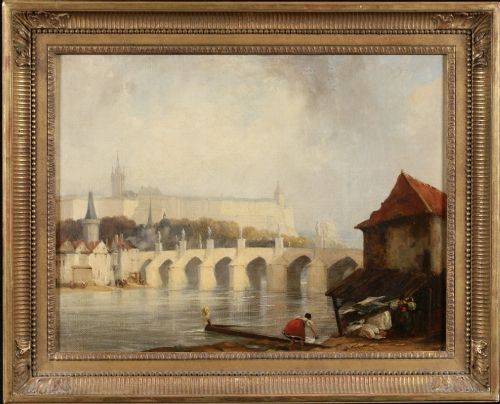
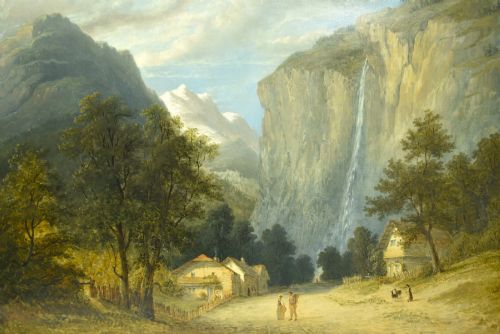
These antique european landscape artwork pieces capture open fields, city streets, and mountain ranges through centuries of painting tradition.
Antique European Landscape Artwork
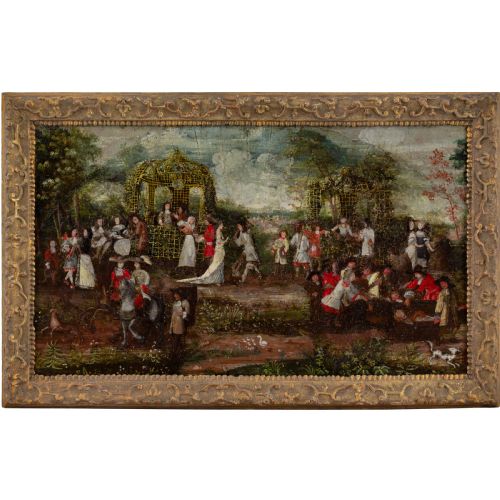
Buyers seeking antique european landscape artwork encounter oil paintings and watercolour paintings produced across several centuries, originating from British, French, Italian, Dutch, Flemish, and German hands. The selection spans formal academic compositions to primitive works and rural scenes.
The 19th Century is heavily represented, alongside pieces stretching back to the 17th Century and forward into mid-century modernist movements. Works range from intimate watercolour studies to large canvases depicting alpine peaks and continental towns.
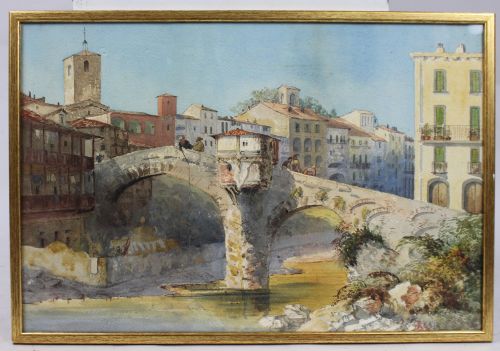
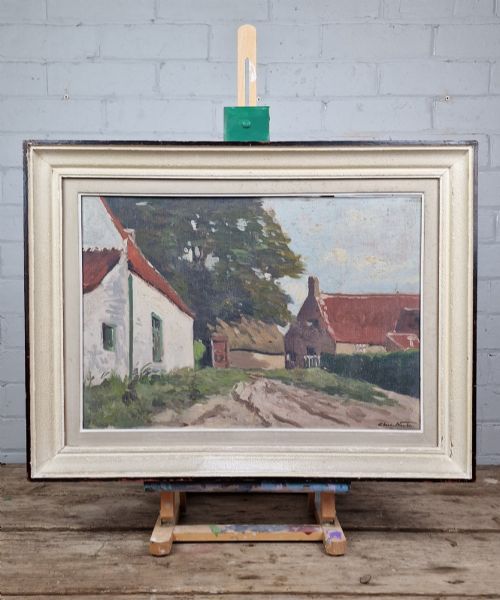
Framed formats include original giltwood and gesso frames that complement the period of the painting. Subjects move between quiet farmyards, urban streetscapes, coastal views, and mountainous river valleys.
Materials and technique
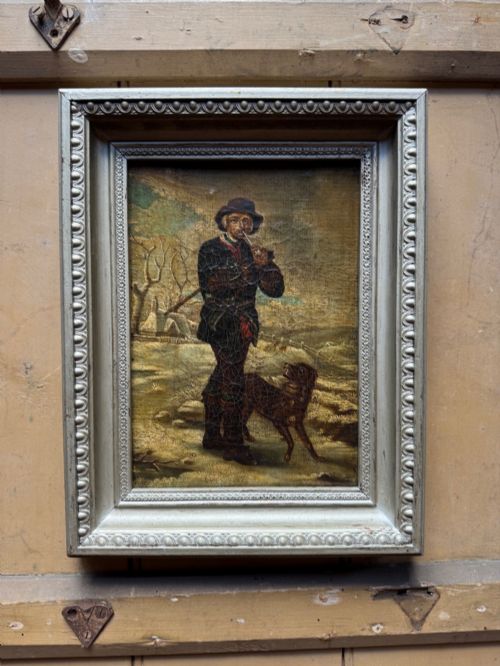
Pigments were applied primarily as oil paint on canvas, board, or wood panels, while watercolours utilised paper supports often backed with pencil and wash. Canvases and panels frequently show the ageing characteristics of centuries, including craquelure in the oil layers.
Frames rely on carved wood finished with gesso and gold leaf or giltwood to provide structural support and decoration. Preparation of the ground involved traditional priming methods suited to the respective period.
The selection includes oil paintings and watercolours spanning the 17th Century to the mid-20th Century.
Assessing quality
Execution of brushwork and spatial depth separates hurried decorative studies from masterful atmospheric renderings. The handling of light and shadow, particularly in 17th-century Dutch and Flemish works or 19th-century impressionist pieces, dictates artistic merit.
Condition of the pigment layer and the original support remains vital, where undisturbed surfaces and minimal past restoration preserve the artist's intended touch. Original frames matching the age of the artwork enhance historical integrity.
Charles Houben·Albert Rieger·Paul-Élie Gernez·Frederick Tully Lott·William George Meadows·Hendricus Joseph Dillens·Pieter Bout·Adriaen Frans Boudewyns·Jan Evert Morel·Joseph W. Milliken·Noel Harry Leaver·Alois Arnegger
The Antique European Landscape Artwork Glossary
- Oil on Canvas
- Pigments mixed with a drying oil, typically linseed, applied to stretched woven fabric. This medium allowed artists to achieve rich colour depth and subtle tonal gradations.
- Giltwood
- Wood carved and coated with gold leaf or metallic powder. It forms the decorative surface of many period picture frames.
- Watercolour
- Paint consisting of colour suspended in a water-soluble binder, usually applied to paper. It produces translucent washes of colour well suited to topographical and atmospheric views.
- Gesso
- A paint mixture consisting of a neutral binder mixed with chalk, gypsum, or pigment. It served as a smooth preparation layer for wooden panels and frames before gilding or painting.
- Craquelure
- The fine pattern of dense cracking formed in the surface of old paint or varnish. It develops naturally as oil paint ages and loses flexibility over centuries.
Antique European Landscape Artwork: Frequently Asked Questions
How do I date an oil painting?
Dating relies on stylistic evidence, canvas preparation, stretcher construction, and signatures or inscriptions left by the artist. Pigment analysis and the style of the frame also offer reliable clues to the decade of creation.
Secondary documentation such as exhibition labels on the reverse can further narrow down the chronology of the artwork.
Are watercolours as durable as oils?
Waterworks require protection behind glass and away from direct sunlight to prevent fading of the pigments and degradation of the paper support. Oils present a more robust surface on canvas or panel but remain sensitive to extreme humidity fluctuations.
Proper conservation framing ensures both mediums survive in stable condition.
What is a school in painting terms?
A school refers to a group of artists working in a particular region and period who shared stylistic approaches, techniques, and training methods. Examples include the Flemish School or the Dutch Impressionists.
Attributions to a school are used when an exact individual hand is unrecorded but regional characteristics are clear.
How should I hang landscape artwork?
Artworks should be positioned at eye level away from direct heat sources, fireplaces, and strong sunlight to protect the fragile paint and frame surfaces. Stable indoor humidity prevents warping in wooden panels and stretcher bars.
Secure picture hooks rated for the specific weight of the framed piece must be utilised.