
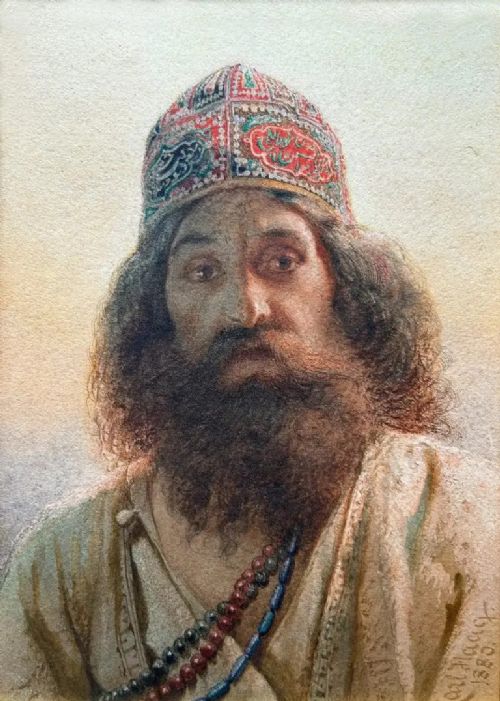


Nineteenth Century Watercolour Paper
Nineteenth century watercolour paper holds the pigment of hands long gone, carrying the delicate washes of Victorian landscapes and Regency portraits.
Nineteenth Century Watercolour Paper
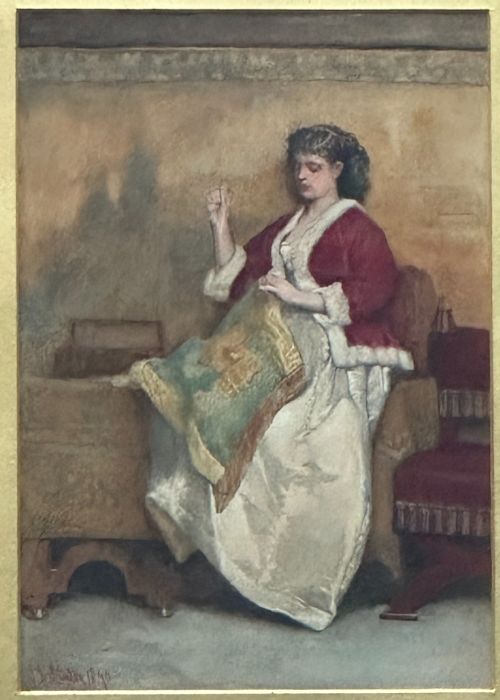
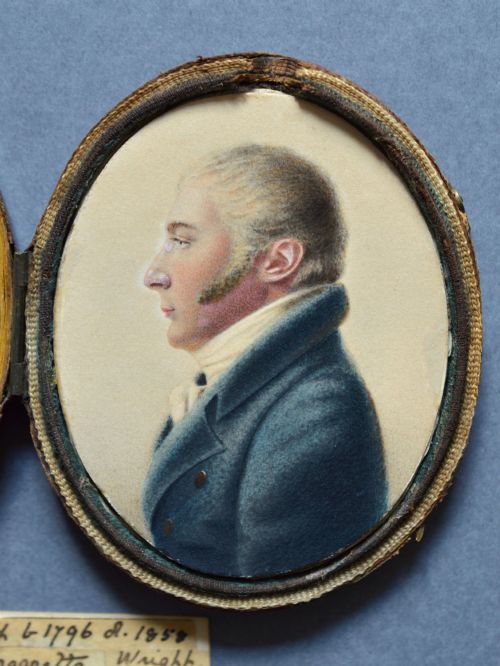
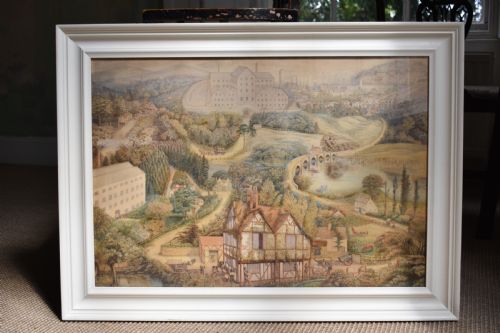
Nineteenth century watercolour paper forms the fragile ground for fine art paintings, portrait miniatures, and wall art created across the Victorian, Regency, and Georgian periods. Buyers encounter framed artwork ranging from British school landscapes to Orientalist scenes and Grand Tour views.
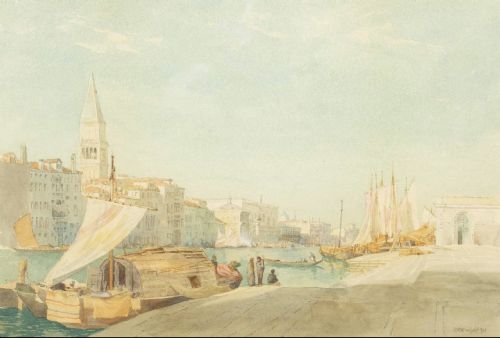
The pieces on this page span diverse subjects such as Welsh river estuaries, Venetian canals, botanical studies, and intimate domestic interiors. Most examples bridge the nineteenth and early twentieth centuries, reflecting the evolving styles of British and European artists.
Materials and Technique
Artists applied watercolour pigment, gouache, and ink directly onto heavy paper supports, often framed behind glass to protect the delicate media. The physical substance of the paper bears the tooth and texture characteristic of nineteenth century manufacture.
Makers integrated pigment with water to achieve varying levels of transparency, sometimes building up opaque gouache highlights or defining outlines in ink. These traditional techniques allowed painters to capture atmospheric effects from moonlight scenes to bright Mediterranean vistas.
The selection includes British school landscapes, architectural studies of Venice and Rome, and Chinese export gouache.
Quality and Execution
Quality rests upon the sureness of the brushwork and the clarity of the composition, distinguishing masterly topographical and figurative studies from naive or derivative works. The handling of light and pigment in landscapes or portraits determines the visual impact of the piece.
Preservation of the paper support and the vibrancy of the original watercolour pigments also dictate standing. Works that retain their initial tonal depth without excessive fading or damp damage demonstrate superior survival through the decades.
Sir James Dromgole Linton·Thomas John Horsley·Richard Henry Wright·Carl Haag·Cornelius Pearson·Edwin Lord Weeks·John Augustus Atkinson·Frederick William Hattersley·Vittore Zanetti Zilla·George Kilburne·Alfred W Parsons·Jabez Bligh·William Manners·Harold Swanwick·Henry John Kinnaird·William Lucas·Linnie Watt·John R Houston·Arthur Claude Strachan·Ettore Ascenzi·Thomas Swift Hutton·Walter John Bayes·Frank Saltfleet·James Aitken·Harold Lawes
The Nineteenth Century Watercolour Paper Glossary
- Gouache
- An opaque watercolour paint that dries to a matte finish. Artists used it alongside traditional transparent watercolours to add highlights and solid areas of colour.
- Grand Tour
- A cultural journey of Europe undertaken by wealthy young men in the eighteenth and nineteenth centuries. Paintings from this tradition record classical ruins and foreign landmarks.
- Orientalist
- A style of nineteenth century art depicting scenes from the Middle East and North Africa. These works often feature local figures, architecture, and sunlit landscapes.
- Regency
- The period in British history from 1811 to 1820, characterised by distinct artistic and architectural elegance. Portraiture and landscapes from this era frequently display refined linear control.
- Victorian
- The period spanning the reign of Queen Victoria, marked by diverse artistic movements. Watercolour painting flourished during this time with societies dedicated to the medium.
Nineteenth Century Watercolour Paper: Frequently Asked Questions
How do I care for nineteenth century watercolour paper?
Keep framed pieces away from direct sunlight to prevent the watercolour pigments from fading over time. Maintain stable indoor humidity levels to protect the antique paper support from moisture damage.
Ensure the artwork remains securely sealed behind glass with acid-free backing materials. Professional framing preserves the structural integrity of these delicate works for future generations.
How can I tell a Regency watercolour from a Victorian one?
Regency watercolours often feature softer palettes, tighter brushwork, and classical neoclassical subjects reflecting the early part of the century. Victorian pieces tend toward broader tonal ranges, varied subject matter including genre scenes, and more expressive landscape techniques.
Costume details, framing styles, and artist signatures also provide reliable clues for dating. Cross-referencing known active dates of the artists helps narrow down the exact period.
Were these watercolours always framed?
Many works were created as loose sheets for portfolios or sketchbooks before later being mounted and framed for display. Some pieces entered private collections immediately while others remained unbound for decades.
Original period frames add historical context, though many nineteenth century works have been reframed to modern conservation standards. The condition of the paper often reflects whether it spent more time stored flat or exposed to light on a wall.
What subjects are most common in nineteenth century watercolours?
Landscapes and topographical views dominate the era, driven by the popularity of travel, sketching tours, and the Grand Tour. British rural scenes, coastal marine views, and architectural studies appear frequently.
Portrait miniatures and domestic interior scenes also represent significant categories of output. Artists recorded both everyday domestic life and exotic foreign travels with equal diligence.