

Antique Etched Glassware
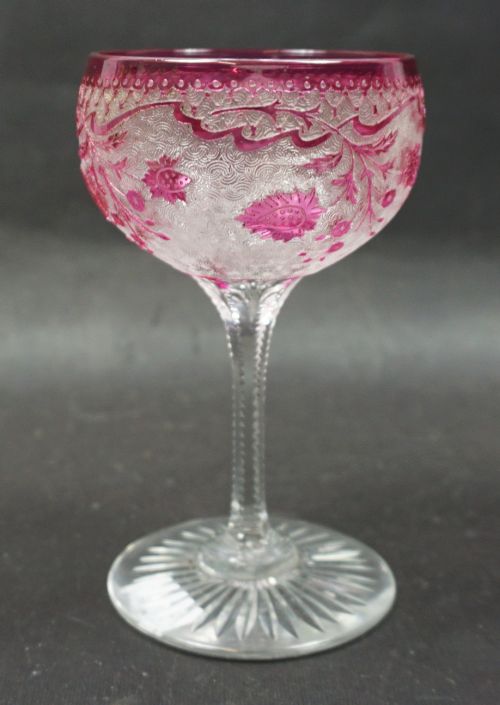
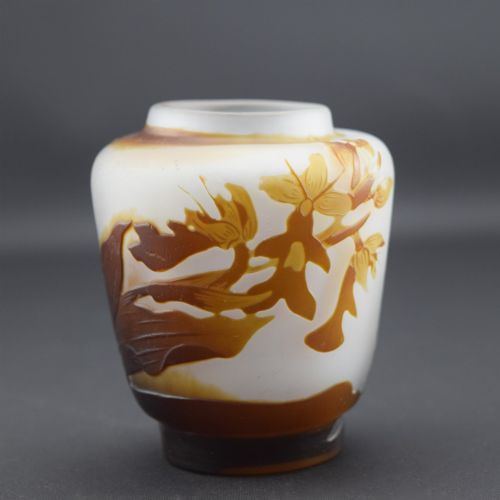
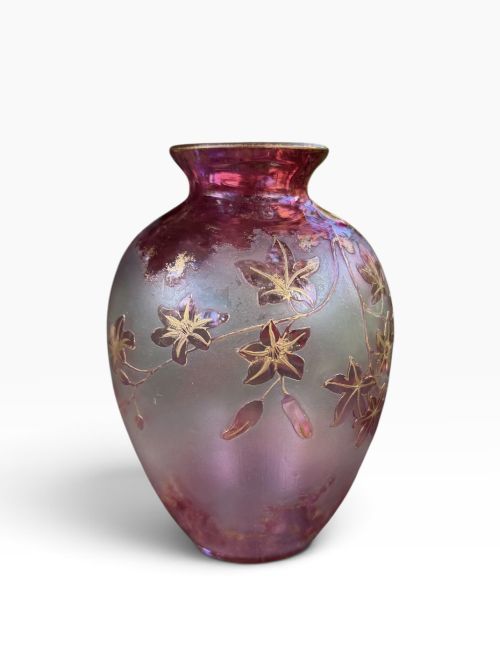
Antique etched glassware encompasses vessels from the Georgian era through to the Art Deco period, formed in clear glass, lead crystal and cameo glass.
Antique Etched Glassware
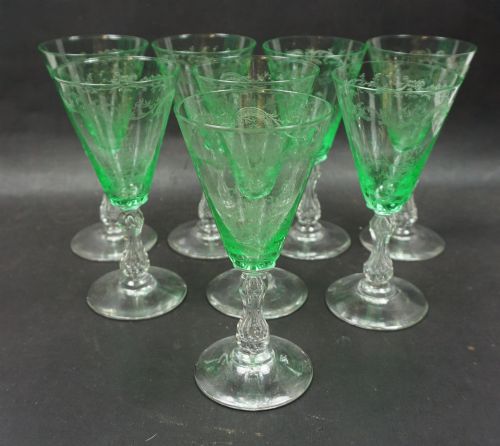
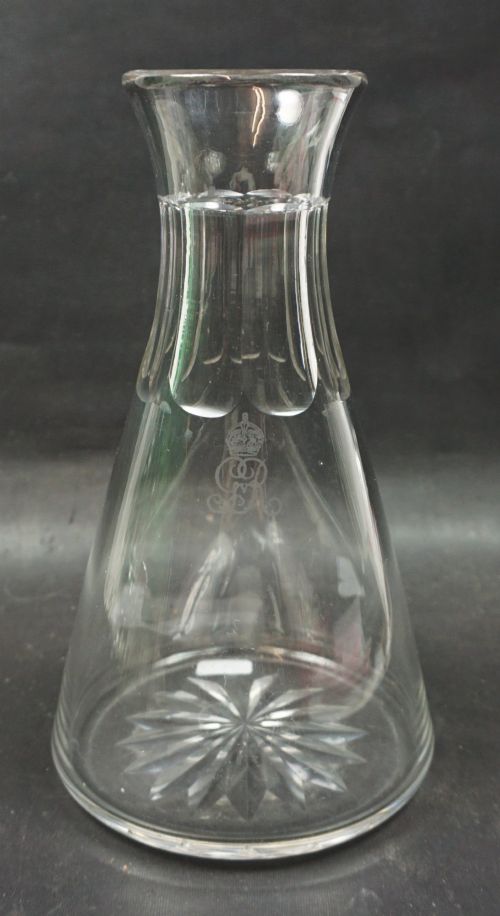
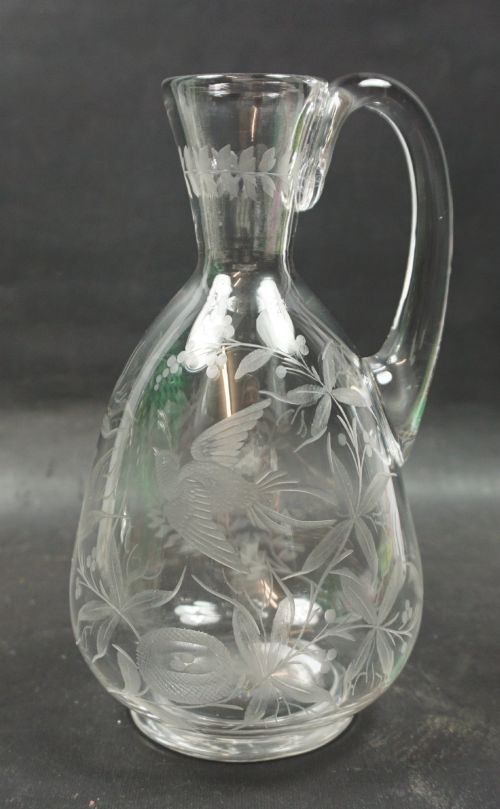
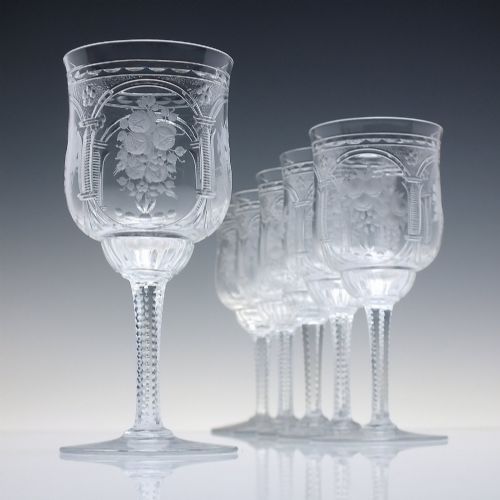
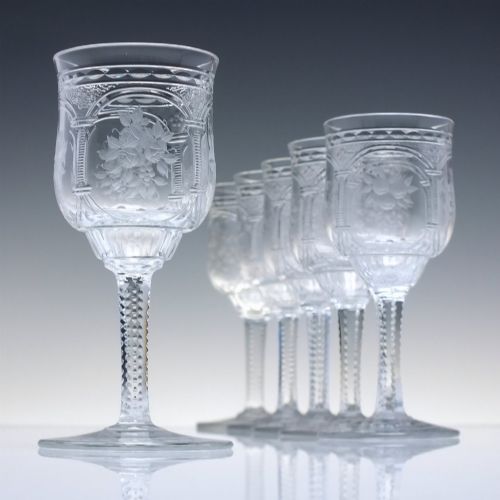
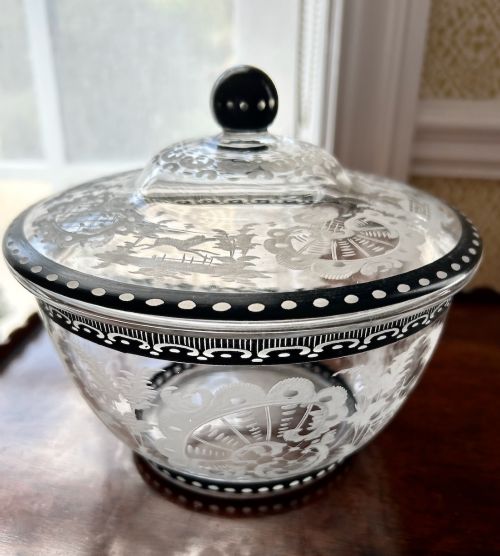
Antique etched glassware comprises a diverse range of drinking vessels, vases, decanters and table pieces originating from British, French and Bohemian makers. The selection spans distinct historical periods, notably the Victorian, Edwardian and Art Deco eras, each bringing particular decorative vocabularies to the table.
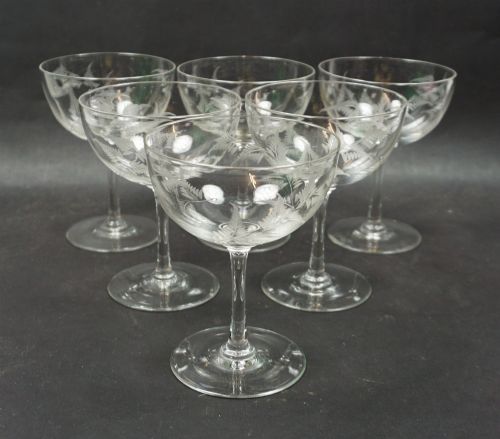
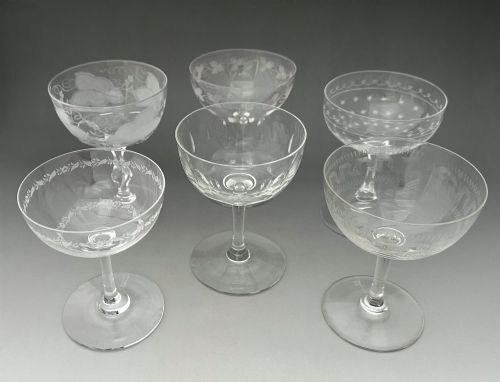
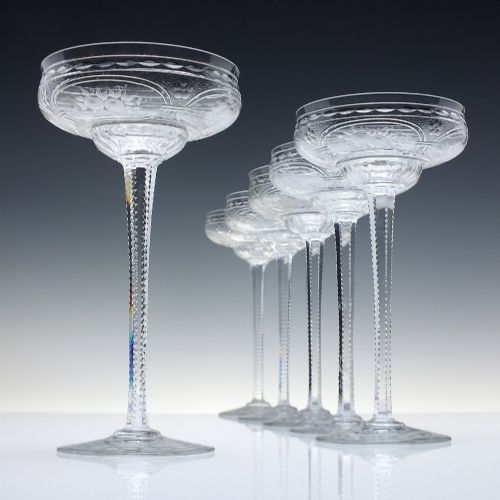
The most frequent encounters on this page include Victorian wine glasses, champagne coupes and finger bowls alongside Edwardian cordial glasses and Art Deco suites. Table glass from these periods served both utilitarian functions in domestic settings and ornamental roles in cabinets and dining rooms.
How they were made
Makers utilised clear glass, lead crystal, frosted glass and coloured cameo layers as the primary medium for these vessels. Techniques involved free-blowing, moulding and cutting before surface decoration was applied.
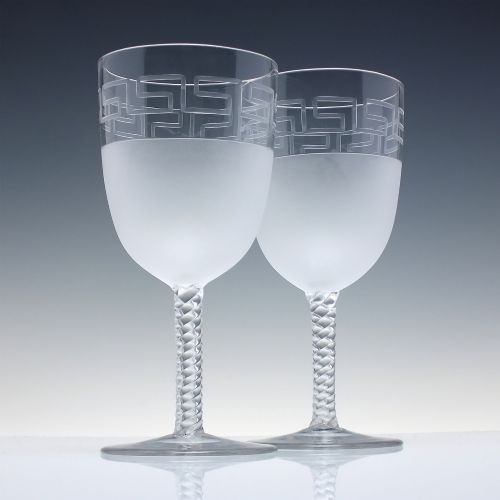
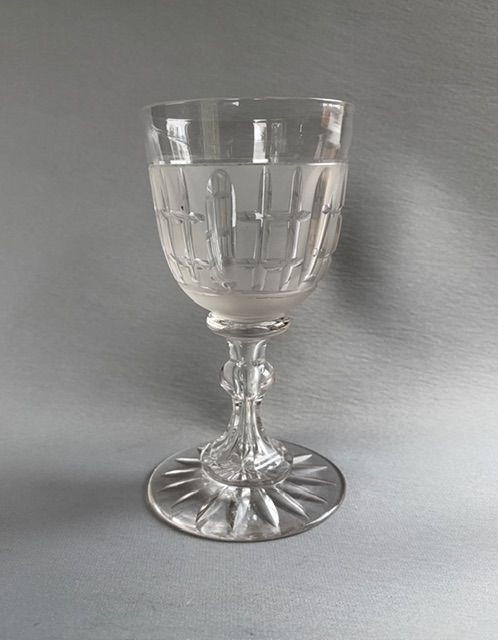
Decoration relied on acid etching, wheel engraving and enamel work to bite floral motifs, geometric patterns and armorials into the glass surface. Acid etching gained prominence by the late nineteenth century, allowing for precise control over frosted details and cameo relief.
Antique Etched Glassware Retail Price Guide 2026
Typical asking prices for etched glassware among the pieces listed under this phrase on Sellingantiques today, from the lower quarter to the upper quarter. They describe what is for sale here now, not the wider market.
Customs and excise measures appear alongside delicate champagne coupes, proving that historical thirsts required precise legal oversight.
What varies in quality
Quality rests on the crispness of the wheel engraving or the chemical depth of the acid etch, alongside the clarity and weight of the underlying glass or lead crystal. Well-defined motifs demonstrate superior workshop execution.
The sophistication of the design, particularly in multi-layered cameo pieces or coordinated suites of drinking glasses, separates standard domestic ware from exceptional studio output.
Baccarat·Gallé·Stevens & Williams·Schneider·Karl Palda
The Antique Etched Glassware Glossary
- Cameo glass
- Glass formed of two or more distinct layers of colour, where portions of the top layer are carved or acid-etched away to reveal the contrasting background. This technique demands high skill to maintain consistent depth.
- Rummer
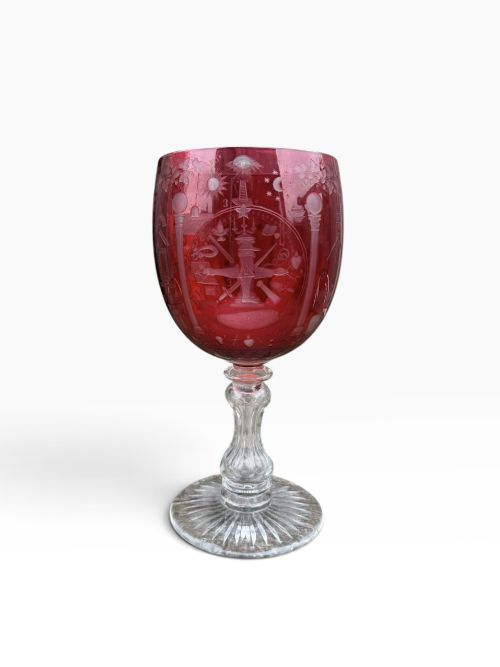
- A large, heavy-stemmed drinking glass popular in the eighteenth and nineteenth centuries, frequently etched with Masonic emblems or commemorative scenes. They typically feature a bucket or pan bowl.
- Finger bowl
- A small, rounded bowl used at the table for rinsing fingers between courses. Victorian examples often combine cut and frosted glass techniques.
- Roemer
- A traditional Germanic or Bohemian wine glass featuring a large bowl on a patterned or ribbed stem with a conical foot. They frequently appear in amber, green or ruby glass.
- Celery vase
- An tall ornamental vessel designed to hold stalks of celery upright on the Victorian dining table. These pieces often exhibit deep cutting and star-etched bases.
Antique Etched Glassware: Frequently Asked Questions
Were these glasses used daily?
Many Victorian and Georgian drinking glasses and decanters saw regular service at formal dinners, gatherings and taverns. Other pieces, such as delicate cameo vases or large presentation rummers, served primarily as decorative display items.
Usage patterns depended heavily on the thickness of the crystal and the social status of the household.
How do I date etched glass?
Dating relies on stylistic clues such as the naturalistic florals of Art Nouveau, the geometric rigour of Art Deco, or the heavy cutting typical of Victorian manufacture.
Form, weight, pontil marks on the base and the specific etching technique also provide clear markers for period attribution.
What is the difference between etched and engraved glass?
Engraved glass is worked mechanically using a rotating copper wheel and abrasives to cut lines directly into the surface. Etched glass uses acid to eat away exposed areas, leaving frosted or recessed designs.
Acid etching became widespread in the late nineteenth century as a quicker alternative to wheel engraving.