


Antique Etagere Shelf
An antique etagere shelf brings tiered display and open storage into a room, joining utility with refined nineteenth-century design.
Antique Etagere Shelf
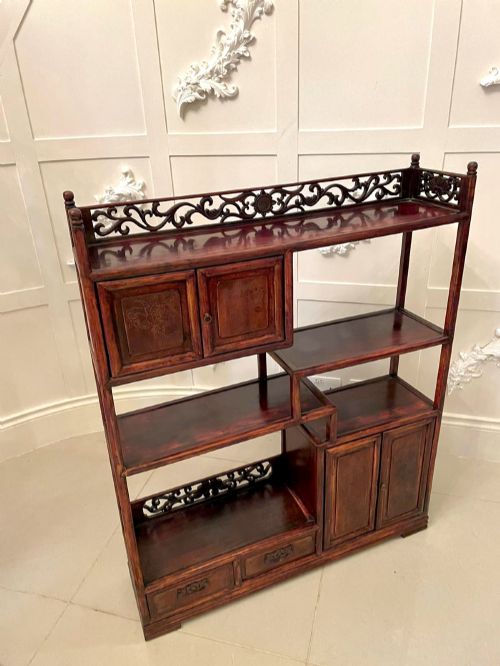
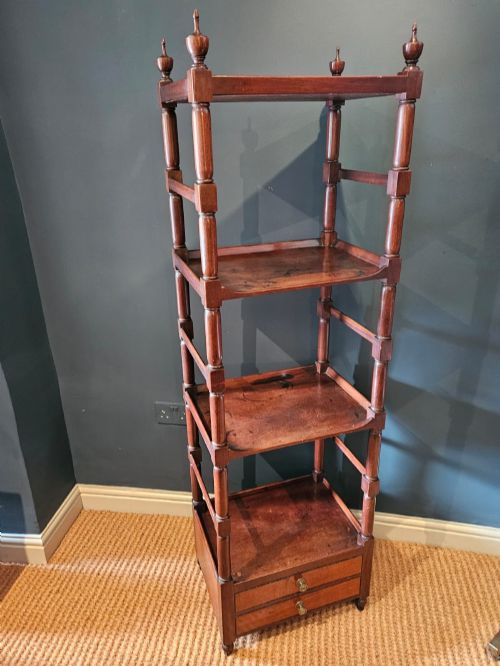
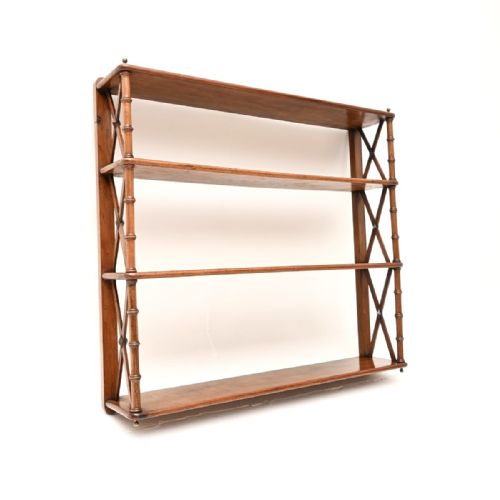
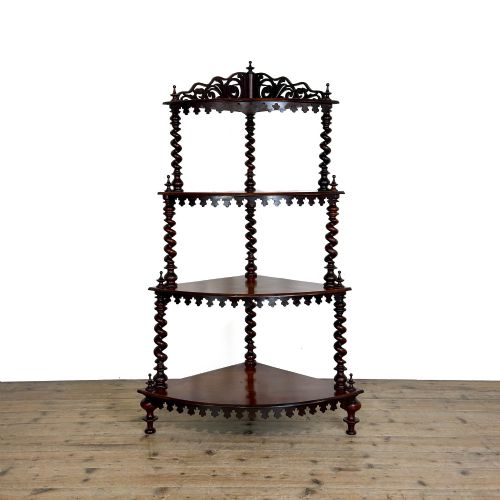
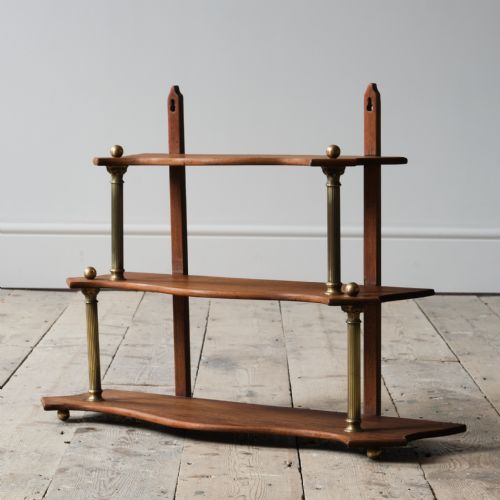
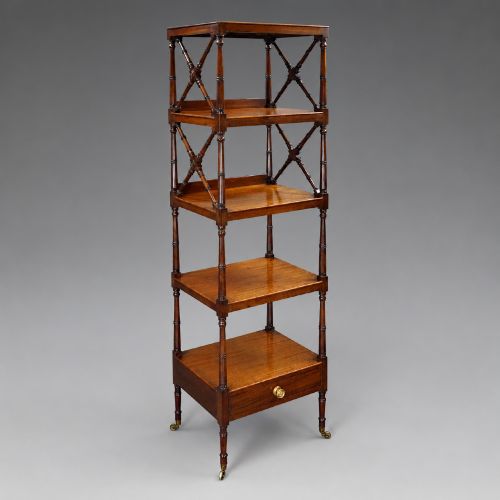
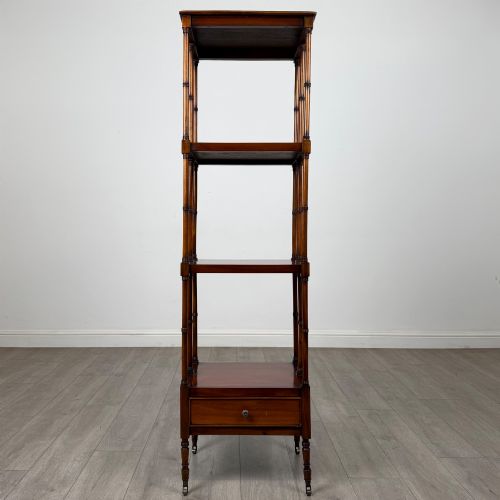
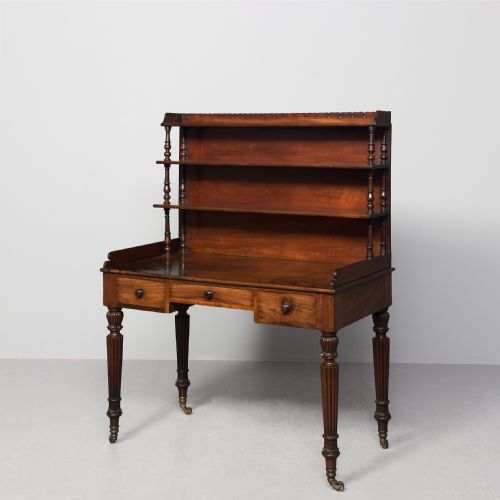
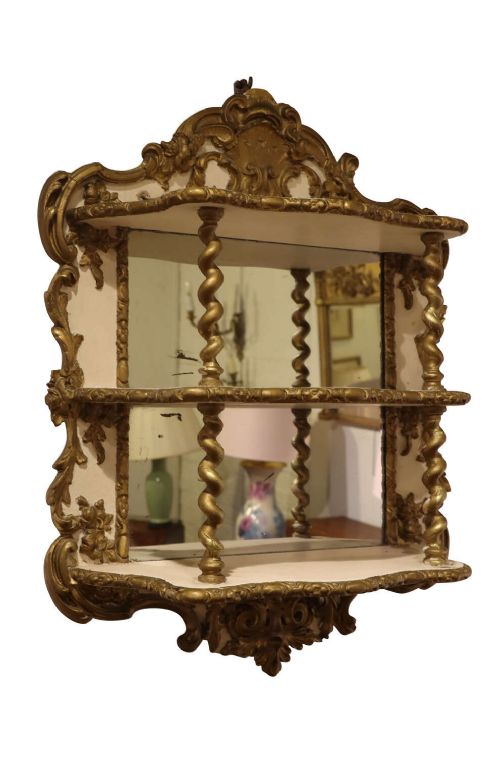
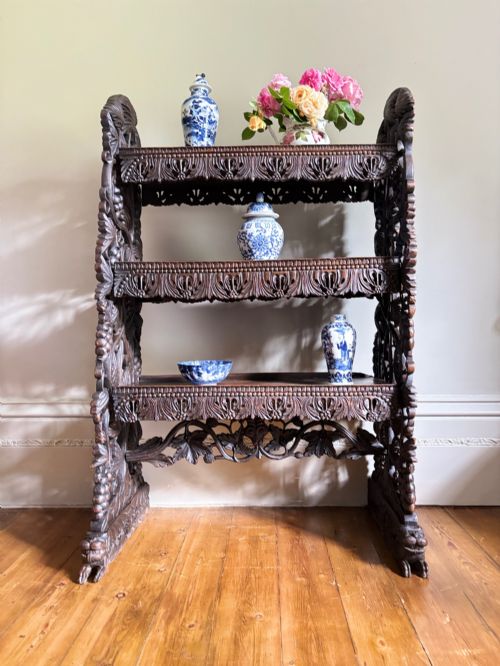
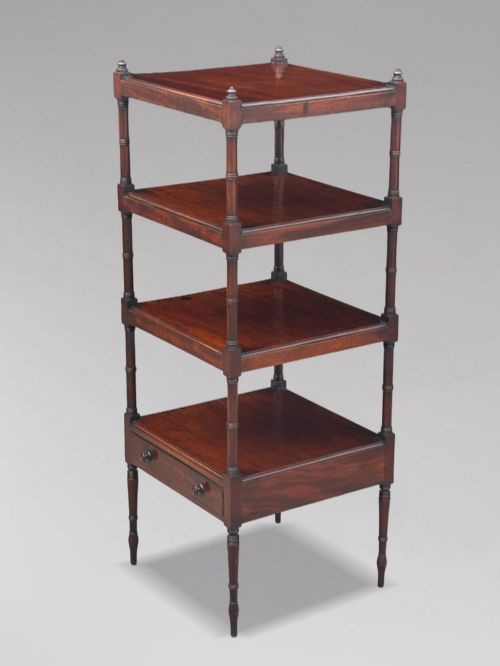
An antique etagere shelf functions as an open tiered stand designed for the display of ornaments, books, and small domestic objects. When searching for an antique etagere shelf, a buyer encounters multi-tiered pieces originating from the nineteenth century alongside related forms such as whatnots and wall shelves. The majority of items met on this page belong to the Victorian and Regency periods, spanning freestanding corner units, wall-hanging racks, and multi-tier bookcases.
How they were made
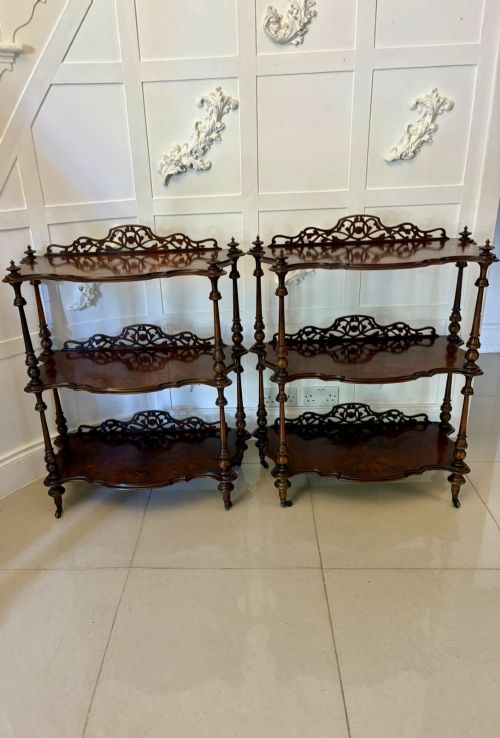
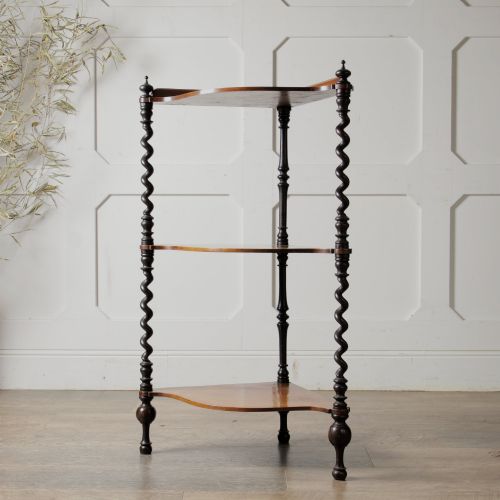
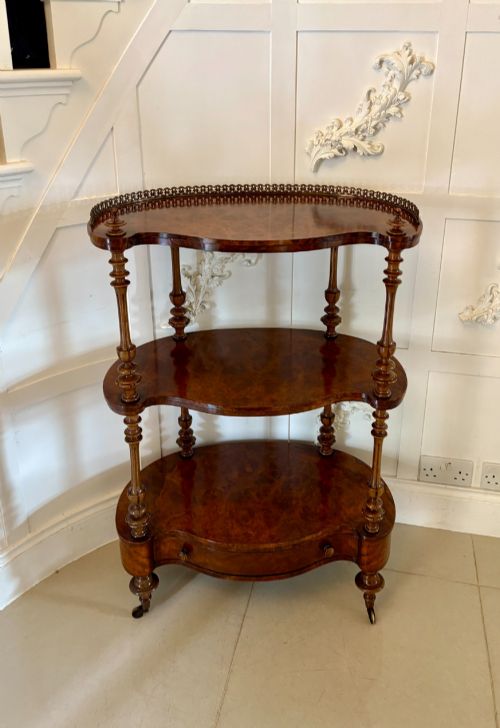
Cabinetmakers constructed these tiered pieces using solid and veneered hardwoods, notably mahogany, walnut, and rosewood, often enhanced by burr walnut figure or inlaid parquetry. Uprights and supports frequently incorporate turned wood components, barley twists, or brass mounts that secure the horizontal platforms together.
Surface finishes rely on traditional polish and ebonising, sometimes paired with parcel gilding or metal elements such as wrought iron in Parisian baker racks. Joinery methods prioritise stability across multiple levels, supporting the weight of stacked shelves without compromising the slender profile of the etagere or whatnot.
A sturdy nineteenth-century baker's rack happily transitions from industrial pastry prep to holding an extensive houseplant collection.
What varies in quality
The refinement of timber selection dictates the visual standing of each piece, distinguishing straight-grained mahogany from highly figured burr walnut and intricate parquetry inlay. Superior examples display balanced proportions across every tier, precise turning on the upright supports, and harmonious matching of wood grain across the shelves.
Execution of detail separates standard utility furniture from exceptional workshop production. Subtle touches such as serpentine shaping, carved mouldings, integrated brass detailing, and original structural integrity elevate the piece from a simple storage rack to an accomplished item of period furniture.
Gabriel Viardot·James Mein of Kelso·Gillows·Edwards & Roberts
The Antique Etagere Shelf Glossary
- Etagere
- A piece of furniture consisting of a set of open shelves for displaying small objects or ornaments. These tiers rise progressively, offering multiple surfaces in a compact footprint.
- Whatnot
- A nineteenth-century multi-shelved stand used for displaying china, books, or ornaments. It shares a direct lineage with the etagere and frequently appears in corner and freestanding configurations.
- Burr Walnut
- Timber taken from a walnut tree growth, yielding complex, swirling grain patterns. Cabinetmakers prized this veneer for high-status Victorian display furniture.
- Barley Twist
- A type of turning resembling a spiral rope, frequently used for the vertical supports on nineteenth-century stands. This decorative technique adds texture and visual rhythm to the uprights.
- Parquetry
- Geometric mosaic woodwork used for decorative surface patterns on tabletops and shelves. Artisans arranged contrasting wood veneers to create intricate geometric designs.
Antique Etagere Shelf: Frequently Asked Questions
What is an etagere shelf?
An etagere shelf is an open-tiered piece of furniture designed specifically for displaying decorative objects, porcelain, and books. These units provide multiple levels of vertical storage while maintaining an open, airy appearance in a room.
Most examples date from the nineteenth century, encompassing styles from the Regency period through high Victorian craftsmanship. They appear in freestanding formats, corner designs, and wall-hanging variations.
How were whatnots used?
Whatnots served primarily as display furniture in nineteenth-century drawing rooms and parlours, holding collections of small ornaments and prized possessions. Their open shelving allowed owners to exhibit decorative items from multiple angles.
Over time, these versatile stands also functioned as music cabinets, small bookcases, and general utility display units. Their tiered construction made them practical for both compact spaces and grand reception rooms.
Where should I place an etagere?
An etagere works effectively against a living room wall, in an empty corner, or flanking a fireplace where vertical display space is needed. Corner variants utilise overlooked angles in a room without consuming floor space.
Wall-hanging versions suit smaller rooms or hallways where freestanding furniture would obstruct movement. Placing them away from direct heat sources helps protect the historical timbers and veneers.
How do I identify Victorian pieces?
Victorian etageres and whatnots often feature dense timbers like walnut, burr walnut, and rosewood, frequently accompanied by turned uprights and barley twist supports. Stylistic markers include serpentine shelf edges, rich dark polishing, and occasional ebonising.
Cabinetmakers of this era also embraced eclectic influences, producing pieces with Japonisme, Chinoiserie, and revivalist details. Examining the construction underneath often reveals period joinery and timber characteristics unique to the mid-to-late nineteenth century.