




Antique Equine Artwork
Antique equine artwork brings the power and character of the horse into a room through oil, canvas, and watercolour.
What antique equine artwork is
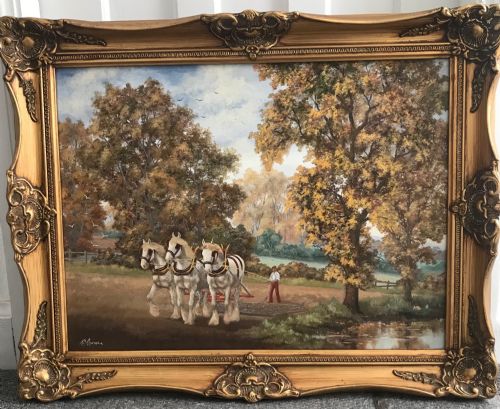
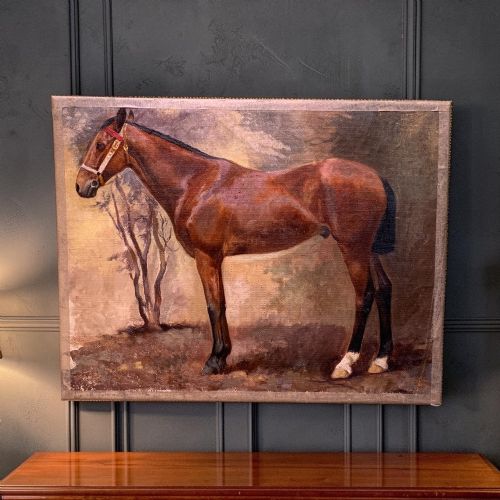
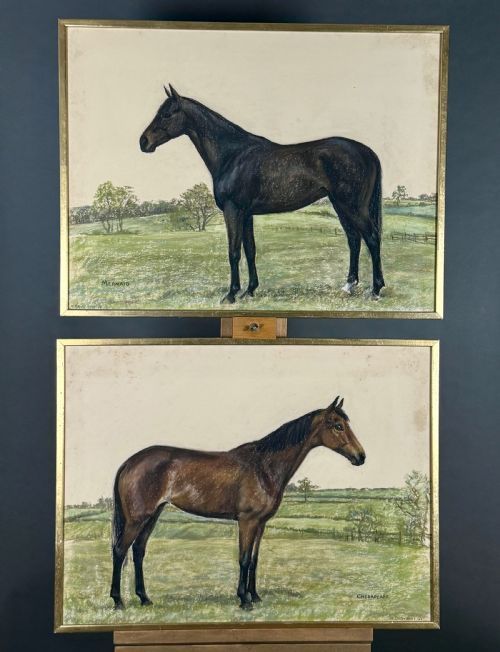
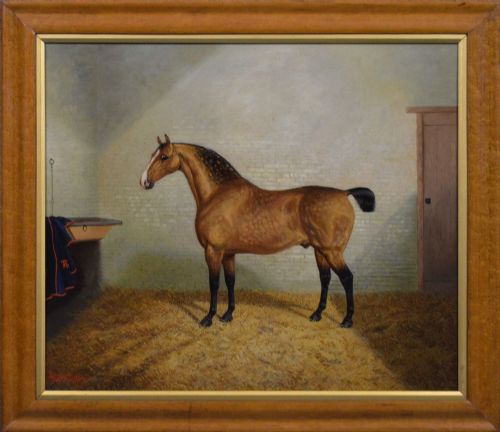
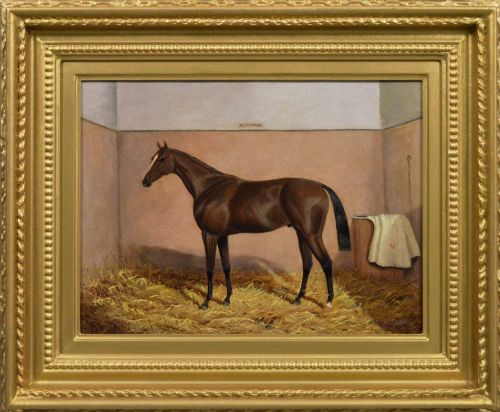
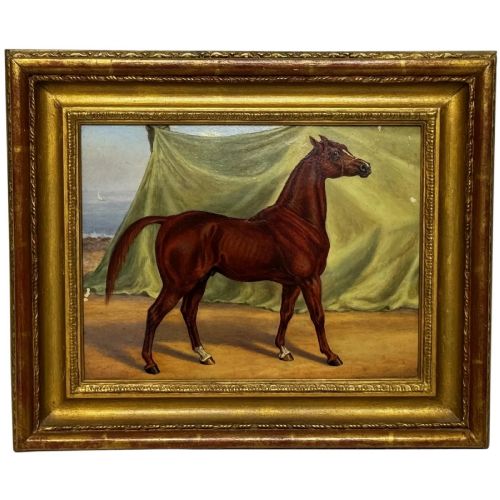
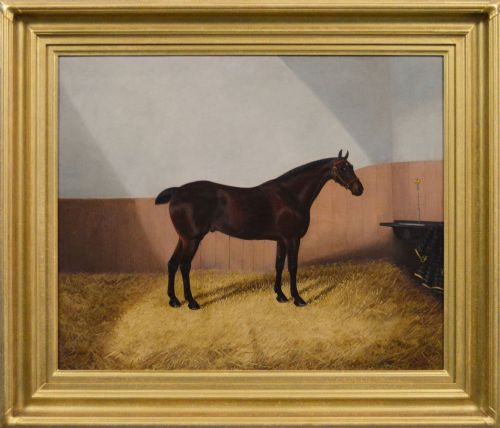
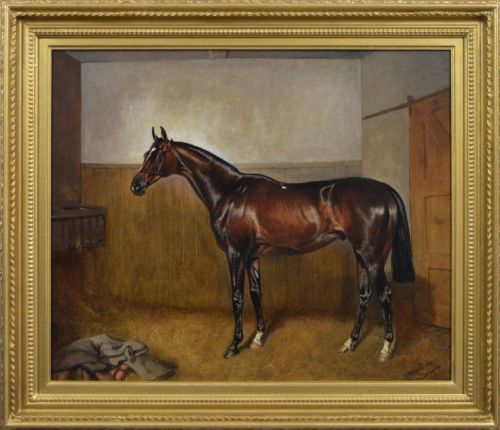
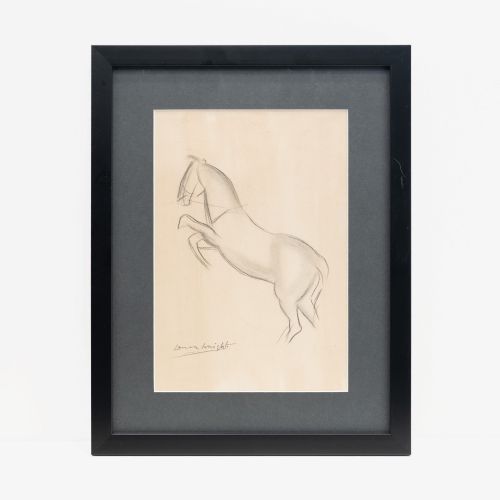
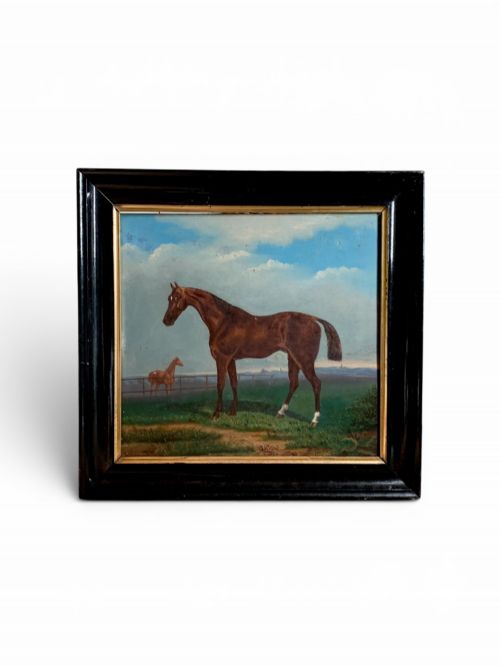
Antique equine artwork encompasses paintings and prints focused on horses, capturing specific animals, racehorses, and rustic scenes with ponies. These works range from detailed oil portraits of named subjects to atmospheric watercolours and painted prints.
The pieces available here lean heavily into nineteenth century British traditions. Buyers encounter Victorian sporting art and equestrian studies that record the physical build and spirit of horses from past eras.
Forms vary from framed prints after well-known artists to original oil paintings on canvas and paper. Many retain period framing in giltwood or birds eye maple under glass, preserving their original presentation.
How they were made
Makers utilised oil paint applied to canvas and paper to build up rich coats and muscular forms. Watercolour painting offered a lighter touch for studies on paper.
Frames employ materials like giltwood, gilt wood, and birds eye maple to house the artwork. Glass protects delicate watercolours and paper prints from environmental wear.
Retail Price Guide 2026
Typical UK retail prices for equine artwork, calculated from the Sellingantiques database of over a million retail prices indexed since 2003. This retail price guide relies exclusively on Sellingantiques data; no external sources or auction records are used, so the figures do not describe the wider market.
Listings span the nineteenth century and the year nineteen hundred, focusing on oil, canvas, paper, and watercolour.
What varies in quality
The distinction between standard works and superior pieces lies in the precision of the animal's anatomy and the handling of light across the coat. Named subjects with recorded provenances command greater attention than anonymous studies.
Framing also dictates the overall standard of a piece. Original giltwood or birds eye maple surrounds elevate the presentation, whereas later replacement frames alter the historical integrity of the object.
Fred Fitzpatrick·John Alfred Wheeler·John Frederick Herring Snr
The Antique Equine Artwork Glossary
- Oil painting
- A work created using pigments bound in a drying oil medium, typically applied to canvas. This technique allows for deep colour blending and textured brushwork.
- Watercolour painting
- A method where water-soluble pigments are used on paper to create translucent layers of colour. It offers a delicate and immediate record of the subject.
- Giltwood
- Wood that has been treated with a thin layer of gold leaf or gilt. It provides a bright, ornate border common in nineteenth century framing.
- Birds eye maple
- A figure in maple wood that resembles tiny swirling eyes, highly valued for decorative furniture and framing. It adds distinctive pattern and warmth to the border.
- Sporting art
- A genre dedicated to depicting field sports, racing, and animals in action. These works document the history of equestrian pursuits.
Frequently Asked Questions
What periods do these pieces date from?
The available selection centres on the nineteenth century, extending into the year nineteen hundred. These dates reflect Victorian sporting art traditions.
Works from this era capture both named racehorses and everyday rural scenes involving ponies.
Are the horses in these paintings named?
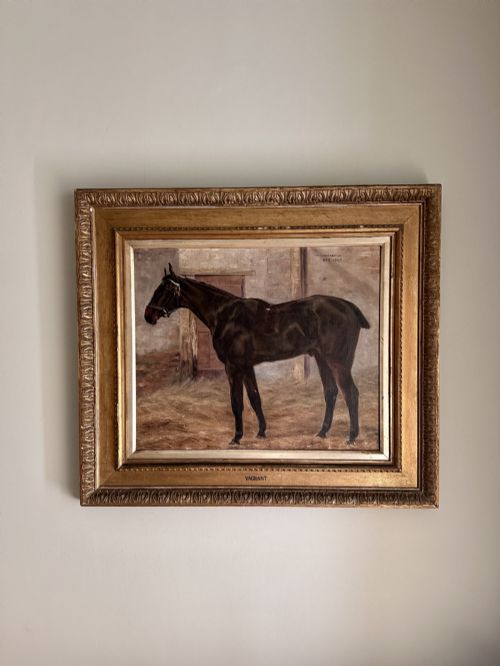
Some individual horses are specifically identified by name, such as Vagrant or General Peace. These portraits often include artist signatures and historical provenance. <br> Other works depict generic rustic figures with ponies and hounds without recording a specific animal's pedigree.
What mediums were used for these artworks?
Artists utilised oil paint on canvas and paper to create detailed and durable portraits. Watercolours were also employed for lighter studies on paper.
Additionally, painted prints offer another method of representation found within these listings.