
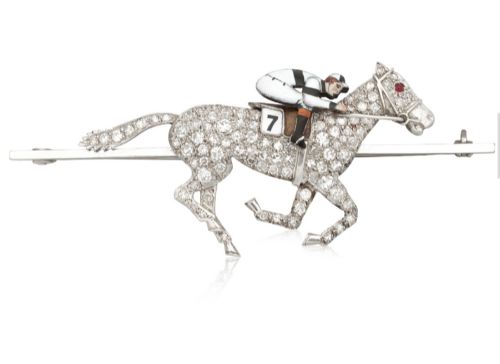
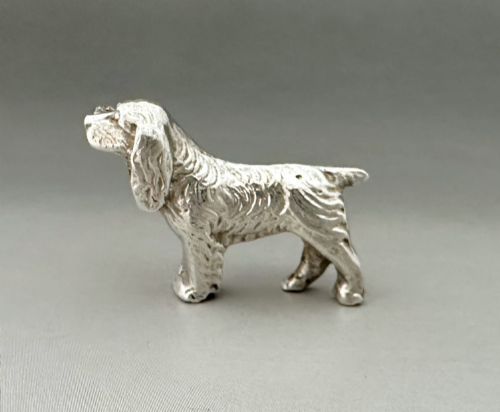


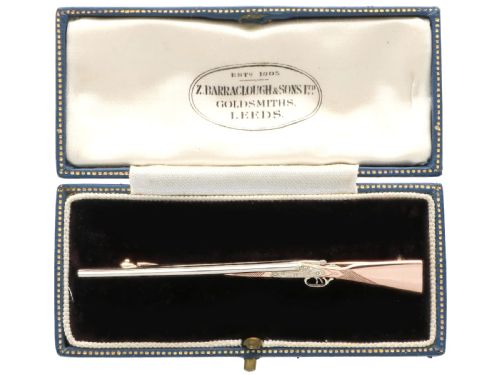


Antique Equestrian Brooch
These antique equestrian brooches capture sporting history in gold, silver, and precious stones, bringing traditional craftsmanship straight to your lapel.
Antique Equestrian Brooch
An antique equestrian brooch embodies the sporting traditions of the nineteenth and twentieth centuries, taking the form of horseshoes, hunting bugles, shotgun pins, and animal figures. You will regularly encounter Victorian and Edwardian examples fashioned into horseshoe shapes accented with seed pearls or turquoise.
The selection ranges from simple silver dog brooches and stick pins to elaborate eighteen-carat yellow gold jockey cap pins set with garnets and diamonds. Mid-century sporting items also appear, reflecting a lasting fascination with country pursuits and rural life.
Many of these items double as practical dress accessories, originally pinned to cravats, hats, or lapels during outdoor events. Their survival demonstrates both durable construction and enduring appeal among collectors of equestrian memorabilia.
How they were made
Goldsmiths utilised varying purities of gold, including nine-carat, fifteen-carat, and eighteen-carat yellow gold, alongside sterling silver and silver gilt to construct the structural mounts of each brooch. These metals were shaped into realistic sporting motifs such as hunting bugles, shotgun barrels, and horseshoe frames.
Gemstones and organic materials like turquoise, seed pearls, diamonds, and garnets were hand-set into the metalwork to add colour and detail, particularly upon horseshoe designs. Specialised techniques like Essex crystal painting were also employed to create miniature animal portraits set beneath domed quartz.
Materials documented across the listings include multiple purities of gold, sterling silver, turquoise, garnets, diamonds, and natural seed pearls.
What varies in quality
Quality separates simple mass-produced items from superior pieces through the precision of the metalwork and the selection of materials. Higher quality items feature higher gold purities, such as fifteen or eighteen-carat gold, paired with well-matched natural seed pearls or vibrant turquoise stones.
Artistic execution dictates the distinction between standard pins and exceptional collector pieces, particularly in hand-painted subjects like Essex crystal fox motifs or gemstone-laden jockey caps. The refinement in sculptural detail of animals and sporting gear reflects the skill of the original workshop.
The Antique Equestrian Brooch Glossary
- Stick Pin
- A long pin with a decorative head designed to secure neckties or lapels, frequently featuring equestrian motifs in gold or silver.
- Essex Crystal
- A reverse-intaglio technique where an animal subject is carved into the back of a domed quartz crystal and hand-painted to appear three-dimensional.
- Silver Gilt
- Sterling silver that has been coated with a thin layer of gold, giving the appearance of solid gold while utilising a silver base.
- Seed Pearl
- Very small, naturally occurring pearls often used in cluster settings on Victorian and Edwardian horseshoe jewellery.
- Turquoise
- An opaque, blue-to-green mineral commonly cut into cabochons and mounted in nineteenth-century gold jewellery for colour contrast.
Antique Equestrian Brooch: Frequently Asked Questions
How do I wear an antique brooch today?
These pieces suit modern tailoring, knitwear, and coats, functioning well on lapels, collars, or thick scarves.
Heavier items like horseshoe brooches require sturdy fabrics to support their weight without pulling the material.
What materials are common in these items?
Gold in nine, fifteen, and eighteen-carat purities appears frequently alongside sterling silver and silver gilt mounts.
Gemstones such as turquoise, seed pearls, garnets, and diamonds provide traditional decorative detail.
How can I tell a Victorian piece apart?
Victorian items often display specific construction traits, such as tube hinges and wide C-clasps on the pin backs.
Motifs like seed pearl horseshoes and detailed animal figures strongly indicate nineteenth-century manufacture.
Were stick pins used differently than brooches?
Stick pins were originally designed to secure cravats and neckties in place on gentlemanly riding attire.
Over time, collectors adapted them for use as lapel decorations or hat pins.